
The trick Woolworths uses to make food look less fattening
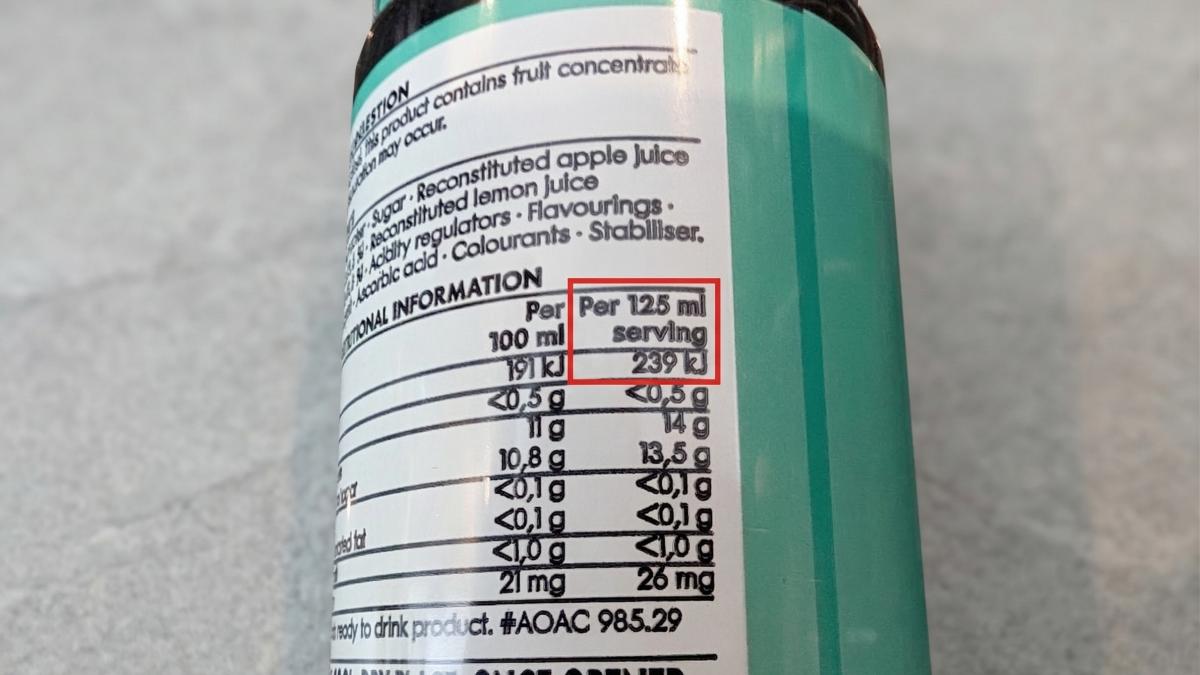
Woolworths and other food manufacturers use a serving size smaller than what a person typically eats to make the food appear less fattening at first glance.
In South Africa, food producers are required to provide nutritional information on food packaging for a range of products.
Regulation R146, which became effective on 1 March 2012, made it mandatory to include a nutritional information table when a nutrient content claim is used.
“These Regulations are aimed at ensuring that consumers have access to properly and accurately labelled foodstuffs,” the Health Department said.
It explained that these labels will assist South Africans to make informed food choices and promote healthy eating.
In 2023, the Department of Health published draft regulations for the labelling and advertising of foodstuffs, known as R3337.
The new regulations require that all food products include a Nutritional Information Table (NIT) with basic information.
It includes energy, protein, total fat, saturated fat, carbohydrates, sugars, dietary fibre, sodium, and potassium.
The draft regulations also introduce new requirements for making claims about foods on the label or packaging.
All claims must be based on scientific evidence and must not be misleading. There are also new restrictions on health claims and nutrient content claims.
Although the new R3337 regulations are not yet in force, most basic nutritional information is already displayed on packaging as part of the R146 requirements.
The biggest impact of the new regulation will be the proposed restrictions on on-package marketing of foodstuffs.
“A substantial number of products will carry warning labels and be prohibited from utilising common marketing techniques,” researchers said.
Common trick food manufacturers use to make food look healthy

Food manufacturers, especially sweet producers, have a long history of using serving size as a marketing tool to improve the perceived health profile of their products.
Researchers refer to this practice as ‘health framing’ or ‘portion distortion’ in academic literature on the topic.
A 2012 study found that manufacturers often choose serving sizes smaller than what people typically eat.
This smaller unit makes the food appear less fattening at first glance, reducing the guilt associated with the purchase and eating the product.
Manufacturers often divide a single-serving container, like a bag of chips or a can of soda, into two servings.
This creates a ‘Health Halo’, where the product is perceived as a light snack despite containing a large amount of energy.
The strategy works well. Artificially lowering the serving size calories significantly increases the consumer’s intention to buy the product.
This strategy also encourages people to eat more of the product because the food looks healthier on paper.
Although consumers consider the calories per serving when buying food, they ignore the serving size when eating it.
One study found that when people perceive a snack as healthy because of its labelling, they tend to eat up to 35% more than they would otherwise.
In South Africa, ‘health framing’ and ‘portion distortion’ are widespread and are used by many retailers and food manufacturers.
The section below provides an overview of what MyBroadband found during its investigation of the issue.
Woolworths Green Apple Flavoured Cables (35 g cable with 25 g portion size)
Woolworths produced one of the most delicious sweets on the market, called Green Apple Flavoured Cables. There are 5 cables in a pack weighing 175 grams, for a weight of 35 grams per cable. We have never seen anyone eat just one cable. However, Woolworths describes a portion of 25 grams, which is less than one cable.

Woolworths Multi Coloured Eggs (50 g bag with 25 g portion size)
Woolworths offers its Multi Coloured Eggs in differently sized bags, including a 50-gram portion, which is the same weight as a chocolate bar. Most people will consume this bag in a single sitting. However, Woolworths gives one portion as 25 grams.

Woolworths Sparkling Lemonade (200 ml can with 125 ml portion size)
Woolworths has 200 ml Sparkling Lemonade cans. This is far less than the old 340 ml cans, which people consumed in the old days. However, Woolworths gives one portion as 125 ml. It is highly unlikely that anyone would not drink the whole can after opening it.

Woolworths Sparkling Mint Mojito (300 ml can with 125 ml portion size)
Woolworths has 300 ml Sparkling Mint Mojito cans. It is highly likely that people would drink the whole can after opening it. However, Woolworths gives one portion as 125 ml.

Woolworths Hand Cooked Crisps (50 g bag with 25 g portion size)
Woolworths has 50-gram Hand Cooked Crisps bags. People will typically eat the whole bag of crisps once opened. However, it gives one portion as 25 grams.

Woolworths responds
MyBroadband contacted Woolworths for comment, and the company said that characterising its Nutritional Information Table choices as “portion distortion” was incorrect.
“When it comes to labelling, Woolworths is firmly committed to transparency and putting the nutritional needs of our customers first,” it stated.
“In formulating our nutritional information tables, and the serving sizes listed, we take a significant number of factors into consideration.”
These include legislation, scientific energy recommendations, and practical issues, such as dividing a product into a sensible number of portions or rounding up to a reasonable whole number.
Regarding legal requirements, Woolworths said that the South African Labelling Regulations provide the following definition for a serving size:
A single portion/serving size which is not more than the portion/serving sizes typically recommended by health professionals for maintenance or achievement of a healthy weight and good health and which would not encourage consumers to consume “supersize” servings which might result in an undesirable increase of their total energy intake that could contribute to unhealthy weight gain.
“To determine a serving size (shown in the nutritional table), our Food team examines the nutritional information for each labelled product with particular focus on energy, protein, carbohydrates, fat, and sodium,” said Woolworths.
“All nutrients and energy sources have a part to play in a balanced diet, and Woolworths serving sizes reflect our best attempt to quantify how much of each product constitutes an acceptable single serving.”
Woolworths also said its serving sizes endeavour to be practical. “For example, we might say 15 ml of jam instead of 20 ml, because 15 ml is recognised as a tablespoon — a common unit of measure in baking.”
Or, if a bag of crisps is 50 g, Woolworths may suggest a 25 g serving size because that allows the pack to be divisible by two.
“At Woolworths, we have invested significant capital into developing and measuring our serving size recommendations to be as useful and informative as possible,” it said.
“We have a qualified, in-house dietitian that provides expert guidance in this respect, and we take pride in our meticulous application of the law and our determination to give customers accurate and practical nutritional information.”
Woolworths said its commitment to transparency and clarity was particularly evident in some of its new MINDFUL (TR)EATING products, which provide visual guidelines on the packaging, as shown below.





 Loading ...