
Small South African farming town famous for sweets, beer, and Pieter-Dirk Uys now a leader in renewable energy

The small town of Darling in the Western Cape, famous for its wildflowers, beer brewery, and toffees, served as a critical testing ground for South Africa’s multi-billion-rand renewable energy industry.
Founded in 1853, Darling was named after Sir Charles Henry Darling, who had become Lieutenant-Governor of the Cape Colony in South Africa in 1851.
Prior to its establishment, approximately 29 farmers lived in an area called Groenkloof, and Darling was established on one of those farms: Langfontein.
At its founding, the town served only as a church outpost. However, it grew into a dairy-farming powerhouse in the region.
One of its first major businesses — the Darling creamery — was founded in 1899 by two Swedish settlers: Nils Georg Moller and G. Threnstrom. The creamery was closed in 1950.
Darling is renowned for its wildflowers, and since 1917, the Darling Wildflower Society has hosted the annual Darling Wildflower Show at the beginning of Spring in September each year.
The small farming town played a key role during World War 2 and the first South African Air Force flying unit to be based in Darling was 23 Squadron, which arrived at the beginning of 1943.
In November 1943, Ventura aircraft of the 29 Operation Training Unit were relocated from Nigel to Darling.
In January 1944, construction of an iron hangar in Darling began, intended to ease maintenance problems.
The use of Darling’s airfield started tapering off after the conclusion of World War 2 as Air Force Base Langebaanweg became the hub of South African Air Force operations on the West Coast.
Darling is also known as the town in which satirist Pieter-Dirk Uys has performed and continues to perform many of his shows as Evita Bezuidenhout.
The town is home to Uys’s Evita se Perron venue, a repurposing of Darling’s old railway station in 1996. The venue is adjacent to an arts and crafts market run by the Darling Trust.
Today, Darling resembles a quirky, artistic hub that balances dairy and olive farming with a strong influx of tourists.
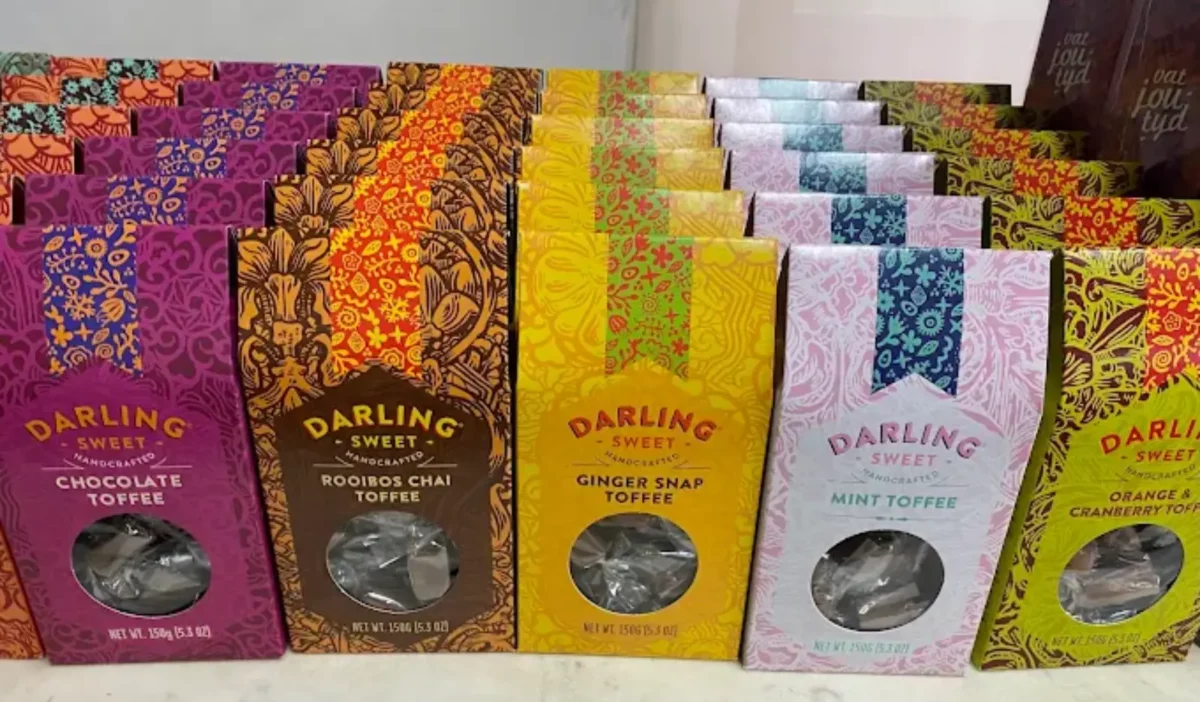
It is home to the well-known Darling Craft Brewery and the Darling Sweet company, which is famous for its toffee.
A testing site for South Africa’s wind energy industry

Situated on the Moedmaag Hill, approximately 12km to the north-west of Darling, lies the Darling Wind Farm, which was commissioned in May 2008 as a national demonstration project for wind energy.
The wind farm was established through a joint venture between the City of Cape Town, the Central Energy Fund, and the Development Bank of Southern Africa.
In 2008, the idea of feeding renewable energy into the national grid was largely theoretical. No regulatory framework existed, and the project infamously took nearly a decade from conception to commissioning.
The facility has served as a living laboratory proving that independent power producers can safely integrate wind energy into the national electricity grid.
The farm features four Fuhrländer FL1250 turbines, with a combined capacity of 5.2MW. While a small capacity by today’s standards for wind farms, it served as a crucial testing ground for wind energy.
The site has also acted as a guinea pig for Environmental Impact Assessments, Power Purchase Agreements, and performance testing in South Africa.
Engineers use the wind farm to benchmark the minimum wind speeds at which turbines begin generating energy, as well as protocols for managing high winds.
The Darling Wind Farm has become an academic hub, with data from the plant enabling institutions like the University of Cape Town to refine wind energy models.
Such research has enabled developers to predict and model energy yields with a high degree of accuracy, which has been crucial in securing international financing.
Darling Wind Farm


The small town of Darling in the Western Cape



 Loading ...