
South Africa’s oldest gold mining town set for a comeback with modular mining technology

Pilgrim’s Rest in Mpumalanga could experience a gold-mining comeback with modular mining technology after becoming somewhat of a ghost town since the 1970s.
Theta Gold Mines, an Australian company that owns the rights to the mines that put Pilgrim’s Rest on the map, has embarked on the TGME Gold Project to restart underground mining in the region.
The town came into prominence in September 1873 when prospector Alec Patterson discovered alluvial gold in what became known as Pilgrim’s Creek.
While he kept his discovery secret, a gold rush ensued when fellow prospector William Trafford registered the claim with Angus MacDonald, Gold Commissioner for the region.
The town’s population grew rapidly as 1,500 prospectors arrived in Pilgrim’s Rest to pan for alluvial gold in the creek.
The diggers initially established tent camps near the claims, and by 1876, most had been replaced by more permanent structures.
Around this time, many businessmen had arrived in the town to trade, supplying the miners with equipment and provisions.
While most early diggers found alluvial gold, primarily gold dust recovered from river beds and banks of streams, some found nuggets as well.
The largest nugget reportedly found in the area was the “Breda” nugget, which weighed in at over 6kg. However, legends of nuggets as large as 11kg were spoken around campfires.
For many years, Pilgrim’s Rest was the core of the Transvaal’s mining industry. By the 1880s, alluvial gold started dwindling, and many prospectors moved to newly discovered deposits in Barberton.
As more capital and larger equipment arrived in the region, mining companies began digging deeper for ore.
By 1895, several small mining companies had merged to form the Transvaal Gold Mining Estates (TGME), in which Theta Gold Mines now holds a 74% stake.
The ore they extracted was transported to the Reduction Works, established in 1897, and as demand grew, the operators realised something was missing: electricity.
The Belvedere hydroelectric power plant was established in the Blyde River Canyon in 1911, providing 2,000kW of power and making it the largest hydroelectric power station in the Southern hemisphere.
Anglo-Boer War shuts down Pilgrim’s Rest mines

Pilgrim’s Rest and the surrounding district were at the mercy of the Boer forces throughout the Anglo-Boer War, which lasted from 1899 to 1902.
As a result, the mines shut down, and TGME employees were instructed to leave the area. In the later years of the conflict, when Boer commandos were forced into guerrilla warfare, they faced a challenge.
They were living largely on supplies that they could only buy from local tribes, which demanded real money, or coins, instead of gold ingots.
The Zuid Afrikaansche Republiek, an independent Boer republic, established a small mint in Pilgrim’s Rest and formed a Mint Commission.
The team produced between 600 and 986 Veldponde, or Field Pounds, in 1902, which commandos could use to buy supplies.
Today, the Veldpond remains an extremely rare and valuable coin, with at least half minted from Pilgrim’s Rest gold.
Mining continued after the Anglo-Boer War and saw peak production in 1913 and 1914, when the TGME produced more than 112,000 ounces (3,175kg) of gold per year.
However, gold production declined steadily thereafter, and in 1972 the last operational mine had to be closed, leaving Pilgrim’s Rest on the verge of becoming a ghost town.
Pilgrim’s Rest could make a comeback

In late 2025, Theta Gold Mines announced plans to enhance the TGME gold plant to process underground ore.
Theta Gold Mines said it would advance the TGME gold plant by purchasing a 900kW ball mill circuit from MechProTech, a local company that manufactures modular mining plant equipment.
MechProTech’s entire range of mineral processing equipment is produced in South Africa, and it assembles and tests all equipment in-house.
The equipment provided will include two high-performance ball mills, motor control centre panels installed in containers, and an integrated feed system.
According to Theta Gold Mines executive chairperson, Bill Guy, its procurement from MechProTech represented a clear commitment to commission the plant by the end of 2026.
The company said the new gold plant would extract material from several historical sites, including the Beta, Frankfort, Clewer-Dukes Hill-Morgenzon, and Rietfontein mines.
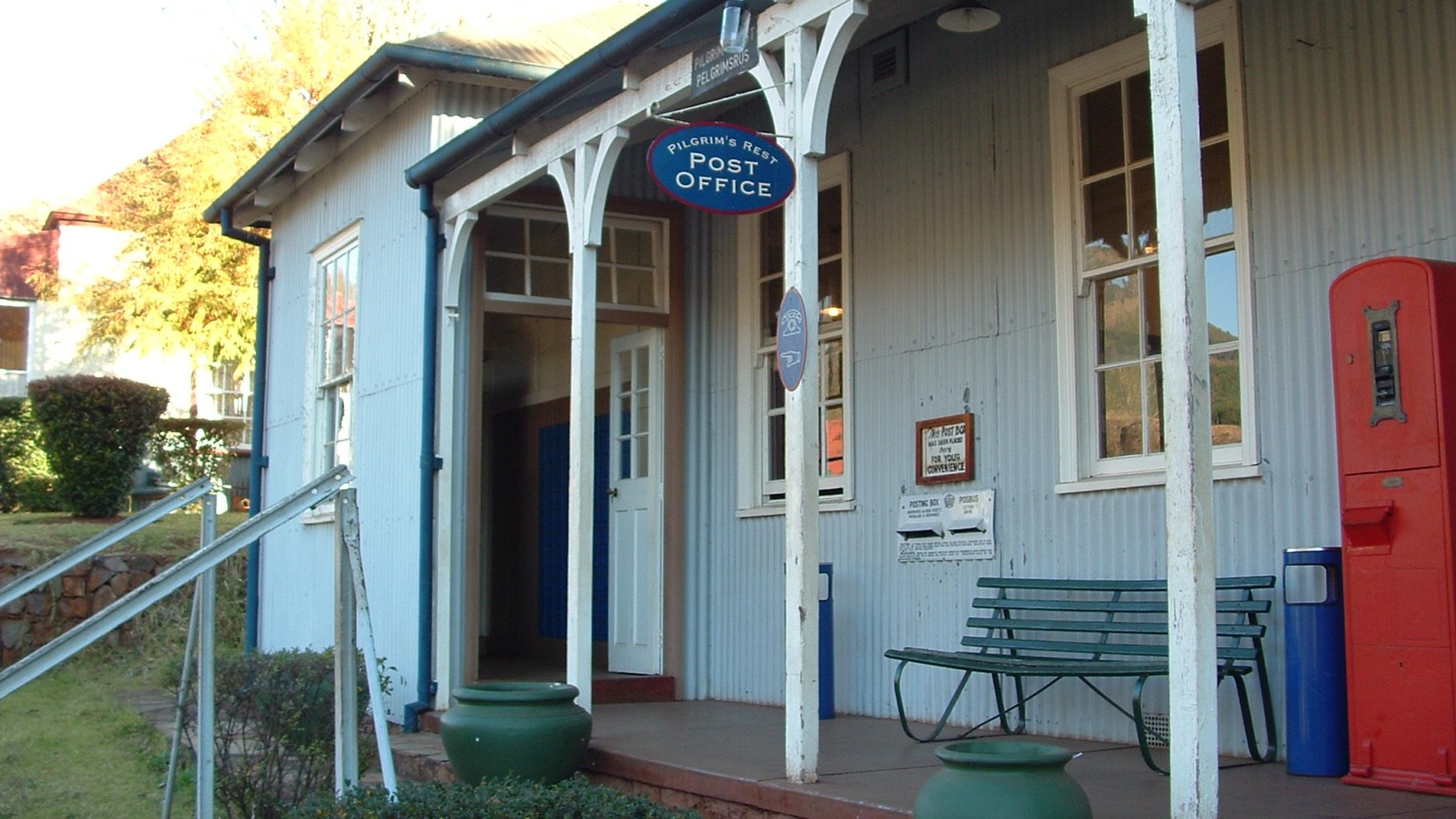
Photos from Pilgrim’s Rest in Mpumalanga




MechProTech Ball and Mill Scrubbers





 Loading ...