
Woman blocked from getting her South African ID book because someone stole her fingerprints

Lesego Nono Cooper can’t register her daughter for her matric exams, she can’t renew her children’s passports, she can’t even obtain funeral cover for her family should something happen to her.
That is because her fingerprints have been linked to someone else, a person nine years younger, with no explanation of how it may have happened.
At best, Home Affairs’ systems have failed spectacularly. At worst, her identity has been completely stolen, down to her fingerprints.
As a result, her application for an ID book has been stuck in limbo for 11 years. Attempts to resolve the matter have only made things worse for her and her children after she refused to pay a bribe.
Cooper is a Motswana woman who met her husband, George, while he was working in Botswana. They were married in South Africa nearly 20 years ago.
She obtained permanent residence in 2012. Two years later, Cooper tried to apply for her ID book for the first time so her daughters could receive their South African ID documents.
Having been told the process could take 18 months, she patiently waited. However, 18 months later, she had received no word about her ID book.
Upon contacting Home Affairs, Cooper was informed that her ID was under investigation. For years, she received no explanation for the hold-up.
Finally, in 2022, Cooper was informed that her fingerprints had been linked to someone else’s ID in the Home Affairs database. She opened a case to try and have the issue corrected.
Although frustrating, at this point, there was no urgency to resolve the issue, as Cooper could do most things that required ID verification with her Botswana passport and ID card.
That included applying for and renewing her children’s passports, so they could travel with her to Botswana to visit her family over the holidays.
However, that soon changed when she visited the Alberton Home Affairs branch to try and resolve the matter once and for all.
R40,000 for Home Affairs to do its job
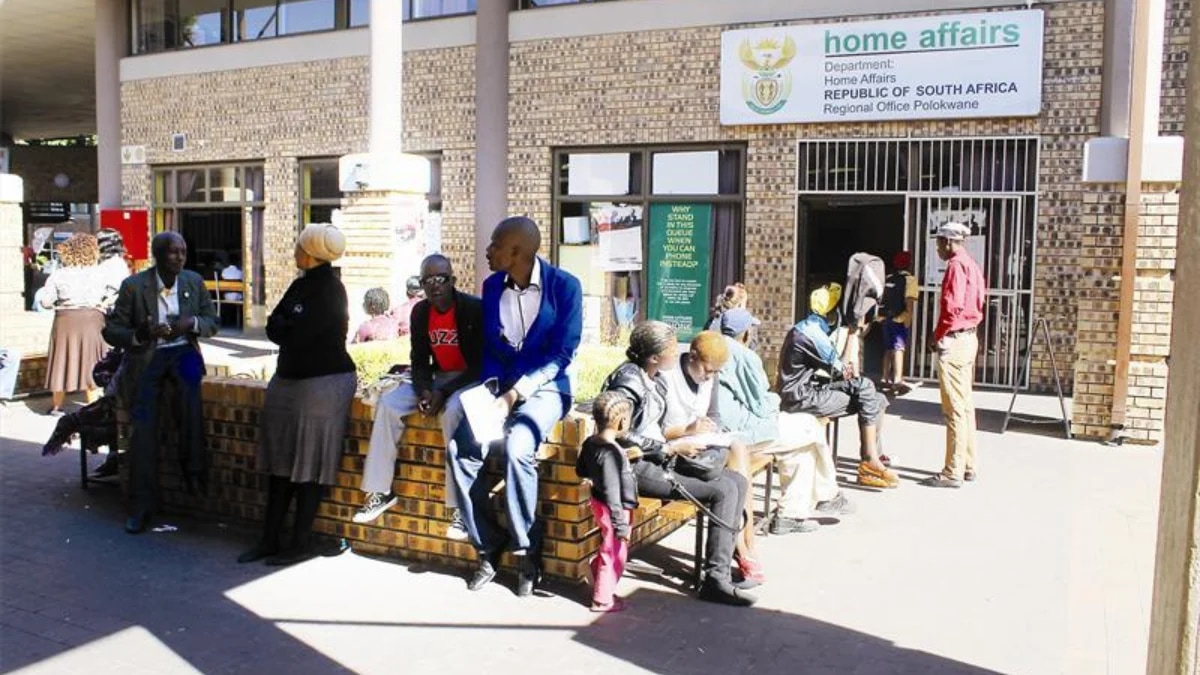
Cooper said that, in 2024, she was offered the opportunity to pay a R40,000 bribe to fix her Home Affairs National Identification System (HANIS) profile.
She declined, at which point she was told the Alberton office could not help her, as it no longer issued green ID books. Cooper was directed to Orange Farm in Orlando.
Until recently, permanent residents and naturalised citizens were unable to apply for a smart ID card — they had to obtain a green ID book.
Following her visit to the Alberton branch, Home Affairs has refused to allow Cooper to renew her children’s passports using her Botswana ID credentials because of the problem flagged with her identity.
At her wits’ end, Cooper appointed attorneys to try and force Home Affairs to act, effectively trading the R40,000 bribe for a R40,000 legal bill.
MyBroadband contacted the Department of Home Affairs and its minister, Leon Schreiber, about Cooper’s case on 18 March 2026.
We finally received feedback on 4 May, but it seemed that no investigation into the issue had been conducted.
“It’s impossible” — Home Affairs

Thulani Mavuso, Home Affairs spokesperson and Deputy Director-General for Operations, said it was impossible for one person’s fingerprints to be linked to another’s HANIS profile.
“Each applicant has unique fingerprints, and the Home Affairs National Identification System does not link fingerprints to more than one individual,” Mavuso stated.
Regarding what Cooper could do to fix her profile, Mavuso’s advice was Kafkaesque. He said Cooper must do what she was already doing.
“Matters of identification clarifications must be resolved by the affected individual through a formal representation at the nearest Home Affairs front office,” said Mavuso.
“The representation must be submitted in person and be supported by all relevant documentation in the individual’s possession.”





 Loading ...