
Vodacom, MTN, Cell C, and Telkom fail network quality tests

The Independent Communications Authority of South Africa (ICASA) has published its quarterly quality of service (QoS) monitoring reports.
The tests focussed on voice services provided in Limpopo and KwaZulu-Natal.
ICASA said the purpose of the reports is to identify shortcomings in the services offered by the mobile operators.
In Limpopo, the monitoring was conducted in Ga-Riba/Ga-Nkoana, Tzaneen, Hoedspruit, Modjadjiskloof, and Bela-Bela, covering a distance of 3,358km.
In KwaZulu-Natal, the monitoring was conducted in Cato Ridge, Pietermaritzburg, Richmond, Mpophomeni, and Howick, covering a distance of 2,574km.
ICASA said it conducted the monitoring through drive-testing using TEMS Symphony equipment. The metrics used were Call Setup Success Rate and Drop Call Rate.
Limpopo
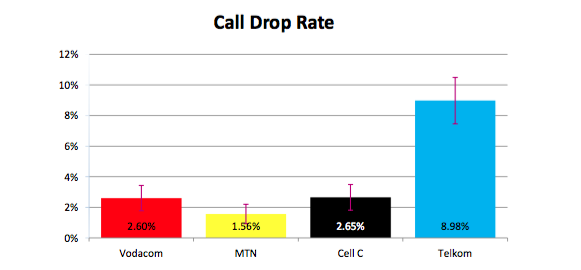
- Telkom did not meet the Average Drop Call Rate (ADCR) target, while Cell C, MTN, and Vodacom met the target of below 3%.
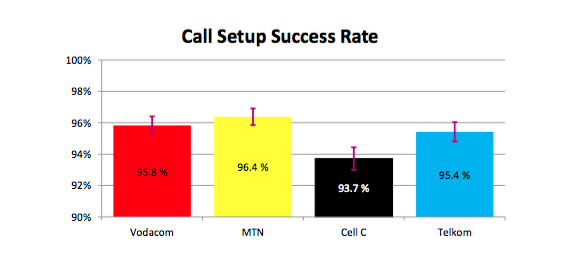
- None of the operators met the Average Call Set-up Success Rate (ACSSR) target of 98%.
Operators said they would remedy the problems by improving site availability, conducting radio optimisation, and adding new sites on the network to improve areas with poor coverage.
In the areas where Cell C and Telkom did not have continuous coverage, they relied on their roaming partners.
KwaZulu-Natal
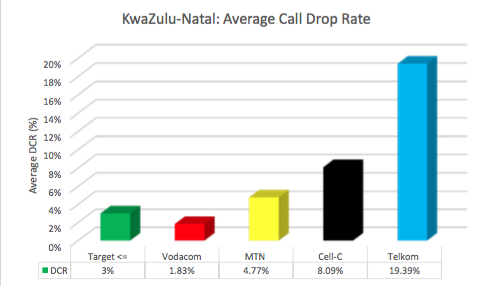
- Vodacom met the ADCR, while the other operators did not meet the target of below 3%.
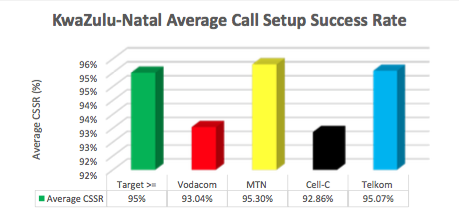
- MTN and Telkom met the ACSSR, while Vodacom and Cell C did not meet the target of above 95%.
Telkom stated that the lack of 900MHz spectrum is a challenge when providing rural coverage and that it relies on MTN roaming to provide services to consumers in certain areas.
The high dropped call rate was due to a lack of seamless handover between its network and MTN’s network, said Telkom.
More cellular news
How Vodacom and MTN can lose their cellular spectrum
ICASA may completely scrap LTE and 4G spectrum licensing attempt


 Loading ...