
How graphics cards have evolved over the years

Computer hardware is constantly evolving, with components becoming smaller and more powerful.
Graphics card performance has changed a lot over the past 30 years, from only displaying rows of characters to rendering photorealistic scenes in real-time.
The appearance and designs of graphics cards have also experienced radical changes, with manufacturers upgrading PCB components and experimenting with cooling systems.
Many companies attempted to break into the GPU market, but it has historically been dominated by Nvidia and AMD (ATI).
Below is a look at how much graphics cards have changed over the past three decades.
1981 – IBM Monochrome Display Adapter
While not technically a graphics card, the Monochrome Display Adapter was one of the first display adapters produced. It was able to display 80 columns and 25 lines of text.

1983 – Intel iSBX 275 VGCMB
Intel’s iSBX 275 Video Graphics Controller Multimode Board was able to display eight colours at a resolution of 256 x 256.

1988 – ATI VGA Wonder
ATI made a name for itself in the global graphics processor market with products like the VGA Wonder.
The card featured 16-bit colour support and 2D rendering.

1996 – 3dfx Voodoo 1
The 3dfx Voodoo1 marked the beginning of the 3D gaming era – sporting a 3D processor with 4MB of RAM and a 50MHz core clock.

1997 – Nvidia Riva 128
Nvidia’s Riva 128 graphics card secured a foothold for the company in the 3D graphics market and competed with the Voodoo 1.

1998 – 3dfx Voodoo 2
The Voodoo 2 was a cutting-edge card which combined three chips to offer the best 3D graphics performance at the time.

1999 – Nvidia GeForce 256 DDR
Nvidia’s GeForce 256 boasted a cooler for its processor chip and support for DirectX 7.

2002 – ATI Radeon 9700
ATI’s Radeon 9700 graphics card included support for Direct3D 9.0 and OpenGL 2.0, offering high-end performance on a 150nm manufacturing process.
2006 – Nvidia GeForce 8800 GTX
The Nvidia GeForce 8800 GTX was a powerful graphics card for its time, drawing large amounts of power and easily running the most demanding games for a number of years.

2009 – ATI Radeon HD 5970
The HD 5970 was one of the last products created by ATI before it was acquired by AMD, delivering a dual-GPU setup with unprecedented performance.

2009 – Nvidia GeForce GTX 295
Nvidia’s GeForce 200 Series marked the company’s first GPUs created on the 40nm manufacturing process and boasted performance far superior to the GeForce 100 Series.
The trend of emblazoning rendered characters onto graphics card coolers began to diminish as new graphics cards were released.

2012 – AMD Radeon HD 7970
AMD’s Radeon HD 7970 was a powerful card built on the 28nm manufacturing process and the company’s Graphics Core Next (GCN 1.0) architecture.

2012 – Nvidia GeForce GTX 680
The GeForce 600 Series was built on Nvidia’s Kepler architecture and a 28nm fabrication process, which persisted for two subsequent GPU generations.

2013 – AMD Radeon R9 290
The Radeon R9 290 is a high-end GPU which remains a powerful contender against modern cards and holds its own in modern titles.

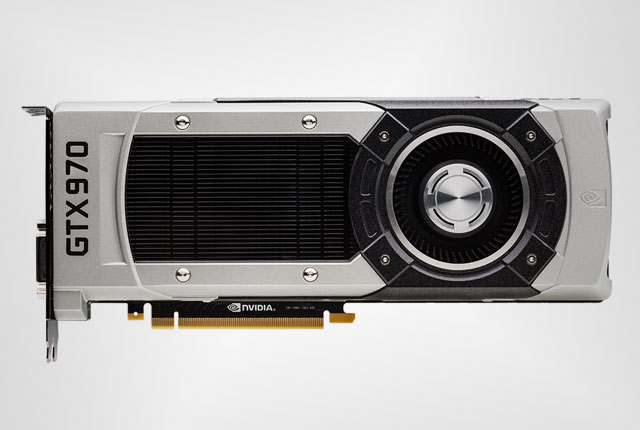
2014 – Nvidia GeForce GTX 970
Nvidia’s GeForce GTX 970 Maxwell-powered graphics card has proven immensely popular among gamers as a high-value 1080p GPU solution.
2016 – AMD Radeon RX 480
The Polaris-based Radeon RX 480 is built on a 14nm manufacturing process and is aimed at mid-range gamers seeking high-value performance.

2016 – Nvidia GeForce GTX 1080
Nvidia used a 16nm manufacturing process to build its Pascal architecture, which powers the GeForce GTX 10 Series.
The company’s flagship GeForce GTX 1080 delivers an impressive 8GB of GDDR5X VRAM and can compete against SLI or CrossFire systems as a standalone solution for 4K gaming.

Now read: Budget graphics cards under R5,000 – Pricing and performance


 Loading ...