
Invisibility cloak one step closer
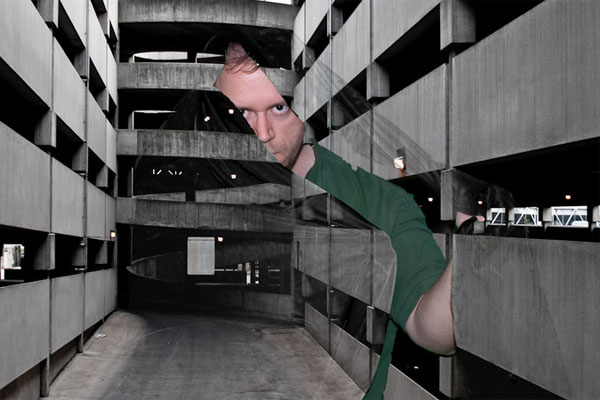
Researchers from QMUL’s School of Electronic Engineering and Computer Science have demonstrated a practical cloaking device that allows curved surfaces to appear flat to electromagnetic waves.
While the research might not lead to an invisibility cloak, it could result in a step-change in how antennas are tethered to their platform.
It could allow for antennas in different shapes and sizes to be attached in awkward places.
“The design is based upon transformation optics, a concept behind the idea of the invisibility cloak,” said Professor Yang Hao.
The researchers coated a curved surface, similar to the size of a tennis ball, with a nanocomposite medium. The effect is to cloak the object.
The design approach has much wider applications, ranging from microwave to optics for the control of any kind of electromagnetic surface waves.
The picture below shows the cloak not in use: the presence of the object along the path of the traveling wave drastically changes its electric field configuration.

The picture below shows where the cloak is in action and the graded-index nanocomposite has been applied. There is a noticeable improvement in the reconstruction of wave fronts.

More on science
5 human spaceflight missions coming soon
The best Nasa pictures this year







 Loading ...