The South African town where electricity supply is privatised

So burning wood is renewable?? Wow you really do want us to go back to the 1100s.

How convenient that you ignore the other renewables that make up the energy mix to pick the one thing that is problematic. OH NO WOOD IS NOT RENEWABLE SO LET'S IGNORE SOLAR AND WIND POWER.

Perhaps one day when you actually have a solar system for yourself you'll see. Great for a home, but unless you seriously overspec panels cloudy days don't help.

This is exactly why you overspec.

Oh another thing you need a battery without that you're either going to use Eskom or a generator for power.

This is exactly why you get lithium batteries.

Now on a country scale you cannot run heavy industry on unreliable power, also once again think about it logically.

****. You cannot run industry on renewables? Better tell Germany that their 256.2 TWh of power that it's going to try and go into a smelter or factory and get rejected because it's a renewable watt, not a fossil fuel watt.

Big oil and coal fund renewables, but not nuclear, why? Cause one still needs them, the other doesn't.

Sources.

In South Africa our electrical grid is already unstable, now you want to add more instability by throwing in the power of it gods?

How does adding renewable watts to the grid make it more unstable than it already is? Or let me put that another way: how will keeping renewable energy off the grid make it more stable than it is currently?

Perhaps one day when we have cheap, reliable and easily dispatchable storage renewables would work. But for now it's still not there yet.

Explain to me how our current coal plants are cheap, reliable and easily dispatchable? Even if we build new ones, they are likely to be as stuffed up as Kusile and Medupi. Nuclear is reliable, but it's not cheap and will take 10+ years to build (not factoring in corruption an incompetence in government). Gas is the only thing that could help create more stability, but we don't have enough gas supply infrastructure to support it locally en-mass (yet).

Here's what annoys me about every one of your arguments at the end of the day: for you, if you can't service big industry, renewables are not worth the time. But the way I see it, renewables CAN help fill a gap, even if it's just by reducing the amount of energy homes and certain businesses use, during the day, and at night if places have battery storage.

Renewables are not perfect, but we can get them up and running quickly, and in the long run they will be cheaper than any other solution we currently have as the tech driving renewable energy production and, more importantly, renewable energy storage is only getting cheaper and more efficient. This means that we can help alleviate the strain on the system with renewable energy that we can get up and running within the space of 24 month.

Or we can "not bother" with any kind of renewable energy and just let things get worse for the next 5-10+ years while we build more reliable baseload. That's what you seem to be advocating for.
 
What happens when a cloud passes over?
Build a fraction more to account for the like 20 days a year that that happens in any significant manner in Sunny South Africa. Or just move to stage X of loadshedding on those days where the solar doesn't output what you need... instead of... you know... loadshedding every day like we currently do.

These points being raised are non-points.

First it's not portable, then there's no space, then what about some clouds. Are those honestly the most compelling objections you guys can muster?

There is plenty of space, it's a cheap and rapid way to eliminate some of the most devastating parts of loadshedding, and, best of all, it can happen in small stages allowing for the project funds to be more tightly controlled.
 
Last edited:
Build a fraction more to account for that.

These points being raised are non-points.

First it's not portable, then there's no space, then what about some clouds. Are those honestly the most compelling objections you guys can muster?

There is plenty of space, it's a cheap and rapid way to eliminate some of the most devastating parts of loadshedding, and, best of all, it can happen in small stages allowing for the project funds to be more tightly controlled.
Do you know how grid frequency works?

I said, without battery to smooth it all out it’s useless. And right now, grid storage batteries are in their infancy.
 
Who controls that? Do you know how loadshedding works?

What are you trying to say? I do know how load shedding works. But load shedding isn't the same across the entire grid.
 
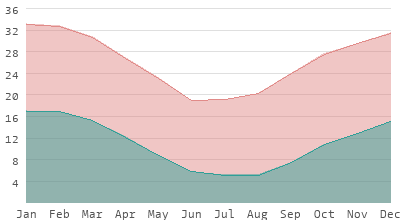
Also, here's why people keep on wanting to build solar in the Northern Cape. It's actually, kinda sunny over there.

There’s no point arguing with you, you’ve clearly made up your mind.
 
And right now, grid storage batteries are in their infancy.

So because a technology isn't perfect we should just ignore it? Better tell half the members of this forum to throw out their solar installations and lithium batteries because the technology is still "in its infancy".
 
They consume at most 6.5MW, the smallest turbines are 30MW. 6.5MW is tiny in the grand scheme of things. They are lucky the town doesn't have any big industries. Smelters are 400MW, a small industrial zone would chew that 4MW up in one gulp.
I mean the Randpark Ridge shopping centre has a solar plant on its roof of 1MW for its own consumption and that's a tiny shopping centre.
My Air compressor at work is 15MWh... and there are 2....
 
Do you know how grid frequency works?

I said, without battery to smooth it all out it’s useless. And right now, grid storage batteries are in their infancy.
Get enough storage to handle frequency issues. Again do it in a modular manner, 100MW at a time.

It remains a modular, affordable, quick way to mitigate daytime loadshedding.
 
Ok, so I was 500MW off. That’s really going to fix things.
700MW... These things matter. If you read what I said then you would have noted the 180MW Steenbras Pumped Hydro scheme lets CT City power mitigate an entire stage of Load Shedding most days.

That 180MW is useful. Major city scale useful. The difference between 700MW and 500MW is more than the Steenbras dam.

How about that 700MW difference? Looks like more than 3x as useful to me. The main point is that mitigating the power draw from 2.9GW of pumped hydro (currently supplied during off peak times leading to off peak load shedding) would be big. Big big. Your freezer potentially not melting a bit each night big. Happily running off base load during low demand times (AKA night). Instead of that power being used to raised pumped storage levels so the energy can be used during peak hours. And as also mentioned if the reservoirs can be filled in summer during the day, then the excess solar could be used to directly mitigate load shedding during the day as well. Eskom saving billions of Rands a year big, and maybe helping to pay off some of its debt big; Instead of the tax paying having to shoulder that debt as the ANC is planning.

There's nothing "only" about it. And there's the potential to more than double the pumped hydro generating capacity in SA. And before "SA doesn't have water"... This is "pumped hydro". They have a high reservoir and a low reservoir. It's for the most part the same water being used over and over, barring evaporation and elective use for other purposes downstream.
 
Last edited:
  • Like
Reactions: zll
700MW... These things matter. If you read what I said then you would have noted the 180MW Steenbras Pumped Hydro scheme lets CT City power mitigate an entire stage of Load Shedding most days.

That 180MW is useful. Major city scale useful. The difference between 700MW and 500MW is more than the Steenbras dam.

How about that 700MW difference? Looks like more than 3x as useful to me. The main point is that mitigating the power draw from 2.9GW of pumped hydro (currently supplied during off peak times leading to off peak load shedding) would be big. Big big. Your freezer potentially not melting a bit each night big. Happily running off base load during low demand times (AKA night). Instead of that power being used to raised pumped storage levels so the energy can be used during peak hours. And as also mentioned if the reservoirs can be filled in summer during the day, then the excess solar could be used to directly mitigate load shedding during the day as well.

There's nothing "only" about it. And there's the potential to more than double the pumped hydro generating capacity in SA. And before "SA doesn't have water"... This is "pumped hydro". They have a high reservoir and a low reservoir. It's for the most part the same water being used over and over, barring evaporation and elective use for other purposes downstream.
Right, so how is that pumped storage working out for us right now while we sit with stage 6?
 
Top
Sign up to the MyBroadband newsletter
X