Russo-Ukrainian War - 2022 Edition - Part 8

Status
Not open for further replies.
I'm not getting into a pissing contest with you.
Having often spoken to my brother in law, who is the project director for deep sea pipe installations in the Middle East, all I can tell you is that even an experienced amateur diver has absolutely no idea about what is involved (and possible) during deep sea diving, underwater habitats etc.

And not even people like him are aware of what's possible with military support.

Exactly. I concur completely. Yet here we have recreational divers trying to discuss military pipeline sabotage operations.
 
Last edited:
I would simply wave my magic wand and hope for the best.
If that fails, I would try the following..


There are hot water suits, saturation diving and bells where divers spend and work for DAYS at depth without having to surface and decompress. Not quite the same as your surface dip in the Baltic in a wetsuit trying to survive, I give you that.

Ah great, we've now moved from recreational wet suited divers to dry suited divers and now to hot water suited divers and diving bells. How much bigger is the floating surface diving support component you didn't want known getting?

We still need to get to saturation divers living on the bottom in undersea habitats before we get to the easy stuff like a submarine operated ROV or a pig in a pipeline.
 
Because they will increase your exposure time in very cold water.

So you don't need to see what you're doing using explosives? OK then.

In 4C? How long would you last?

How? Subseas currents can flow in one way at one depth and another way when deeper. How do you measure that from the surface?

Nope it's like being in a boat when a sudden mist comes up and you have no compass. Which direction is land?

How does that anchor you to the bottom in a current?

Because you're playing at 60 metres in 2 - 4C in bad vis with unknown currents, not at 15 metres viewing wrecks. What is a strong current to you, how many knots?

Love to see you do military operations with a PADI cert.

Because you're playing at 60 metres in 2 - 4C in bad vis with unknown currents, not at 70 metres viewing wrecks in nice conditions. The Baltic is different all over the place. Tell me what it's like off Bornholm? What is a strong current to you, how many knots?

Let me ask you why ROV's are used rather than divers to lay a pipeline? Maybe that will answer your question. It's not mission impossible but mission unlikely. There are easier ways without the risk your idea involves.

You're way out of your depth here, buddy. :sneaky:

Here are the wrecks that people dive every day, along with their depths. As you can see, more than 20 of them are well over 60 meters:
gHYydfz.png

Source


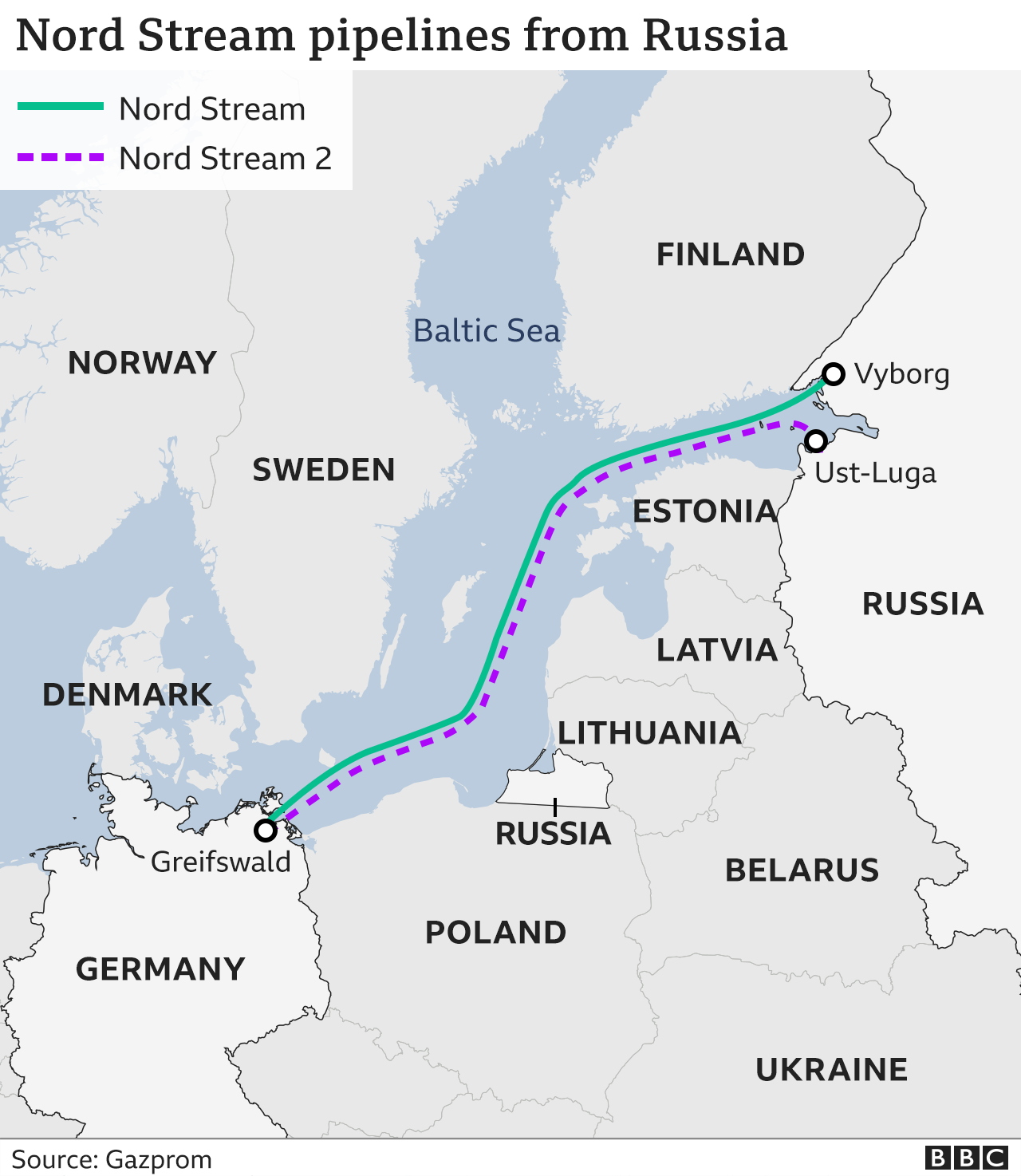
And here are the Nord Stream pipelines:
_123359820_nord_streams_pipelinev3_640-nc.png


Now tell me again how diving down 70 meters to a wreck in the Baltic Sea is a cakewalk compared to diving down 60 meters to a pipe. In the exact same place.
 
Last edited:
Exactly. I concur completely. Yet here we have recreational divers trying to discuss military pip[eline operations.
In all due respect, people try to show how it is possible. You stick by how it is NOT possible, now knowing what Is possible.

You might enjoy reading the following. Explains in very simple terms all about deep diving (gas, equipment, depths etc)

 
I know that. I'm stating I know how cold the Baltic is.

You haven't answered how you navigate down the water column in bad vis and unknown currents for 60 metres to land bang on target.


I'm living in a semi desert now and my last diving medical was aged 51, so I'm well out of date.

You hit the seabed upstream from the pipeline and then let the current take you to it.
 
How much bigger is the floating surface diving support component you didn't want known getting?

We still need to get to saturation divers living on the bottom in undersea habitats before we get to the easy stuff like a submarine operated ROV or a pig in a pipeline.
No, we still need to get to a simple atmospheric suit diving.

"An ADS can enable diving at depths of up to 700 metres (2,300 ft) for many hours by eliminating the majority of significant physiological dangers associated with deep diving. The occupant of an ADS does not need to decompress, and there is no need for special gas mixtures, so there is little danger of decompression sickness or nitrogen narcosis when the ADS is functioning properly"
 
You're way out of your depth here, buddy. :sneaky:

Here are the wrecks that people dive every day, along with their depths. As you can see, more than 20 of them are well over 60 meters:

Now tell me again how diving down 70 meters to a wreck in the Baltic Sea is a cakewalk compared to diving down 60 meters to a pipe. In the exact same place.

I can guarantee you it's only in summer. I know how cold that Baltic is in autumn, winter and spring. So not every day. And the vis conditions vary greatly so the dives will be on the good vis wrecks. I seriously doubt there will be any wreck dives on the Estonia either.

And the wreck dives will take place on surveyed wrecks with dive operators. And you with your recreational dive cert will not be going down to 70 metres breathing trimix or using a rebreather.
 
In all due respect, people try to show how it is possible. You stick by how it is NOT possible, now knowing what Is possible.

You might enjoy reading the following. Explains in very simple terms all about deep diving (gas, equipment, depths etc)


Are you a diver?
 
You hit the seabed upstream from the pipeline and then let the current take you to it.

First, how do you know the direction of the current on the bottom?

How do you know you didn't land downstream? And how many minutes of your 6 minute time do you use drifting to find the pipeline? What if the current on the bottom is in the same direction as the pipeline and you drift parallel to it?
 
No, we still need to get to a simple atmospheric suit diving.

"An ADS can enable diving at depths of up to 700 metres (2,300 ft) for many hours by eliminating the majority of significant physiological dangers associated with deep diving. The occupant of an ADS does not need to decompress, and there is no need for special gas mixtures, so there is little danger of decompression sickness or nitrogen narcosis when the ADS is functioning properly"

Right, so even more diving support on the surface with the vessel flying flag Alpha to indicate divers down so that other vessels stay away.
 
And the wreck dives will take place on surveyed wrecks with dive operators. And you with your recreational dive cert will not be going down to 70 metres breathing trimix or using a rebreather.
Yes, you need to be Tec certified for that depth. There are an estimated 160,000 Tec divers globally, so the suspect list is quite long...

I can guarantee you it's only in summer. I know how cold that Baltic is in autumn, winter and spring. So not every day. And the vis conditions vary greatly so the dives will be on the good vis wrecks. I seriously doubt there will be any wreck dives on the Estonia either.
First, how do you know the direction of the current on the bottom?

How do you know you didn't land downstream? And how many minutes of your 6 minute time do you use drifting to find the pipeline? What if the current on the bottom is in the same direction as the pipeline and you drift parallel to it?

It's 20 minutes, not 6 minutes. There's no need to cut the dive short for any of the reasons you mentioned. A dry suit is perfectly suitable for 4-5 degree water (which is what the water temperature at 50-60 meters depth is year-round in the Baltic Sea). It's designed for that very purpose.


This is Graf Zeppelin, a wreck which is 60 meters deep at the top and 87 meters deep at the bottom and is close to the Nord Stream pipeline.


Wonder how they navigated the "unknown currents"!

Wonder how they can see with such terrible visibility!

Wonder how they are managing to survive in such freezing temperatures!

Wonder how the guy can move his fingers individually with such great dexterity!

Must be a miracle, hey?
 
Last edited:
Time needed to find the pipe and plant the explosives at an accessible place in the hypothermic temperatures, bad visibility and swift currents of the Baltic within the 5 -6 minutes bottom time?
I get the feeling that none of these russian lover scum have ever done any recreational diving with most dives @ 18m and speciality diving on air down to 35m to 40m.
Deep diving is not for the faint of heart and carries its own risks and even at 40m you have very restricted bottom time. Air and effects are greatly magnified as you go deeper and it is not a linear graph.

These leaks were at 57m ( at the top of the pipe ) . Getting there would require technical diving infrastructure and that needs a lot more planning. It isnt just hop in the water and go down
 
You're way out of your depth here, buddy. :sneaky:

Here are the wrecks that people dive every day, along with their depths. As you can see, more than 20 of them are well over 60 meters:
gHYydfz.png

Source


And here are the Nord Stream pipelines:
_123359820_nord_streams_pipelinev3_640-nc.png


Now tell me again how diving down 70 meters to a wreck in the Baltic Sea is a cakewalk compared to diving down 60 meters to a pipe. In the exact same place.
Hmmm sorry .
70m is way past recreational diving and is in the realm of technical diving.
It is not an "everyday" dive and will require a gas change.
 
Right, so even more diving support on the surface with the vessel flying flag Alpha to indicate divers down so that other vessels stay away.
Right. Wetsuit, oxygen, Alpha flag, not able to study currents, not able to anchor, unable to dive in 4-5C water for longer than 6 min bottom time.

Seems like you've just described an amateur dive.
 
I get the feeling that none of these russian lover scum have ever done any recreational diving with most dives @ 18m and speciality diving on air down to 35m to 40m.
Deep diving is not for the faint of heart and carries its own risks and even at 40m you have very restricted bottom time. Air and effects are greatly magnified as you go deeper and it is not a linear graph.

These leaks were at 57m ( at the top of the pipe ) . Getting there would require technical diving infrastructure and that needs a lot more planning. It isnt just hop in the water and go down
@Cosmik Debris meet @Major Boredom
 
I get the feeling that none of these russian lover scum have ever done any recreational diving with most dives @ 18m and speciality diving on air down to 35m to 40m.
Deep diving is not for the faint of heart and carries its own risks and even at 40m you have very restricted bottom time. Air and effects are greatly magnified as you go deeper and it is not a linear graph.

These leaks were at 57m ( at the top of the pipe ) . Getting there would require technical diving infrastructure and that needs a lot more planning. It isnt just hop in the water and go down
This, the dangers of getting narced on air at that depth are hectic. An advanced recreational diving certification will get you to a max depth of 40m Going deeper not only increases the risk of nitrogen narcosis but your air supply gets used all that much faster.

It's one of the reasons why the blue hole in Dahab has claimed so many lives, the archway out to the open ocean has a ceiling of 55m, it lures recreational divers in, but they get into trouble with gas running out/narced and they drown.
 
Status
Not open for further replies.
Top
Sign up to the MyBroadband newsletter
X