


-
- News
-
Categories
- 5G
- ADSL
- AI
- Banking
- Black Friday
- Broadband
- Broadcasting
- Business
- Business Telecoms
- Cellular
- Cloud and Hosting
- Columns
- Cryptocurrency
- Energy
- Enterprise
- Fibre
- Gadgets
- Gaming
- Government
- Hardware
- Industry News
- Internet
- Internet of Things
- Investing
- IT Services
- Motoring
- Reviews
- Science
- Security
- Smartphones
- Software
- Technology
- Telecoms
- Trending
- Wireless
- Press Office
- Forum
- Industry News
- Features
- Company hub
- Speed Test
- About us
- Advertise with us
- Contact
- Careers
-
Join the MyBroadband community
South Africa’s biggest forum. Discuss, discover, and connect with thousands of members.
-
Question of the Day: If you were buying a TV today, which brand would you choose?
You are using an out of date browser. It may not display this or other websites correctly.
You should upgrade or use an alternative browser.
You should upgrade or use an alternative browser.
Silicon Valley Bank is largest failure since 2008 crisis, billions stranded
- Thread starter Polymathic
- Start date

konfab
Honorary Master
Was waiting for this.
What f__king diversity hire CFO would think that leaving half a billion dollars cash in a non-interest baring bank account that is only insured for $250k is a good idea?
You lot want to talk about whether bank accounts are investments or not. Fine. Then if the point of a bank account is that your money is meant to be safe, then they do you use a product where a tiny proportion is actually protected?
They deserve to lose every cent of it.
quovadis
Honorary Master
What's the alternative then?What f__king diversity hire CFO would think that leaving half a billion dollars cash in a non-interest baring bank account that is only insured for $250k is a good idea?

Vox Populi Vox Dei
High Tory
The Silicon Valley Bank Bailout
But there is a political risk from a bailout too. If the Administration acts to guarantee deposits without Congressional approval, it will face legitimate legal questions. The White House may choose to jam House Speaker
Kevin McCarthy if markets aren’t mollified. But Mr. McCarthy has a restive GOP caucus as it is, and a bailout for rich depositors will feed populist anger against Washington.
The critics have a point. For the second time in 15 years (excluding the brief Covid-caused panic), regulators will have encouraged a credit mania, and then failed to foresee the financial panic when the easy money stopped. Democrats and the press corps may try to pin the problem on bankers or the Trump Administration, but these are political diversions.
You can’t run the most reckless monetary and fiscal experiment in history without the bill eventually coming due. The first invoice arrived as inflation. The second has come as a financial panic, with economic damage that may not end with Silicon Valley Bank.
Vox Populi Vox Dei
High Tory
Another translation: "My electoral chances collapse if a financial collapse happens."Biden says Americans can have confidence that banking system is safe… Translation; “the banking system along with the entire financial system itself is coming apart.”

rvZA
Honorary Master
- Joined
- Jan 3, 2021
- Messages
- 25,277
- Reaction score
- 25,153
SVB collapse only 'the tip of the iceberg' under Biden spending policies, economist warns
Former Trump White House adviser and chief economist at FreedomWorks Steve Moore said Silicon Valley Bank's collapse might be the "tip of the iceberg" for the financial system. Moore told Harris Faulkner on Monday that the Biden administration's spending caused the Federal Reserve to raise interest rates, leading to financial problems for many major banks.
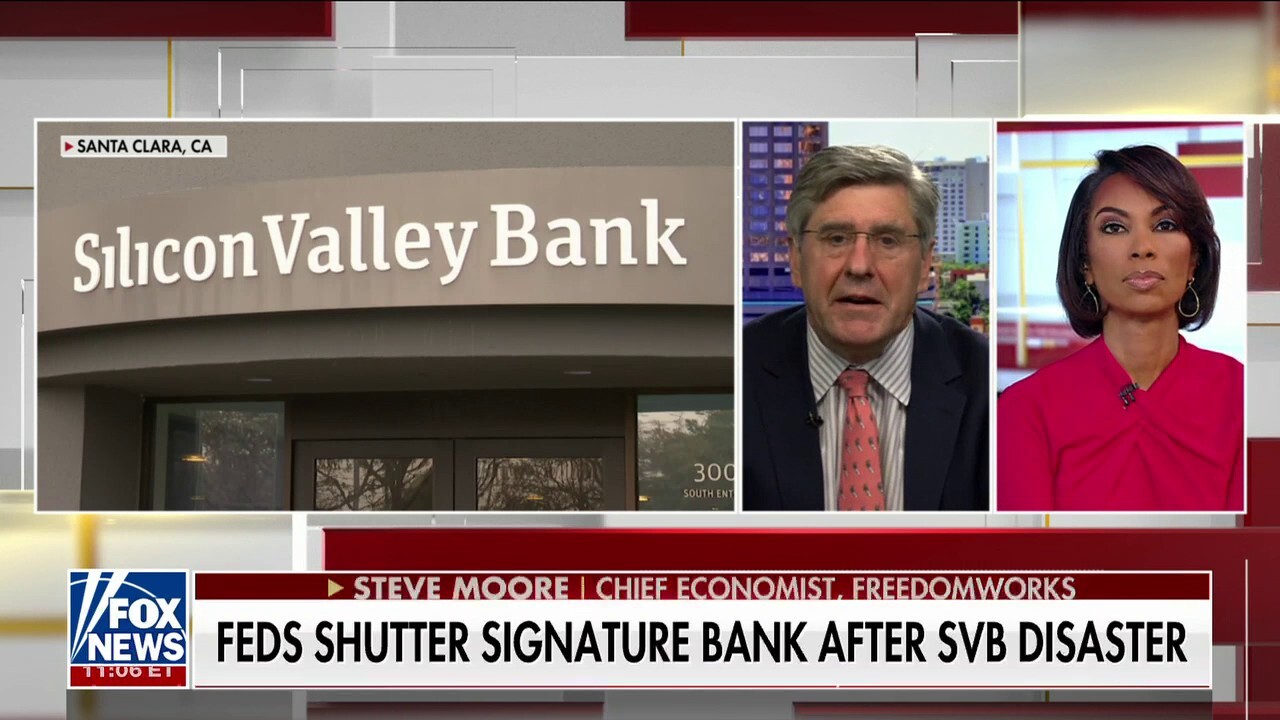
SVB collapse only 'the tip of the iceberg' under Biden spending policies, economist warns
FreedomWorks chief economist Steve Moore said high inflation and interest rates caused financial problems for banks like SVB.
 www.foxnews.com
There is no better time to pull all investments and money from the US as now. Biden collapsing the US economy the same way the ANC did SA.

When the equity markets crash, it will be the perfect time to buy quality shares. As an example, I bought Sasol when the price was in the 30’s. Grim to think like this, but if the markets were to crash, it is a short term phenomenon that opens opportunities.

Monkeyz
Expert Member
Some of the bank shares listed above had trading halted several times.
- Western Alliance Bancorporation Common Stock
- PacWest Bancorp
- First Republic Bank Common Stock
- Zions Bancorporation N.A.
- OceanFirst Fnl Dp Sh Pfd A
- Customers Bancorp, Inc - Common Stock
- East West Bancorp, Inc.
- Metropolitan Bank Holding Corp. Common Stock
- First Horizon Corporation Common Stock
- Regions Financial Corporation Common Stock
- Comerica Incorporated Common Stock
- Bank of Hawaii Corporation Common Stock
- KeyCorp Common Stock
- Customers Bancorp, Inc 5.375% Subordinated Notes Due 2034
- Macatawa Bank Corporation
- Texas Capital Bnc Dpsh 5.75 Ps
- United Community Bk Dep
- The Charles Schwab Corporation - Common Stock
- Coastal Financial Corp Cm St
- Huntington Banc Dep Shs J
- Magyar Bancorp Inc
- Macatawa Bank Corporation
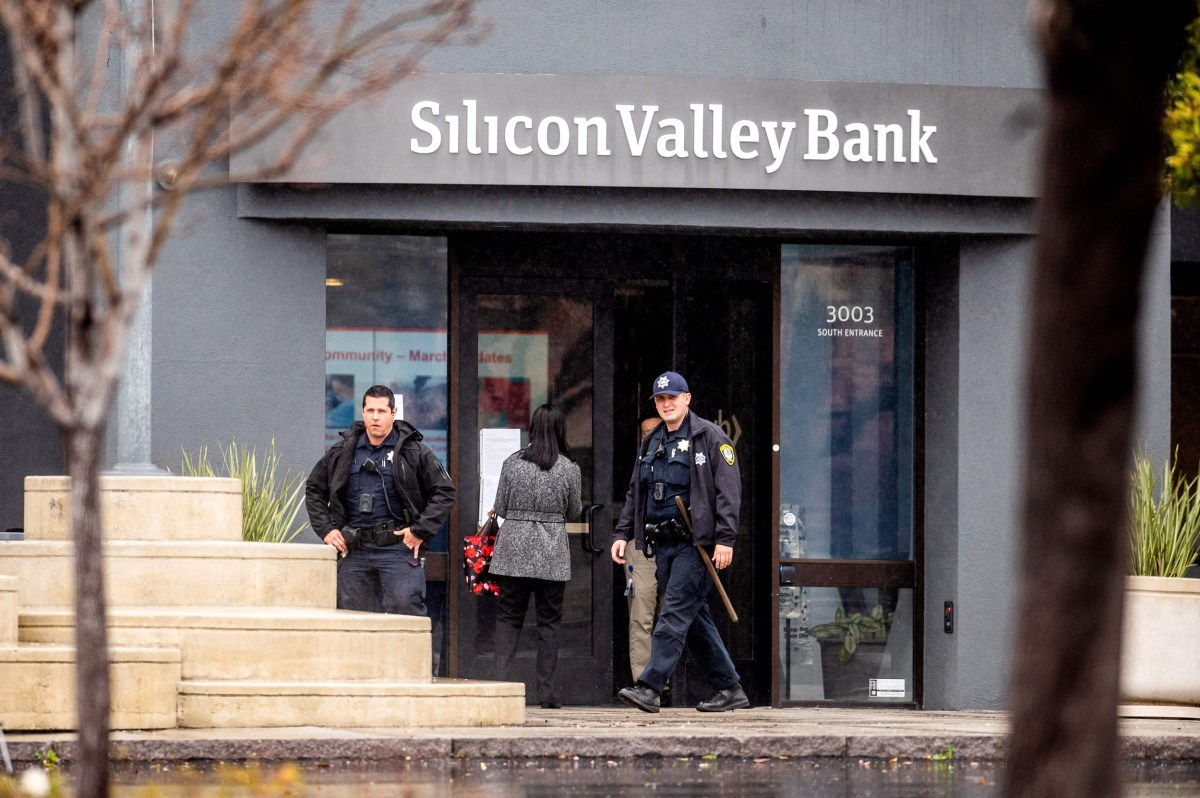
Full list of bank shares that halted trading as panic spreads
"Silicon Valley Bank, Santa Clara, California, was closed today by the California Department of Financial Protection and Innovation, which appointed the Federal Deposit Insurance Corporation (FDIC) as receiver," the FDIC said last week.
 www.newsweek.com

Very interesting conversation going on in Twitter Spaces about this.
konfab
Honorary Master
Well for a start, have more than one bank accountWhat's the alternative then?

funny how at the first sign of risk in capitalism everyone runs off to jump ship into the socialist ocean . This happens, it’s part of the system. It sucks. It doesn’t mean everyone must run. Capitalism works, but it is not without it risks. Nothing is.

rietrot
Honorary Master
- Joined
- Aug 26, 2016
- Messages
- 44,127
- Reaction score
- 22,303
Dan on the Lotuseaters make a good argument for the "bailout", basically people are sheep and all these regional banks will collapse if just nothing is done. Which is bad if you like more freedom and options, not just a monopoly of four big banks.funny how at the first sign of risk in capitalism everyone runs off to jump ship into the socialist ocean . This happens, it’s part of the system. It sucks. It doesn’t mean everyone must run. Capitalism works, but it is not without it risks. Nothing is.
The entire problem is also caused by the government, so the socialism at this point is, to use a covid example: Can the government just close your business without compensating you for the lost revenue. Government already created the mess, now it is difficult to say just let all the banks fail, when they were just following the government regulation.
Ideally government should have nothing to do with banking(or any business), but that is just not the case.

Paulsie
Executive Member
- Joined
- Apr 6, 2020
- Messages
- 6,426
- Reaction score
- 5,099
The only option is to go back to Glass-Steagall act which separated commercial banking from investment banking. Customers could chose and if within investment banking, would have to bear the consequences.Dan on the Lotuseaters make a good argument for the "bailout", basically people are sheep and all these regional banks will collapse if just nothing is done. Which is bad if you like more freedom and options, not just a monopoly of four big banks.
The entire problem is also caused by the government, so the socialism at this point is, to use a covid example: Can the government just close your business without compensating you for the lost revenue. Government already created the mess, now it is difficult to say just let all the banks fail, when they were just following the government regulation.
Ideally government should have nothing to do with banking(or any business), but that is just not the case.

Progenix Oj101
Dealer
16th largest in the USA. I knew that had a lot of banks, but more than 2,000?Secondly, this was one of the bigger banks in the US

quovadis
Honorary Master
So 2,000 bank accounts should do it.Well for a start, have more than one bank account


- Joined
- Nov 20, 2015
- Messages
- 41,546
- Reaction score
- 21,127
A historical timeline of things (found on another forum) :
The tally: SVB becomes the second-largest bank in the U.S. to collapse, only behind Washington Mutual in 2008 with their $307B in assets at the time. Signature Bank is third. Silvergate’s place on the list hasn’t been determined yet.
- July 21, 2010: The Dodd–Frank Wall Street Reform and Consumer Protection Act is passed in response to the Great Recession that started in 2007. It sets up conditions to make banks more robust and stable. One of these is to make sure banks have funds on hand to cover deposits
- May 24, 2018: President Trump rolls back a lot of these rules via the Economic Growth, Regulatory Relief and Consumer Protection Act, removing a lot of regulation from banks and reducing how often they have to perform stress testing to survive financial issues.
- During the COVID-19 pandemic, tech companies do really well because of everyone shifting to teleworking whenever possible.
- Silicon Valley Bank, which had a pretty big presence servicing the tech sector, starts getting a lot more deposits. At the end of 2022, they had $209B in total assets, with $175.5B in deposits. Most of the deposits (86.4%) were uninsured.
- Since interest rates were kept low (almost zero in many cases) during the time of the pandemic, SVB looks for a way to be able to offer customers a better rate. SBV uses most of the money being deposited to buy long-term Treasury bonds and reduces how much they have on hand to cover deposits.
- 2022: The interest rates on long-term Treasury bonds and other interest rates slowly start climbing.
- The startup companies banking with SVB begin making withdrawals to cover business expenses.
- Silvergate Bank in California, which had some dealings involving cryptocurrency, is hit when several of them start dropping in price and FTX goes bankrupt. Three U.S. Senators (Elizabeth Warren, Roger Marshal, John Kennedy) want Silvergate to explain its relationship to FTX in December 2022.
- Likewise, Signature Bank in New York, which had 30% of its deposits in the form of cryptocurrency, is also hit with losses due to cryptocurrency decreasing.
- At the end of 2022, the “unrealized losses” of the Treasury bonds held by SVB exceeds $15B. An unrealized loss is what you’ll lose when you sell them at the current value.
- Early in March 2023, SVB is informed by Moody’s Investors Service that they were looking at downgrading SVB’s credit rating due to the unrealized losses.
- March 8, 2023: SVB announced they sold $21B worth of investments, borrowed $15B and would hold an emergency stock sale to raise $2.25B. They lose almost $2B by selling those items.
- March 8: Moody’s downgrades SVB’s credit rating, despite SVB’s steps to boost their finances.
- March 8: Silvergate announces they’ll wind down operations and liquidate.
- March 8: Venture capital firms urges their portfolio companies to withdraw their deposits from SVB because they’re concerned about a bank run happening.
- March 9: The bank run happens due to the VC firms creating a self-fulfilling prophecy by saying “Get out before it does”. SVB customers withdraw $42B by the end of the day, leaving it in the red by $958 million.
- March 9: SVB’s stock plummets. Trading is halted the following morning.
- March 10: Examiners from the Federal Reserve and the Federal Deposit Insurance Corporation show up to see what’s going on. Hours later, the California Department of Financial Protection and Innovation took possession of SVB and appointed the FDIC as the receiver. FDIC creates a new bank in order to re-open SVB’s branches on Monday the 13th and opens an auction to get a buyer for SVB.
- Over the weekend, no buyer is found. SVB employees are notified they will be let go in 45 days. Salaried employees will get a 50% raise and hourly employees get double pay for any overtime.
- March 12: The Treasury, Federal Reserve and FDIC announce all depositors would be “made whole” (get their deposits back).
- March 12: The New York State Department of Financial Services closes Signature Bank, citing “systemic risk”.