Professor at centre of plagiarism row resigns from University of Cambridge

What Cambridge should have learned from the Milli Vanilli fiasco - The Spectator​

1787388724347.png

With hindsight, Milli Vanilli’s 1989 worldwide smash hit ‘Girl You Know It’s True’ should have been called ‘Actually, It Isn’t True at All’, for reasons some Spectator readers of a certain vintage may well remember.

Before I explain why, it’s important to say that it wasn’t just any old hit.

The catchy electro-pop ditty went platinum six times over in America and led to the telegenic singing duo Rob Pilatus and Fabrice Morvan – black, pretty, dreadlocked, androgynous and with great clothes and moves – winning a Grammy in 1990 for best new artist. By that time, they had sold 30 million records.

Eleven months later however, in an unprecedented act, the Recording Academy of America revoked the Grammy when it became clear that Rob and Fab, as they were known, hadn’t sung a single word of ‘Girl You Know It’s True’ or indeed their other two US number ones, ‘Blame It on the Rain’ and ‘Girl I’m Gonna Miss You’.

What was true, it turned out, was that legendary German pop producer Frank Farian had session singers do all the music and vocals. Fab and Rob had been hired purely for dance and lip-syncing duties.

This was nothing new: Farian had done something similar with Boney M a few years earlier. Pop’s naughty secret might have remained just that, however, had it not been for an MTV promotional event which featured the pair.

It all went swimmingly. At first. The boys were doing their thing to ‘Girl You Know It’s True’ – dinky dances, quality miming – when, unfortunately, the backing track malfunctioned. It got stuck on ‘Girl you know’ and repeated those three words endlessly.

Poor old Rob and Fab, meanwhile, couldn’t hear what was happening so ploughed on regardless. But once they twigged, they ran off stage, mid song.

A few months after this, Farian held a press conference, confessing everything. At the time it looked like he’d thrown the pair under the bus. Only later did it emerge that Rob and Fab were about to expose themselves in an effort to control the narrative.

But Farian beat them to the punch.

Even in those pre-social media days the scandal was catnip to journalists.

As Rob and Fab discovered, everyone loves you when you are, to quote Nina Simone, ‘young, gifted and black’. But when you’re young, grifting and black, it’s a different story. The retribution was horrendous.

The two boys – Fab was 23, Rob 25 – became pop culture pariahs. Their record label dropped them, deleted the album from their catalogue, and cancelled their tour.

Some years later, Fab described the experience as ‘awful’ and like ‘a media lynch mob.’ He had a point. At a press conference designed to lance the boil a crowd of mostly white journalists bellowed questions and accusations at the pair.

That, not surprisingly, was that for Milli Vanilli. Seven years later, humiliated and broken, Rob was found dead in a hotel room near Frankfurt after an accidental overdose.

The parallels with the Arday scandal are striking. Both featured young, black, charismatic media stars who went from hero to zero virtually overnight.

In both cases the victims clearly wanted and relished fame and recognition but didn’t know what to do with it once it exploded.

And both tales had a racial element: in the musical version, a powerful white man exploited and misled two impressionable young black boys. They signed with Farian expecting to record their own songs but he had already recorded the tracks that would later become the Milli Vanilli hits.

At no stage did Farian – who died in 2024 – tell his young charges what they might be letting themselves in for or help them prepare for it.

The academic version saw something similar: a powerful, predominantly white institution exploited a naïve, patently under-qualified, (relatively) young black man for its own ends.

Cambridge University couldn’t wait to trumpet its DEI credentials but, it would seem, gave no thought whatsoever to any possible consequences. In both cases it was the system that was to blame, not the venality of the victims.

And in both cases the psychology is eerily similar.

As experts have noted in the Arday case, if you construct a glamorous but fundamentally false public image and invest in it 100 per cent, you will be much less likely to cope when the construct disintegrates.

There’s even a name for it: self-presentation theory. If you’re an Emperor who defines yourself by your clothes but are then very publicly rendered naked, there’s a chance you won’t be able to survive.

Given the grim nature of both stories the last thing you’ll be expecting is a happy ending. But there is one. Because Fabrice Morvan not only survived, but thrived.

In the years that followed he managed to come to terms with what happened, understood it, and turned it to his advantage. He gave interviews in which he showed no rancour whatsoever and appeared in a 2023 documentary about the scandal.

This year, in a YouTube discussion, he talked cheerfully and winningly about the music business. ‘Ooh, you know… it’s up and it’s down. That’s just how it is.’

And in 2025 he received – irony of ironies – a Grammy nomination for best audio book in the narration and story telling category for his memoir 'You Know It’s True: The Real Story of Milli Vanilli'.

Fabrice, bless him, was able to survive his calamity and, eventually, own it. It is a tragedy that Rob – and of course Professor Arday – were not able do the same.

https://spectator.com/article/what-cambridge-should-have-learned-from-the-milli-vanilli-fiasco/
 
DEI and similar programmes are not based on some kind of belief in racial or gender based superiority.

I don't believe that academic institutions, or any other organisation for that matter should favour black applicants over any other. Opposing that doesn't appear to be his crusade though - if you look at the papers he's published, his mission is to prove that the best person for the top job is always a white male. Except, perhaps in entertainment or sport.

He's basically Andrew Tate in an academic gown. OK, without the sex trafficking, but you know what I mean.
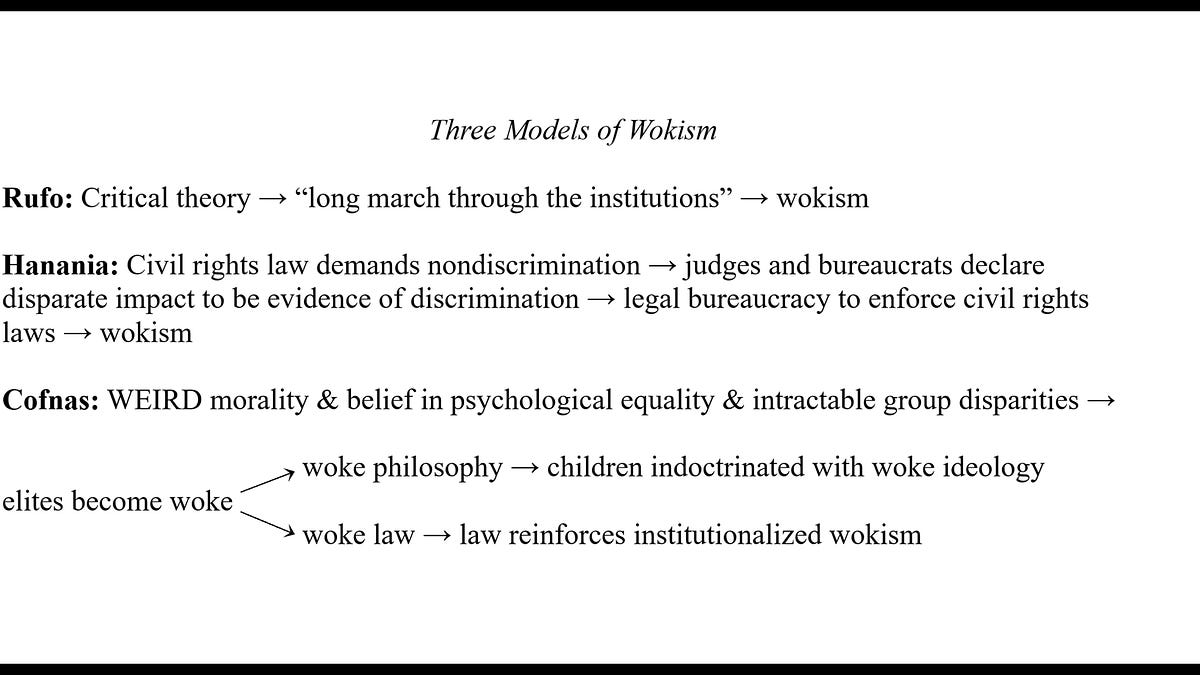
You have a fundamental misunderstanding of Cofnas' academic position, driven by what's been written about him in the defense of Arday and Cambridge. He's been quoted out of context, and even so the quote is 100% accurate and a mere reflection of a study that only came out in discovery as part of a lawsuit. I think it has already been referred to

There is no point in pointing you to the relevant literature, as it is doubtful that you will read it. Though Cofnas sees himself as to the right, he has great difficulty hiding the fact that he leans toward the need for affirmative action in order to address disparities in society. I laughed when I saw someone call him a racist eugenicist, as he is actually in favour of social engineering with an outcome to advance blacks in Britain and the USA. He states this quite clearly. His problem is with the dishonesty in the system, and he lays this bare. The left does not like the embarrassment this causes as the benefits of DEI are often enjoyed by the institution, more than the demographic it is aimed at, hence the hit pieces that inform your views.

Though fairly conservative in many instances, my views on education lean centre left in terms of equality of opportunity, and centre right in terms of meritocracy. Cofnas' views are well to the left of mine.

Blank slatism is as ridiculous a concept as flat earth or the denial of evolution, but for some reason it's hauled back out the moment anyone mentions hereditarian reality.
 
You have a fundamental misunderstanding of Cofnas' academic position, driven by what's been written about him in the defense of Arday and Cambridge. He's been quoted out of context, and even so the quote is 100% accurate and a mere reflection of a study that only came out in discovery as part of a lawsuit. I think it has already been referred to

There is no point in pointing you to the relevant literature, as it is doubtful that you will read it. Though Cofnas sees himself as to the right, he has great difficulty hiding the fact that he leans toward the need for affirmative action in order to address disparities in society. I laughed when I saw someone call him a racist eugenicist, as he is actually in favour of social engineering with an outcome to advance blacks in Britain and the USA. He states this quite clearly. His problem is with the dishonesty in the system, and he lays this bare. The left does not like the embarrassment this causes as the benefits of DEI are often enjoyed by the institution, more than the demographic it is aimed at, hence the hit pieces that inform your views.

Though fairly conservative in many instances, my views on education lean centre left in terms of equality of opportunity, and centre right in terms of meritocracy. Cofnas' views are well to the left of mine.

Blank slatism is as ridiculous a concept as flat earth or the denial of evolution, but for some reason it's hauled back out the moment anyone mentions hereditarian reality.

Fair enough. Feel free to post a link to the relevant literature - I'm happy to have a read of it and gain my own opinion as to whether the lad is misunderstood or not.
 
Fair enough. Feel free to post a link to the relevant literature - I'm happy to have a read of it and gain my own opinion as to whether the lad is misunderstood or not.
Doing a search is a bit fruitless, as no one really wants you to read any of his stuff as it exposes the fact that he is not "Andrew Tate", as you put it. I'd go to his substack, go to posts, and select what you want to read.

I'd have a look at:

It's interesting to note that until he exposed Arday, a lot of his criticism came from the right.

The piece that has had him branded.


If you don't want to get into his substack, this is a pretty good summary of the last 4 years. 40 mins at double speed.

I have yet to receive a quote of a racist statement the guy's made, and I've asked.
 
Doing a search is a bit fruitless, as no one really wants you to read any of his stuff as it exposes the fact that he is not "Andrew Tate", as you put it. I'd go to his substack, go to posts, and select what you want to read.

I'd have a look at:

It's interesting to note that until he exposed Arday, a lot of his criticism came from the right.

The piece that has had him branded.


If you don't want to get into his substack, this is a pretty good summary of the last 4 years. 40 mins at double speed.

I have yet to receive a quote of a racist statement the guy's made, and I've asked.

Thanks, I'll have a wade through that.
 

Inside America's Psychosis: Jason Arday, James Fishback, and Flock Cameras | Ep 76 - Rufo & Lomez​

Jason Arday's fraud, James Fishback's chaos campaign, and America's rollout of facial-recognition drones don't look related until you see them as three symptoms of the same collapse in institutional trust.

 
When things go wrong in the black community, blacks get treated like a child would get treated.

Imagine this was a white guy, the media wouldn't care and he would be treated like an adult who made his own life CHOICES that saw him fail.
 
Arday came, wrote, published, challenged and disrupted. His work enters that space where ideas acquire a life beyond their authors. His books will be read. His arguments will be debated. His scholarship will be taught. His ideas will be prescribed to generations of students who may never have had the privilege of meeting him

Poor Edith went off the deep end without using her floaters again
 
Top
Sign up to the MyBroadband newsletter
X