


netstrider
Executive Member
- Joined
- Nov 1, 2006
- Messages
- 5,791
- Reaction score
- 4,850
Eish...
Experts everywhere.
Experts everywhere.
South Africa’s biggest forum. Discuss, discover, and connect with thousands of members.

Did someone remove your balls? Are you okay ?I do. It doesn't
50 million can die tomorrow and guess what. It doesn't end then either
Now stop living like Chicken Little, go find a chick, and make some babies

No one knows. Not even you.

Eish...
Expits everywhere.
Did someone remove your balls? Are you okay ?
I am. Why are you running and screaming around ? Are you in pain ? Give it time to heal.Asks the dude running around screaming the sky is falling

Better than expats everywhere.Eish...
Experts everywhere.

Why?
The ground proximity warning system's, job is to make the pilot aware they might fly into a mountain.
In this circumstance they were completely aware of the danger and didn't need an annoying alarm to remind them constantly about what they are attempting to do.
It also switches off during landing and takeoff.
2015 Hageland Aviation Services Cessna 208B accident. The NTSB found that the aircraft's TAWS alerts were likely inhibited for most or all of the flight. The operator had a practice of routinely inhibiting the alerts because of nuisance warnings at the low altitudes at which its aircraft operated. The aircraft subsequently entered deteriorating visibility and struck terrain. The NTSB specifically identified the routine use of the terrain-inhibit switch as a contributing factor.
Tara Air Flight 197 - Nepalese airline that operates in mountainous terrain. It became common practice for pilots to inhibit TAWS because crews familiar with mountainous routes were used to the constant ''nuisance'' warnings. The investigation determined that there would have been at least 3 clear warnings that may have averted the crash.
- Work with Title 14 Code of Federal Regulations Part 135 certificate holders that operate under visual flight rules in mountainous terrain at altitudes below the required terrain clearance of the aircraft’s required terrain awareness and warning system (TAWS) class to (1) ensure that management and pilots are aware of the risks associated with distraction (from continuous nuisance alerts) and complacency (brought about by routine use of the terrain inhibit feature); (2) develop plans for mitigating those risks and minimizing nuisance alerts; and (3) develop procedures that specifically address when pilots should test, inhibit, and uninhibit the TAWS alerts, considering the operator’s typical operations and the TAWS manufacturer’s guidance. (A-18-14)
- Modify the terrain awareness and warning system requirements in Technical Standard Order C151 such that, once the alerts are manually inhibited, they do not remain inhibited indefinitely if the pilot does not uninhibit them. (A-18-15)
 www.ntsb.gov

I'll wait for Petter's view of this incident before I admit that I might be wrong.
Yes this is completely relevant.People have short memories.
This is dangerously low..
Also, how do you explain this to your insurance. Assuming you survive.People have short memories.
This is dangerously low..

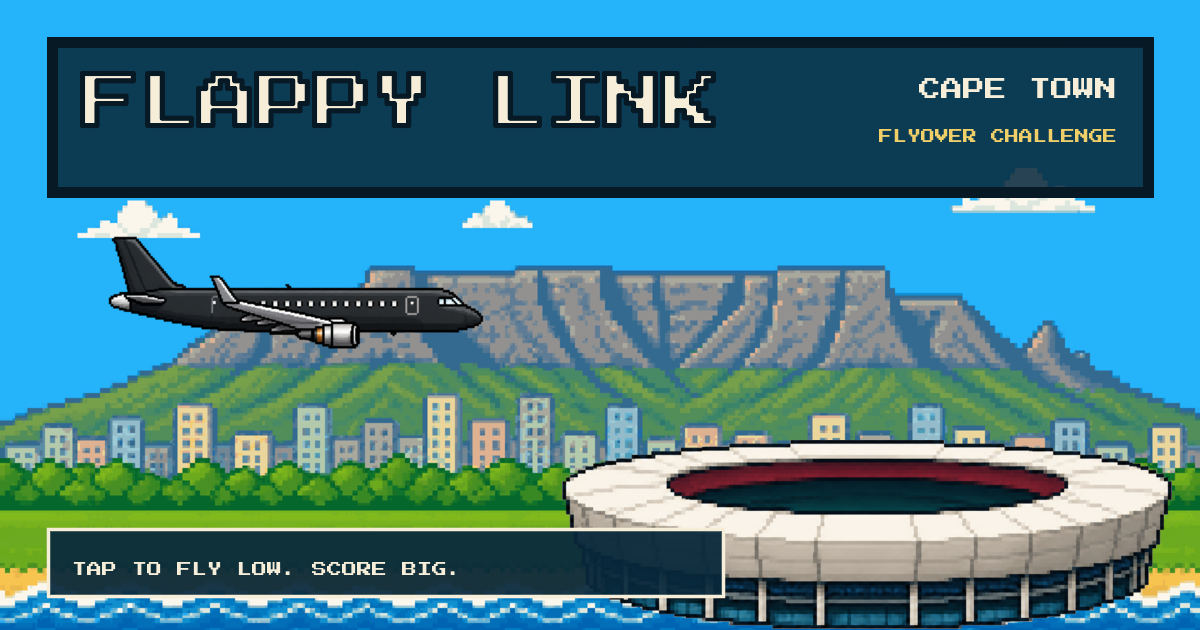
 www.flappylink.com

I somehow don't think he'll have a glowing review of this stunt.

Flappy Link — Cape Town Flyover Challenge
Tap to stay airborne, skim Cape Town's stadium roofs, and climb the Flappy Link leaderboard. How low can you go?

Hmm. Was an impressive maneuver but you can't deny if anything went wrong that low there would be very little time for recovery. The whole scenario with the "miracle on the Hudson" shows very well what happens when things go bad at low altitudes. At that height bird strike could be more likely and one stutter of those engines and a plane could have hit the stadium and the packed crowd. Guess what I am saying is I liked the stunt, but I also can't deny the risk involved.
Another example that is somewhat similar to this was the costa concordia. Regular dangerous maneuver on an experienced but very distracted captain (women on board the deck he was showing off to) and people died and big disaster unfolded all in the name of spectacle. Bad idea and safety standards were ignored.
Safety standards exist for reasons regardless of how experienced you are. The safety experts should decide the standard and the pilots stick to it. End of story for me.

Fly under the arch? Send flysafair.
