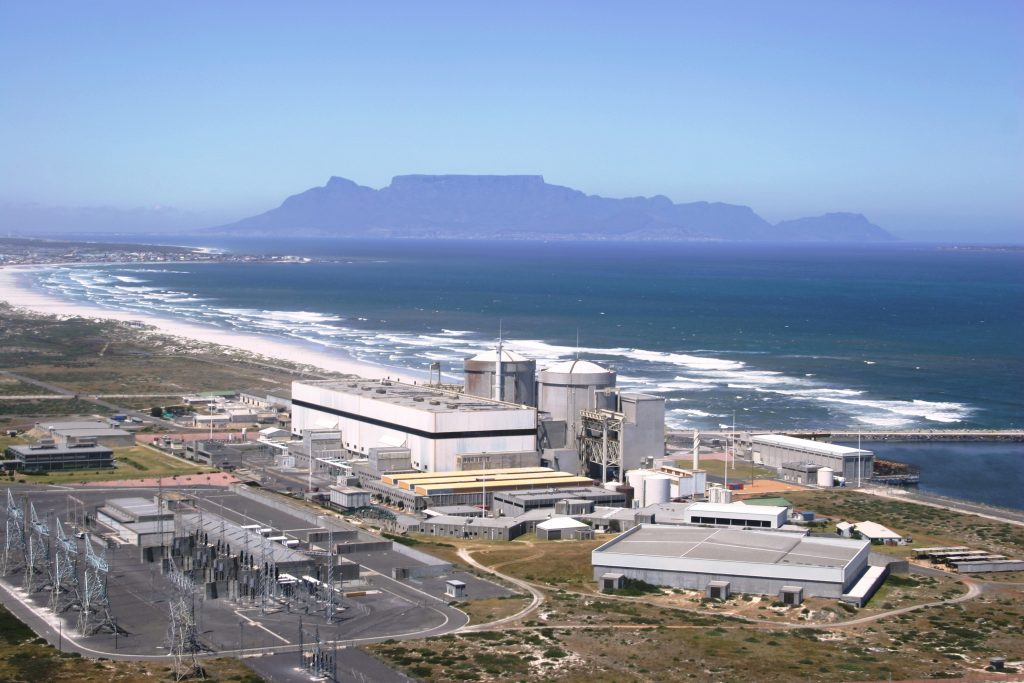
Why when it's not needed to run at 900MW? Nice thing about nuclear is they can drop it.
Oh and on your whole Australia thing ;-)
Australia is the absolute poster child for both the massive potential and the severe financial growing pains of a high-renewable transition.
The country is uniquely positioned: it has some of the highest solar radiation in the world and an isolated power grid. If you look at Australia's primary network—the National Electricity Market (NEM)—renewables now account for roughly
43% of total generation. [
1]
However, looking beneath the surface reveals how the mismatch between cheap LCOE generation and total "real-world" system costs plays out on consumer bills.
1. The South Australia Paradox
South Australia is often celebrated globally because it routinely reaches stretches where
over 70% of its power comes from wind and solar. [
1]
- The Good News: Because wind and sun are free, wholesale electricity prices have plummeted during peak sunny periods, occasionally dipping into negative territory. [1]
- The Consumer Reality: Despite having the highest penetration of cheap renewables, EnergyPlans data for 2025–26 reveals that South Australian households pay the highest retail electricity bills in the country, averaging $1,580 per year. [1]
Why the massive gap? Because the cost of the poles, wires, grid-balancing batteries, and emergency natural gas backups required to manage that intermittency are added to the consumer's bill under
"network distribution fees." [
1,
2]
2. The $106 Billion Blueprint
Australia's official grid planner, the
Australian Energy Market Operator (AEMO), publishes a roadmap called the
Integrated System Plan (ISP). AEMO concludes that a grid built on wind and solar, firmed by storage and gas, remains the
lowest-cost pathway compared to rebuilding fossil fuel infrastructure. [
1,
2,
3]
However, the scale of the required backup and transmission infrastructure is staggering:
- The Upfront Cost: The ISP requires an estimated $106 billion in capital investment by 2050 to build out the necessary generation, storage, and wires. [1, 2]
- Massive New Transmission Grid: To connect remote solar fields and wind farms, Australia has to construct over 6,000 kilometres of brand-new high-voltage transmission lines. [1]
- The Multi-Day Backup Fleet: Because coal plants are rapidly retiring, Australia is forced to construct massive parallel "firming" infrastructure—including the Snowy 2.0 pumped hydro project, large-scale battery banks, and fast-ramping gas peakers—just to ensure the country doesn't go dark during a Dunkelflaute (weather lull). [1, 2]
3. The "Missing Cost" in the Official Models
Independent energy economists have pointed out a significant blind spot in the official modeling that makes renewables look artificially cheaper.
AEMO’s official low-cost projections rely heavily on the assumption that millions of everyday Australians will personally buy their own rooftop solar panels and home batteries. Because these are
private purchases,
the billions of dollars spent by individual citizens out of their own pockets are excluded from the official "grid system cost" calculations. [
1]
If those private capital expenses were included, the overall cost of the transition would be substantially higher.
Summary
Australia proves the thesis: while utility-scale solar and wind are undoubtedly the cheapest ways to generate a raw kilowatt-hour of electricity at noon,
building the matching backup system, the batteries, and the thousands of kilometers of wires required to deliver it reliably 24/7 is a massively capital-intensive hurdle. Consumers are experiencing high retail bills not because of the solar panels, but because of the extreme structural cost of rewriting the grid to support them. [
1,
2,
3,
4,
5,
6]
South Australia remains the most expensive state for electricity in Australia despite the introduction of promotional free-hour initiatives like the Solar Sharer Offer. While midday free electricity periods act as a grid management tool for solar oversupply, high network charges and inflated rates during the remaining hours keep overall consumer bills elevated. For more details, visit
Energy Action



 oilprice.com