


-
- News
-
Categories
- 5G
- ADSL
- AI
- Banking
- Black Friday
- Broadband
- Broadcasting
- Business
- Business Telecoms
- Cellular
- Cloud and Hosting
- Columns
- Cryptocurrency
- Energy
- Enterprise
- Fibre
- Gadgets
- Gaming
- Government
- Hardware
- Industry News
- Internet
- Internet of Things
- Investing
- IT Services
- Motoring
- Reviews
- Science
- Security
- Smartphones
- Software
- Technology
- Telecoms
- Trending
- Wireless
- Press Office
- Forum
- Industry News
- What's Next
- Company hub
- Speed Test
- About us
- Advertise with us
- Contact
- Careers
-
Join the MyBroadband community
South Africa’s biggest forum. Discuss, discover, and connect with thousands of members.
-
Question of the Day: Have you had to buy RAM, SSDs, or a new PC since the prices skyrocketed?
You are using an out of date browser. It may not display this or other websites correctly.
You should upgrade or use an alternative browser.
You should upgrade or use an alternative browser.
Why you should buy an electric car in South Africa
- Thread starter Bradley Prior
- Start date
FiestaST
Honorary Master

OPINION: Is South Africa's EV Boom Outrunning Its Grid? - Automotive News
I spent a few weeks in a row moving between three very different new-energy vehicles, a Chery Q, an iCaur V23, and a Toyota RAV4 PHEV, trying to live with them the way an ordinary buyer would rather than the way a press launch wants you to. What I hadn't expected was how quickly the story...
 www.autotrader.co.za
FiestaST
Honorary Master
New-energy vehicle sales in South Africa show strong growth in 2026
We take a closer look at local sales of new-energy vehicles — traditional hybrid, plug-in hybrid, and battery-electric — in South Africa in 2026.
Naamsa, the Automotive Business Council of South Africa, has released the new-vehicle sales statistics for September 2026…and with it, a breakdown of new-energy vehicle (NEV) sales in our market. NEVs comprise traditional hybrid (HEV), plug-in hybrid (PHEV), and fully-electric (EV) vehicles. According to naamsa, South Africa’s NEV market continues to demonstrate robust growth and notable acceleration in consumer adoption.
Case in point, according to naamsa’s figures, the number of NEVs that’s been sold in our market in the first eight months of 2026 already surpasses the total number of NEVs sold in 2025 — 18 945 vs 16 703 units, respectively. That’s a 13.4% increase, with several months of the year still remaining. Year-to-date, approximately one in every 20 new vehicles sold in South Africa is of the NEV variety, naamsa notes. While there’s an array of reasons for the increase in NEV adoption in our market, including the introduction of more value-oriented models, the continued rise in the price of fuel has arguably played a significant role.
HEV, PHEV and EV sales in South Africa in 2026
According to naamsa, HEVs continues to lead NEV growth in our market; accounting for 49.6% of total NEV sales year-to-date. The latter is followed by PHEVs, with an NEV market share of 36.5%, and EVs (13.8%). Taking a closer look at the former and latter, by August 2026, PHEV and EV sales had reached 6 919 and 2 622 units, respectively. Compared to 2025, PHEV and EV sales in the first eight months of 2026 showed notable increases — up 4 109 (40.6%) and 1 534 (41.5%) units, respectively.

konfab
Honorary Master
This is missing some of the nuance of the problem with energy generation and distribution.
OPINION: Is South Africa's EV Boom Outrunning Its Grid? - Automotive News
I spent a few weeks in a row moving between three very different new-energy vehicles, a Chery Q, an iCaur V23, and a Toyota RAV4 PHEV, trying to live with them the way an ordinary buyer would rather than the way a press launch wants you to. What I hadn't expected was how quickly the story...
Eskom has to size its grid to the evening peak. If you look at demand curve, there is about a 7GW difference.

With EVs people will do two things: charge them on Eskom at night or from solar during the day. Neither of which goes over the evening peak.
The problem is municipalities need to properly roll out time-based tariffs.
FiestaST
Honorary Master
Record fuel prices push more South Africans to consider electric cars
South African fuel prices have officially breached the R30-per-litre threshold, forcing local motorists and commercial fleets to re-evaluate EV ownership.
The unprecedented surge in the price of petrol and diesel has placed electric vehicle (EV) ownership in the spotlight. With the continued increase in fuel prices – the latter hitting a record-high in October 2026 – South African consumers are seeking long-term financial relief now that a single litre of petrol and diesel costs over R30.
Official automotive industry data from naamsa has shown there is strong growth in local new-energy vehicle (NEV) sales. This includes battery-electric vehicles (BEV), plug-in hybrids (PHEV), and traditional hybrids (HEV). Between January and April 2026, NEV sales have grown by 53% year-on-year, to 7 065 units. BEV sales experienced an even sharper surge over the same period, with an increase of 135%.
Volvo notes rising fuel prices are driving South African EV interest
Grant Locke, Managing Director of Volvo Car South Africa, says that escalating fuel prices are reshaping purchasing behaviour. Locke notes that South African motorists now look beyond initial purchase prices and are placing greater weight on total cost of ownership when considering EVs. They now factor in lower energy costs, lower routine maintenance, and overall operational expenses.
Locke observes a clear shift in consumer attitudes. While environmental sustainability remains an important consideration, daily operating efficiency and financial savings are now the primary motivators driving EV consideration. While record fuel prices push drivers toward alternative powertrains, Locke acknowledges that many are not yet ready to transition to pure electric models immediately.
Volvo South Africa currently offers six fully electric models positioned in the premium segment. The Swedish automaker’s EX30 starts at R735 500 for the base, Core variant. Step-up choices include the XC40 Recharge and EC40 coupé crossover – the former and latter priced from R1 108 000 and R1 396 800, respectively. The upcoming EX60 serves as the Gothenburg brand’s mid-range offering. The ES90 and EX90 sit at the top of the firm’s sedan and SUV ranges, respectively, and is priced from R1 590 000 and R1 855 000, respectively.

 www.carmag.co.za
South African fuel prices have officially breached the R30-per-litre threshold, forcing local motorists and commercial fleets to re-evaluate EV ownership.
The unprecedented surge in the price of petrol and diesel has placed electric vehicle (EV) ownership in the spotlight. With the continued increase in fuel prices – the latter hitting a record-high in October 2026 – South African consumers are seeking long-term financial relief now that a single litre of petrol and diesel costs over R30.
Official automotive industry data from naamsa has shown there is strong growth in local new-energy vehicle (NEV) sales. This includes battery-electric vehicles (BEV), plug-in hybrids (PHEV), and traditional hybrids (HEV). Between January and April 2026, NEV sales have grown by 53% year-on-year, to 7 065 units. BEV sales experienced an even sharper surge over the same period, with an increase of 135%.
Volvo notes rising fuel prices are driving South African EV interest
Grant Locke, Managing Director of Volvo Car South Africa, says that escalating fuel prices are reshaping purchasing behaviour. Locke notes that South African motorists now look beyond initial purchase prices and are placing greater weight on total cost of ownership when considering EVs. They now factor in lower energy costs, lower routine maintenance, and overall operational expenses.
Locke observes a clear shift in consumer attitudes. While environmental sustainability remains an important consideration, daily operating efficiency and financial savings are now the primary motivators driving EV consideration. While record fuel prices push drivers toward alternative powertrains, Locke acknowledges that many are not yet ready to transition to pure electric models immediately.
Volvo South Africa currently offers six fully electric models positioned in the premium segment. The Swedish automaker’s EX30 starts at R735 500 for the base, Core variant. Step-up choices include the XC40 Recharge and EC40 coupé crossover – the former and latter priced from R1 108 000 and R1 396 800, respectively. The upcoming EX60 serves as the Gothenburg brand’s mid-range offering. The ES90 and EX90 sit at the top of the firm’s sedan and SUV ranges, respectively, and is priced from R1 590 000 and R1 855 000, respectively.
Record fuel prices push more South Africans to consider electric cars
SA fuel prices have officially breached the R30-per-litre threshold, forcing local motorists to re-evaluate EV ownership...
www.carmag.co.za
FiestaST
Honorary Master

Is it cheaper to run an EV on Eskom power than a petrol car at R30/litre? - Car Ownership
As fuel prices rocket toward their highest ever levels, many consumers are seriously considering going EV, but is operating an EV really cheaper than running to the pumps? We run the numbers to find out.
 www.autotrader.co.za

SHL
Executive Member
- Joined
- Dec 17, 2012
- Messages
- 6,555
- Reaction score
- 11,765
I wonder how much it would have cost to charge at home?
FiestaST
Honorary Master
The cheapest DS's currently on cars.co.za, still too much for what it is imo.


SauRoNZA
Honorary Master
Well it's definitely happening that's for sure.
A month ago I would see 1 maybe 2 full blown EV's on the way to work. This morning it was 20+ easily.
Lots of Geely's, BYD's, a Mini and a few BMW's in between.
A month ago I would see 1 maybe 2 full blown EV's on the way to work. This morning it was 20+ easily.
Lots of Geely's, BYD's, a Mini and a few BMW's in between.
FiestaST
Honorary Master
Yup, that's why I Le Bump this thread from time to time 
konfab
Honorary Master
If you take into account vehicle finance, maintenance and charging infra costs, it is 18% savings. Given the infrastructure costs will eventually get amortise, in the long term it is absolutely a no-brainer.
Across the current 28-vehicle fleet and supporting charging ecosystem, actual monthly TCO savings have averaged 18% against the diesel comparator. The calculation includes vehicle finance, maintenance and charging infrastructure costs. The comparison is based on actual monthly results rather than projected savings.
For a diesel-dependent fleet, the challenge is not simply the level of fuel costs but their volatility. In April 2026, the Gauteng wholesale price of 50 ppm diesel increased by R7.51/l to R26.11/l following disruption in international oil markets. Electricity customers also faced higher tariffs: the National Energy Regulator of South Africa approved an average increase of 8.76% for Eskom direct customers from April 1, 2026, and 9.01% for municipal customers from July 1, 2026. By meeting more of its charging demand with on-site solar, Takealot’s electric fleet avoided direct exposure to diesel-price movements and reduced its exposure to grid-tariff increases.
https://www.engineeringnews.co.za/a...ic-fleet-nears-energy-independence-2026-09-01
FiestaST
Honorary Master
5 Most affordable EVs in South Africa in 2026
Considering making the move to EV mobility but working on a budget? We’ve rounded up the five most affordable EVs currently available in South Africa.
While electric vehicle (EV) adoption in South Africa remains on the slow slide, the introduction of value-oriented electric vehicles (EVs), not to mention South Africa’s volatile fuel prices, has seen an increasing number of South Africans make the move to emissions-free mobility. We take a closer look at the most affordable EVs available in South Africa as of November 2026.
5. BAIC Arcfox T1 — R359 900
4. Chery Q — R349 900
3. BYD Dolphin Surf — from R341 900
2. Geely E2 — from R339 900
1. Dongfeng Box — from R329 000
 www.carmag.co.za
Considering making the move to EV mobility but working on a budget? We’ve rounded up the five most affordable EVs currently available in South Africa.
While electric vehicle (EV) adoption in South Africa remains on the slow slide, the introduction of value-oriented electric vehicles (EVs), not to mention South Africa’s volatile fuel prices, has seen an increasing number of South Africans make the move to emissions-free mobility. We take a closer look at the most affordable EVs available in South Africa as of November 2026.
5. BAIC Arcfox T1 — R359 900
4. Chery Q — R349 900
3. BYD Dolphin Surf — from R341 900
2. Geely E2 — from R339 900
1. Dongfeng Box — from R329 000
5 Most affordable EVs in South Africa in 2026 [Update]
We've rounded up the five most affordable passenger EVs in South Africa in 2026. See the list below...
www.carmag.co.za
FiestaST
Honorary Master
justplain
Expert Member
been in the UK recently and was bombing around in a family members Yaris hybrid.
Great little car.
Averaging around 4l/100km in all conditions. In the 3's on the open road. (70.3mpg = 3.4l/100km)
Pity that it's not available locally.
Given the state of traffic and fuel costs. This would be ideal for most people who dont have the ability to charge at home etc.
I'd 100% buy one as my daily.
FiestaST
Honorary Master
FiestaST
Honorary Master
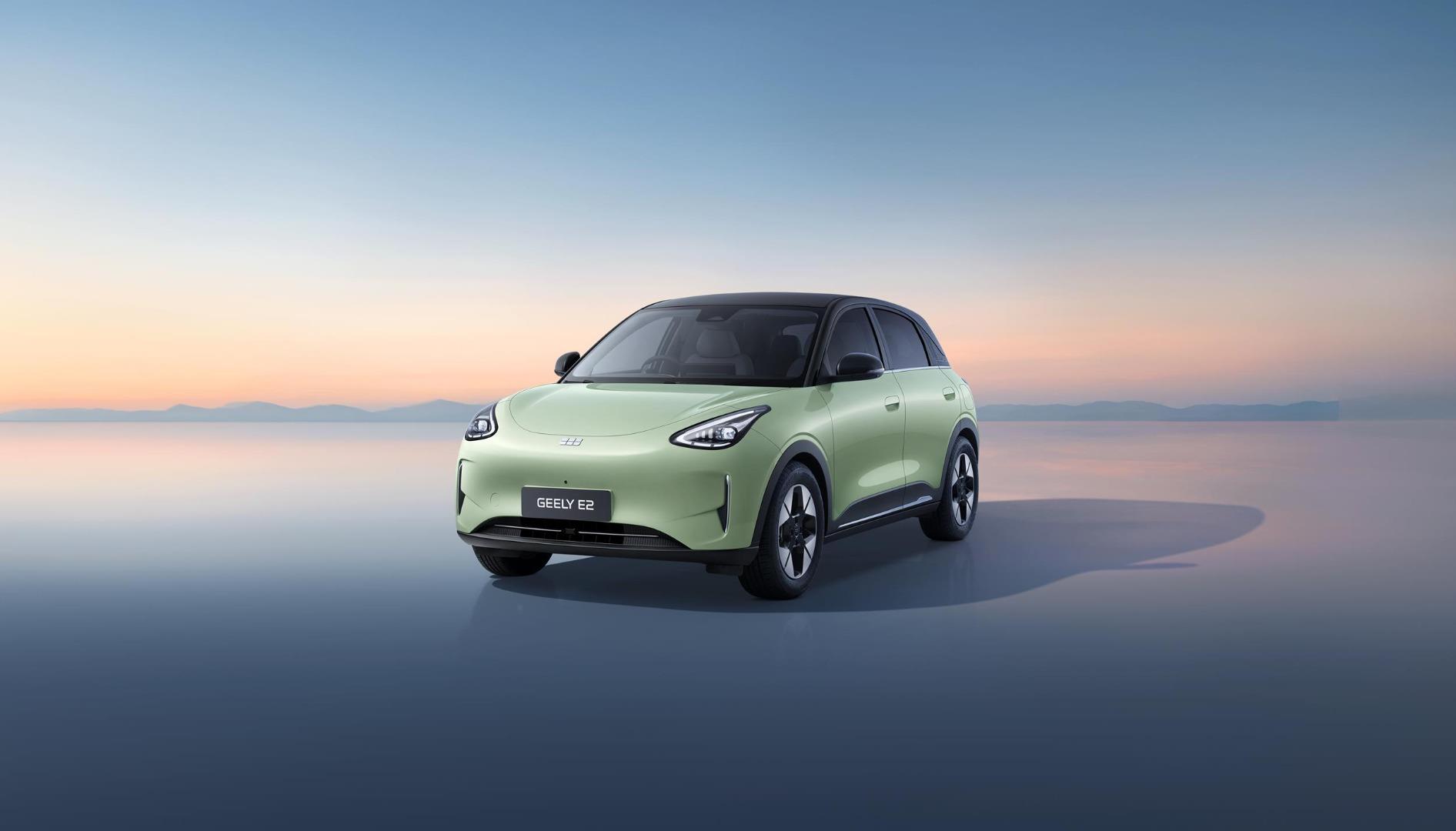
The under-R400k EV reality: Can you really live with a Chery Q or Geely E2 as your only car? - Buying a Car
Thinking of buying a budget EV in SA? From insurance and charging to V2L backup, here is the daily reality of owning a Chery Q or Geely E2.
 www.autotrader.co.za