
Big change to Amazon deliveries in South Africa

Amazon’s marketplace in South Africa has ended its long-running promotion that offered free delivery on all orders, with the option to upgrade to same-day delivery for R2.
Free delivery on items shipped by Amazon for orders over R500 remains available. However, priority shipping now costs R90 regardless of the order value.
When the e-commerce giant first launched its marketplace in South Africa two years ago, on 7 May 2024, only orders fulfilled by Amazon of over R500 qualified for free delivery.
The company also ran a promotion where a customer’s first order enjoyed free shipping, regardless of value.
That Christmas, Amazon launched a promotion offering free deliveries on all orders. It worked so well that it kept the free delivery offer in place to help drive uptake.
Since then, Amazon has launched same-day and priority shipping, allowing customers to choose a time slot in which their order must be delivered.
Amazon launched multiple delivery window options in November 2025, allowing customers to select morning (08:00-13:00), afternoon (13:00-18:00), or evening (17:00-20:00) delivery slots.
Orders placed before midnight can be booked for the following day’s morning timeslot. Similarly, orders placed before certain cut-offs daily can book same-day delivery in the afternoon or evening.
Under its long-running promotion, this feature cost an additional R2 at checkout. As of May 2026, this has increased to R90. Standard Delivery is R75 for orders that don’t qualify for free shipping.
Ending its promotions on standard and priority deliveries in South Africa raised the question of whether the company planned to finally launch Amazon Prime in the country.
Asked about this, Amazon declined to confirm or deny the speculation. “We are constantly innovating and working hard to bring more value to our South African customers,” a spokesperson stated.
Amazon gaining traction in South Africa
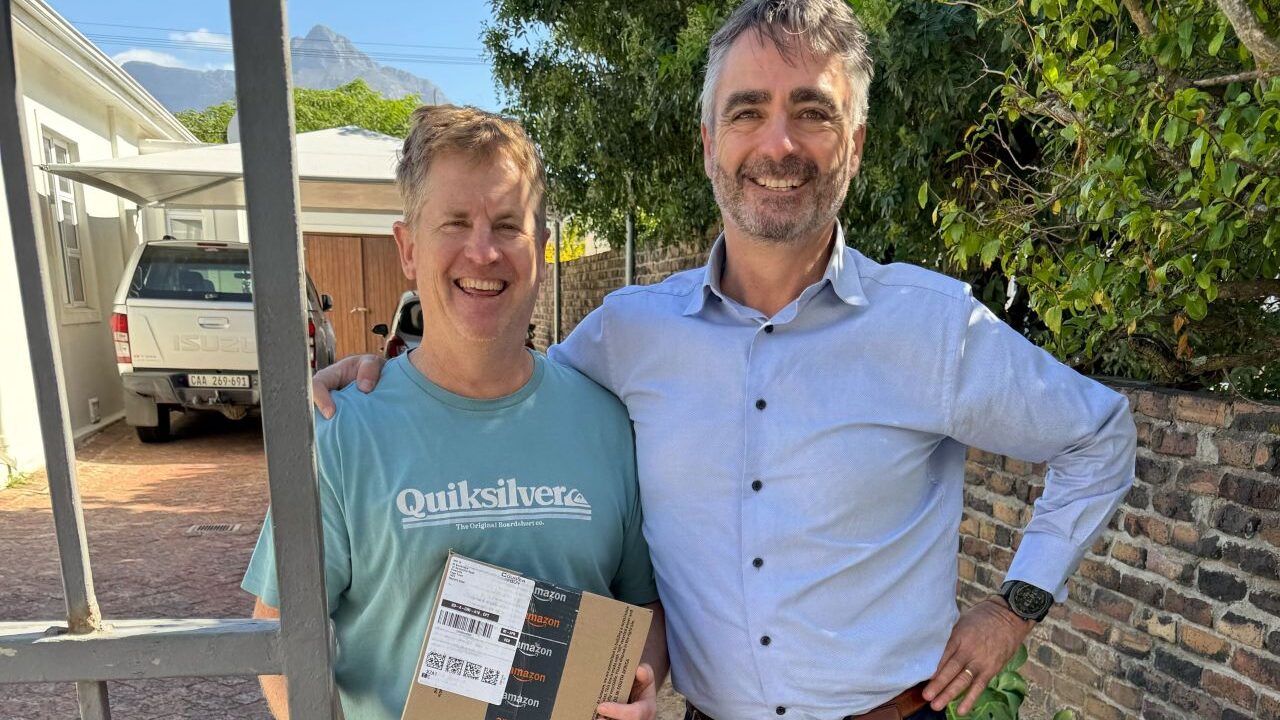
Following a slow start in 2024, Amazon’s South African marketplace gained traction throughout all of last year, coinciding with the introduction of its free shipping promotion.
Although Amazon has not shared official sales figures, independent data from various sources suggested that orders on its local marketplace surged during 2025.
One clear indicator of the South African marketplace’s traction was its performance over Black Friday 2025, which the retailer described as its biggest sales event yet.
Both FNB and Discovery Bank reported that Amazon accounted for the third-highest transaction value of any retailer among their customers.
The only retailers that topped it were Takealot and Checkers Sixty60. Amazon also accounted for the fourth-highest number of transactions among Discovery Bank’s customers.
In addition, one of MyBroadband’s forum members also analysed orders fulfilled by The Courier Guy for Amazon.co.za from launch to early October 2025.
He found that Amazon experienced substantial month-on-month growth in delivery volumes in 2025, reaching a peak of 223,695 in September.
The data also reflected quick turnaround times, with most orders delivered on the same day or the next day.
In the first eight days of October, average daily orders reached 14,491, more than double September’s volumes and roughly 1,000 shy of what Amazon.co.za delivered in its entire launch month.
If that trend were sustained throughout October 2025, just one Amazon.co.za courier partner would have fulfilled over 430,000 orders during that month.
Amazon absorbed fuel price shocks in South Africa

Earlier this year, Amazon said it would not apply a surcharge on South African third-party merchants who ship products via its logistics fulfilment service despite the sharp increase in fuel prices.
At the same time, the e-commerce giant announced a 3.5% fuel and logistics surcharge for sellers in the U.S. and Canada from 17 April 2026.
Amazon.com spokesperson Ashley Vanicek explained that elevated fuel and logistics costs had increased operational costs across the e-commerce industry.
Over 60% of products sold on the online marketplace are sourced from third-party merchants who pay Amazon fees for storing and delivering their products.





 Loading ...