


MickeyD
RIP
Found this on the BT site while looking for the best way to answer a basic query on MyBB.
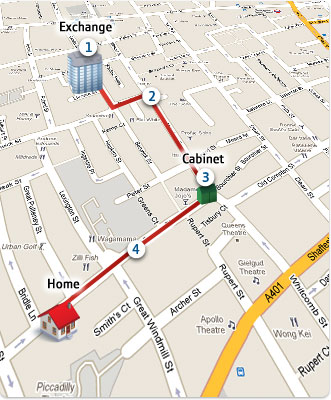
ADSL broadband is delivered through your phone line to your home – and the journey starts at your local telephone exchange. Find out about each stage of the journey, and how it affects your broadband speed.
1. Your local telephone exchange
2. Once broadband leaves your exchange
3. Your local cabinet
4. The cabinet in your home
1. Your local telephone exchange
The main factor affecting your broadband speed is the distance from your telephone exchange to your home. Generally speaking, the closer you live to the telephone exchange, the higher the broadband speed your phone line can support, although line routing is not always 'as the crow flies'.
There are other things that can affect the broadband speed you receive, but this is by far the most important factor.
This is true of every ADSL broadband provider, as they all provide broadband to your home from your local telephone exchange.
Some broadband providers manage broadband traffic at the telephone exchange – which can have an effect on your speed. Find out more about traffic management below.
2. Once broadband leaves your exchange
Your broadband speed is affected by the number of other people using the network at the same time, so it's important you test your broadband speed at different times of the day to see how other users will affect your speed.
More people sharing broadband connections at peak times means congestion in broadband traffic, which in turn can mean slower speeds – particularly during the peak usage time of 5pm – midnight.
3. Your local cabinet
A cabinet is a small, usually green, box you can see on street corners throughout the country. These are all maintained by BT along with telephone exchanges, and are another connection point for your phone line between the local telephone exchange and your home, but on a more local level.
4. The cabinet to your home
The final stage of the broadband journey is from the cabinet to your home. While this distance isn't as critical to your broadband speed as the overall distance from the telephone exchange to your home, it still has an effect on your speed.
Remember that the time of day you're online can also affect your speed – the more users that are online at the same time as you, the slower your speed will be.
Note: You can access more topics by visiting the BT site.
I will update this thread with more very specific details regarding our local environment from next month.
What is traffic management?
Broadband traffic management is when a broadband provider puts limits on the speed people can get over their broadband connection. This can happen when there is a large demand for broadband at the same time in the same area, or when one user has used a large amount of data usage, so their broadband speed is artificially slowed temporarily. Traffic management can be done in two ways: either as part of the service you receive, or to manage heavy usage by some customers.
At BT, we always aim to get broadband to you as fast as possible, so before broadband leaves the telephone exchange we monitor how much internet traffic there is on the network and manage it to make sure everyone gets the best speed possible.
You can think of it like this: imagine you're in a car on a motorway. Heavy internet users are flooding many more cars on to the motorway, making it more difficult for you to move around.
Traffic management makes sure that all users get their fair space on the road – or the best speed possible.
How does BT manage broadband traffic?
We're constantly investing in the telephone network to make sure everyone gets the best speed possible.
We believe it's important that all of our customers receive an optimal service whether they only use the internet a small amount or whether they are very heavy users of the internet. That is why we operate a traffic management policy to protect the experience of the majority of our customers during peak times:
The traffic management policy only affects a tiny minority of customers. Latest information shows 99.9% of all BT Broadband customers weren't impacted at all
Traffic management is only applied during the peak period of the day when the very heavy usage could impact others. During the rest of the day all customers are free to use as much as they like
The policy only affects customers with exceptional broadband usage – for example, you could watch the standard size BBC iPlayer video every second of every day and still not be impacted by the very heavy user traffic management policy
We also control non time-critical, 'peer to peer' traffic during the peak period so that critical services like video streaming aren't affected. Again outside of the peak period all customers are free to use as much 'peer to peer' services as they like.
Why does the time of day affect my broadband speed?
The actual speeds you will experience will differ and will continually vary throughout the day as levels of congestion on the internet change. You should not expect full speeds all the time, especially during the daily peak period (5pm-12 midnight) when global internet speeds are at their slowest due to congestion.
The main factors governing the day-to-day download speed you will experience over your line are:
The time of day i.e. how busy the network and the internet are (6–9pm being the busiest time, when speed can reduce significantly)
The speed of individual websites you are visiting (some have a maximum access speed)
Whether you're sharing your connection with others in your home
Whether you have software running in the background, such as spyware
ADSL broadband is delivered through your phone line to your home – and the journey starts at your local telephone exchange. Find out about each stage of the journey, and how it affects your broadband speed.
1. Your local telephone exchange
2. Once broadband leaves your exchange
3. Your local cabinet
4. The cabinet in your home
1. Your local telephone exchange
The main factor affecting your broadband speed is the distance from your telephone exchange to your home. Generally speaking, the closer you live to the telephone exchange, the higher the broadband speed your phone line can support, although line routing is not always 'as the crow flies'.
There are other things that can affect the broadband speed you receive, but this is by far the most important factor.
This is true of every ADSL broadband provider, as they all provide broadband to your home from your local telephone exchange.
Some broadband providers manage broadband traffic at the telephone exchange – which can have an effect on your speed. Find out more about traffic management below.
2. Once broadband leaves your exchange
Your broadband speed is affected by the number of other people using the network at the same time, so it's important you test your broadband speed at different times of the day to see how other users will affect your speed.
More people sharing broadband connections at peak times means congestion in broadband traffic, which in turn can mean slower speeds – particularly during the peak usage time of 5pm – midnight.
3. Your local cabinet
A cabinet is a small, usually green, box you can see on street corners throughout the country. These are all maintained by BT along with telephone exchanges, and are another connection point for your phone line between the local telephone exchange and your home, but on a more local level.
4. The cabinet to your home
The final stage of the broadband journey is from the cabinet to your home. While this distance isn't as critical to your broadband speed as the overall distance from the telephone exchange to your home, it still has an effect on your speed.
Remember that the time of day you're online can also affect your speed – the more users that are online at the same time as you, the slower your speed will be.
Note: You can access more topics by visiting the BT site.
I will update this thread with more very specific details regarding our local environment from next month.
What is traffic management?
Broadband traffic management is when a broadband provider puts limits on the speed people can get over their broadband connection. This can happen when there is a large demand for broadband at the same time in the same area, or when one user has used a large amount of data usage, so their broadband speed is artificially slowed temporarily. Traffic management can be done in two ways: either as part of the service you receive, or to manage heavy usage by some customers.
At BT, we always aim to get broadband to you as fast as possible, so before broadband leaves the telephone exchange we monitor how much internet traffic there is on the network and manage it to make sure everyone gets the best speed possible.
You can think of it like this: imagine you're in a car on a motorway. Heavy internet users are flooding many more cars on to the motorway, making it more difficult for you to move around.
Traffic management makes sure that all users get their fair space on the road – or the best speed possible.
How does BT manage broadband traffic?
We're constantly investing in the telephone network to make sure everyone gets the best speed possible.
We believe it's important that all of our customers receive an optimal service whether they only use the internet a small amount or whether they are very heavy users of the internet. That is why we operate a traffic management policy to protect the experience of the majority of our customers during peak times:
The traffic management policy only affects a tiny minority of customers. Latest information shows 99.9% of all BT Broadband customers weren't impacted at all
Traffic management is only applied during the peak period of the day when the very heavy usage could impact others. During the rest of the day all customers are free to use as much as they like
The policy only affects customers with exceptional broadband usage – for example, you could watch the standard size BBC iPlayer video every second of every day and still not be impacted by the very heavy user traffic management policy
We also control non time-critical, 'peer to peer' traffic during the peak period so that critical services like video streaming aren't affected. Again outside of the peak period all customers are free to use as much 'peer to peer' services as they like.
Why does the time of day affect my broadband speed?
The actual speeds you will experience will differ and will continually vary throughout the day as levels of congestion on the internet change. You should not expect full speeds all the time, especially during the daily peak period (5pm-12 midnight) when global internet speeds are at their slowest due to congestion.
The main factors governing the day-to-day download speed you will experience over your line are:
The time of day i.e. how busy the network and the internet are (6–9pm being the busiest time, when speed can reduce significantly)
The speed of individual websites you are visiting (some have a maximum access speed)
Whether you're sharing your connection with others in your home
Whether you have software running in the background, such as spyware
Last edited:
