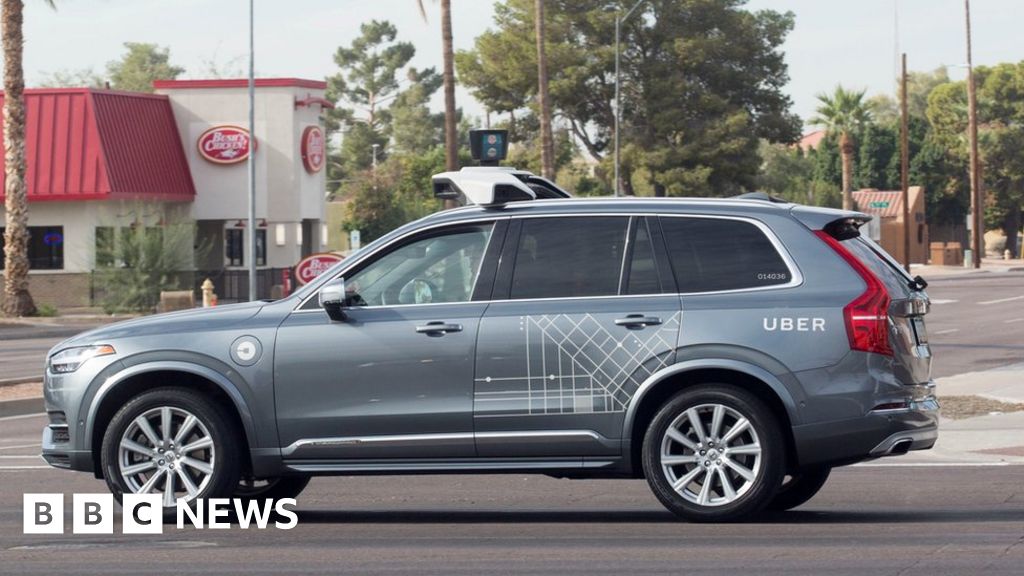
Autonomous car kills pedestrian in America

FiestaST

Honorary Master
Joined
Aug 9, 2009
Messages
220,878
Reaction score
103,514
Location
CPT~ /\\/¯¯¯\\/\\ ~ZA
Only a matter of time hey!

Autonomous car kills pedestrian in America

Uber-operated car causes first death attributed to a self-driving vehicle

An autonomous car operated by Uber Technologies has crashed into and killed a pedestrian in Arizona, USA.

Police in the city of Tempe said that the car was driving itself with an operator behind the wheel when it struck a woman crossing the road with a bicycle. The woman later died in hospital from her injuries.

"A female walking outside of the crosswalk crossed the road from west to east when she was struck by the Uber vehicle," Tempe Police said in a statement.

Uber said on Twitter that it is "fully cooperating" with the Police investigation and has expressed condolences to the family of the victim.

Uber has halted autonomous vehicle testing, which it was operating in Phoenix and Tempe in Arizona, as well as other cities in the US including Pittsburgh, San Francisco and Toronto. The tests have been running since 2016 without major incident until now.

Uber CEO Dara Khosrowshahi said via his twitter account "We’re thinking of the victim’s family as we work with local law enforcement to understand what happened”.

Although there have been crashes involving self-driving vehicles, including a well-documented incident involving a Google autonomous car in 2016, today’s incident is thought to be the first involving a death.

https://www.autocar.co.uk/car-news/industry/autonomous-car-kills-pedestrian-america

Uber.JPG
 
If they were using a Volvo as pictured above, I wonder if the Volvo safety systems were on or if they had been overridden by Uber's software.

Condolences to the victim's family nevertheless
 
Self-driving Ubers on hold after pedestrian death

An Uber self-driving car hit and killed a woman crossing the street in Arizona, police said on Monday, marking the first fatality caused by an autonomous vehicle and a potential blow to the technology expected to transform transportation.

The ride services company said it was suspending North American tests of its self-driving vehicles.

So-called robot cars, when fully developed by companies including Uber, Alphabet and General Motors, are expected to drastically cut down on motor vehicle fatalities and create billion-dollar businesses. But Monday's accident underscored the potential challenges ahead for the promising technology as the cars confront real-world situations involving real people.

The accident spurred immediate reaction from US lawmakers who have been debating whether to pass legislation that would speed introduction of self-driving cars into the United States.

Democratic Senator Edward Markey of Massachusetts, a member of the transportation committee said: "This tragic accident underscores why we need to be exceptionally cautious when testing and deploying autonomous vehicle technologies on public roads."

Autonomous mode

The Uber vehicle was in autonomous mode with an operator behind the wheel at the time of the crash, about 10pm on Sunday in Tempe, a suburb about 18km east of Phoenix.

"The vehicle was traveling northbound," police said, "when a female walking outside of the crosswalk crossed the road from west to east when she was struck by the Uber vehicle."

The victim, identifyied as Elaine Herzberg, 49, later died from her injuries in a hospital, police said. Further details on the accident were not immediately available.

Local television footage of the scene showed a crumpled bike and a Volvo XC90 SUV with a smashed-in front. Uber has been using special versions of Volvo's SUV for its testing, but a Volvo spokesman said the autonomous technology used in the vehicle at the time of the accident was not made by Volvo.

The US National Highway Traffic Safety Administration and National Transportation Safety Board said they were sending teams to investigate the crash. NHTSA also said it was in contact with Volvo. Canada's transportation ministry in Ontario, where Uber conducts testing, also said it was reviewing the accident.

Wild West

Uber and Waymo on Friday urged Congress to pass sweeping legislation to speed the introduction of self-driving cars into the United States. Some congressional Democrats have blocked the legislation over safety concerns, and Monday's fatality could hamper the quick passage of the bill, congressional aides said Monday.

Safety advocates called for a national moratorium on all robot car testing on public roads.

Advocacy group Consumer Watchdog said: "Arizona has been the wild west of robot car testing with virtually no regulations in place. That's why Uber and Waymo test there. When there's no sheriff in town, people get killed.”

Arizona has opened its arms to companies testing self-driving vehicles as a means to economic growth and jobs. Governor Doug Ducey signed an executive order in 2015 allowing for the testing of such vehicles on Arizona streets and reached out to Uber a year later, after California regulators cracked down on the company over its failure to obtain testing permits.

Self-driving cars being tested routinely get into fender-benders with other vehicles. Last week, a self-driving Uber crashed with another vehicle in Pittsburgh, fortunately without injuries.

in 2017 Uber temporarily grounded its self-driving cars for a few days following a crash with another car in Tempe. The company has been the subject of a number of complaints about its autonomous vehicles, but the company has said the cars were being driven by a human driver at the time of the incidents.

Essential to Uber's success

Uber has said its ability to build autonomous cars is essential to its success in the rapidly changing transportation industry. The company envisions a network of autonomous cars that would be summoned through the Uber app that would supplement - and eventually replace - human-driven cars.

Uber had logged 3.2 million self-driving kilometres by December 2017; it has more than 100 autonomous cars testing on the roads of the greater Phoenix area, the company's prime testing ground due to the state's loose regulations and hospitable weather. Rain, snow and ice are particularly challenging for autonomous cars. The company also tests in Pittsburgh and Toronto.

Concerns over the safety of autonomous vehicles flared after a July 2016 fatality involving a Tesla Model S. The car involved in that accident featured a partially autonomous system that required human supervision. Uber's vehicle, on the other hand, is considered a full self-driving vehicle where a human is not needed at the wheel.

Safety regulators later determined Tesla was not at fault.

https://www.iol.co.za/motoring/indu...ubers-on-hold-after-pedestrian-death-13925872

Snip.JPG
 
They will probably find that the car was not at fault again.

Unless it was a sensor failure or something like that.
 
No new clampdown on self-driving cars - Arizona

State officials say they see no immediate need to tighten rules on the testing of self-driving cars in Arizona in reaction to a fatal accident involving an Uber autonomous vehicle that has focused attention on the safety of the new technology.

Meanwhile, Toyota has paused autonomous vehicle testing following Sunday’s accident in which an Uber self-driving SUV struck and killed a woman in Tempe.

Carmakers and tech companies are evaluating whether or not to suspend their autonomous vehicle programs in the wake of the first fatality involving a self-driving vehicle. Uber said on Monday it was suspending its own program.

Toyota said it was temporarily pausing its testing on US public roads to help its test drivers, who could be experiencing “an emotional effect” from the incident.

“This ‘timeout’ is meant to give them time to come to a sense of balance about the inherent risks of their jobs,” Toyota said.

Wide open roads

Uber, along with other technology and car companies, has been testing in Arizona, which regulates autonomous vehicles with a lighter touch than neighbouring states such as California.

The state has a long history of allowing automakers to test new vehicles on its wide, open roads, and a 2015 executive order by Governor Doug Ducey paved the way for companies to test autonomous technology without interference by the legislature. More than 600 self-driving vehicles are now testing on Arizona roads, according to the governor’s office.

Director for policy and communications at the Arizona department of transportation Kevin Biesty said on Tuesday existing regulations were sufficient and that the state had no immediate plans to issue new rules.

“We believe we have enough in our laws right now to regulate automobiles,” Biesty said. “There will be issues that the legislature will have to address in the future as these become more widespread.”

No new restrictions

During the early phase of self-driving vehicle testing, Arizona refrained from adding new restrictions on companies testing on state roads, Biesty said, adding it did not believe any new regulations would add to safety.

Biesty said his agency was waiting for federal safety regulators to conclude an investigation before drawing any conclusions. Arizona’s self-driving vehicle oversight committee has not planned any meetings or actions, he said.

Also on Tuesday, Tempe mayor Mark Mitchell issued a statement saying he supported Uber’s decision to suspend testing until the end of the investigation. His office said the mayor had not asked other autonomous vehicle companies to suspend testing in the city.

'Fault has not been determined'

Full details are still forthcoming surrounding the death on Sunday night of pedestrian Elaine Herzberg after she was struck by Uber’s test vehicle, a Volvo SC90, which was operating in autonomous mode at the time.

Herzberg, who was homeless, was crossing a four-lane road with her bicycle outside of the crosswalk when she was struck.

The Maricopa County Attorney’s Office in Phoenix said it was awaiting the results of an investigation by Tempe police before reviewing whether any charges should be filed. Officials with the National Transportation Safety Board and National Highway Traffic Safety Administration are also investigating.

The Tempe police department said it “would like to reaffirm that fault has not been determined in this case”.

Serious dent

The NTSB said investigators had viewed video captured by a camera in the Uber vehicle, and were gathering data from the vehicle and Uber.

A photo posted on Twitter by the NTSB showed a serious dent in the right front corner of the car’s bonnet. Investigators will be in Tempe for the rest of the week and will not release findings until reviews of information from the scene and analysis of vehicle data are finished.

Uber’s Advanced Technologies Group office in Tempe appeared empty on Tuesday except for a security guard who said only a small security crew was working at the site since the accident. The autonomous vehicles normally filling the parking lot outside were nowhere to be seen.

The fatality is drawing fresh attention to the safety of autonomous vehicles, and the challenges of testing them on public streets. Self-driving cars have been involved in minor accidents, but nearly all have been blamed on human motorists hitting the autonomous vehicle.

'Very far from where it needs to be'

The outcome of the investigations in Arizona will be pivotal for companies racing to profit from robo-taxi services and automated delivery vehicles. Among them are General Motors, Waymo, ride services company Lyft, Ford and others.

Waymo said earlier in March it began operating self-driving vehicles in Arizona without human minders, offering rides to select customers. GM, through its Cruise Automation unit, has said it plans to launch a robo-taxi service in 2019, and said on Tuesday it stood by that timeline.

Self-driving startup nuTonomy said it was temporarily halting its testing on public roads in Boston at the city’s request.

Analysts and experts said the fatality involving Uber could slow progress toward deployment in the sector.

Technology analyst for London-based Edison Investment Research Richard Windsor said in a blog post on Tuesday: “What this incident indicates is that the state of autonomous driving (and especially Uber) is very far from where it needs to be to become market-ready.”

https://www.iol.co.za/motoring/industry-news/no-new-clampdown-on-self-driving-cars-arizona-13955970

Snip.JPG
 
Uber’s Autonomous Test Cars Lagged Behind Competitors Before The Arizona Crash: Report

In the aftermath of the fatal crash involving an self-driving Uber vehicle and pedestrian 49-year-old Elaine Herzberg in Arizona last week, the company has come under extra scrutiny about its self-driving technology and how it’s deployed. Now, a New York Times investigation details just how far behind Uber’s cars were even leading up to the Arizona crash.

Additionally, the newspaper reports that Dara Khosrowshahi—the man brought in to clean up Uber after alpha-bro CEO Travis Kalanick was ousted—considered shutting down the self-driving car project, previously seen as the key to Uber’s future as it grapples with the costs of rides and whether its drivers are contractors or full employees.

The paper reports one hundred pages of documents and people familiar with the company’s operations have revealed an incredibly unsettling fact: While Waymo, Google’s autonomous vehicle project, was able to drive almost 5,600 miles last year without driver intervention, Uber’s self-driving cars weren’t able to meet its target goal of 13 miles per intervention as of March. That’s a pretty huge discrepancy.

From the story:

Waymo and Cruise, a self-driving car company owned by GM, reported their “intervention” numbers to California regulators. Uber’s goals in Arizona were mentioned in internal documents — Arizona does not have reporting requirements — and it has not been testing self-driving cars in California long enough to be required to report them.

[...] But Uber’s autonomous cars are not operating nearly as well as those of its competitors. Cruise reported to California regulators that it went more than 1,200 miles per intervention. After its strong California results, Waymo is now testing cars in Chandler, Ariz., a Phoenix suburb, with no safety drivers.
The report says Uber’s autonomous vehicles struggled to navigate unfamiliar and tricky situations such as construction sites and driving next to big rigs—two pretty common occurrences for the average driver. It’s almost surprising that Uber’s solo-driver autonomous vehicles didn’t make headlines sooner.

So why were the cars on the roads in the first place? Uber was feeling the pressure, the story said. The company has been trying to save face after Khosrowshahi replaced Kalanick as chief executive in a change of arms that made headlines for all the wrong reasons, and Khosrowshahi initially didn’t see the value in a long-term autonomous vehicle project. In April, he had planned a visit to the Uber’s Phoenix testing site, where the plan was to give him a ride through difficult, unpredictable road conditions with no driver intervention.

Needless to say, that won’t be happening any time soon. Uber has shut down its autonomous car testing in Pittsburgh, Arizona, San Francisco, and Toronto for the foreseeable future.

As Jalopnik’s Ryan Felton also uncovered earlier this week, the Times reports Uber eventually stopped the practice of having two humans mind the car during testing, as is generally industry standard. The Phoenix test involved two separate groups of test drivers. One group put cars through “stress” situations that would have resulted in a crash without any driver intervention.

The second focused on picking up customers in their vehicles and were encouraged to take control to prevent the little things—a sharp turn or hard braking. When the two groups merged to begin offering an entirely driverless system, Uber swapped from the two-driver system (where one person could take over in case of failure and the other kept track of data) to a single driver. Even employees voiced concern over the safety risks it would entail, like these:

Not all drivers followed Uber’s training. One was fired after falling asleep at the wheel and being spotted by a colleague. Another was spotted air drumming as the autonomous car passed through an intersection, according to the two people familiar with Uber’s operations.

Across the board, it seems like Uber has dropped the ball in the autonomous vehicle field. It’s stumbled where their competitors took confident strides, and the price it may pay could be massive Now, the project that was supposed to clear its name has only made another mess to clean up.

https://jalopnik.com/uber-s-autonomous-test-cars-lagged-behind-competitors-b-1824047353

Snip.png
 
"A female walking outside of the crosswalk crossed the road from west to east when she was struck by the Uber vehicle," Tempe Police said in a statement.

Autonomous car gets damaged by incompetent pedestrian, the title should read.
 
Top
Sign up to the MyBroadband newsletter
X