Stop what you're doing right now, only 1 photo per day in that other thread!

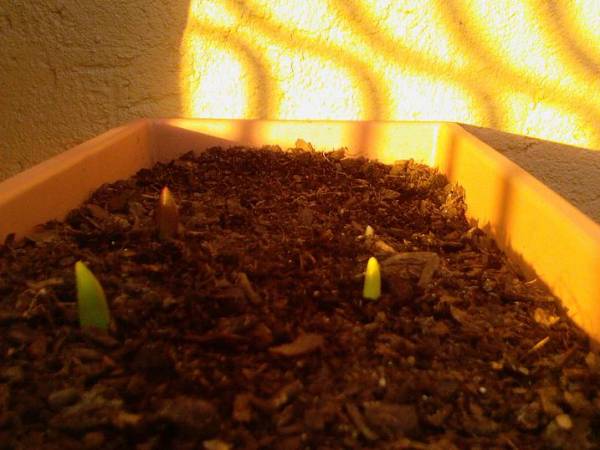
The tulips are the first bulbs to sprout:

tulips_23may_-_Copy.jpg


Need to mulch up.
 
Last edited:
v nice ld... v v nice...

Must try and get my black lab in a decent photo...
 
Soccer or stars - Uploaded yesterday


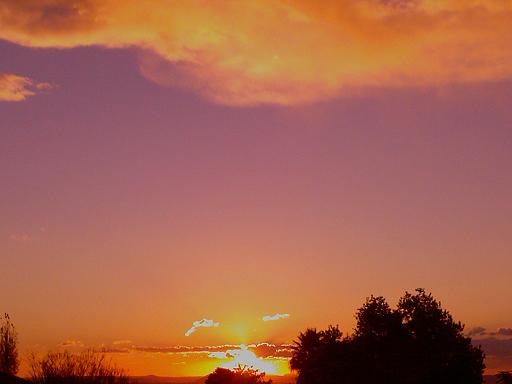
A new day dawns


Crossing over (With some motion blur)
 
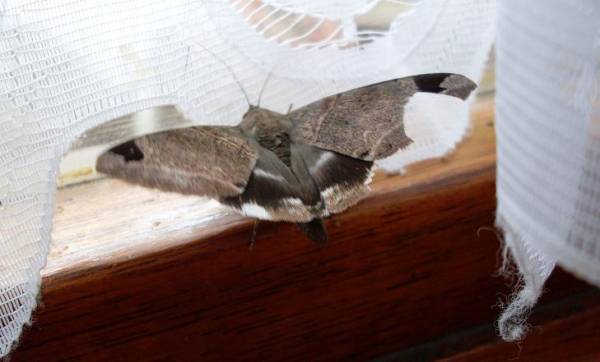
One very lucky moth, just escaped from a gecko .... left a section of it's wing in the gecko's mouth though :eek:

Moth_Escape.JPG
 
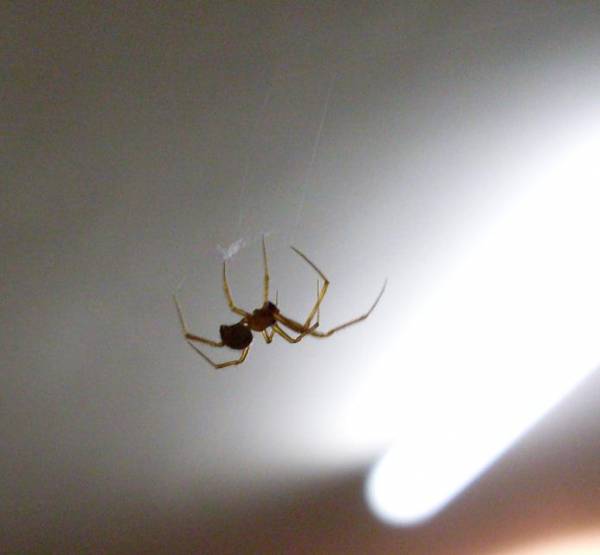
Went to go make supper and spotted this guy in the kitchen doorway. It's about the size of 2 match heads.

Spider2.JPG
 
ldmelsa, I love scrolling up and down over those pics of yours, quite a nice effect :-)

Anyways, my pics for this thread, seeing as though I already let a moth loose in the other one, is about high ISO on a non-DSLR and when to use them. Often when people test the noise levers at higher ISOs on small sensor size cameras they do it under the wrong conditions. High ISO modes on non-DSLR cameras are there to use under low light conditions - the noise reduction for high ISO modes in the camera firmware is also optimized to work on darker photos.

It is absolutely pointless to shoot at a higher ISO than what you need simply because you can. One should always take the shot at the lowest ISO possible.

Here with some random examples to illustrate that higher ISO modes on small sensor cameras are not completely useless IF used under the right conditions :

ISO 800 :
800_1.jpg

800_2.jpg


ISO 1600 :
1600_1.jpg

1600_2.jpg


Cellphone camera (Nokia N82) at ISO 500 and ISO 800 :
n500.jpg

n800.jpg
 
that first pic of the ray is the best IMO ..... with the light shining down from above, very cool.
 
Not a special picture at all, Would have been better if I had been faster on the uptake, and got the group from the front rather than AFTER they'd run past me...


This is more a kind of had to be there moment.. but this group ran past us all singing shosholoza (after having run 55kms)
 
Excellent frame grabs! I assume being a Canon it stores the video in MJPEG? That is pretty convenient if you want frame grabs since the video is actually just a bunch of jpegs. Was that a single video shot with AF on? Looks very good.

The highISO shots look better on the Kodak than on our Canon S3 but at the cost of sharpness - Kodaks does seem to do rather aggressive noise reduction at higher ISO values. The Nokia, those shots look good because they were done in macro mode, lots of blurry background to apply aggressive NR on :p

Small camera? How small and what you want to spend :D. There are some pretty sweet Canon IXUS models these days. The Kodak V-series might come in a little cheaper and also has OIS. Personally I always have my phone with me so when I buy a phone I go for something with a nice camera. The new N86 has a very nice 8MP shooter on the back (check out the sample images 2/3 down this page)
 
When good ISOs go Bad

Seeing that I yesterday posted the good side about high ISOs on small sensor cameras, today I'll post the worst. Something that I find is a sure way to take worthless shots is the modes where you have to shoot at 3megapixel or less (on a 8mp or 10mp sensor).

Batch #1 - 0.5s exposures

ISO 800, still looks OK :
a800.jpg


ISO 3200, very little detail left :
a3200.jpg


ISO 6400, could be a smudged painting for all I know :
a6400.jpg

Shot at the Coetzenburg fire in Stellenbosch earlier this year. All shots resized from 3mp images.

Batch #2 - 16s exposures

ISO 800, still to dark :
b800.jpg


ISO 1600, a lot of noise, too dark still :
b1600.jpg


ISO 3200, now there is light, but its all smeared :
b3200.jpg


ISO 6400, Da Vinci could draw better with his eyes closes :
b6400.jpg

Shot on a night with no street or moon light present. First two shots resized from 10mp, last two from 3mp.
 
No, it is a DV (Motion JPEG [I think],compression ratio of 5:1 and runs at 25Mbps) camera, plus it's interlaced (720x576i50), not progressive. Because it was interlaced I had to deinterlace the frames with a special adaptive deinterlacing plugin. I also had to resizes the frames from 720x576 to 768x576, as DV is anamorphic (it has a pixel aspect ratio of 1.07:1, but is displayed at 1.33:1 [4:3] or 1.78:1 [when it's 16:9] - if this was a 16:9 DV camera, I would have resized them to 1024x765 [16x9]).
 
Last edited:
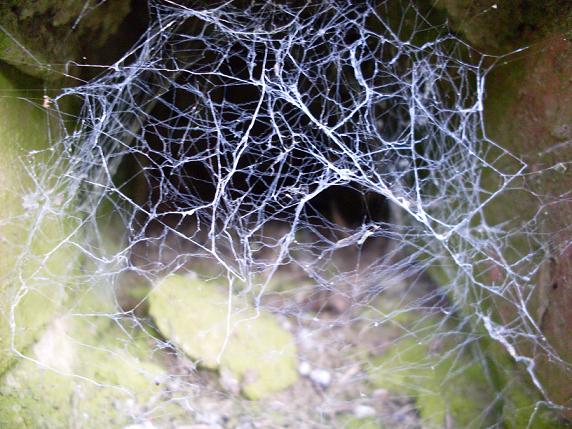
Literally makes me shudder to think about the spider that made this web ...... :o

Spiderweb.JPG
 
And no raw or Photoshop. Only resized, for Flickr, with ACDSee.
I just wish I had a cheaper camera! I would love to use "crap" cameras. :D
 
Top
Sign up to the MyBroadband newsletter
X