


Yea, being in IT and seeing such, makes me wonder how this magnificent site "As it Praises itself" has such a underground prevalent undertone.
no one is forcing you to stay
South Africa’s biggest forum. Discuss, discover, and connect with thousands of members.
Yea, being in IT and seeing such, makes me wonder how this magnificent site "As it Praises itself" has such a underground prevalent undertone.

is MYBB not a Recognised IT website still allows forums like this.
At the end of the day everyone has their own perceptions, religious ideals etc. this should not be allowed on an IT website.
Go to “X” or wherever and spew your differences!
Is MyBoraodband a professional organisation but hosting cr@p in the background? !!!! F Me!

The number of people posting nonsense from X/ Twitter in this thread alone has been insanity.This is why I stay off of Twitter. You guys know it's basically a landfill for propaganda right?

The West didn't. The Iranians sold the rights to a British company.You can't ignore it. It's their country and their oil, after all. Who gives the west the right to decide on their behalf.
In 1901, William Knox D'Arcy, a millionaire London socialite, negotiated an oil concession with Mozaffar al-Din Shah Qajar of Persia. He financed this with capital he had made from his shares in the highly profitable Mount Morgan Mine in Queensland, Australia. D'Arcy assumed exclusive rights to prospect for oil for 60 years in a vast tract of territory including most of Persia. In exchange the Shah received £20,000 (£2.1 million today),<a href="https://en.wikipedia.org/wiki/Anglo-Iranian_Oil_Company#cite_note-inflation-UK-2"><span>[</span>2<span>]</span></a> an equal amount in shares of D'Arcy's company, and a promise of 16% of future profits.<a href="https://en.wikipedia.org/wiki/Anglo-Iranian_Oil_Company#cite_note-Kinzer_2003_48-3"><span>[</span>3<span>]</span></a><a href="https://en.wikipedia.org/wiki/Anglo-Iranian_Oil_Company#cite_note-bio-4"><span>[</span>4<span>]</span></a>
D'Arcy hired geologist George Bernard Reynolds to do the prospecting in the Persian desert. Conditions were extremely harsh: "small pox raged, bandits and warlords ruled, water was all but unavailable, and temperatures often soared past 50°C".<a href="https://en.wikipedia.org/wiki/Anglo-Iranian_Oil_Company#cite_note-Kinzer_2003_48~49-5"><span>[</span>5<span>]</span></a> After several years of prospecting, D'Arcy's fortune dwindled away and he was forced to sell most of his rights to a Glasgow-based syndicate, the Burmah Oil Company.
By 1908, having sunk more than £500,000 into their Persian venture and found no oil, D'Arcy and Burmah decided to abandon exploration in Persia. In early May 1908, they sent Reynolds a telegram telling him that they had run out of money and ordering him to "cease work, dismiss the staff, dismantle anything worth the cost of transporting to the coast for re-shipment, and come home." Reynolds delayed following these orders and in a stroke of luck, struck oil shortly after, on 26 May 1908.<a href="https://en.wikipedia.org/wiki/Anglo-Iranian_Oil_Company#cite_note-Kinzer_2003_48~49-5"><span>[</span>5<span>]</span></a> However, according to Arnold Wilson, "The service rendered by G.B. Reynolds to the British empire and to British industry and to Persia was never recognized."<a href="https://en.wikipedia.org/wiki/Anglo-Iranian_Oil_Company#cite_note-dy-6"><span>[</span>6<span>]</span></a>
According to Daniel Yergin, "By the end of April 1933, a new agreement was finally forged. The concession area was reduced by three-quarters. Persia was guaranteed a fixed royalty of four shillings per ton, which protected it against fluctuations in oil prices. At the same time, it would receive 20 percent of the company's worldwide profits that were actually distributed to shareholders above a certain minimum sum. In addition, a minimum annual payment of £750,000, irrespective of other developments, was guaranteed. The royalties for 1931 and 1932 were to be recalculated on the new basis, and the 'Persianization' of the workforce was to be accelerated. Meanwhile, the duration of the concession was extended from 1961 to 1993." By 1950, Abadan had become the world's largest refinery.<a href="https://en.wikipedia.org/wiki/Anglo-Iranian_Oil_Company#cite_note-dy-6"><span>[</span>6<span>]</span></a><span title="Page / location: 269–271, 463">: 269–271, 463 </span>
The Anglo-Persian Oil Company continued its large Persian operations although it changed its name to the AIOC in 1935. In spite of diversification the AIOC still relied heavily on its Iranian oil fields for three-quarters of its supplies, and controlled all oil in Iran.[<em><a href="https://en.wikipedia.org/wiki/Wikipedia:Citation_needed" title="Wikipedia:Citation needed"><span title="This claim needs references to reliable sources. (August 2021)">citation needed</span></a></em>]
On 7 March 1951, Prime Minister Haj Ali Razmara was assassinated by the Fada'iyan-e Islam, a Shia terrorist organization that supported nationalization of the AIOC. As Prime Minister, Razmara successfully resisted efforts by the pro-nationalization opposition party, the National Front. The public's discontent over the lack of progress regarding the AIOC and the D'Arcy concession became even more apparent from<a href="https://en.wikipedia.org/wiki/Anglo-Iranian_Oil_Company#cite_note-Kinzer_2003_78~80-20"><span>[</span>20<span>]</span></a> the obvious lack of mourning for Razmara. A raucous protest walkout by newspaper reporters ensued when a visiting American diplomat urged "reason as well as enthusiasm" to deal with the imminent British embargo against Iran.<a href="https://en.wikipedia.org/wiki/Anglo-Iranian_Oil_Company#cite_note-Kinzer_2003_106-21"><span>[</span>21<span>]</span></a>


The West didn't. The Iranians sold the rights to a British company.
https://en.wikipedia.org/wiki/Anglo-Persian_Oil_Company
Do you read that?. S O L D
And it was for 60 years. After that, the rights expire.
They then renegotiated it in 1933, despite 1968 only being 35 years left. And extended it to 1993
All they had to do was let the concession expire in 1968 and that would have been it. The Iranians would then be able to negotiate with whomever they want.
Of course, that isn't want happened. Radical Shia clerics assassinated the PM who was keeping the agreement in tact.

Do you really think the contracts entered into by undemocratic leaders should be treated as valid long after that political system has been overthrown?And it was for 60 years. After that, the rights expire.
They then renegotiated it in 1933, despite 1968 only being 35 years left. And extended it to 1993

 Plenty examples of these 'journalists' being terrorists.
Have you considered that the US is...lying.Exactly, what points? The UK, Australia, and EU all stressed that the truce should be extended to Lebanon. Clearly they don't consider Lebanon to be currently included in the truce.
Again, this comes back to the US who is leading the coalition. It is the US who should instruct their partner. Then again, Israel's campaign in Lebanon is not Epic Fury. Israel knows the lanes.
It is the US that needs to include Lebanon. This is their watch.
Without points, the public can't have an opinion. We don't know what was brokered. Clearly Pakistan was mistaken.
Fog is what it is.

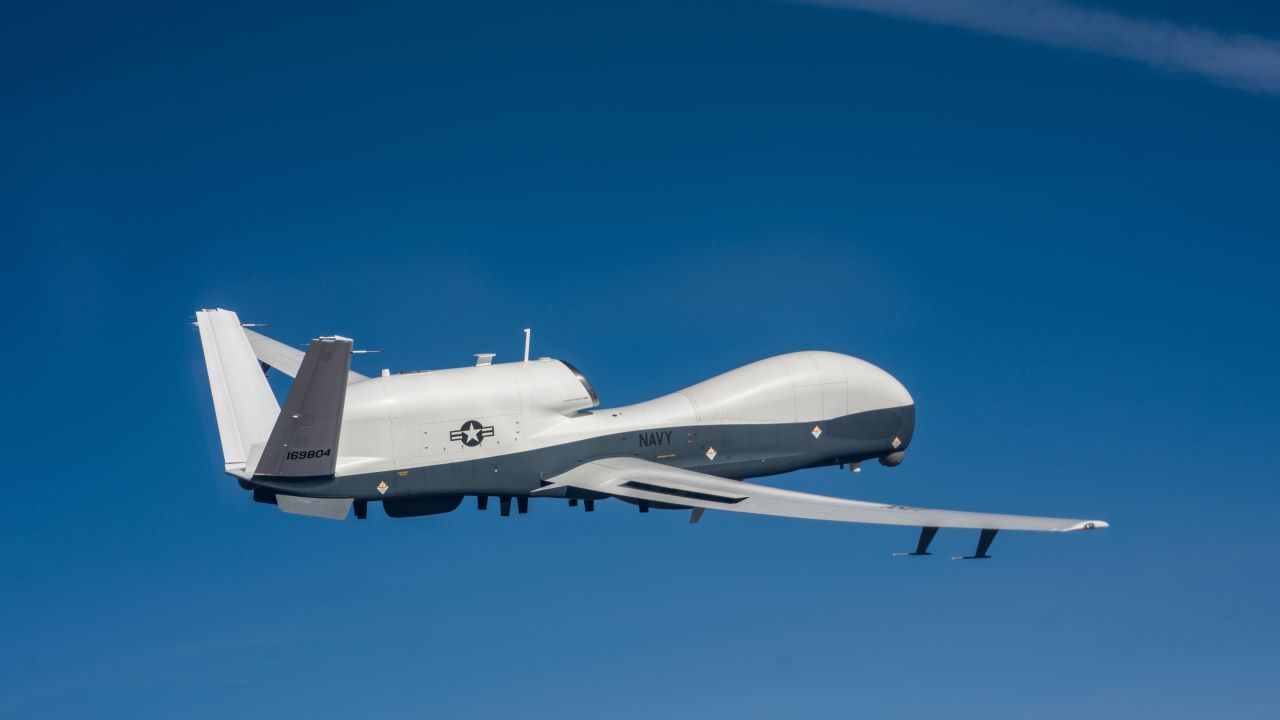
 theaviationist.com
You are being deliberately ignorant if you don't look at the history as to why that happened, and as to the parties at play, like radical Shia clerics.I'm not reading all of that , but the coup in 1953 that installed the Shah was planned and initiated by the CIA. They admitted to it years later, so it's not a maybe.
1953 Iranian coup d'état - Wikipedia
en.wikipedia.org
A key motive was to protect British oil interests in Iran after Mosaddegh nationalized the country's oil industry.<a href="https://en.wikipedia.org/wiki/1953_Iranian_coup_d'état#cite_note-crime-11"><span>[</span>10<span>]</span></a><a href="https://en.wikipedia.org/wiki/1953_Iranian_coup_d'état#cite_note-Allen-Ebrahimian-12"><span>[</span>11<span>]</span></a><a href="https://en.wikipedia.org/wiki/1953_Iranian_coup_d'état#cite_note-13"><span>[</span>12<span>]</span></a>
Mosaddegh had sought to audit the documents of the Anglo-Iranian Oil Company(AIOC), a British corporation (now part of BP), to verify that AIOC was paying the contracted royalties to Iran, and to limit their control over Iranian oil reserves.<a href="https://en.wikipedia.org/wiki/1953_Iranian_coup_d'état#cite_note-kinzer-14"><span>[</span>13<span>]</span></a>Upon the AIOC's refusal to cooperate with the Iranian government, the parliament (Majlis) voted to nationalize Iran's oil industry and to expel foreign corporate representatives from the country.
Textbook lies, one could see this from a mile away.
Your original post, who taught you history?
You can't give back something you never owned.
Hence, I find your distortion tantamount to lowly bootlicking.
Tell me when I harp at the fact that you a taqiya Zionist why do you dismiss it like you merely hold an informed position on the subject?

No government speaks the truth.
And yet you keep telling me to trust the US and Israel.No government speaks the truth.
You are being deliberately ignorant if you don't look at the history as to why that happened, and as to the parties at play, like radical Shia clerics.
From your own article:
In a previous post, you said greed was the reason. And I agree, it is greed on the part of the Iranians, they signed away the rights to the oil.
I didn't tell you to trust anyone. I am communicating with sources that are on the record.And yet you keep telling me to trust the US and Israel.
Yup, when I want a trustworthy source as to whether a murder has been committed, I always trust the official twitter account of the organisation that is being accussed of said murder.That's what they call journalists when the useful idiots get their panties in a twist


Don't let the door hit you on your way out.Lol, I created a beehive. I will not comment further, I see I received threats and so forth.
But seems a bit weird. Enjoy your political/ethnic/religious sub-forums.


