


build more grid capacity, transmission lines, or wheel the power. Protest against Eskom/gov to deregulate transmission lines so private can build more transmission, rather than spending efforts on this degrowth protesting.Generators cost R20/kWh. Solar farm uses 500 football fields. No grid capacity to built 500 football fields in the sticks.
-
- News
-
Categories
- 5G
- ADSL
- AI
- Banking
- Black Friday
- Broadband
- Broadcasting
- Business
- Business Telecoms
- Cellular
- Cloud and Hosting
- Columns
- Cryptocurrency
- Energy
- Enterprise
- Fibre
- Gadgets
- Gaming
- Government
- Hardware
- Industry News
- Internet
- Internet of Things
- Investing
- IT Services
- Motoring
- Reviews
- Science
- Security
- Smartphones
- Software
- Technology
- Telecoms
- Trending
- Wireless
- Press Office
- Forum
- Industry News
- What's Next
- Company hub
- Speed Test
- About us
- Advertise with us
- Contact
- Careers
-
Join the MyBroadband community
South Africa’s biggest forum. Discuss, discover, and connect with thousands of members.
-
Question of the Day: Have you registered your home solar with Eskom?
You are using an out of date browser. It may not display this or other websites correctly.
You should upgrade or use an alternative browser.
You should upgrade or use an alternative browser.
Protests mounting ahead construction of massive hyperscale facility in Cape Town
- Thread starter Luis
- Start date

HermeticAnarchist
Expert Member
- Joined
- Oct 14, 2021
- Messages
- 1,624
- Reaction score
- 1,667
And who will build this mythical infrastructure?
The government?
They will steal your money first.
The corporation?
You will pay through the nose.
The government?
They will steal your money first.
The corporation?
You will pay through the nose.
twinkletoes
Active Member
- Joined
- Apr 23, 2013
- Messages
- 48
- Reaction score
- 2
Thermal distillation is used to desalinate seawater to make it potable but the process requires heat as it requires water to be evaporated. Some datacentres uses evaporative cooling (ie boils water). Surely someone has considered the option to use datacentre cooling as source for thermal distillation of seawater for desalination which can then be used as a source of potable water for Cape Town? Everyone wins? The brine that is left after evaporation should also contain elements that can be used elsewhere (salt, magnesium, etc). This sounds like a straight forward (note - not the same as simple) engineering problem that can be solved.
wingnut771
Honorary Master
Electricity is expensive enough as it is. How much will it be after all of that? Wheeling power is impossible because of grid capacity as the 500 soccer field solar farm is in the sticks. They should build datacentre in new york city, the electricity is cheaper there.build more grid capacity, transmission lines, or wheel the power. Protest against Eskom/gov to deregulate transmission lines so private can build more transmission, rather than spending efforts on this degrowth protesting.
HermeticAnarchist
Expert Member
- Joined
- Oct 14, 2021
- Messages
- 1,624
- Reaction score
- 1,667
Thermal distillation is used to desalinate seawater to make it potable but the process requires heat as it requires water to be evaporated. Some datacentres uses evaporative cooling (ie boils water). Surely someone has considered the option to use datacentre cooling as source for thermal distillation of seawater for desalination which can then be used as a source of potable water for Cape Town? Everyone wins? The brine that is left after evaporation should also contain elements that can be used elsewhere (salt, magnesium, etc). This sounds like a straight forward (note - not the same as simple) engineering problem that can be solved.
But...but...that would benefit the community.
Can't have that...
wingnut771
Honorary Master
Thermal distillation is used to desalinate seawater to make it potable but the process requires heat as it requires water to be evaporated. Some datacentres uses evaporative cooling (ie boils water). Surely someone has considered the option to use datacentre cooling as source for thermal distillation of seawater for desalination which can then be used as a source of potable water for Cape Town? Everyone wins? The brine that is left after evaporation should also contain elements that can be used elsewhere (salt, magnesium, etc). This sounds like a straight forward (note - not the same as simple) engineering problem that can be solved.


xera
Expert Member
Proxa, which will also operate the Strandfontein and Monwabisi plants, was paid R500-million to build them. The plants will contribute 14-million litres to the 500-million litres that Cape Town uses in a day. It will charge the city close to R500-million a year for this water. The deal runs for two years, after which the plants will be closed down.

Cape Town’s desalination plant budget dries up
If the national government doesn’t intervene, residents could end up footing the bill
mg.co.za
Can't make up such bs
xera
Expert Member
vs
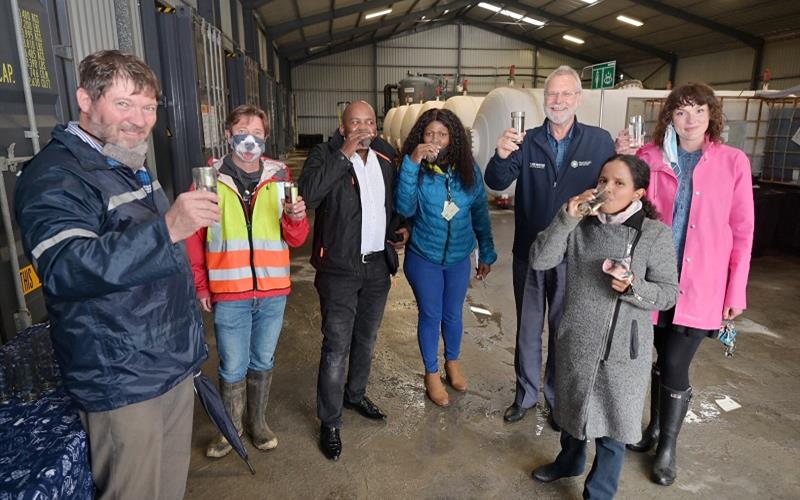
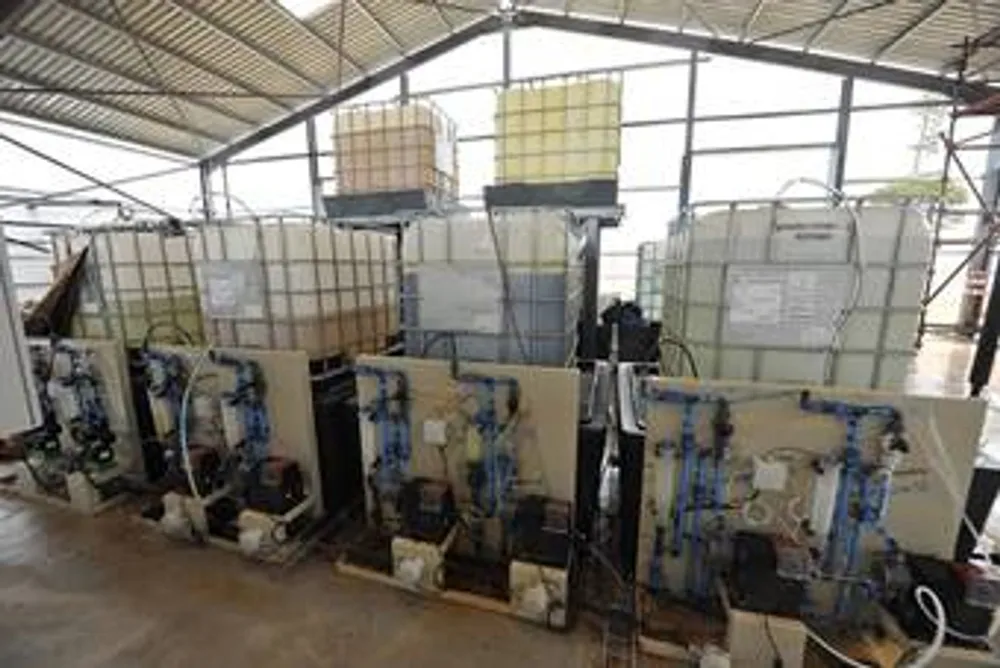
Cape Town has done this before, briefly. During Day Zero, three temporary plants at the V&A Waterfront, Strandfontein and Monwabisi pulled small volumes of seawater out of the Atlantic on short-term contracts. They were costly, contested in court, and switched off when the dams refilled. Paarden Eiland is the City’s first attempt at a permanent, at-scale plant.
Yet they cost the same money as the TUAS Singapore Desalination plant, which was making R100 Million litres of water a day, and is still running!
Because using much more water is cheaper?Open cycle cooling, because its cheaper
Is this 33% pass rate for maths coming through?
twinkletoes
Active Member
- Joined
- Apr 23, 2013
- Messages
- 48
- Reaction score
- 2
Yup. I maybe shouldn't have used the term boiling. Point is that the evaporated water can be used to produce potable water.
wingnut771
Honorary Master
The problem I foresee is getting the sea water to the datacentre and then dealing with everything rusting and scraping the polluted salt off and collecting the water vapour.Yup. I maybe shouldn't have used the term boiling. Point is that the evaporated water can be used to produce potable water.
wingnut771
Honorary Master
Okay, see its possible and being done. Now to just find 175MW x 4 from somewhere.Yup. I maybe shouldn't have used the term boiling. Point is that the evaporated water can be used to produce potable water.


spiff
Executive Member
- Joined
- Oct 17, 2007
- Messages
- 7,004
- Reaction score
- 2,783
Don't understand why they need fresh water when sea water works better. 
Grok.
**Yes, the sea can effectively cool data centers using heat exchangers, and this approach is already in use in several real-world deployments.** It leverages the ocean's vast thermal capacity as a natural heat sink, often reducing energy use for cooling (which can account for 30-40%+ of data center power) and eliminating or minimizing freshwater consumption.
### How It Works
Seawater cooling typically uses **closed-loop heat exchangers** to avoid direct contact between corrosive saltwater and IT equipment:
- **Cold seawater** is pumped from the ocean (often from deeper, cooler layers) through sealed pipes or heat exchangers.
- Heat from the data center's internal cooling fluid (or air) transfers to the seawater via the exchangers.
- Warmed seawater is discharged back to the sea at a controlled temperature (e.g., with limits like no more than a 3°C rise in some regulations) to minimize environmental impact.
**Key methods include**:
- **Wet Surface Air Cooling (WSAC)**: Seawater is sprayed over closed pipes carrying facility coolant; salt buildup is managed with periodic fresh-water flushes. Google uses this at its Hamina, Finland facility on the Gulf of Finland.
- **Closed-loop direct or air-exchanger cooling**: Seawater circulates in sealed systems for direct-to-chip liquid cooling or to chill air. Microsoft's Project Natick tested underwater server pods using ambient seawater.
- **Deep Seawater Cooling (DSWC)**: Pipes draw from cold deep ocean layers (e.g., ~2,770m depth at stable ~18°C). Studies (e.g., IIT Bombay) show up to **79% energy savings** vs. traditional chillers for a 100 MW facility, with payback in ~8 months.
### Real-World Examples
- **Google Hamina (Finland)**: Repurposed a paper mill with seawater cooling via tunnels; achieves very low Power Usage Effectiveness (PUE ~1.09) without mechanical chillers.
- **Start Campus Sines (Portugal)**: Uses massive seawater flows (~1,000 m³/min) from a deep ocean basin in a closed circuit with titanium heat exchangers; operational since ~2024 for AI workloads.
- **China's underwater projects**: Wind-powered submerged pods off Shanghai (24 MW) and others use seawater directly as a passive coolant, cutting cooling energy dramatically (PUE ~1.15) and eliminating freshwater/land use.
- **Floating/offshore concepts**: Projects like Samsung's planned floating data centers (target 2028) and others use seawater in closed loops.
Similar lake-based systems (e.g., Toronto's Deep Lake Water Cooling) demonstrate the principle.
### Benefits
- **Energy efficiency**: Ocean water's high thermal capacity (thousands of times that of air) enables "free cooling" with minimal or no chillers.
- **Water savings**: Near-zero freshwater use, addressing scarcity issues in data center growth.
- **Sustainability**: Lower carbon emissions; integrates well with renewables (e.g., offshore wind).
- **Scalability for AI**: Supports high-density racks where air cooling struggles.
### Challenges and Considerations
- **Corrosion and biofouling**: Salt, marine life, and sediments require corrosion-resistant materials (e.g., titanium, HDPE pipes), filtration, and maintenance.
- **Environmental impact**: Discharge temperature must be regulated to protect marine life; permitting and environmental assessments are key hurdles.
- **Infrastructure**: Pipelines, pumps, and coastal access add upfront costs and engineering complexity (e.g., insulation for long pipes).
- **Location limits**: Best for coastal or offshore sites; not universal.
- **Regulatory/operational**: Maintenance is harder underwater/floating; local ecology and permitting can delay projects.
Overall, seawater cooling via heat exchangers is proven, viable, and increasingly attractive amid AI-driven demand and water constraints. It's not a one-size-fits-all solution but excels where geography allows. Ongoing innovations (e.g., hybrid systems, better materials) are expanding its use.
Grok.
**Yes, the sea can effectively cool data centers using heat exchangers, and this approach is already in use in several real-world deployments.** It leverages the ocean's vast thermal capacity as a natural heat sink, often reducing energy use for cooling (which can account for 30-40%+ of data center power) and eliminating or minimizing freshwater consumption.
### How It Works
Seawater cooling typically uses **closed-loop heat exchangers** to avoid direct contact between corrosive saltwater and IT equipment:
- **Cold seawater** is pumped from the ocean (often from deeper, cooler layers) through sealed pipes or heat exchangers.
- Heat from the data center's internal cooling fluid (or air) transfers to the seawater via the exchangers.
- Warmed seawater is discharged back to the sea at a controlled temperature (e.g., with limits like no more than a 3°C rise in some regulations) to minimize environmental impact.
**Key methods include**:
- **Wet Surface Air Cooling (WSAC)**: Seawater is sprayed over closed pipes carrying facility coolant; salt buildup is managed with periodic fresh-water flushes. Google uses this at its Hamina, Finland facility on the Gulf of Finland.
- **Closed-loop direct or air-exchanger cooling**: Seawater circulates in sealed systems for direct-to-chip liquid cooling or to chill air. Microsoft's Project Natick tested underwater server pods using ambient seawater.
- **Deep Seawater Cooling (DSWC)**: Pipes draw from cold deep ocean layers (e.g., ~2,770m depth at stable ~18°C). Studies (e.g., IIT Bombay) show up to **79% energy savings** vs. traditional chillers for a 100 MW facility, with payback in ~8 months.
### Real-World Examples
- **Google Hamina (Finland)**: Repurposed a paper mill with seawater cooling via tunnels; achieves very low Power Usage Effectiveness (PUE ~1.09) without mechanical chillers.
- **Start Campus Sines (Portugal)**: Uses massive seawater flows (~1,000 m³/min) from a deep ocean basin in a closed circuit with titanium heat exchangers; operational since ~2024 for AI workloads.
- **China's underwater projects**: Wind-powered submerged pods off Shanghai (24 MW) and others use seawater directly as a passive coolant, cutting cooling energy dramatically (PUE ~1.15) and eliminating freshwater/land use.
- **Floating/offshore concepts**: Projects like Samsung's planned floating data centers (target 2028) and others use seawater in closed loops.
Similar lake-based systems (e.g., Toronto's Deep Lake Water Cooling) demonstrate the principle.
### Benefits
- **Energy efficiency**: Ocean water's high thermal capacity (thousands of times that of air) enables "free cooling" with minimal or no chillers.
- **Water savings**: Near-zero freshwater use, addressing scarcity issues in data center growth.
- **Sustainability**: Lower carbon emissions; integrates well with renewables (e.g., offshore wind).
- **Scalability for AI**: Supports high-density racks where air cooling struggles.
### Challenges and Considerations
- **Corrosion and biofouling**: Salt, marine life, and sediments require corrosion-resistant materials (e.g., titanium, HDPE pipes), filtration, and maintenance.
- **Environmental impact**: Discharge temperature must be regulated to protect marine life; permitting and environmental assessments are key hurdles.
- **Infrastructure**: Pipelines, pumps, and coastal access add upfront costs and engineering complexity (e.g., insulation for long pipes).
- **Location limits**: Best for coastal or offshore sites; not universal.
- **Regulatory/operational**: Maintenance is harder underwater/floating; local ecology and permitting can delay projects.
Overall, seawater cooling via heat exchangers is proven, viable, and increasingly attractive amid AI-driven demand and water constraints. It's not a one-size-fits-all solution but excels where geography allows. Ongoing innovations (e.g., hybrid systems, better materials) are expanding its use.
wingnut771
Honorary Master
They dont need any water:Don't understand why they need fresh water when sea water works better.
Grok.
**Yes, the sea can effectively cool data centers using heat exchangers, and this approach is already in use in several real-world deployments.** It leverages the ocean's vast thermal capacity as a natural heat sink, often reducing energy use for cooling (which can account for 30-40%+ of data center power) and eliminating or minimizing freshwater consumption.
### How It Works
Seawater cooling typically uses **closed-loop heat exchangers** to avoid direct contact between corrosive saltwater and IT equipment:
- **Cold seawater** is pumped from the ocean (often from deeper, cooler layers) through sealed pipes or heat exchangers.
- Heat from the data center's internal cooling fluid (or air) transfers to the seawater via the exchangers.
- Warmed seawater is discharged back to the sea at a controlled temperature (e.g., with limits like no more than a 3°C rise in some regulations) to minimize environmental impact.
**Key methods include**:
- **Wet Surface Air Cooling (WSAC)**: Seawater is sprayed over closed pipes carrying facility coolant; salt buildup is managed with periodic fresh-water flushes. Google uses this at its Hamina, Finland facility on the Gulf of Finland.
- **Closed-loop direct or air-exchanger cooling**: Seawater circulates in sealed systems for direct-to-chip liquid cooling or to chill air. Microsoft's Project Natick tested underwater server pods using ambient seawater.
- **Deep Seawater Cooling (DSWC)**: Pipes draw from cold deep ocean layers (e.g., ~2,770m depth at stable ~18°C). Studies (e.g., IIT Bombay) show up to **79% energy savings** vs. traditional chillers for a 100 MW facility, with payback in ~8 months.
### Real-World Examples
- **Google Hamina (Finland)**: Repurposed a paper mill with seawater cooling via tunnels; achieves very low Power Usage Effectiveness (PUE ~1.09) without mechanical chillers.
- **Start Campus Sines (Portugal)**: Uses massive seawater flows (~1,000 m³/min) from a deep ocean basin in a closed circuit with titanium heat exchangers; operational since ~2024 for AI workloads.
- **China's underwater projects**: Wind-powered submerged pods off Shanghai (24 MW) and others use seawater directly as a passive coolant, cutting cooling energy dramatically (PUE ~1.15) and eliminating freshwater/land use.
- **Floating/offshore concepts**: Projects like Samsung's planned floating data centers (target 2028) and others use seawater in closed loops.
Similar lake-based systems (e.g., Toronto's Deep Lake Water Cooling) demonstrate the principle.
### Benefits
- **Energy efficiency**: Ocean water's high thermal capacity (thousands of times that of air) enables "free cooling" with minimal or no chillers.
- **Water savings**: Near-zero freshwater use, addressing scarcity issues in data center growth.
- **Sustainability**: Lower carbon emissions; integrates well with renewables (e.g., offshore wind).
- **Scalability for AI**: Supports high-density racks where air cooling struggles.
### Challenges and Considerations
- **Corrosion and biofouling**: Salt, marine life, and sediments require corrosion-resistant materials (e.g., titanium, HDPE pipes), filtration, and maintenance.
- **Environmental impact**: Discharge temperature must be regulated to protect marine life; permitting and environmental assessments are key hurdles.
- **Infrastructure**: Pipelines, pumps, and coastal access add upfront costs and engineering complexity (e.g., insulation for long pipes).
- **Location limits**: Best for coastal or offshore sites; not universal.
- **Regulatory/operational**: Maintenance is harder underwater/floating; local ecology and permitting can delay projects.
Overall, seawater cooling via heat exchangers is proven, viable, and increasingly attractive amid AI-driven demand and water constraints. It's not a one-size-fits-all solution but excels where geography allows. Ongoing innovations (e.g., hybrid systems, better materials) are expanding its use.


naughty001
Expert Member
People living in a poor country, up in arms when a company finally invests here.
Beggars that want to be choosers.
who really said that the inhabitants of this country are totally steeped in immense brain power

 to be brutally honest its mostly just always been the opposite ....... guys like this cretin purrr participating in this thread are a case in point

purrr
Expert Member
- Joined
- Nov 6, 2025
- Messages
- 1,854
- Reaction score
- 1,578
Really mature.who really said that the inhabitants of this country are totally steeped in immense brain power

Sapphiron
Honorary Master
its still 3.5 kWh to produce one Kl of water.
vs
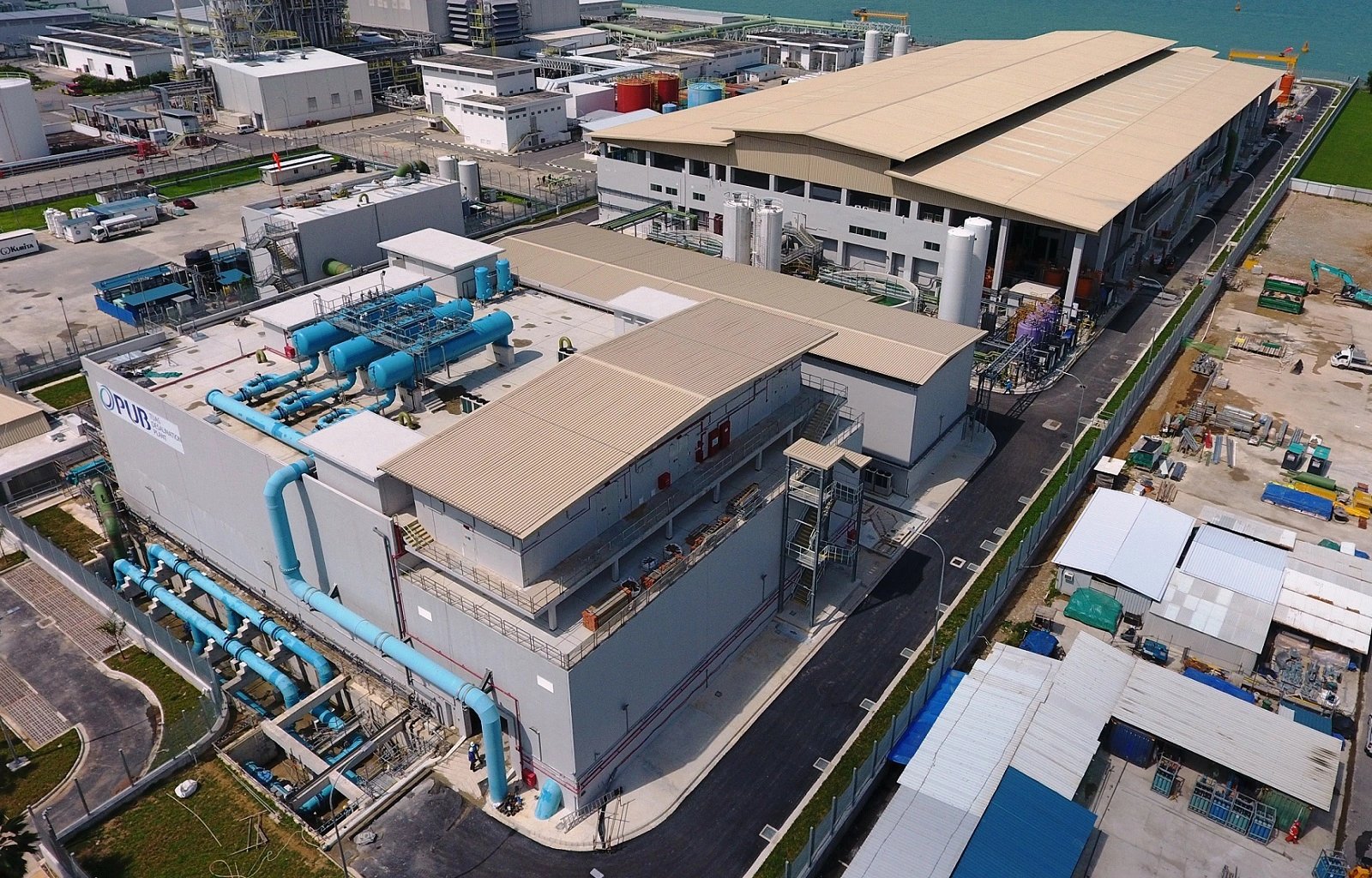
Yet they cost the same money as the TUAS Singapore Desalination plant, which was making R100 Million litres of water a day, and is still running!
or around R12 per Kl of water at industrial rates.
So if the DC needs 12.05 million liters/day , that's around 12050 kl or R144k per day just in power to produce the water, never mind any of the other costs.

Vorastra
Honorary Master
It sounds like you need to posting this at the author of the article, not me.You sure about that?
https://foxgloveproject.com/meet-the-team/ - Aussie phone nr.
As for the local component, they couldn't even raise R200k in a year, only R45k (after a R40k anonymous donation). So, very popular.
Represented by the LRC.
1 + 1 = 11.
Life is a mystery. ¯\_(ツ)_/¯
naughty001
Expert Member
You forget we have issues with water and electricity.
Data centres don't benefit us.
Maybe 100 jobs.
No they can **** off.
you know why i say you have a lesser brain - the biggest problems are caused by the twattys that do not pay for the water and electricity ie who go and illegally connect to substations and then also the municipalities who take from Eskom and collect the money and who have (mostly ANC) councillors who steal that money and then do not pay Eskom for that use and this government who use Eskom and all SOEs like an ATM for themselves
as for the jobs - no overseas company owes you farkall job and you are a cant because of your entitled tw@tty ways of thinking that the rest of the world owes you, and that you don't need to actually do anything so that YOU can be paid - THAT IS AN ENTITLED KNOBBY WAY OF LOOKING AT THINGS so i'm not surprised at your attitude because of everything you have said so far in this thread - you exhibit a total South African attitude cant way of thinking that demands that something can only exist if it benefits only you ie it must have one third ZA ownership and it must create ZA jobs by the millions otherwise it is not worth it ..... but the truth is that small minded individuals who think like you do actually being born and coming into existence is bad for the world
ar5es like you cannot think that it needs to start small but it needs to start somehow and then it can grow to a situation that worthwhile companies will eventually come here but you expect all the big companies to just come knocking at the door ...... well they don't need cakes like you and the cants running this country in the way you need them and they can afford to tell you to stand on your head and whistle through your ar5e because of your cant attitude
To wash away the tears of the new anti datacentre woke crowd.Someone explain how it’s using this water? It’s in a closed system for cooling how are they consuming it they don’t throw it out after it’s been cycled?