The disappearance of load-shedding has little — if anything — to do with Eskom's generating fleet improvements

mylesillidge

Journalist
Joined
Jul 29, 2021
Messages
4,273
Reaction score
4,573
Real reasons load-shedding disappeared

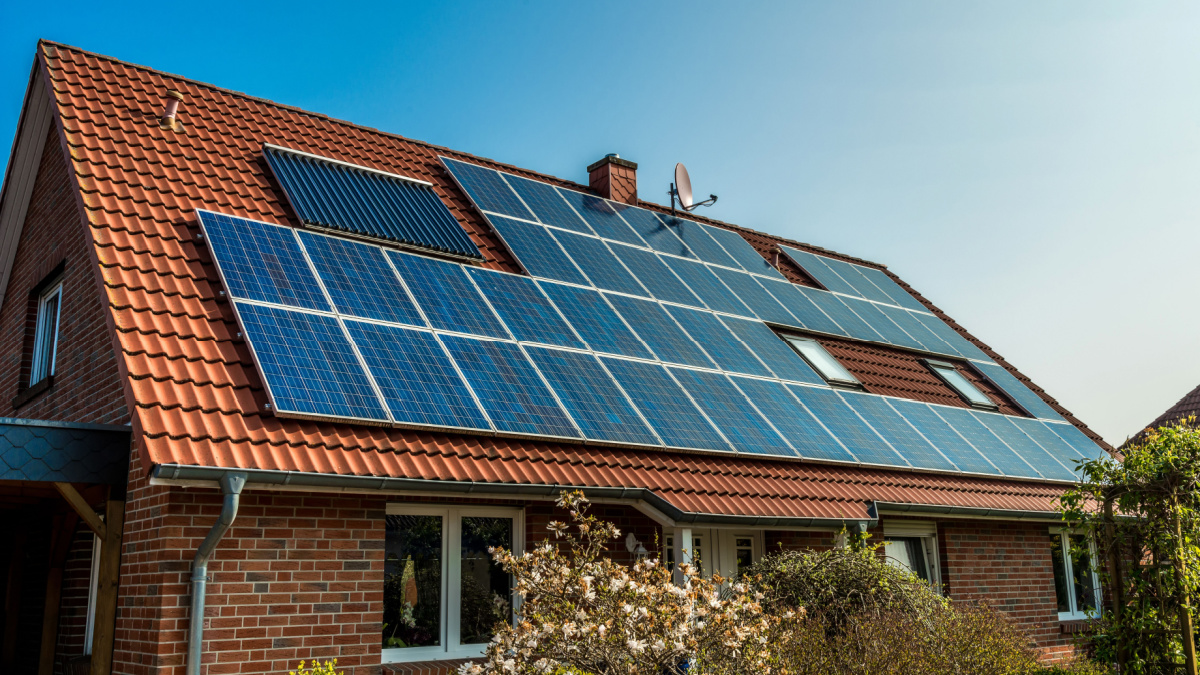
Local electricity demand destruction and rapid uptake of self-generation are the two main reasons that load-shedding has disappeared in South Africa.

These findings stem from MyBroadband's analysis of Statistics South Africa and National Transmission Company of South Africa (NTCSA) data on electricity production and demand.
 
This would need to be looked at holistically over a course of years, not just two years, especially over the worst case of LS we had, Eskoms sent out number changes drastically over the years depending on a variety of things, if you look at 2014 where sent out was 231 129 and then 2015 it was 226 300, but peak demand was 34 971 and 34 768? You can see just looking at the total sent out doesn't really give the entire picture.

1786946390901.png
Here is FYI 2025
1786946621300.png

So 2016 through to 2025, you'll see that the sent out FYI 2024 (Apr 2023 to Mar 2024) was actually 184 576, 191 307 was FYI 2023
If you look at the Total peak demand on integrated power system, MW, you'll see that demand requirements haven't changed that drastically over the years, the peak demand after all the measures has though, especially over 2023 (FYI 2024), almost as if Eskom was removing about 6 stages of load shedding from us. Looking at it FYI 2025 was a massive jump in sent out from FYI 2023, so where did your numbers come from?
These reports are all available at
Plus the difference between 2023 and 2025 is way higher than 82% (this is actually the difference between 2023 and 2024)
1786948249113.png
Yes we all like to slander Eskom, but can we do it for the right reasons? Not planning for the future, horrible pricing and and. Articles like these need more research as the info is out there and this one is wrong in so many ways.
As I'm not even sure where this number came from either?
SSEGs expanded further in 2026, exceeding 9,100MW by July, meaning there was nearly 7,000MW more self-generation online than in 2023
As in this article it states solar was at 6.8GW in 2025?
This one was 5.4GW in 2024
And this one from 2023 saying it was 4.4GW

So where does the 7GW come from? If in 2023 it was 4.4GW, in 2025 6.8GW in August of 2025, you're saying there was another surge in 2026?
The AI generated figures I could believe, that seems more logical, though not sure on the battery storage.
 
Last edited:
Not that massive a difference if there was supposedly 9GW of solar taking demand away.
Solar would mostly affect electricity GWH sales, not the demand per se. That's why you say the demand peaks haven't changed a whole lot. Of the 9GW installed there is probably some 2GW max that is shaving the peak demand. 70% if not more of the installs are still using a lot of grid during peak times. A typical 40k installation is not taking care of the oven and geyser for most thats for sure.

As per usual I have asked these guys to do an article to show the effect of industries dying (chrome etc) but we get nothing...
 
Solar would mostly affect electricity GWH sales, not the demand per se. That's why you say the demand peaks haven't changed a whole lot. Of the 9GW installed there is probably some 2GW max that is shaving the peak demand.

As per usual I have asked these guys to do an article to show the effect of industries dying (chrome etc) but we get nothing...
Yup even looking at the GWH sold, it's that drastically different either in comparison over the years.
This is why I said you need to look at it holistically over a course of a few years, as the GWH sent out changes, sometimes drastically sometimes not.
It is odd that with the supposed 9GW of installed solar, demand drop is only 2 to 3GW at most. Considering that Eskom has improved the EAF by 14% which means roughly 7 to 8GW improvement overall.
 
Yup even looking at the GWH sold, it's that drastically different either in comparison over the years.
This is why I said you need to look at it holistically over a course of a few years, as the GWH sent out changes, sometimes drastically sometimes not.
It is odd that with the supposed 9GW of installed solar, demand drop is only 2 to 3GW at most. Considering that Eskom has improved the EAF by 14% which means roughly 7 to 8GW improvement overall.
Click bait articles. Kinda tiring to be honest. They must just make a proper article factoring everything.
 
Solar would mostly affect electricity GWH sales, not the demand per se. That's why you say the demand peaks haven't changed a whole lot. Of the 9GW installed there is probably some 2GW max that is shaving the peak demand. 70% if not more of the installs are still using a lot of grid during peak times. A typical 40k installation is not taking care of the oven and geyser for most thats for sure.

As per usual I have asked these guys to do an article to show the effect of industries dying (chrome etc) but we get nothing...

A full answer involves both supply and demand, as well as batteries and pumped storage. Both sides will argue their respective views, and minimise the contrary points. No single simple answer describes the whole process.

IMO solar during the afternoon reduces the duration of the peak period, and allows pumped storage to serve it's designed function, rather than an all-day band-aid.
 
A full answer involves both supply and demand, as well as batteries and pumped storage. Both sides will argue their respective views, and minimise the contrary points. No single simple answer describes the whole process.
Agreed
IMO solar during the afternoon reduces the duration of the peak period, and allows pumped storage to serve it's designed function, rather than an all-day band-aid.
I can see Eskom getting a big break during the day to do maintenance and pump the storage up since demand is reduced quite a bit yeah.
 
1786951464843.png
This is the issue, demand during the day sure, who cares, but this is where the poo hits the fan. The 6GW drop during the afternoon eh, not sure how much maintenance you can get done + we don't have that much pumped storage.
 
But, Eskom patted themselves on the back, the President announced loadshedding was a thing of the past! The Government would surely not lie about these things....
 
I was crucified for saying that solar increases grid loading under the right conditions and saw it first hand on that estate that had solar houses. If everyones batteries get drained during cloudy days and all those inverters kick into grid mode to charge, not only does the grid need to supply your still existent load but it must charge your batteries also (hence why your AC cable to the inverter is thicker than the outgoing inverter output cable).

And Eskom must be there to pick up that slack and the grid is mostly not designed to do that, especially EV chargers. Someone must pay for the grid upgrades and thats why Eskom and Munis, even across the world are pushing that cost to people. You cant use little to no grid and expect the utility to bail you out when you want it. Thats why fixed charges keep skyrocketing.
 
I was crucified for saying that solar increases grid loading under the right conditions and saw it first hand on that estate that had solar houses. If everyones batteries get drained during cloudy days and all those inverters kick into grid mode to charge, not only does the grid need to supply your still existent load but it must charge your batteries also (hence why your AC cable to the inverter is thicker than the outgoing inverter output cable).

And Eskom must be there to pick up that slack and the grid is mostly not designed to do that, especially EV chargers. Someone must pay for the grid upgrades and thats why Eskom and Munis, even across the world are pushing that cost to people. You cant use little to no grid and expect the utility to bail you out when you want it. Thats why fixed charges keep skyrocketing.
Indeed, I said the same thing, especially around heavy LS when people couldn't understand what I meant by demand shift. Load shedding just moved the demand around, it didn't totally remove it. Hence the demand is still there, just spread a bit. Plus as you stated people with solar systems will generally kick over to the grid on heavily cloudy days, putting more strain as it's now twice the work.
Well those that don't manage their systems that is.
 
Indeed, I said the same thing, especially around heavy LS when people couldn't understand what I meant by demand shift. Load shedding just moved the demand around, it didn't totally remove it. Hence the demand is still there, just spread a bit. Plus as you stated people with solar systems will generally kick over to the grid on heavily cloudy days, putting more strain as it's now twice the work.
Well those that don't manage their systems that is.
Which is easily the majority. From my personal experience, the absolute majority dont know what a kW is or kWh. Even Electrical engineers (my old colleagues). Only because they just dont work with these things often. How then will they know anything about Home assistant, charging schedules etc. Thats asking too much of the average person in my opinion. Heck even installers dont do it for people coz they also dont know half this stuff (Aux ports, Neutral relays, MPPT limits, etc).
 
Which is easily the majority. From my personal experience, the absolute majority dont know what a kW is or kWh. Even Electrical engineers (my old colleagues). Only because they just dont work with these things often. How then will they know anything about Home assistant, charging schedules etc. Thats asking too much of the average person in my opinion. Heck even installers dont do it for people coz they also dont know half this stuff.
Yup and a lot are badly configured to kick back to grid at 6pm regardless of battery. Just look at the graph and you can see why demand is relatively the same in the peaks.
 
I was crucified for saying that solar increases grid loading under the right conditions and saw it first hand on that estate that had solar houses. If everyones batteries get drained during cloudy days and all those inverters kick into grid mode to charge, not only does the grid need to supply your still existent load but it must charge your batteries also (hence why your AC cable to the inverter is thicker than the outgoing inverter output cable).

And Eskom must be there to pick up that slack and the grid is mostly not designed to do that, especially EV chargers. Someone must pay for the grid upgrades and thats why Eskom and Munis, even across the world are pushing that cost to people. You cant use little to no grid and expect the utility to bail you out when you want it. Thats why fixed charges keep skyrocketing.
Register your system. That will fix it.
 
Top
Sign up to the MyBroadband newsletter
X