


satanboy
Psychonaut seven

BUCHAREST, Romania—Mihai Moldovanu grabs the cardboard box with the enthusiasm of a man from the future who’s opening a time capsule.
“Maybe it could still work,” he tells me.
He dusts it off with his hands. Inside the box rests the computer he built for himself in high school. He hasn’t switched it on in 10, maybe 20 years. This summer, when moving from one apartment to another, he stumbled upon the box. “I need to find a charger and an old TV set. It’s going to be tricky to revive it.”
An athletic geek now in his mid-40s, Moldovanu has always been crafting DIY projects. In the local open-source community, he is better known as one of the creators of the first Romanian Linux distribution, TFM, that’s still used by local companies. His 9-to-5 job is that of a System Administrator for a fin-tech company in Bucharest.
What Moldovanu’s holding isn’t some hobbyist kit potentially familiar to tech tinkerers back in the states. In the mid-1980s, Romania was a poverty-stricken, Communist country. So like a handful of his fellow students with a similar undeniable passion for computing, Moldovanu soon became one of only a few dozen underground computer builders in the country. They illegally manufactured computers using parts smuggled from factories and heaps of manually soldered wires. But armed with very few resources and plenty of creativity, people like Moldovanu soon fueled an underground hardware industry that would birth some of the country’s best future tech professionals.
...
Back then, Romania’s hardware industry mainly cloned the British Sinclair ZX Spectrum, a machine released in the UK in 1982. This device was copied all across Central and Eastern Europe. The ZX Spectrum was an 8-bit personal computer built around a Zilog Z80 A CPU running a BASIC interpreter, an easy-to-use programming language widespread on microcomputers at that time. It used a TV set as a display and audio cassettes for storage.
Among the clones manufactured by the Communists was the Cobra or CoBra. The name stands for COmputere BRAsov, with Brasov being the town in central Romania where these machines were assembled to be used by enterprises. Of course, ordinary people couldn’t buy them—which is what first led several students at the Politehnica University of Bucharest deciding to build them themselves.
“It was a highly illegal operation. And we knew this very well,” Moldovanu tells me. “But to us, it didn’t matter. We were super excited to turn a pile of parts into a cool project.”
If militia officers caught Moldovanu and colleagues while they were selling computes, however, it'd matter. The authorities could seize the students’ electronics, make them pay fines, and could expel them from the university for starters.

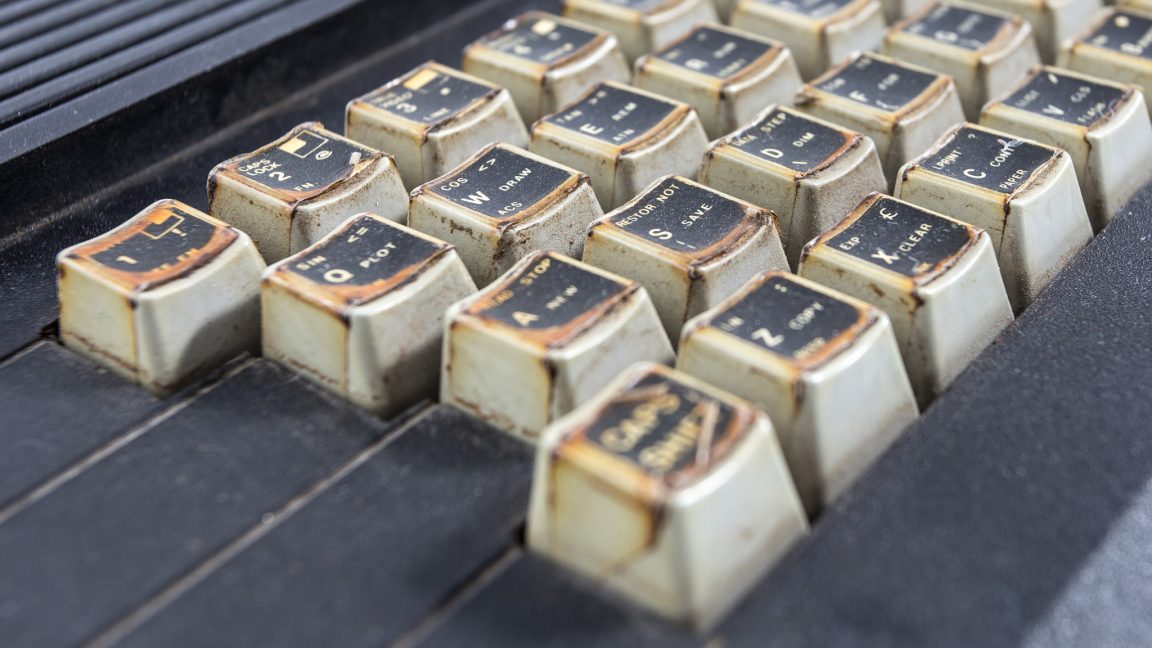
The underground story of Cobra, the 1980s’ illicit handmade computer
In their poor, Communist country, Romania's computer curious built an underground industry.
 arstechnica.com