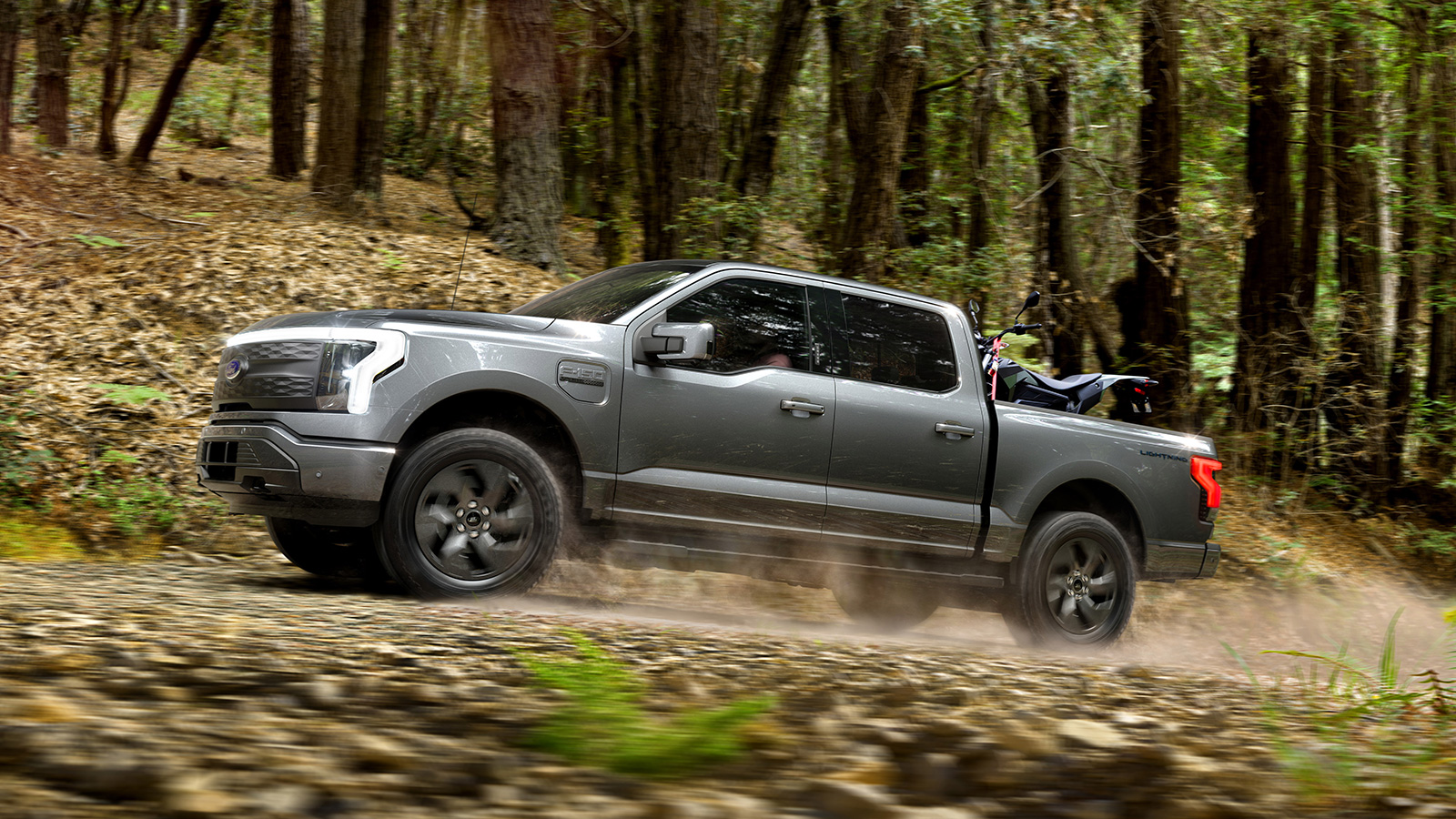
2018 Ford F-150

This Is How The Ford F-150's Taillight Scales Work

Let's look at the engineering that lets the 2021 Ford F-150 tell you how much weight you just threw into your truck.

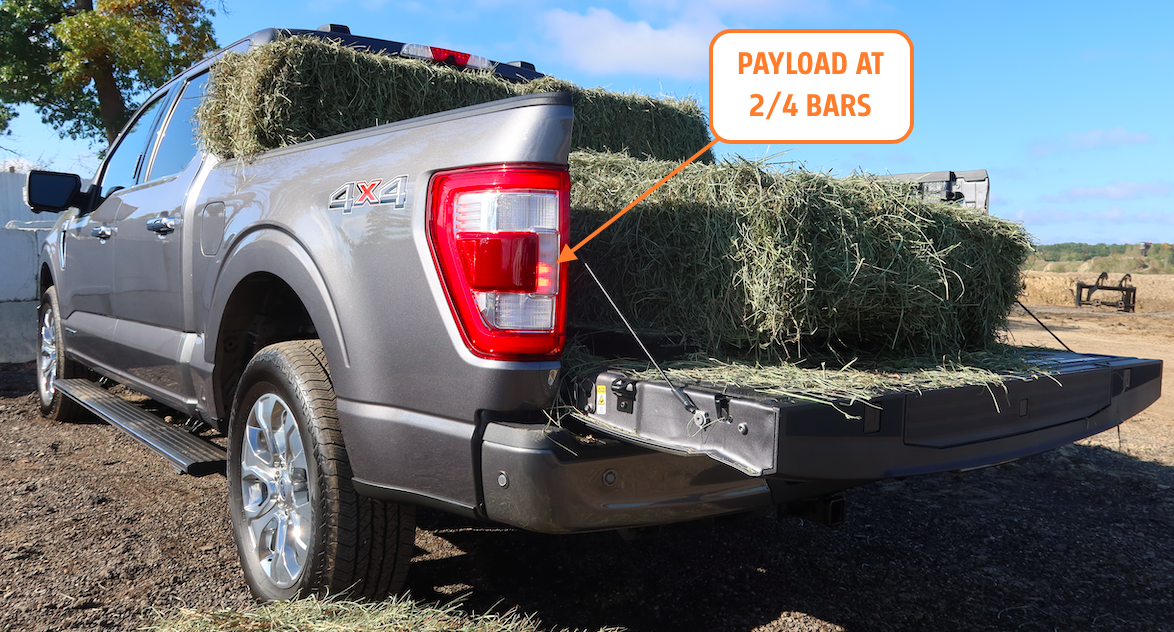
The 2021 Ford F-150 has a feature called “Onboard Scales,” which uses the taillights to help make sure you don’t overload the truck beyond its payload capacity. Here’s how this works.

I’m always impressed when automotive software engineers use already-existing hardware to develop useful new features. Ford’s Trail Control (off-road cruise control) and Trail Turn Assist (a feature that brakes the rear inside wheel to allow for a tighter turn) are two great examples that take advantage of drive-by-wire and the vehicle’s highly capable ABS system.

Now there’s Onboard Scales. My taillight-fetishizing coworker Jason Torchinsky pretty much had a stroke when he saw this feature, as you could probably tell by his article. While that story did a great job contextualizing what this moment means in the grant scheme of taillight history, it didn’t really describe how the system works. Neither did our introductory article in April.

Seeing as Jason’s taillight story is the most-clicked-upon story on Jalopnik right now, and seeing as I just had a chance to test out Onboard Scales at a Ford press event yesterday, I thought I’d write a bit about how the tech works. It’s not going to be one of my patented deep dives, but it’ll be a nice, light overview. Here we go.

 
The Ford F-150 Tremor Is A Tougher-Looking F-150 That Can Handle Moderate Off-Roading

I took a short off-road test drive in a F-150 Tremor. Here's what I thought.

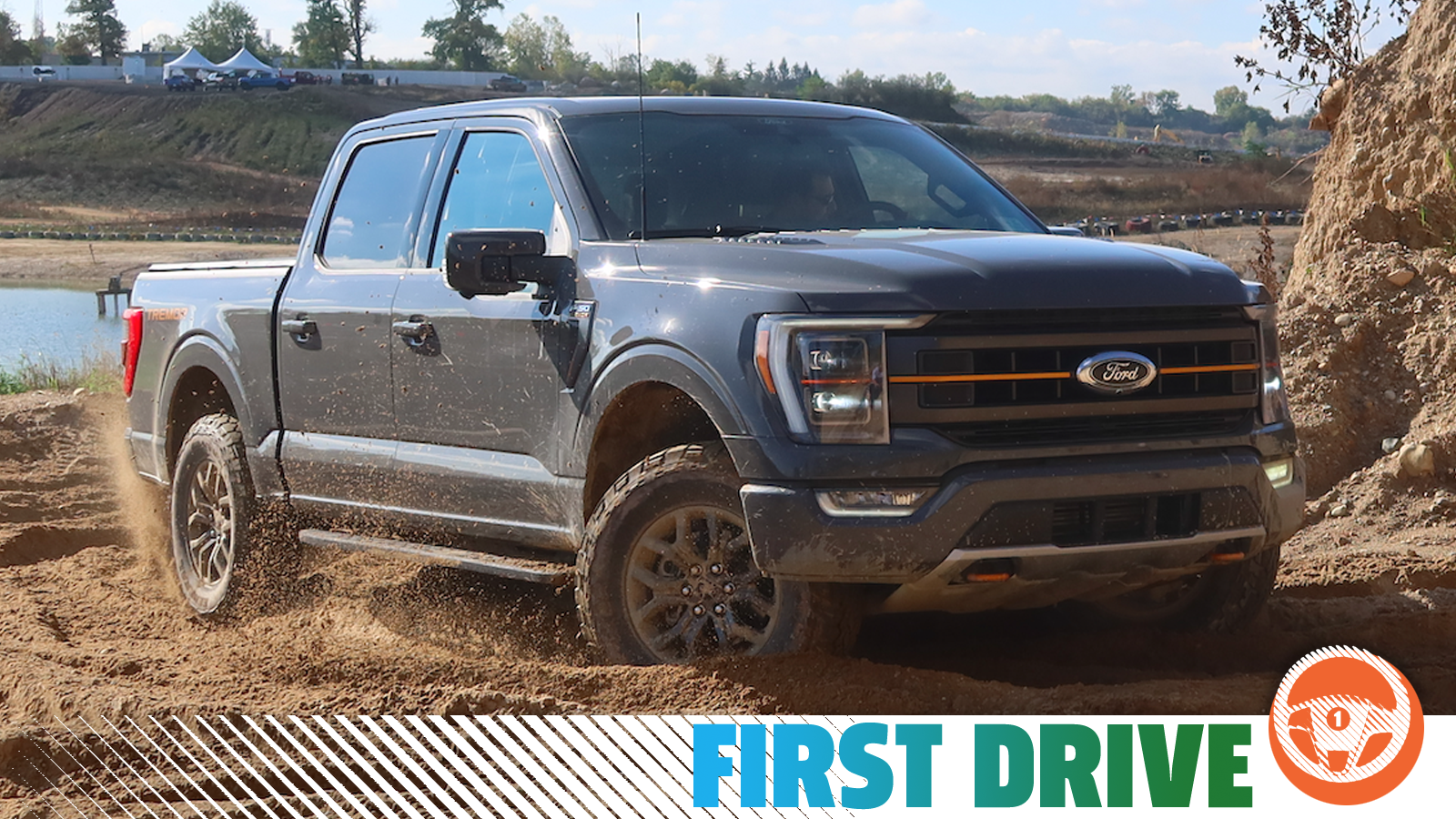
The Ford F-150 Tremor is for people who want an F-150 that looks like it can do some moderate off-roading and actually has the hardware to back that up. I spent a few minutes behind the wheel of one; here’s what I thought.

Back when I was an engineer at FCA, I had to do all my off-road validation testing either at the Chelsea Proving Grounds (an hour away) or at an off-road park (none of which were anywhere close, really). “How is it that all of these OEMs are developing off-road vehicles, but there’s no good place nearby to put them to the test?” I wondered.

Someone capitalized on this idea a couple of years ago when they built Holly Oaks ORV Park. Not only has it become a place where automakers can do light to medium-difficulty off-road testing, but it’s also a place where they can host journalists for short off-road reviews.

Subaru used this spot a few months back, and demonstrated to me how scary the Outback Wilderness’ Hill Descent Control can be on loose downhill grades. And about a month ago, Ford inviting a few journalists to spend a half an hour or so behind the wheel of the brand’s new F-150 Tremor.


Ford 1.pngFord 2.pngFord 3.pngFord 4.pngFord 5.pngFord 6.png
 
Despite Reports, Ford Says Its F-150 Lightning Is Not Delayed

Conflicting reports said that Lightning deliveries would be delayed until next fall. Ford says nah

Earlier today, there was a bit of confusion surrounding the Ford F-150 Lightning and when the trucks would eventually be delivered. Social media posts, an article that’s since been taken down on Teslarati.com, and a forum post on F150Gen14.com all said that the EV truck would be delayed until September of next year. Now, that doesn’t appear to be the case.

This all started with a forum post on F150Gen14 Thursday morning, which had a link to a Ford webinar going over F-150 Lighting delivery and production timelines that afternoon. The forum claims during the webinar, Ford representatives James Morgan and Nathan Gyori outlined the F-150 Lightning’s timeline. One of the main points: F-150 Lightning delivers would be pushed back from the original spring of ‘22 date to September. Social media picked up on it. People tweeted about it. The storm of confusion set off.

Ford quickly went into damage control mode and shot down these claims, withFord’s director of EV communications Emma Brag tweeting there is no delay and deliveries are on track for spring of 2022.

 
F-150 Lightning Orders Haven't Even Started But The Truck's Markups Are Already Here

Thanks potentially to Ford's stinginess with their new trucks, the power control over priority reservations lies in dealers' hands now

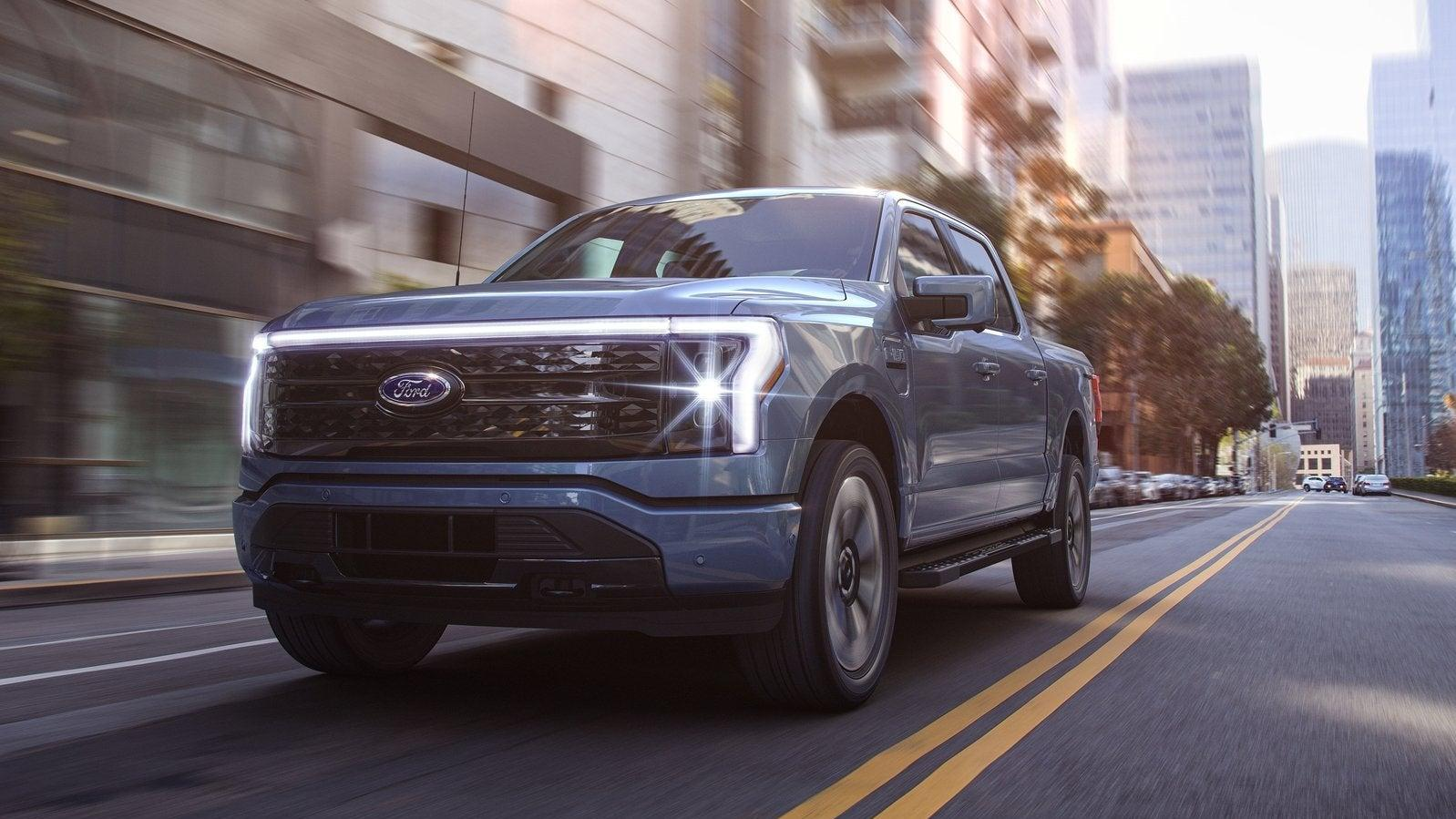
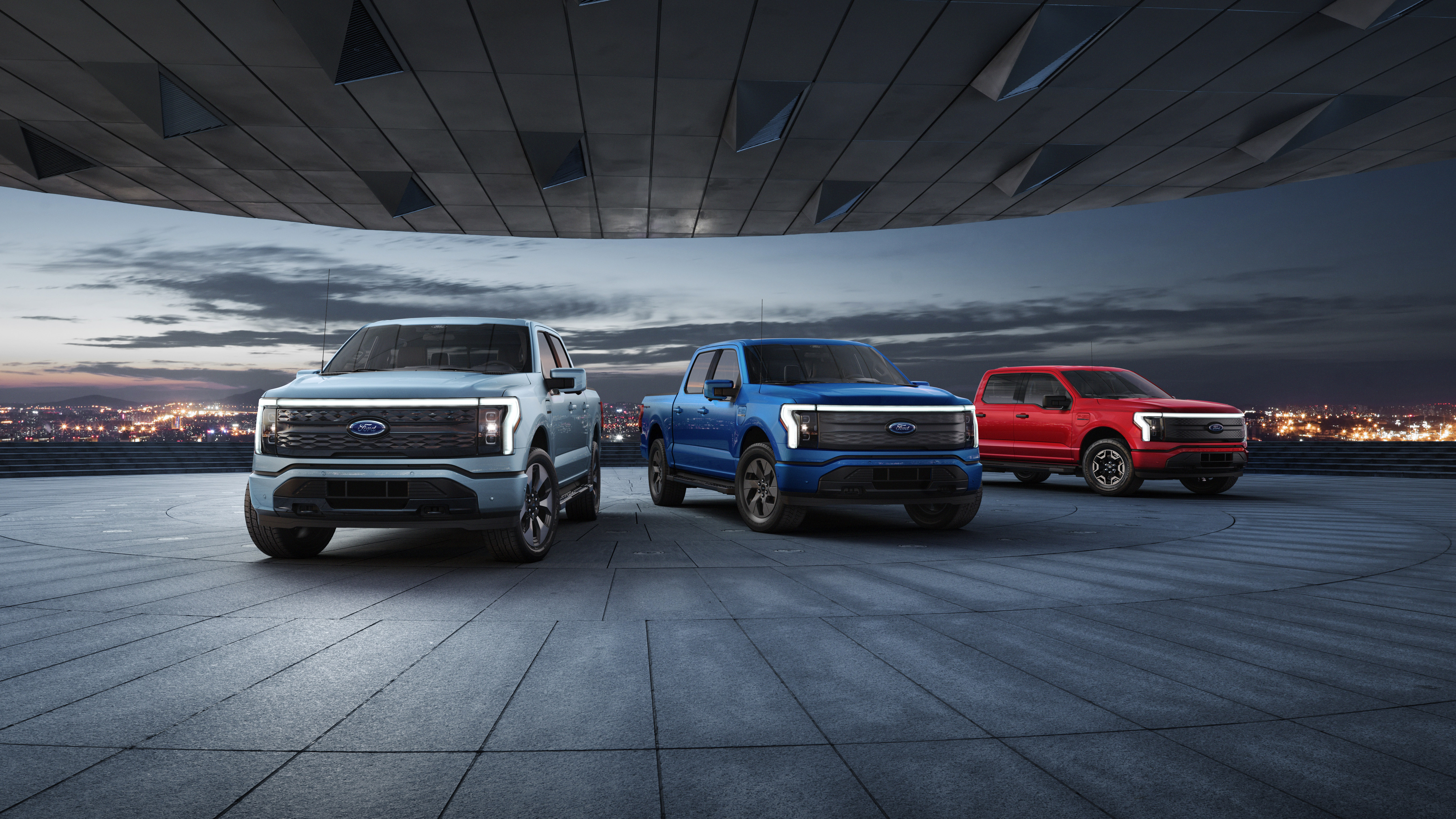
Ford has presented some ambitious EV plans this year. A huge part of those plans rests on the shoulders of one vehicle’s upcoming launch: the Ford F-150 Lighting EV. And the people are hyped, having already put in more than 160,000 reservations for the electric pickup. The dealers are hyped too, with a newer, better and more profitable opportunity. Get ready, the F-150 Lightning markups have already begun.

A post on the F-150 owner forum f150gen14.com details the markups of the Lightning at several dealers. The first was sent in an email to an unknown reservation holder who has their F-150 Lightning reserved at Rodman Ford in Foxborough, MA.

Good, Evening,

You are receiving this email because you reserved a Ford Lightning with Rodman Ford. Unfortunately, Rodman currently has over 200 reservations at this time and is only being allocated with 10% of the reservations. To guarantee your order for this upcoming spring there will be an adjusted markup on the vehicle of $5,000 from the MSRP. The first 10% of customers that respond to this email agreeing with the markup will be put as priority to purchase the Ford Lightning this spring. Ford is anticipating opening orders in January and having the vehicle roll out between April and June. The reservation order list will be finalized on Friday 12/17/2021, if you no longer have interest in the Lightning please let us know and we will remove you from the reservation list as well.

Thank you,

Lightning Support Staff

Rodman Ford

508-543-3333

Outside of the $5,000 markup, this email is troubling. If you read between the lines you can see what the dealer is really saying: they aren’t getting that many Lightnings from Ford. Because of that, even though you may already have a reservation, they have to charge you more.

 
The Ford F-150 Lightning's Batteries Are Smaller Than The Competing Rivian R1T And Hummer EV

The Lightning will come with two options for battery capacity, but do great things come in small packages?

With EVs, capacity and range are the name of the game. Carmakers are locked in endless one-upmanship, constantly trying to outdo each other for headline-grabbing numbers in both categories. Ford, however, is making headlines for a different reason — how small the battery options are on its F-150 Lightning.

In a livestream from December 16th, re-shared on YouTube by DriveElectric Columbus, Ford revealed a spec sheet for the upcoming Lightning that included battery options for each of the truck’s trim levels. Both options, however, are smaller than the competition from GMC and Rivian: 98 kWh for the base battery, and 131 kWh for the extended range.

Ford is aiming for 230 miles of range from the base battery, and 300 from the Extended-Range option. Given the range estimates from the competition, these numbers seem realistic for their respective capacity options — though certainly not class-leading.

For comparison, the Rivian R1T’s smallest battery is 135 kWh. That’s said to deliver 314 miles of range, making Ford’s expectation of 300 miles from its slightly-smaller Extended-Range pack seem entirely feasible. The Rivian, however, can be optioned up to a 180 kWh “Max Pack” battery that advertises “400+ miles” of usable range — far more than either Lightning offering.


Snip.png
 
Here Are The Options To Check If You Want Your Ford Lightning To Be As Expensive As A Rivian R1T

The Ford F-150 Lightning configurator is finally live, and if you want heated seats I have bad news for you.

There’s a lot of hype around the Ford F-150 Lightning, and Ford is leaning into that hype by almost doubling production — something it announced Tuesday, a day before General Motors is expected to unveil its electric Silverado. Also today, Ford sent the Lightning configurator live, giving potential customers, as well as the generally curious, the ability to price out the electric pickup of their dreams.

While we knew that the F-150 Lightning would start at $40,000 for a stripped-down “Pro” model, that version was never intended to go toe-to-toe against more luxurious battery-electric workhorses — such as, say, the Rivian R1T. Thanks to the configurator, we have a better idea of what it’ll cost to get an F-150 on a level of parity with that truck. The short answer is “a lot.”

The XLT is the second trim level up the range and starts at $52,974. Among other things, it adds a surround-view camera system, as well as an eight-way power-adjustable cloth seat (but only for the driver.) If you want the extended range battery — which lifts maximum distance on a charge from 230 miles to 300 and output from 426 horsepower to 523 — you’ll have to budget another $10K. That puts you at about $63K; for reference, the R1T starts at $67,500 but comes with 314 miles of range standard and 800 horsepower.

The R1T can also tow more than the Lightning — 11,000 pounds versus 5,000 pounds for the standard-range Ford, or 10,000 for the one with the bigger battery. (Ford’s $865 Max Trailer Tow package will raise that number to 7,700 pounds for the Lightning with the smaller pack.) On the flip side, the Lightning’s payload capacity is a bit stronger, at 2,000 pounds compared to the R1T’s 1,700. Also, its 5.5-foot bed is 12 inches longer than the Rivian’s.

The Lightning really begins to pale when you start adding luxuries, like heated seats. Butt warmers require equipment group 312A, which also includes Ford’s CoPilot 360 2.0 Level 2 driver assist suite, a power tailgate and a heated leather steering wheel in addition to other, less noteworthy bells and whistles. That’s another $9,500 on the sticker.

Couple the extended range battery with 312A to get the Lightning relatively close to the R1T’s base spec in terms of interior comforts and performance, and you’re spending $74,169 including destination.

 
Top
Sign up to the MyBroadband newsletter
X