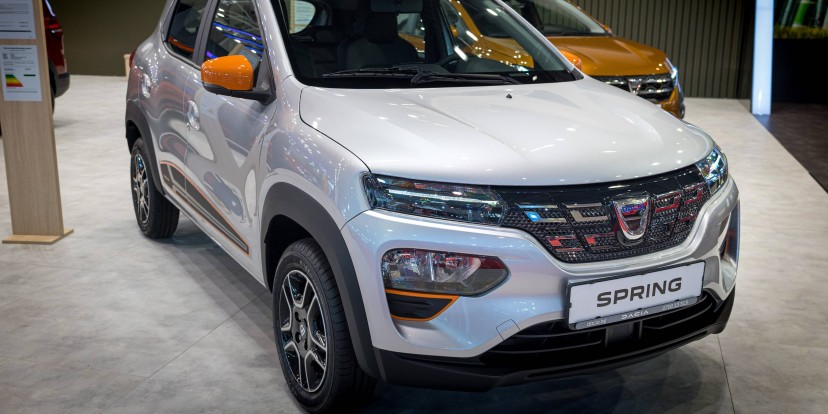
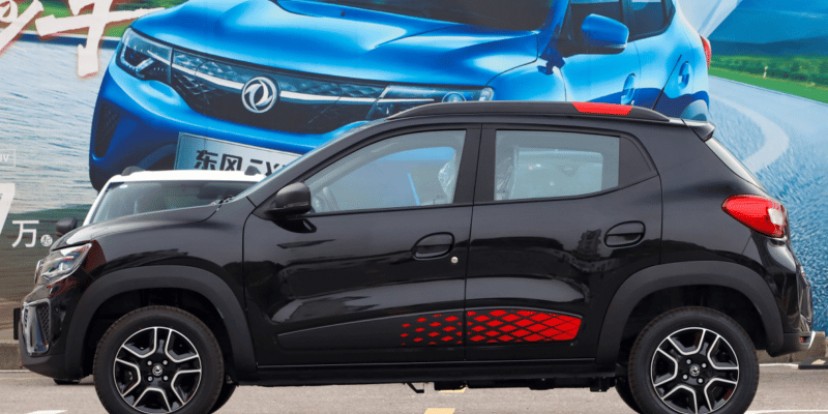
2019 Renault K-ZE (Kwid EV)

LETTER | I'd jump at a chance for a Kwid electric car but here's the problem - reader

• The Dacia Spring is the same car as the Renault Kwid.

• Renault has electrified the Spring/Kwid line-up in Europe.

• Wheels24 reader Justin Steyn explains why he would want one, and outlines SA's challenges.

Here's what Steyn has to say:

"I would jump at a chance for a car like the Dacia Spring or Kwid electric. VW's e-Up! would be another very attractive candidate.

"The trouble is, our government prioritises local production and the electric imports attract excise duties, sometimes in excess of 40%! Contrast this to countries where electric vehicle buyers actually get a hefty discount on their personal income tax bill, when they buy electric cars.

"Remember the Joule? If any government official had any sense back then, they could have made a rule for government fleets to buy a minimum number of Joules annually. Here in Cape Town, I regularly see cars like Chrysler 300C's, Hyundai models, even Audi Q7's with military or government plates. Clearly, the decision-makers who procure these vehicles are completely disconnected from other realities in South Africa. Or maybe they are connected with the kind of realities Judge Zondo listens to daily?

"Mercedes Benz used to advertise their original SLK with a German slogan translating as 'we make perfection visible'.

"Regrettably, policymakers in our beloved country don't share that SLK ethos, and I won't hold my breath to see a truly affordable electric car in Mzansi, any time soon.

"It will be a pleasant surprise if I'm proven wrong.

 
New Dacia Spring: affordable EV launches in France from €12,403

Car-share and delivery van options due for electric model, which is claimed to be Europe's most affordable electric car

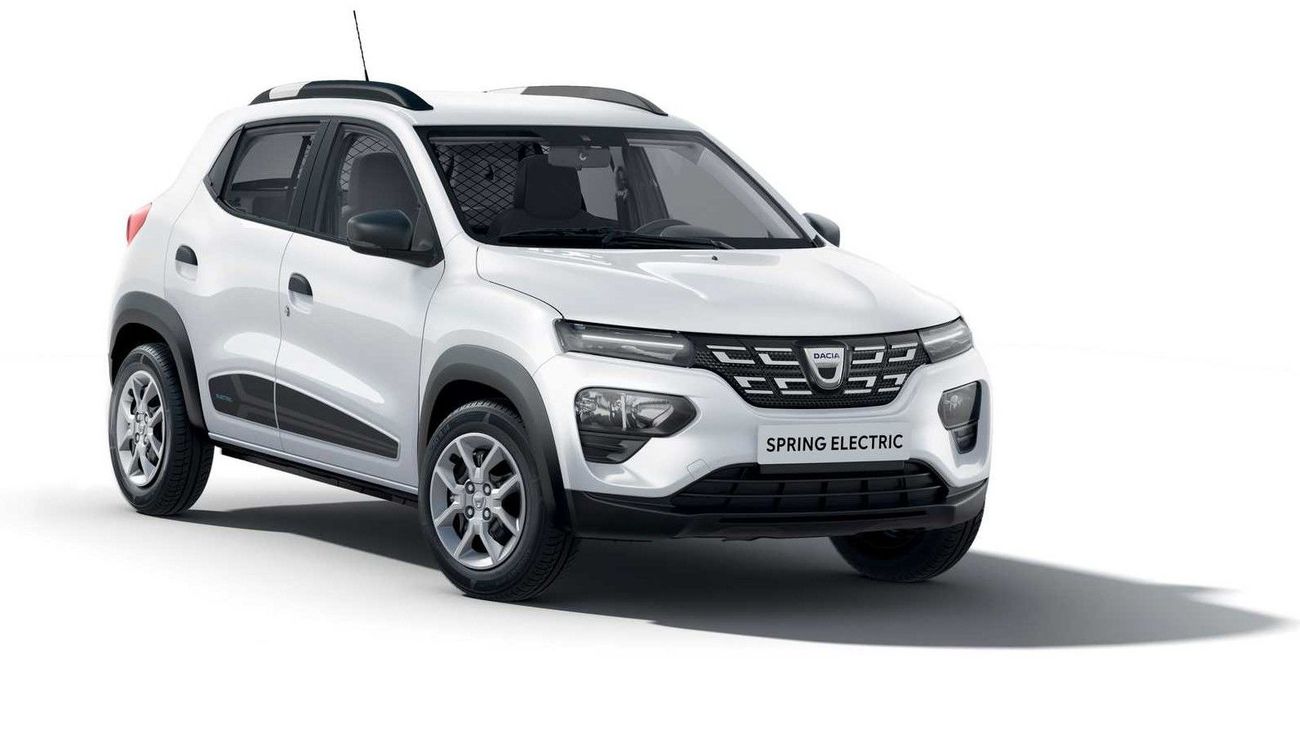
The Dacia Spring Electric, said to be Europe's most affordable EV, has gone on sale in France priced from €12,403 after that country's generous EV incentives.

That minimum price, equivalent to £10,630, positions the Spring alongside a mid-range, conventionally fuelled Sandero in terms of cost. The French government currently offers a grant to buyers of sub-€45,000 EVs amounting to 27% of the cost of purchase, including tax - and a further €2500 if the EV is bought in exchange for an older combustion car to be scrapped.

Pre-orders for the four-seat passenger car open on 20 March, while a two-seat commercial variant will be introduced in 2022.


2021 Dacia Spring review (ENGLISH) Cheapest electric car in Europe - AutoRAI International​


The Dacia Spring is Dacia's first fully electric car. An electric car with a Dacia price, is it any good? In this video we have a quick first look at the Dacia Spring Electric and we take it for a drive.

 
Dacia Spring EV looking 'very positive' for UK sale

Priced from €12,403 in France, a decision will be made on UK sale by early January

A decision on whether the new Dacia Spring Electric will go on sale in the UK will be made by early January at the latest, according to brand boss Denis Le Vot.

The Spring, billed by its maker as Europe's most affordable EV, is already on sale in left-hand drive markets, but the firm has delayed a UK sales decison while it evaluates production capacity and its sales potential against the cost of a right hand-drive conversion.

"It is looking very positive, but there is no final decision," Denis Le Vot, CEO of Dacia told Autocar. "Our data suggests there are 15 million motorists in Europe who commute in their cars today - and that 60% of them use them for short distance driving exclusively. I am not saying they will all buy a Spring, but I am sure that it is exactly the kind of car that they need.

"For the UK we will make a final decision late this year or by early January at the very latest."

The Spring went on sale in France in March, priced from €12,403 after that country's generous EV incentives. A two-seat commercial variant will be introduced in 2022.


Euro NCAP Crash & Safety Tests of Dacia Spring 2021 - Euro NCAP​

1638955110283.png

Euro NCAP performs a series of crash and safety tests on car models: - a frontal impact test, 50% of the width of the car is striking an oncoming deformable barrier, also travelling at 50 km/h - a frontal impact test, the car impacts a rigid full width barrier - a side impact test, a mobile deformable barrier impacts the driver's door - a pole test, the tested car is propelled sideways into a rigid pole.

A series of pedestrian tests are conducted with different impactors, adult and child head form, lower and upper leg form and whiplash tests are performed on a sled as well as AEB pedestrian and cyclist tests.

Active safety is tested based on the car’s equipment: autonomous emergency braking car-to-car scenarios, occupant status monitoring (including seatbelt reminders), lane support and speed assistance technologies.


Euro NCAP - Crash Test Results - 2021 Dacia Spring​

1638955244796.png

ADULT OCCUPANTS

The passenger compartment of the Spring remained stable in the frontal offset test. Readings of several parameters in the dummies’ legs were high, indicating poor protection, and structures in the dashboard presented a risk of injury to occupants of different sizes and to those sitting in different positions.

Protection of the driver dummy’s chest was also rated as poor, based on readings of chest compression during the test. The pelvis of the driver was also poorly protected with dummy readings exceeding recommended values.

Analysis of the deceleration of the impact trolley during the test, and of the deformation of the barrier afterwards, revealed that the Spring would be a benign crash partner to other vehicles.

In the full width rigid barrier test, the head of the rear passenger was penalised for the extent to which it moved forward, and protection was rated as poor. Chest protection of both occupants was rated as marginal, based on measurements of compression.

In both the side barrier test and the more severe side pole impact, rib compression indicated marginal levels of chest protection, but that of other critical body areas was good. The Spring is not equipped with a centre airbag to protect against occupant to occupant injuries in side impacts.

Tests on the front seats and head restraints demonstrated good protection against whiplash injures in the event of a rear-end collision. However, a geometric assessment of the rear seats indicated poor whiplash protection.

The Spring has an advanced eCall system which partially fulfilled Euro NCAP’s requirements, and the car has no multi-collision braking system to prevent secondary impacts.

The score was penalised for the high forces needed to open the door post-impact.

CHILD OCCUPANTS

In the frontal offset test, protection of the head and neck of the 6 year child were rated as weak, based on measured decelerations and tensile forces respectively. The neck of the 10 year dummy was marginally protected.

In the side barrier impact, all critical body regions were well protected. The front passenger airbag can be switched off to allow a rearward facing child restraint to be used in that seating position.

The labels indicating ISOFIX anchorages were not visible to someone installing a child restraint, and the Spring lost points in this part of the assessment. Also, as a consequence of the poor marking, installation checks of ISOFIX child restraints were deemed a fail.

The Spring is not equipped with i-Size anchorages so i-Size child restraints cannot be used in the vehicle.

VULNERABLE ROAD USERS - AEB - PEDESTRIANS

The protection provided by the bonnet to the head of a struck pedestrian was predominantly good or adequate, with poor results recorded on the stiff windscreen pillars.

The bumper provided good or adequate protection to pedestrian's legs at all test positions. However, protection of the pelvis was mixed, some locations offering good protection and others poor.

The autonomous emergency braking (AEB) system reacts only to other vehicles and does not detect vulnerable road users such as pedestrians and cyclists.

SAFETY ASSIST

A seatbelt reminder system is standard for all seats but the vehicle lacks a fatigue-detection system. Lane assistance is not available on the Spring. A driver-set speed limiter is standard.

The autonomous emergency braking (AEB) system showed marginal performance in tests of its reaction to other vehicles.

 
Last edited:
Renault Zoe given zero stars in Euro NCAP safety tests

Popular EV is third car in history to get zero stars, while Dacia's new Spring EV lands just one star

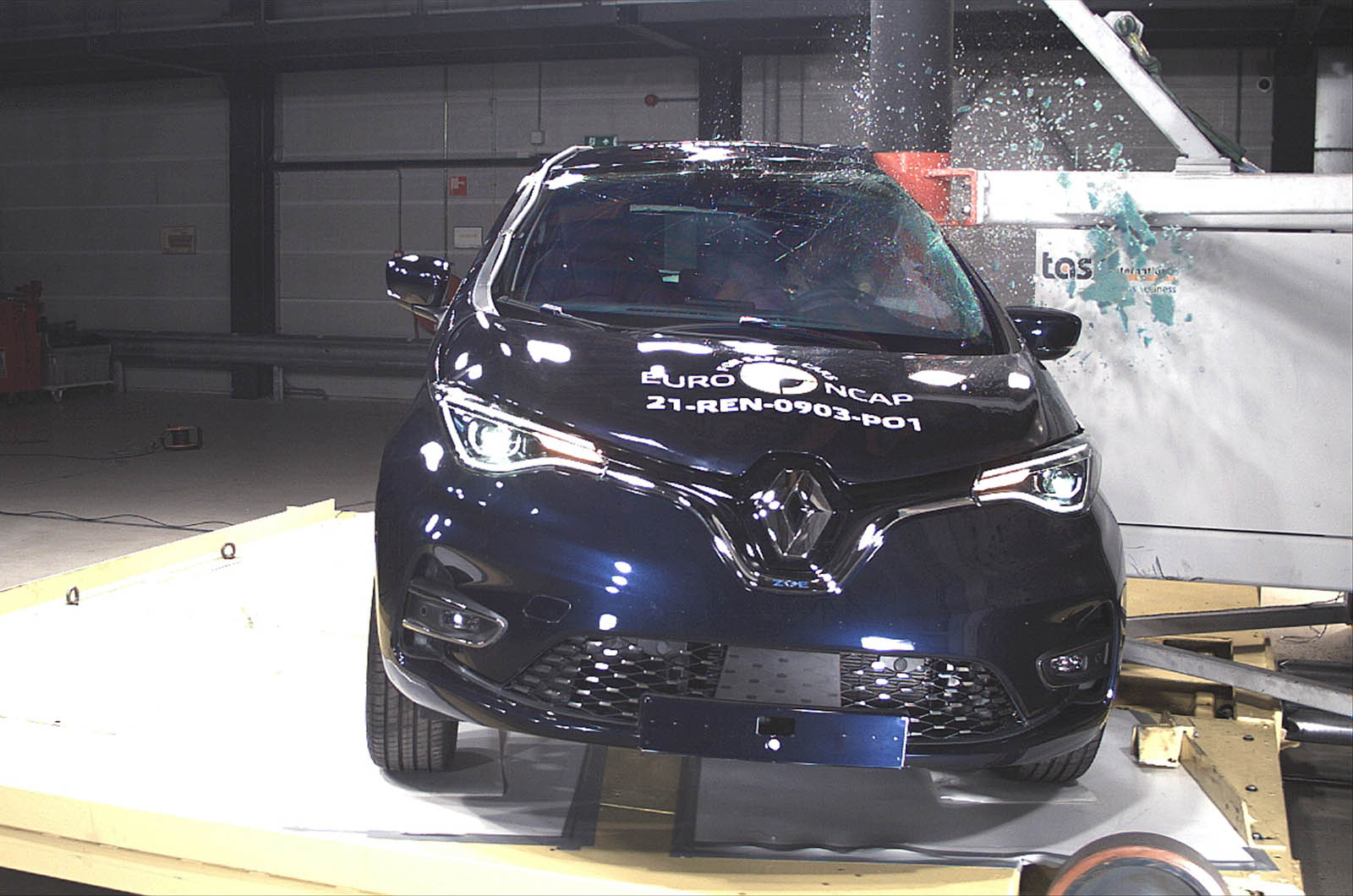
The Renault Zoe, one of Europe's most popular electric cars, has been given a zero-star safety rating in the latest round of Euro NCAP crash tests, while sibling brand Dacia's new Spring EV was awarded just one star.

The Zoe becomes just the third car in Euro NCAP's history to record a zero-star rating, 20 years after the Renault Laguna became the first car to achieve a five-star verdict.

The Zoe previously held a five-star Euro NCAP rating but was entered into the tests following a substantial facelift last year which ushered in a bigger battery and extra power but also, the safety organisation notes, a new seat-mounted side airbag that protects just the occupant's thorax, rather than the head and thorax as it did previously.

This change represents "a degradation in occupant protection", according to Euro NCAP, which reported that in the side-pole-impact test, the "driver's head directly impacted the intruding pole and head injury values indicated poor protection of this part of the body".


Spring 1.jpegSpring 2.jpeg
 
Dacia bosses "fighting tooth and nail" to bring Spring EV to UK

Compact city car will be one of the UK's cheapest mainstream EVs if given the green light

Dacia's UK division is still campaigning ardently to import the diminutive Spring EV, which would be comfortably among the cheapest mainstream electric cars on sale here.

A decision on whether to send the Spring to UK dealerships was expected to be made in January 2022, almost a year after it launched in France, but the brand has yet to confirm a launch date.

Dacia UK brand director Luke Broad told Autocar: "We are fighting tooth and nail with our corporate team to get that car launched here in the UK.

"We don't have confirmation whether it's a go yet, because they're working on fulfilling the huge back order they have in Europe - for me that's another string to my bow; if it's an extremely popular car in Europe, then it's fair to say it will also be extremely popular in the UK.

"There's no decision on Spring. Hopefully we get it, but in the meantime we will hybridise the Jogger and in the medium- to long-term, you will start to see the hybridisation and electrification of the brand - but only when the customers are ready and it makes sense from a cost perspective."

 
Spring Electric is Renault's Kwid EV

This 'Kwid' could start the budget EV revolution. And it's about time!

Renault has revealed a new compact crossover, with battery power.

The French company believes that electrification is crucial to its future and unlike other European rivals, who are prioritizing large and expensive battery vehicles, Renault is going for entry-level value.

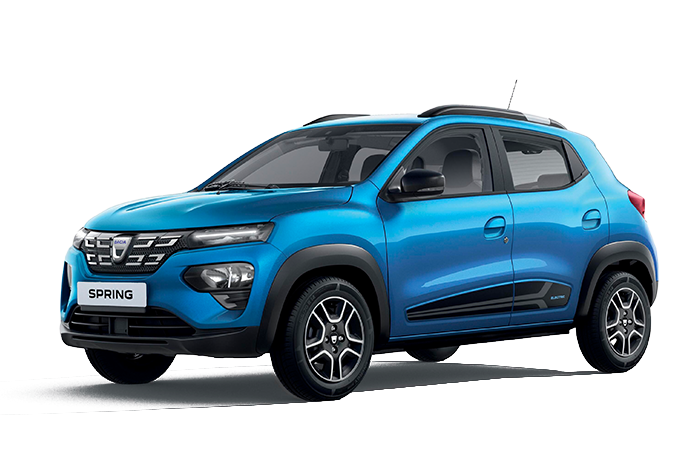
The Spring Electric, which has debuted with Dacia badging, is essentially a battery-powered Kwid. In terms of design, it has a non-functional front grille and there are no exhaust tips at the back.

Power sources from a 26.8 kWh battery pack, which is small, and produces only 33 kW and 125 Nm. The peak power output is quite a lot less than a petrol-engined Kwid (50 kW), but the Spring Electric has 35 Nm more torque.

Renault has not released any acceleration statistics for its new electric crossover, only commenting that it has a 125 kph top speed, which to anyone who has driven the petrol-powered Kwid will know, feels less than stable.

Those power and top speed figures are not ideal. okay for running around town but not for the highway. That said get it here and they will sell units and then hopefully put out a better version for slightly more.
 
Dacia Spring EV unlikely to arrive in UK before 2024

City car would be one of the UK's cheapest EVs, but Dacia is prioritising European supply

The diminutive Dacia Spring city car – one of Europe's cheapest EVs – is still on the cards for a UK launch a year since it launched in France, but is unlikely to arrive here before 2024.

The electric supermini, which contributed to Dacia growing its sales by 5.9% in the first half of 2022, is in high demand in its launch markets - with the firm claiming 5000 orders per month from January to June.

But that demand, coupled with issues in Dacia's supply chain, means that a UK launch has been deprioritised in favour of meeting existing demand.

Dacia's sales, marketing and operations boss Xavier Martinet told Autocar: "Right now we have a six-month waiting time for our current customers because the demand is higher than expected initially, and we have some supply issues - electrical components mainly.

"We're focused on trying to shorten that gap. We haven't given up on Spring for the UK - I don't think we'll have it in 2023, and if we have it it should be in 2024. Don't expect the Spring in the UK in 2022 or 2023."

Martinet's comments came after the brand director of Dacia's UK division, Luke Broad, told Autocar he was still campaigning ardently to import the Spring: "We are fighting tooth and nail with our corporate team to get that car launched here in the UK.

 
Dongfeng EV EX1 Pro is a Chinese Dacia Spring, starts at $7,800

Dongfeng officially unveiled the EV EX1 Pro in China with a rather low starting price of RMB 55,700 which at current exchange rates is just over $7,800, or a smidgen over €8,000. This is a newer version of the already on sale EV EX1. The major difference between the two models is the new ternary lithium battery pack.

Dongfeng EV EX1 Pro is just a rebranded Renault City K-ZE, a Chinese version of the Dacia Spring. The car is manufactured by many other companies under different names and is actually based on another renault - the Renault Kwid, a gasoline-powered small SUV.

The upgraded battery offers a slightly better range of 331 km according to the CLTC standard, an increase of just 10 km over the previous version. On the inside, the car is equipped with a larger screen. The car in the photos is the Tiger Yao Edition, which is the second-most expensive version.


255B5AC6-8647-4407-BCFA-64963A767190.jpegF57EF012-E28A-4F7D-ACCB-A1518EB62984.png6E0CFE7E-4AFB-458E-B080-9DE68565D713.jpeg6DA7FE87-B790-46C3-B5B2-2F1DC1CA142D.jpegA3AED95B-A8E7-4491-A0FE-3E042DB30D9A.jpegA1DF0F90-E51A-4BDD-8688-8531513504EE.jpeg
 
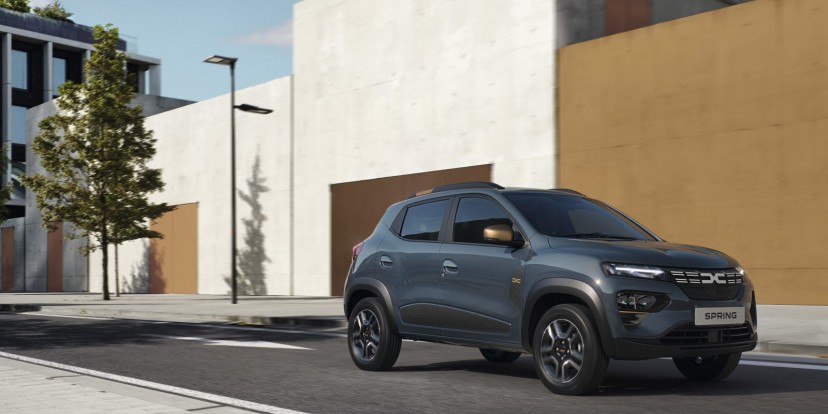
Dacia Spring Extreme gets power boost and improved looks

The Dacia Spring, Europe's most affordable EV, has undergone its first significant redesign. Renault-owned Dacia unveiled the new version of its smallest EV - Spring Extreme. This is a more powerful trim that comes with a new electric motor and styling inspired by bigger SUVs.

The basic Dacia Spring comes with a 33 kW (44 hp) motor. The Spring Extreme boasts new electric motor that provides 48 kW (64 hp) - a significant boost from the 44-hp motor of the standard model. The new electric motor, together with the new gearbox doubles the torque sent to the wheels.

The battery remains the same at 26.8 kWh, with a range of 220 km (136 miles) in the WLTP combined cycle and 305 km (189 miles) in the WLTP City cycle. Although the combined range drops by 10 kilometers, the city range remains the same.

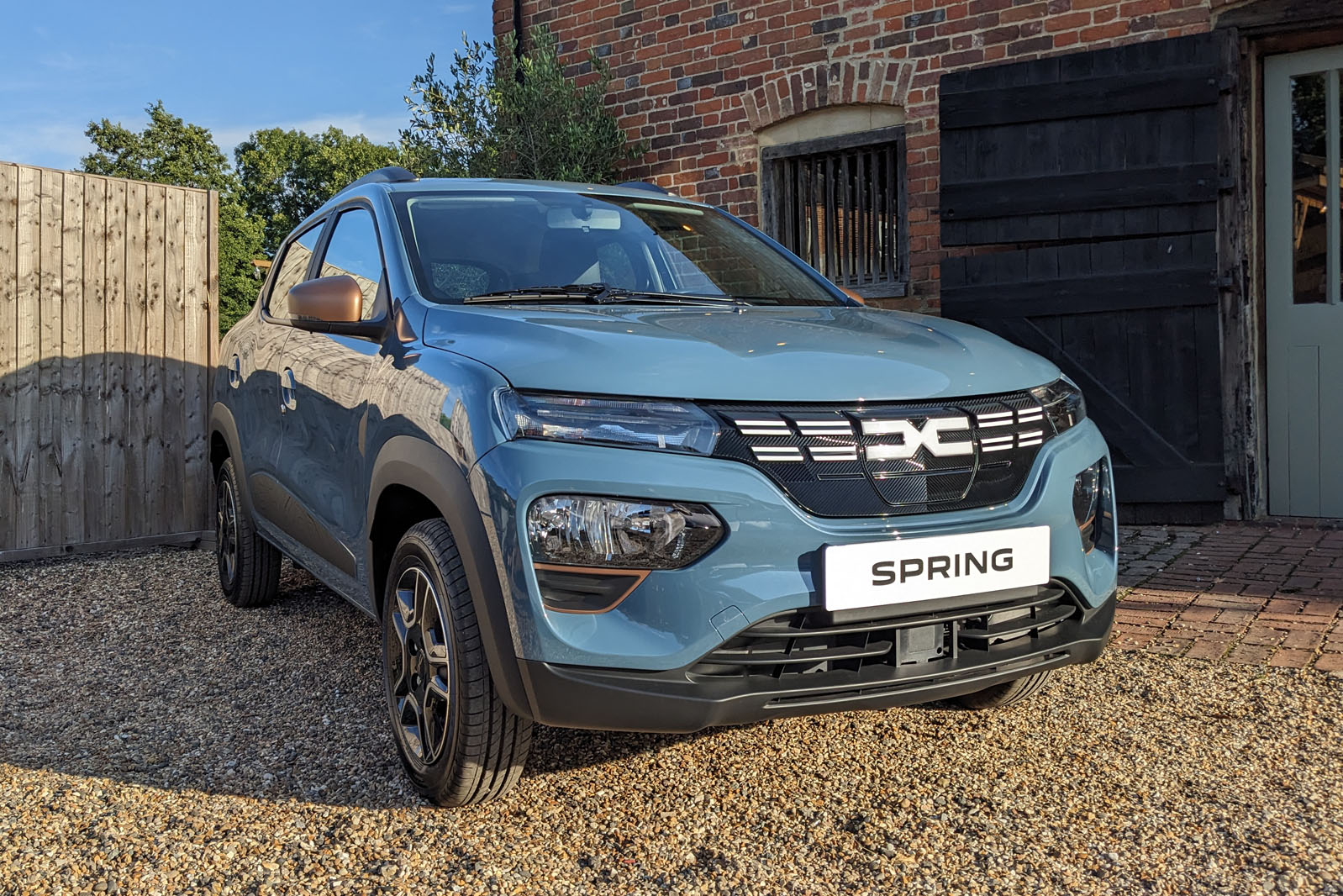
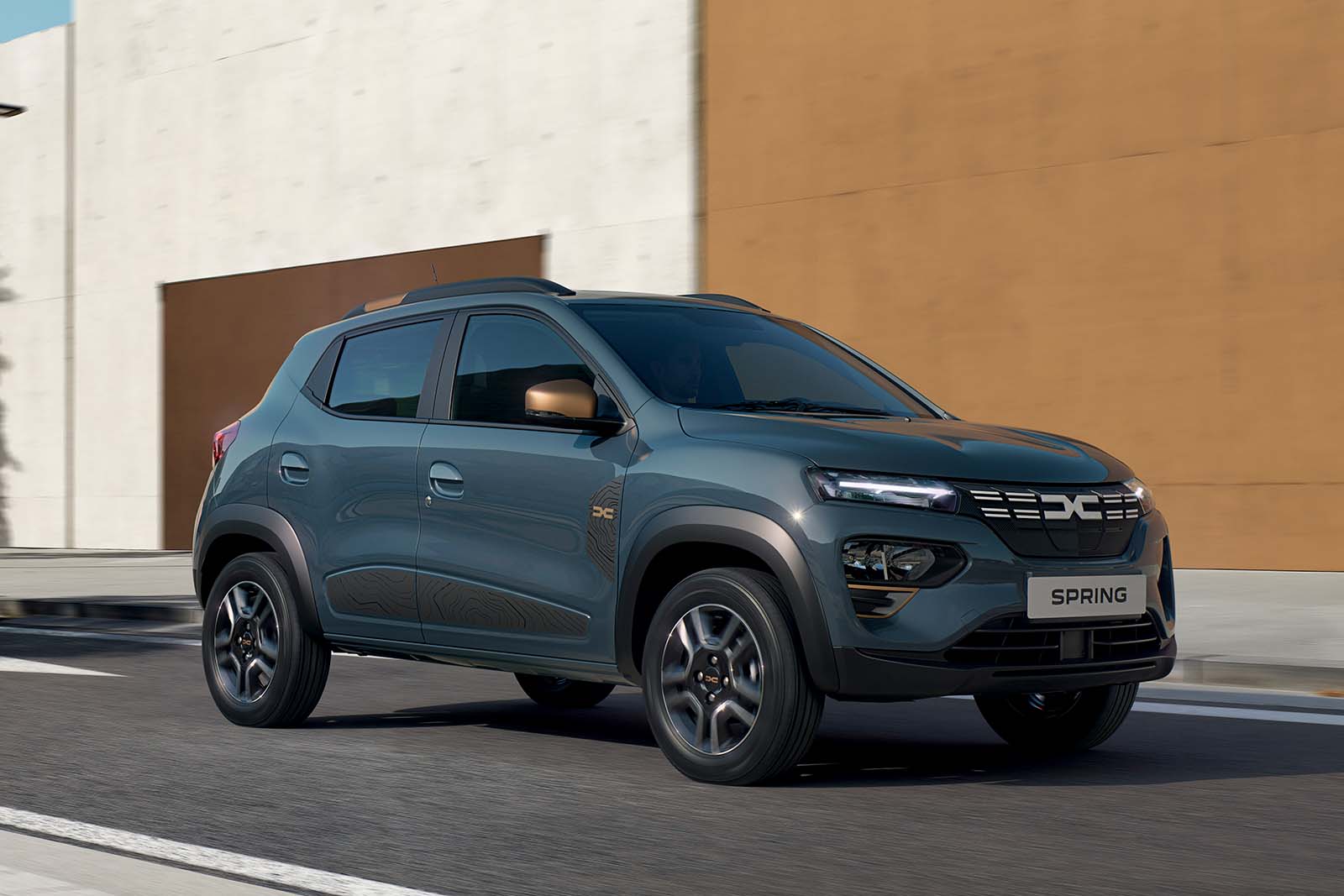
The new electric motor is an additional option, the Essential trim level will continue with the 45 hp motor as the standard choice. The Extreme trim replaces the popular Expression trim. It gives the Spring an outdoorsy feel thanks to its exclusive design features. The Slate Blue color, Copper Brown accents on the roof rails, mirror caps, wheel hubs, front bumper trim give the car much fresher look.


C2E14330-816C-4F55-AE60-AE0F24CBC429.jpeg11F9B71D-9CDA-4F63-95FD-C4FEF21C20DA.jpeg7939CA4B-3ACA-49EB-BA91-015A0B65F556.jpeg
 
Dacia introduces new Extreme trim and more power to Spring EV

New variant of affordable electric city car brings rugged design, power increase and additional technology

A new Extreme variant of the Dacia Spring EV has been unveiled, bringing a boost in performance, rugged design features and bolstered technology.

The Dacia Spring Extreme, unveiled at the Brussels motor show, will be on sale from 17 January in France. It sits above the entry-level, €20,800 (£18,418) Essential model with a price tag of €22,300 (£19,747).

Similar in style to the Dacia Duster Extreme put on sale in the UK last year, the electric city car receives a power increase from 44bhp to 63bhp, with power coming from the same 26.8kWh battery under the skin of the existing Spring.

This is also paired with a new gearbox that improves energy recuperation and doubles the amount of torque sent to the front wheels.

Combined WLTP range stands at 136 miles (slightly less than the 159 miles of the Volkswagen e-Up), while range in the city is around 189 miles on a single charge.

Copper detailing has been added to the roof rails, mirrors, wheel hubs and boot logo, with a unique pattern equipped to the front and rear passenger doors for protection against scrapes.

 
Top
Sign up to the MyBroadband newsletter
X