Advice Millwright to Software Developer

if I can even get in before that since it seems from this thread that is heavily dependent on luck/connections.

My wife is self taught and managed to get a job at Investec and eventually in the Netherlands on a highly skilled visa.

I've also worked with plenty of ex farmers, engineers and even an ex rugby player who started somewhere. I can name more than one former "techie" that never studied and became a developer and almost all of the examples ended up in senior/lead positions. Even here in the Netherlands a guy who is in his early 30s with no formal IT qualification (former physiotherapist) got a development job.

Whether that speaks to their skill, the actual requirements needed in the industry etc. I do not know but what I do know is that it is not "luck".

All you need to get started is a laptop/PC and a tutorial for a language like C#. Then send your CV to the likes of BBD, Dariel etc. and offer yourself as cheap labour and it will snowball from there. The recruiters at Dariel for example are about the nicest people you can meet and even if you do not get an offer they'll probably offer some helpful advice.
 
I think the stuff about data structures and algorithms I could have learned on my own, but perhaps it would be more difficult. The reason is, first you don't have a lecturer that you can ask questions, second you get tested on your knowledge. You can just read a textbook about algorithms, but I think without being tested on it or needing to use it, it won't really sink in.

The general knowledge that I have about business and management has become useful as I've advanced in my career, but I suppose you don't really need expert education for this.

Just bear in mind that I think the world is changing, and I don't think it values degrees as much as it used to. With that being said, South Africa is a little more old fashioned in their approach to degrees, and you will find many places you can't get into without one. Especially the highest paying ones, like banks.


Coursera and Udemy are both fine - I probably recommend Coursera over Udemy.

The thing about both is that the value you get is heavily dependent on the course. There are good courses and Coursera and then there are bad courses on Coursera. The bad ones give you the certificate without requiring you to learn much. The good ones force you to work, and then you learn some stuff.

Never competed a programming course on Udemy, but the way that Coursera works is that, if you want to get a certificate for the course, you have to pay for it. It isn't expensive though, like R2000 per course, take as long as you want. You can do all of the courses for free, you just won't be certified for them. You can also complete the course and then pay for the certificate later when you are ready.

Anyway, on Coursera, the lecturers don't grade your submissions. They don't mark your work. The way it works is that, you either have multiple choice questions, which are easy because you can essentially brute force them. Guess until you get it right. The second type of submission is where your peers grade your work. So you submit your work, then 4 people in the class look at your work. You get the average mark from your peers. So this is good because you can do more complicated work and have it graded. The lecturers then provide a model answer, and you grade according to the model answer. You can't see the model answer until you have finished your own work.

I'd start with something like Python or Javascript. Its an easy teaching tool, but also very useful in the real world. Just spend 3-6 months learning it. Write a few programs. See what you can do. Then maybe move on to something like Java.
I really appreciate the info you gave me on Coursera and how it works it makes my choice easy and it would seem the best way for anyone interested in development to go before spending a lot of money on a degree before you know if it's really what you want to do I was leaning towards udemy but this changed my mind I would much prefer the more interactive route.
 
My wife is self taught and managed to get a job at Investec and eventually in the Netherlands on a highly skilled visa.

I've also worked with plenty of ex farmers, engineers and even an ex rugby player who started somewhere. I can name more than one former "techie" that never studied and became a developer and almost all of the examples ended up in senior/lead positions. Even here in the Netherlands a guy who is in his early 30s with no formal IT qualification (former physiotherapist) got a development job.

Whether that speaks to their skill, the actual requirements needed in the industry etc. I do not know but what I do know is that it is not "luck".
Heh. It speaks to survivorship bias. :) I agree that those who got there this way went on a commendable journey, and got there more by will, sweat and perseverance than luck, however, it also discounts the many who tried and failed.
 
Heh. It speaks to survivorship bias. :) I agree that those who got there this way went on a commendable journey, and got there more by will, sweat and perseverance than luck, however, it also discounts the many who tried and failed.

The longer you try the luckier you get? :p

I guess a disclaimer should've been added stating that if you give up to easy or you really are hopeless at this then it probably won't work out.
 
For reasons that surpass belief, although my degree is in computer science I have had a career in the maritime field. Initially there was some interaction between them because of where I worked (military) and what I did but not for the last twenty years or so. While it may seem like a huge waste (and probably is) I find that training useful to this day as you would be surprised at the wide variety of complex machinery and processes that can be viewed and interpreted as though they are programs and therefore much more easily understood. (if of course programming is your thing) Actually im pretty sure that you already experience this as a millwright. Further exposure to programming can only enhance your ability and fulfillment, even if you didn't actually change careers, although i get that for you, this is the ultimate aim.

@InvisibleJim 's post in this thread is solid info and very good advice
@cguy is also right on the money.
@Ancalagon is also worth listening to.

Anyway to answer your question directly I am an uncouth sailor with a computer science degree from stellenbosch uni.
wow very interesting career I wondered about the navy when I was younger but the cut off age is 21 so I let that go. You right about being exposed to this as a millwright as most jobs for millwrights require sound PLC programming knowledge and I have seen contractors come in as "systems integrators" where they program the machinery that our guys can't.

Exposure to this has strengthened my interest in programming even more so than before I started millwrighting in positions likes PLC programming, Systems Integrating, Automation/Controls engineering and software development and I want to pivot my career in that direction fulltime, staying as a millwright I'll only do plc programming sometimes. All the positions I mentioned above would be a more natural progression from millwright than soft dev and would include a lot of programming although software development interests me most at the moment as the manufacturing environment isn't really my thing as silly as it sounds. I'm just looking what is out there at the moment and how to go about it
 
My pay isn't bad and I'm able to start paying for better education part-time. I'm specifically interested in software development and had a look at getting a Comp sci degree from UNISA.
Personally, I would recommend doing a Diploma in IT first before considering a degree (the diploma covers programming, pc technician/repair work with a spliff of business stuff, at UNISA anyway, I'm starting with it next year), it's a good all-round start in the Comp Sci/IT field. UNISA's applications are still open until October.
My plan so far is to do the CS50: Introduction to Computer Science course which is free and I can do it on my own time so it won't interfere with electrical certs and see if I actually enjoy software development and then in year 3 - 4 start on my Comp Sci degree

Here is the CS50 course just to get my feet wet.
I would also recommend this before considering a qualification. I've completed CS50 and I'm almost done with CS50W (the web development follow-up to the original CS50), so I think I can give you advice about the course.

For starters, this is on par with a first-year university course, seriously, CS50 doesn't pull any punches, to complete newcomers in Comp Sci it might be a bit of a challenge. There are Lectures and Notes, available in each week's syllabus, then there's the most renowned part of the course, the Problem Sets or as I called them "this week's homework". While the Lectures and Notes can help you mostly with each week's problem set, you will come across problems that you have to Google or ask questions about on the community Discord. And if I'm truly honest if you can master C/get C down along with Algorithms and Data Structures then Python (which you will also learn later on in the course) will be a breeze along with JavaScript (whose basic syntax is C-like) and SQL. The homework can be difficult regardless if you choose more comfortable or less comfortable (yes, in most problem sets you can pick what difficulty-level problem you want to do, you could even do both if you feel masochistic).

But finishing the problem sets, especially after struggling with them, is the best feeling ever and very rewarding.
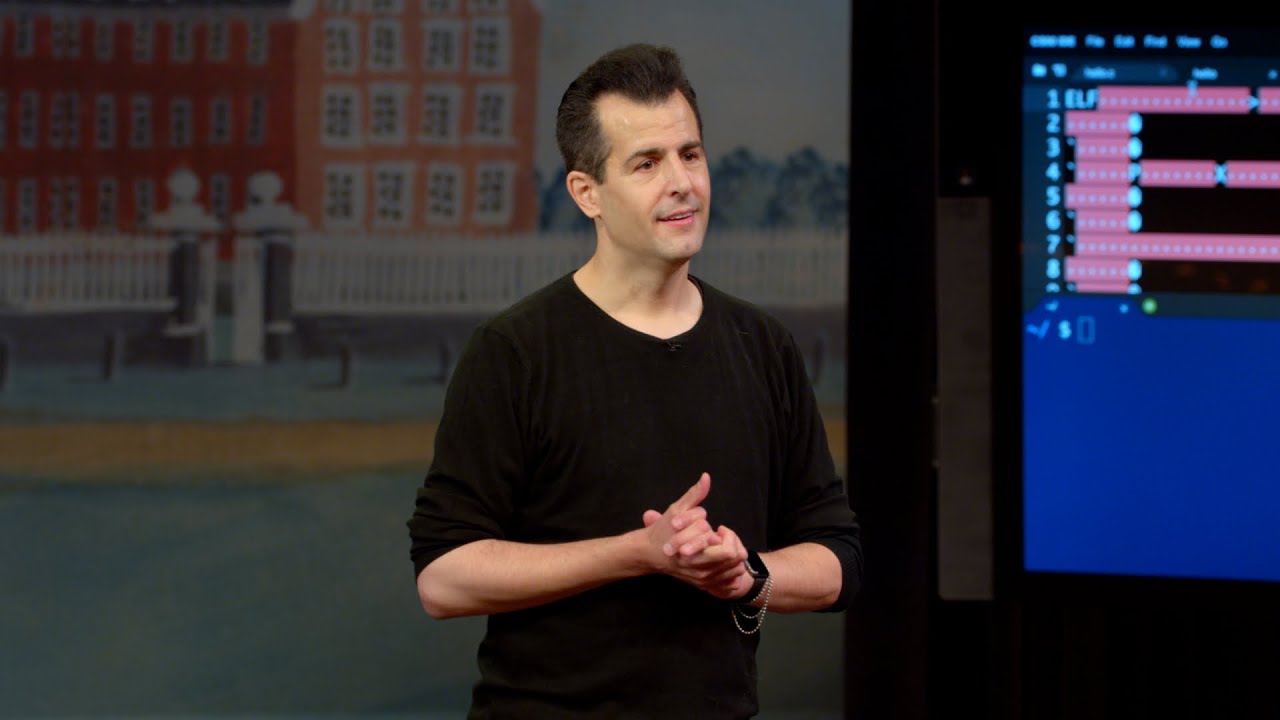
You will learn quite a lot about yourself and about the topic too. The head lecturer, David Malan, is one of the best teachers you will ever see (coming from a guy who didn't have the best teachers in high school).

CS50 Links:

On another topic I would recommend Udemy for niche topics and not broad ones (like an intro to CompSci or general web development), for example, if you want to do PLC programming, look it up on Udemy and find a course that suits your fancy.

I hope this essay I just wrote helps you somewhat
 
My wife is self taught and managed to get a job at Investec and eventually in the Netherlands on a highly skilled visa.

I've also worked with plenty of ex farmers, engineers and even an ex rugby player who started somewhere. I can name more than one former "techie" that never studied and became a developer and almost all of the examples ended up in senior/lead positions. Even here in the Netherlands a guy who is in his early 30s with no formal IT qualification (former physiotherapist) got a development job.

Whether that speaks to their skill, the actual requirements needed in the industry etc. I do not know but what I do know is that it is not "luck".

All you need to get started is a laptop/PC and a tutorial for a language like C#. Then send your CV to the likes of BBD, Dariel etc. and offer yourself as cheap labour and it will snowball from there. The recruiters at Dariel for example are about the nicest people you can meet and even if you do not get an offer they'll probably offer some helpful advice.

My wife is self taught and managed to get a job at Investec and eventually in the Netherlands on a highly skilled visa.

I've also worked with plenty of ex farmers, engineers and even an ex rugby player who started somewhere. I can name more than one former "techie" that never studied and became a developer and almost all of the examples ended up in senior/lead positions. Even here in the Netherlands a guy who is in his early 30s with no formal IT qualification (former physiotherapist) got a development job.

Whether that speaks to their skill, the actual requirements needed in the industry etc. I do not know but what I do know is that it is not "luck".

All you need to get started is a laptop/PC and a tutorial for a language like C#. Then send your CV to the likes of BBD, Dariel etc. and offer yourself as cheap labour and it will snowball from there. The recruiters at Dariel for example are about the nicest people you can meet and even if you do not get an offer they'll probably offer some helpful advice.
Did your wife do this later in life like a career change and had to self study whilst working in a different sector or pretty early on ?
 
wow very interesting career I wondered about the navy when I was younger but the cut off age is 21 so I let that go. You right about being exposed to this as a millwright as most jobs for millwrights require sound PLC programming knowledge and I have seen contractors come in as "systems integrators" where they program the machinery that our guys can't.

Exposure to this has strengthened my interest in programming even more so than before I started millwrighting in positions likes PLC programming, Systems Integrating, Automation/Controls engineering and software development and I want to pivot my career in that direction fulltime, staying as a millwright I'll only do plc programming sometimes. All the positions I mentioned above would be a more natural progression from millwright than soft dev and would include a lot of programming although software development interests me most at the moment as the manufacturing environment isn't really my thing as silly as it sounds. I'm just looking what is out there at the moment and how to go about it
From what I hear in your post I would suggest that (at least to begin with) you keep PLCs, automation, controls, system integration and the like the focus of your programming experience. This is because it is clearly (from what you say) what has interested you to start with. It is a great feeling to watch your programming do real things in a real world by simplifying or streamlining an automated process and even on occasion watching it go wrong destroying something expensive in the process!
Conversely, more abstract software development such as for instance writing a word processor can be as dry as dust and boring as **** and trying that sort of thing too early on might kill the joy of programming for you. I had a similar experience myself.

I wish you every success whatever direction you take.

p.s. You will know that you have succeeded and are a programmer when you can type at sixty mistakes a minute. :)
 
Personally, I would recommend doing a Diploma in IT first before considering a degree (the diploma covers programming, pc technician/repair work with a spliff of business stuff, at UNISA anyway, I'm starting with it next year), it's a good all-round start in the Comp Sci/IT field. UNISA's applications are still open until October.

I would also recommend this before considering a qualification. I've completed CS50 and I'm almost done with CS50W (the web development follow-up to the original CS50), so I think I can give you advice about the course.

For starters, this is on par with a first-year university course, seriously, CS50 doesn't pull any punches, to complete newcomers in Comp Sci it might be a bit of a challenge. There are Lectures and Notes, available in each week's syllabus, then there's the most renowned part of the course, the Problem Sets or as I called them "this week's homework". While the Lectures and Notes can help you mostly with each week's problem set, you will come across problems that you have to Google or ask questions about on the community Discord. And if I'm truly honest if you can master C/get C down along with Algorithms and Data Structures then Python (which you will also learn later on in the course) will be a breeze along with JavaScript (whose basic syntax is C-like) and SQL. The homework can be difficult regardless if you choose more comfortable or less comfortable (yes, in most problem sets you can pick what difficulty-level problem you want to do, you could even do both if you feel masochistic).

But finishing the problem sets, especially after struggling with them, is the best feeling ever and very rewarding.
You will learn quite a lot about yourself and about the topic too. The head lecturer, David Malan, is one of the best teachers you will ever see (coming from a guy who didn't have the best teachers in high school).

CS50 Links:

On another topic I would recommend Udemy for niche topics and not broad ones (like an intro to CompSci or general web development), for example, if you want to do PLC programming, look it up on Udemy and find a course that suits your fancy.

I hope this essay I just wrote helps you somewhat
This is great response and I'm glad someone replied who already did the CS50 course. A few questions if you don't mind.

Are you doing this part-time or full time and if part time do you already work in this industry or something unrelated? I have checked out the UNISA IT diploma and thought about it. Are you still unsure whether you want to go the Network Engineer/Sys Admin etc route over software dev thus choosing IT Diploma for now?

Now for CS50 it says 8-12 weeks but you can do it at your own pace that is you can take longer as long as it gets done before the next version starts which according to the website is 31 December 2021 meaning if I start now as long as it gets done before that date or if think it will take longer I should just wait for the 2022 version to release ?

Is all the lectures prerecorded and uploaded otherwise how else would you be able to do it at your own pace?

If everyone works at their own pace I'm assuming the discord is a bit of a mess since everyone is on a different week?

How long did it take you personally ?

Did you get the verified certificate on just the regular one and how does it work is it digital certificate or a actual physical one that gets posted to you and how do you show it to potential employers if its digital ?
 
Personally, I would recommend doing a Diploma in IT first before considering a degree (the diploma covers programming, pc technician/repair work with a spliff of business stuff, at UNISA anyway, I'm starting with it next year), it's a good all-round start in the Comp Sci/IT field. UNISA's applications are still open until October.
If you have a choice(matric was decent or you got some sort of exemption), why choose a diploma? You will be adding a year of studies for no reason. Some countries don't recognize 3 year degrees, which means you will need to have honours.
Dip - Adv Dip - Hon/Post Dip
vs
Deg - Hon
 
If you have a choice(matric was decent or you got some sort of exemption), why choose a diploma? You will be adding a year of studies for no reason. Some countries don't recognize 3 year degrees, which means you will need to have honours.
Dip - Adv Dip - Hon/Post Dip
vs
Deg - Hon
I did well in matric mostly b's however I never did core maths and had to do a bridging course for my certs in mechanical engineering. According to Unisa the minimum is 50% in maths for Bsc in math and comp sci I got 51% back in 2016 lol not sure if they will accept me on that but I am older now and think I'll do better now as I have more drive, what would your opinion be in my situation ?

I think a refresher course would do well in my case I see Unisa offers Higher certificates in mathematics and stats according to Unisa you have to choose a lower qualification with you main qualification if they don't accept you on the main one and was thinking about doing that but as Primesteak said the diploma in IT is a option as well ?
 
Did your wife do this later in life like a career change and had to self study whilst working in a different sector or pretty early on ?
Think she started out in graphic design and early on started fiddling with code. She has an eye for visual stuff so maybe that's what drove her to pick up on front end development early on and get a foot in the door. She started at crappy agencies though and worked her way up, so it's not like something that falls in your lap. Point is - doable if you really want it.
 
It has been way too long since the last degree vs no degree thread :ROFL:

If you want to code, start coding.

Some of us plebs with no degree are extremely happy/fulfilled with what we do.

Pretty much this. No degree here. Been coding for 8yrs
 
Im not sure thats the fundamentals that most think degrees bring. Degrees make you do accounting, statistics, math, economics etc that gives a wider understanding of the business's world.
Not so much that as OO concepts, data structures, algorithms, complexity estimation, system design, problem solving. Discrete mathematics is fairly useful also.

Let's say I do a lot of interviews and most people with a degree have some (very limited) knowledge on the above.
I personally think our degrees in this country aren't worth much (anymore maybe?)
But I have yet to interview someone who doesn't have a degree who has any reasonable understanding of the above.

It is scary that there are people out there working for "reputable" companies like Absa, FNB, etc. call themselves an "architect" and can't tell me how a HashMap works or why it is O(1) get/put (or in some cases what the orders of magnitude even are). I'm not even asking anything obscure or trick questions (trick questions are for idiots that need to prove they are the "smartest" guy in the room)

If you use a HashMap near daily, is it too much to ask that you actually have some idea of how it works internally so you are at least somewhat informed as to why it is a good choice.

This stuff isn't obscure either.
As an actual engineer you would study a lot of fundamentals like thermodynamics so you understand why your choices make sense.
Software engineering fundamentals is that stuff above.
If you don't have that knowledge you are a computer hacker guy, not a software engineer. (and you don't need a degree to get it).
In the engineering world you would be regarded as technician (B.Tech rather than B.Eng) if you can only apply cookie cutter solutions without understanding the fundamentals.
Software engineering is fairly informal but it is getting better every year and being able to quantify your decisions, estimate their costs and properly design something is becoming pretty standard stuff.
Engineering as a whole has already set the standard, we just need to accept the reality that it applies to our field also.
 
Last edited:
I did well in matric mostly b's however I never did core maths and had to do a bridging course for my certs in mechanical engineering. According to Unisa the minimum is 50% in maths for Bsc in math and comp sci I got 51% back in 2016 lol not sure if they will accept me on that but I am older now and think I'll do better now as I have more drive, what would your opinion be in my situation ?

I think a refresher course would do well in my case I see Unisa offers Higher certificates in mathematics and stats according to Unisa you have to choose a lower qualification with you main qualification if they don't accept you on the main one and was thinking about doing that but as Primesteak said the diploma in IT is a option as well ?
They should accept you because you did a some sort of higher education. With regards to the higher certificate in math and stats, that depends on what your foundations are like. You can always check a text book and see if you recognise the some of the stuff :ROFL:


Definitely go with a degree if you can.
 
Think she started out in graphic design and early on started fiddling with code. She has an eye for visual stuff so maybe that's what drove her to pick up on front end development early on and get a foot in the door. She started at crappy agencies though and worked her way up, so it's not like something that falls in your lap. Point is - doable if you really want it.
I get your point and it gives me hope I'll eventually be able to pull this of thanks so much
 
I have a few decades in software development, and when people ask me whart is what, I suggest they avoid it. IT is not the glamorous job people think it is.
I can't think of doing anything else. Sounds like you're just in the wrong industry or working with the wrong people.

If you don't have a passion for what you're doing then the job is going to suck.
 
They should accept you because you did a some sort of higher education. With regards to the higher certificate in math and stats, that depends on what your foundations are like. You can always check a text book and see if you recognise the some of the stuff :ROFL:


Definitely go with a degree if you can.
My math skills are average I definitely have to put in the effort though it I'm not naturally good at it and I think going over a textbook for a bit of revision should suffice I just don't want to be surprised halfway through year 1 with hectic stuff and then play catchup. I read somewhere on the forum that the Bsc Applied math and comp sci has some nasty modules
 
Last edited:
Top
Sign up to the MyBroadband newsletter
X