


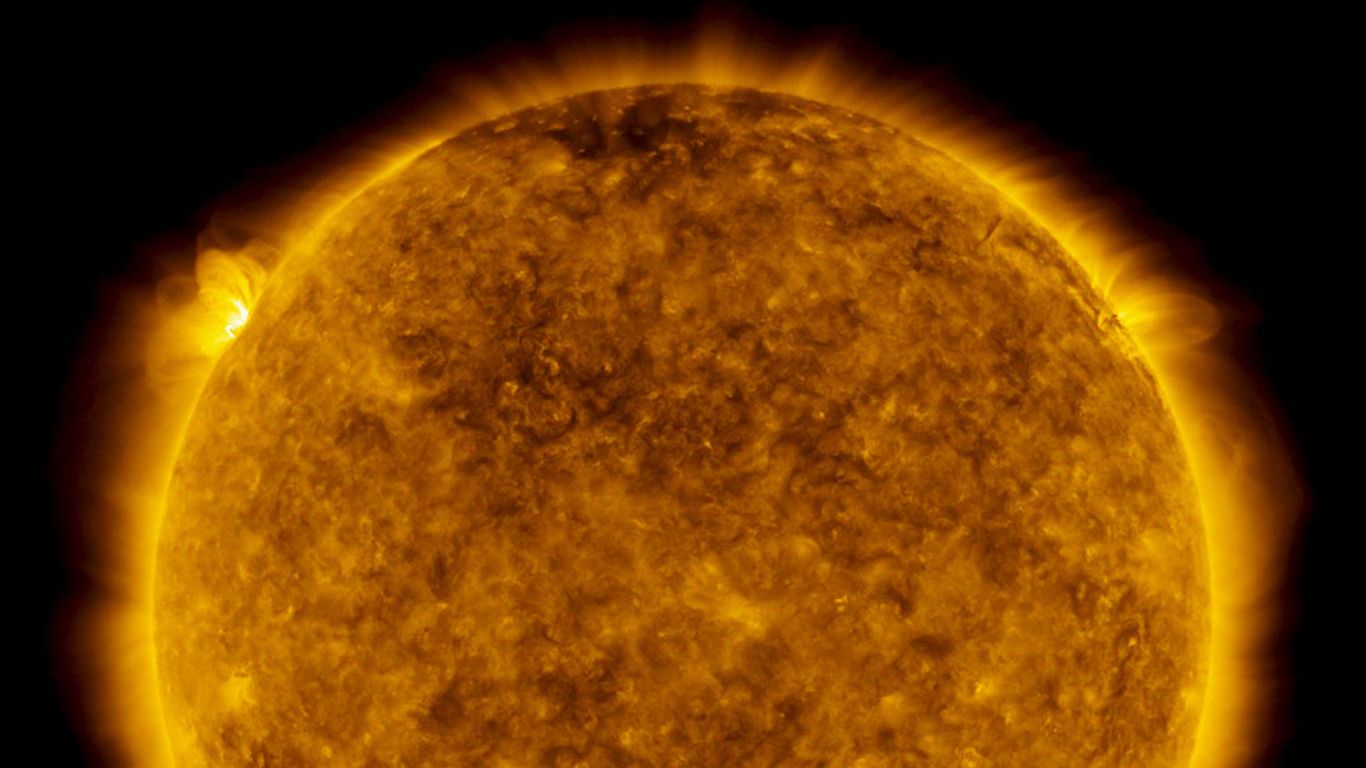
The Sun shot out the largest solar flare since 2017
Strong flares can harm satellites and people in space.
 www.axios.com
The Sun unleashed a strong solar flare last week for the first time since 2017, potentially signaling that our nearest star's activity is ramping up after a long period of quiescence.
Why it matters: Strong solar flares can harm satellites and people in space, while the most extreme flares could take down Earth's electrical grids.
- Tracking the Sun's 11-year solar cycle can help scientists learn more about why it behaves the way it does and possibly predict the star's activity.
- The flare was relatively weak and therefore didn't trigger an alert from the Space Weather Prediction Center. Future flares from this family of sunspots, however, could be stronger.
- The Sun's period of least activity — known as "solar minimum" — can only be seen in hindsight, after many months have passed.
- "The sunspots may well be harbingers of the Sun's solar cycle ramping up and becoming more active," NASA said in a statement. "Or, they may not. It will be a few more months before we know for sure."

