Biomolecular machines

Interesting article:
Rise of the machines: Bruce Alberts and the biochemistry of multi-protein complexes
Mol Biosyst. 2008 Nov;4(11):1043-1045.
Professor Bruce Alberts of the University of California at San Francisco (UCSF) celebrated his 70th birthday in April of this year. There are few people that can rival Bruce with respect to his impact on science both inside and outside the laboratory. In recognition of Bruce’s storied career, we are pleased to dedicate this special issue of Molecular BioSystems to him.

The articles in this special issue of Molecular BioSystems focus on this fascinating area of multi-protein complex chemistry, biochemistry and molecular biology. They reveal that the Alberts paradigm of thinking of these complexes as highly interactive, tightly regulated biochemical machines has held up well over the years and guided many of the important studies that have elucidated their mechanism of action.

Finally, on a personal note, I had the pleasure of working in Bruce’s laboratory at UCSF for two years in the 1980’s. Therefore, I can personally attest to the fact that one of the reasons Bruce has made so many important discoveries is that he is frighteningly smart.
 
DNA-damaged Cells Communicate With Neighbors To Let Them Know They're In Trouble
ScienceDaily (July 14, 2009) — When cells experiencing DNA damage fail to repair themselves, they send a signal to their neighbors letting them know they're in trouble. The discovery, which shows that a process dubbed the DDR (DNA Damage Response) also controls communication from cell to cell, has implications for both cancer and aging.

The findings appear in the July 13 online edition of the Nature Cell Biology.

When a cell experiences DNA damage, its first response is to try to repair the damage. If that doesn't work the cell, hopefully, either commits suicide or stops dividing, two intrinsic mechanisms for preventing cancer according to Judith Campisi, PhD, lead author of the study and a faculty member at the Buck Institute for Age Research. The discovery of the extracellular signaling mechanism, which sets off an inflammatory response, explains how unsuccessful DNA repair at the cellular level impacts tissues, which are the vital units of function in complex organisms like humans, she said.

"With regard to cancer, we found that if there is a mutant and potentially cancerous cell in the vicinity of the damaged cell, the signals from the damaged cell can encourage that mutant cell to behave more aggressively cancerous," said Campisi. "With regard to aging, we think the inflammatory signals from damaged cells propagate an aging 'field' whereby damage builds up over time, impacting not only the individual damaged cells, but the function of the tissue itself." When Buck scientists disabled particular proteins involved in the DDR, the cell-to-cell communication was cut off.

Buck Institute scientist Francis Rodier, PhD, led the team that did the research in the Campisi lab. He was surprised to find that even though the DDR signaling process was activated inside the cultured human cells within minutes of the DNA damage, it took 24 to 48 hours for the damaged cells to start secreting the inflammatory signals.

"We think the cell is giving itself time to repair its DNA before alerting the immune system that there's a problem," said Rodier. He added that scientists were also surprised to discover that the damage-induced communication signaling pathway bypasses a powerful tumor suppressor gene known as p53. That finding gives scientists a target to shut down the inflammatory process without hampering the activity of p53, which is essential to prevent cancer. It also explains why cancerous tumors are still able to secrete inflammatory signals when p53 has mutated and lost its tumor suppressing capabilities.

"Inflammation is a hallmark symptom of cancer," said Rodier. "Inflammation also promotes cancer, so this helps us begin to understand what's involved in that process."

The findings also help explain the aging process Campisi said. The immune system, which destroys damaged cells (such as skin cells whose DNA has been exposed to UV radiation), is not perfect, she said. "Damaged cells that survive the activity of the immune system are sending out continuous danger signals to surrounding cells. That constant alarm drives inflammation, which helps drive aging." Campisi added, "Now we have a target to focus on that could stop those damaged cells from sending out the inflammatory signals."

Other researchers involved in the study include Jean-Philippe Coppé, Christopher K. Patil, Adam Freund, Denise P. Muñoz and Albert R. Davalos, also of the Buck Institute, along with Eric Campeau, Wieteke A. M. Hoeijmakers, and Saba R. Raza of the Lawrence Berkeley National Laboratory, Berkeley, CA. The work was supported by grants from the National Institutes of Health, a grant from the California Breast Cancer Research Program, a Larry L. Hillblom Foundation fellowship, the Netherlands Organization for International Cooperation in Higher Education, the Dutch Cancer Society, and the Department of Energy under contract to the University of California.

It is interesting to see the concentration of microtubule networks at the contact point between cells as evidenced in these PC-3 cells.
picture.php
Do they aid in communication?

Look at the microtubular network of these neuronal hcn2 cells.

hcn2.jpg
 
Last edited:
New Insights Into Formation Of The Centromere, A Key Cellular Structure In Powering And Controlling Chromosome Segregation
ScienceDaily (July 13, 2009) — Lars Jansen* has described the formation of the centromere, a key cellular structure in powering and controlling chromosome segregation and accurate cell division.
090701102902.jpg
 
Last edited:
Surprising New Insights Into The Repair Strategies Of DNA
ScienceDaily (July 16, 2009) — A microscopic single-celled organism, adapted to survive in some of the harshest environments on earth, could help scientists gain a better understanding of how cancer cells behave.

Experts at The University of Nottingham were astonished to discover that the archaeon Haloferax volcanii was better at repairing DNA damage if enzymes, that are widely considered to be critically important in coordinating the repair of DNA, were mutated.

Dr Thorsten Allers, from the Institute of Genetics, said: “These results surprised us. It is the first time, as far as we know, that anybody has found such resistance to DNA damage in mutant cells. Normally, cells that are missing enzymes for DNA repair become more sensitive to DNA damage.”

Like cancer cells, archaea are polyploid — which means they contain more than two sets of chromosomes. Although similar in structure and appearance to bacteria, archaea share a common ancestor with eukaryotes, which include plant and animals. This kinship is at its closest in the way archaea process DNA. Although Dr Allers’s discovery is at the basic biological level, it is the similarities with cancer cells that make him convinced that scientists have much more to learn from archaea.

Discovered just 32 years ago, there are less then 200 experts around the world studying archaea. On the other hand, the mechanisms by which cells perform the repair of DNA breaks has been the subject of decades of research using bacterial and eukaryotic cells. We are only just beginning to learn how this process works in archaea.

DNA breaks can be caused by, among other things, radiation, UV rays and chemotherapy. Dr Allers said: “All organisms can use enzymes to simply glue the broken strands of DNA back together, but this is prone to error and can give rise to mutations which cause cancer. The alternative is to perform a kind of molecular gymnastics called recombination, where healthy strands of matching DNA are used to repair the broken ends. This is a complicated and time-consuming strategy to mend DNA, but avoids mutations. When the enzymes that carry out recombination are defective, cancer can develop more easily. This is what happens in patients with mutations in the BRCA breast cancer genes.”

Dr Allers’s research, published in the journal PLoS Genetics, shows how, unlike other organisms, Haloferax volcanii deliberately avoids using recombination to repair DNA breaks. His results suggest that other polyploid organisms, such as cancer cells, might work in much the same way. What scientists need to know now is why.
 
Last edited:
More efficient biomolecular machines!

DNA 'Sloppier Copier' Surprisingly Efficient: Three Major Puzzles About Famous Enzyme Solved
ScienceDaily (July 15, 2009) — The "sloppier copier" discovered by USC biologists is also the best sixth man in the DNA repair game, an article in the journal Nature shows.

The enzyme known as DNA polymerase V (pol V) comes in when a cell's DNA is reeling from radiation damage or other serious blows. Pol V copies the damaged DNA as best it can – saving the life of the bacterial cell at the cost of adding hundreds of random mutations.

The July 16 Nature study reveals pol V's key attributes: economy of motion and quickness to engage.

The study also solves two other stubborn mysteries about the mechanics of DNA repair: the exact composition of the active form of pol V and the crucial role of a protein filament, known as RecA*, that is always present around DNA repair sites, but was never shown to be directly involved.

The three findings together describe an exquisitely efficient process.

"It's a beautiful mechanism for how cells conserve energy," said first author Qingfei Jiang, a graduate student of senior author Myron Goodman, professor of biological sciences and chemistry at USC College.

Cells multiply by division, which starts with the copying of DNA. Pol V kicks in when a section of damaged DNA baffles the enzymes normally involved in copying.

In experiments with E. coli, Jiang and Goodman showed that the activation signal for pol V is the transfer to the enzyme of two key molecules from RecA*.

RecA* is a nucleoprotein filament: a long line of proteins bound to single-stranded DNA. The molecules that RecA* transfers to pol V are ATP, the energy factory of the cell, and a single RecA* protein among the many that make up the filament.

The copying of damaged DNA is formally called "translesion synthesis," or TLS.

"What is RecA* doing?" had been a vexing question in the field for two decades, since the discovery that the filament was necessary for DNA repair. No one, however, could figure out why.

Goodman's group showed that the role of RecA* is limited but direct: It is needed to donate molecules to activate pol V, but it does not participate in damage-induced DNA copying and does not even need to be next to the repair site.

Instead, RecA* acts as a fuel station to put pol V to action.

With the two extra molecules attached, pol V copies the damaged DNA. As soon as it reaches the end of the damaged section, it falls off and immediately deactivates.

Pol V then waits to be called again.

In addition to saving energy, the process prevents the mistake-prone copier from trying to "repair" normal DNA.

"All the other DNA polymerases [enzymes], when they copy DNA, they go first from one and then to another DNA and copy it. Not this baby. It has to be reactivated," Goodman said.

"It's a utility player. It's the guy who does the tough jobs."

He added that the discovery "explains one of the key ways that you get mutations when you damage DNA."

Human cells use similar enzymes, Goodman said.

The study of mutations holds fundamental relevance for medicine, evolutionary biology, aging research and other fields.

Goodman's research group discovered pol V in 1999. The "sloppier copier" nickname, coined by USC science writer Eric Mankin, has since been adopted widely.

At the time, Goodman described pol V as a "last-ditch cell defense" that averts death at the cost of frequent copying mistakes, which show up as mutations in the cell's DNA.

Ironically, the sloppier copier may do more for the long-term success of the species than its accurate cousins. Some of the accidental mutations are likely to be helpful. Cells with those mutations will adapt better to their environment, and the mutations will spread through the species by natural selection.

Goodman and Jiang's co-authors were Kiyonobu Karata and Roger Woodgate of the National Institute of Child Health and Human Development, and Michael Cox of the University of Wisconsin-Madison.

The National Institutes of Health funded the research.
 
Apparently bacteria communicate with each... to share information of the perceived environment.

'Rosetta Stone' Of Bacterial Communication Discovered

ScienceDaily (July 13, 2009) — The Rosetta Stone of bacterial communication may have been found. Although they have no sensory organs, bacteria can get a good idea about what's going on in their neighborhood and communicate with each other, mainly by secreting and taking in chemicals from their surrounding environment. Even though there are millions of different kinds of bacteria with their own ways of sensing the world around them, Duke University bioengineers believe they have found a principle common to all of them.
The researchers said that a more complete understanding of communication between cells and bacteria is essential to the advancement of the new field of synthetic biology, where populations of genetically altered bacteria are "programmed" to do certain things. Such re-programmed bacterial gene circuits could see a wide variety of applications in medicine, environmental cleanup and biocomputing.

It is already known that a process known as "quorum sensing" underlies communication between bacteria. However, each type of bacteria seems to have its own quorum-sensing abilities, with tremendous variations, the researchers said.

"Quorum sensing is a cell-to-cell communication mechanism that enables bacteria to sense and respond to changes in the density of the bacteria in a given environment," said Anand Pai, graduate student in bioengineering at Duke's Pratt School of Engineering. "It regulates a wide variety of biological functions such as bioluminescence, virulence, nutrient foraging and cellular suicide."

The researchers found that the total volume of bacteria in relation to the volume of their environment is a key to quorum sensing, no matter what kind of microbe is involved.

"If there are only a few cells in an area, nothing will happen," Pai said. "If there are a lot of cells, the secreted chemicals are high in concentration, causing the cells to perform a specific action. We wanted to find out how these cells know when they have reached a quorum."

Pai and scientist Lingchong You, assistant professor of biomedical engineering and a member of Duke's Institute for Genome Sciences & Policy and Center for Systems Biology, have discovered what they believe is a common root among the different forms of quorum sensing. In an article in the July 2009 issue of the journal Molecular Systems Biology, they term this process "sensing potential."

"Sensing potential is essentially the linking of an action to the number of cells and the size of their environment," You said. "For example, a small number of cells would act differently than the same number of cells in a much larger space. No matter what type of cell or their own quorum sensing abilities, the relationship between the size of a cell and the size of its environment is the common thread we see in all quorum sensing systems.

"This analysis provides novel insights into the fundamental design of quorum sensing systems," You said. "Also, the overall framework we defined can serve as a foundation for studying the dynamics and the evolution of quorum sensing, as well as for engineering synthetic gene circuits based on cell-to-cell communications."

Synthetic gene circuits are carefully designed combinations of genes that can be "loaded" into bacteria or other cells to direct their actions in much the same way that a basic computer program directs a computer. Such re-programmed bacteria would exist as a synthetic ecosystem.

"Each population will synthesize a subset of enzymes that are required for the population as a whole to produce desired proteins or chemicals in a coordinated way," You said. "We may even be able to re-engineer bacteria to deliver different types of drugs or selectively kill cancer cells"

For example, You has already gained insights into the relationship between predators and prey by creating a synthetic circuit involving two genetically altered lines of bacteria. The findings from that work helped define the effects of relative changes in populations.

The research was supported by National Institutes of Health, a David and Lucile Packard Fellowship, and a DuPont Young Professor Award.
So, these scientists are going to intelligently mimic the fundamental design of these quorum sensing systems, front-loading and re-programming them to produce medicinally relevant compound and/or enzymes. Fascinating.


And these molecular autonamous agents control their own movement...in groups.
By Manipulating Oxygen, Scientists Coax Bacteria Into Never-Before-Seen Solitary Wave
ScienceDaily (July 17, 2009) — Bacteria know that they are too small to make an impact individually. So they wait, they multiply, and then they engage in behaviors that are only successful when all cells participate in unison. There are hundreds of behaviors that bacteria carry out in such communities. Now researchers at Rockefeller University have discovered one that has never been observed or described before in a living system.


In research published in the May 12 issue of Physical Review Letters, Albert J. Libchaber, head of the Laboratory of Experimental Condensed Matter Physics, and his colleagues, including first author Carine Douarche, a postdoctoral associate in the lab, show that when oxygen penetrates a sample of oxygen-deprived Escherichia coli bacteria, they do something that no living community had been seen to do before: The bacteria accumulate and form a solitary propagating wave that moves with constant velocity and without changing shape. But while the front is moving, each bacterium in it isn’t moving at all.

“It’s like a soliton,” says Douarche. “A self-reinforcing solitary wave.”

Unlike the undulating pattern of an ocean wave, which flattens or topples over as it approaches the shore, a soliton is a solitary, self-sustaining wave that behaves like a particle. For example, when two solitons collide, they merge into one and then separate into two with the same shape and velocity as before the collision. The first soliton was observed in 1834 at a canal in Scotland by John Scott Russell, a scientist who was so fascinated with what he saw that he followed it on horseback for miles and then set up a 30-foot water tank in his yard where he successfully simulated it, sparking considerable controversy.

The work began when Libchaber, Douarche and their colleagues placed E. coli bacteria in a sealed square chamber and measured the oxygen concentration and the density of bacteria every two hours until the bacteria consumed all the oxygen. (Bacteria, unlike humans, don’t die when starved for oxygen, but switch to a nonmotile state from which they can be revived.) The researchers then cracked the seals of the chamber, allowing oxygen to flow in.

The result: The motionless bacteria, which had spread out uniformly, began to move; first those around the perimeter, nearest to the seals, and then those further away. A few hours later, the bacteria began to spatially segregate into two domains of moving and nonmoving bacteria and pile up into a ring at the border of low-oxygen and no-oxygen. There they formed a solitary wave that propagated slowly but steadily toward the center of the chamber without changing its shape.

The effect, which lasted for more than 15 hours and covered a considerable distance (for bacteria), could not be explained by the expression of new proteins or by the addition of energy in the system. Instead, the creation of the front depends on the dispersion of the active bacteria and on the time it takes for oxygen-starved bacteria to completely stop moving, 15 minutes. The former allows the bacteria to propagate at a constant velocity, while the latter keeps the front from changing shape.

However, a propagating front of bacteria wasn’t all that was created. “To me, the biggest surprise was that the bacteria control the flow of oxygen in the regime,” says Libchaber. “There’s a propagating front of bacteria, but there is a propagating front of oxygen, too. And the bacteria, by absorbing the oxygen, control it very precisely.”

Oxygen, Libchaber explains, is one of the fastest-diffusing molecules, moving from regions of high concentration to low concentration such that the greater the distance it needs to travel, the faster it will diffuse there. But that is not what they observed. Rather, oxygen penetrated the chamber very slowly in a linear manner. Equal time, equal distance. “This pattern is not due to biology,” says Libchaber. “It has to do with the laws of physics. And it is organized in such an elegant way that the only thing it tells us is that we have a lot to learn from bacteria.”

Through communication, even the most primitive life forms manipulate their surroundongs towards an end... survival.
 
rwenzori and phronesis - keep it clean.

You're like two children squabbling, and it is disruptive. If you feel the need to squabble, why not create a thread called "the squabble thread" and do your squabbling there? :)

Thanks!
 
One step at a time: Motor molecules use random walks to make deliveries in living cells

Cells rely on tiny molecular motors to deliver cargo, such as mRNA and organelles, within the cell. The critical nature of this transport system is evidenced by the fact that disruption of motors by genetic defects leads to fatal diseases in humans. Although investigators have isolated these motor to study their function in a controlled environment outside the cell, it has been difficult for researchers to follow these fascinating molecular transporters in their natural environment, the living cell.

Now, two articles published by Cell Press in Biophysical Journal, make use of incredibly tiny, glowing "quantum dots" to track the miniscule motions of myosin V in living cells. Interestingly, both research groups independently report that myosin V molecules carry their quantum dot cargo either in a straight line or in a manner akin to a drunken walk.

Myosin V is a motor molecule that "walks" in a fashion similar to humans by stepping along actin filament tracks that are assembled in a dense, criss-crossing network inside the cell. A critical feature of these motors is their ability to walk long distances without falling off their tracks. However, this has never been observed within cells. Through the binding of quantum dots directly to a single myosin V molecule, both investigative teams used sophisticated microscopes and sensitive cameras to witness the 72 nanometer strides (equivalent to 1 millionth of an inch) taken by these motors for the first time in cells.

In results published in the May 20th 2009 issue of Biophysical Journal, Dr. Giovanni Cappello from the Institut Curie in Paris, France tracked the movement of single myosin V molecules with inside living HeLa cells. Dr. Cappello and colleagues reported that the myosin V can transport cargo for long distances without falling off its track at velocities higher than would be expected based on earlier studies. "Our approach goes beyond conventional experiments on organelles and opens interesting perspectives for studying intracellular transport pathways and how motors behave in complex filament networks," says Dr. Cappello.

Dr. David Warshaw and colleagues from the University of Vermont College of Medicine used quantum dots to follow the activity of myosin V in COS-7 cells. Their findings, published in the July 22nd 2009 issue of the journal, suggested that myosin V's apparent drunken walk is in fact the motor taking turns at almost every intersection it encounters along the dense and randomly oriented intracellular actin highway. "Cargo delivery in cells can't totally be a random process, therefore, using the approach described here we can characterize how motors and cargo link up and understand the engineering design principles Mother Nature uses to guarantee efficient and effective delivery of cargo within cells," offers Dr. Warshaw.

"understand the engineering design principles Mother Nature"....
 
'Bacterial Computers': Genetically Engineered Bacteria Have Potential To Solve Complicated Mathematical Problems
ScienceDaily (July 23, 2009) — US researchers have created 'bacterial computers' with the potential to solve complicated mathematics problems. The findings of the research demonstrate that computing in living cells is feasible, opening the door to a number of applications. The second-generation bacterial computers illustrate the feasibility of extending the approach to other computationally challenging math problems.
A research team made up of four faculty members and 15 undergraduate students from the biology and mathematics departments at Missouri Western State University in Missouri and Davidson College in North Carolina, USA engineered the DNA of Escherichia coli bacteria, creating bacterial computers capable of solving a classic mathematical problem known as the Hamiltonian Path Problem.

The research extends previous work published last year in the same journal to produce bacterial computers that could solve the Burnt Pancake Problem.

The Hamiltonian Path Problem asks whether there is a route in a network from a beginning node to an ending node, visiting each node exactly once. The student and faculty researchers modified the genetic circuitry of the bacteria to enable them to find a Hamiltonian path in a three-node graph. Bacteria that successfully solved the problem reported their success by fluorescing both red and green, resulting in yellow colonies.

Synthetic biology is the use of molecular biology techniques, engineering principles, and mathematical modeling to design and construct genetic circuits that enable living cells to carry out novel functions. "Our research contributed more than 60 parts to the Registry of Standard Biological Parts, which are available for use by the larger synthetic biology community, including the newly split red fluorescent protein and green fluorescent protein genes," said Jordan Baumgardner, recent graduate of Missouri Western and first author of the research paper. "The research provides yet another example of how powerful and dynamic synthetic biology can be. We used synthetic biology to solve mathematical problems; others find applications in medicine, energy and the environment. Synthetic biology has great potential in the real world."

According to Dr. Eckdahl, the corresponding author of the article, synthetic biology affords a new opportunity for multidisciplinary undergraduate research training. "We have found synthetic biology to be an excellent way to engage students in research that connects biology and mathematics. Our students learn firsthand the value of crossing traditional disciplinary lines."

Synthetic biologists design bacterial computers, bacteria can be seen as computers making computers and cells are like robust computational systems. What is next?
 
Synchronized Swimming Of Algae
ScienceDaily (July 30, 2009) — Using high-speed cinematography, scientists at Cambridge University have discovered that individual algal cells can regulate the beating of their flagella in and out of synchrony in a manner that controls their swimming trajectories. Their research was published on the 24th July in the journal Science.

The researchers studied the unicellular organism Chlamydomonas reinhardtii, which has two hair-like appendages known as flagella. The beating of flagella propels Chlamydomonas through the fluid and simultaneously makes it spin about an axis.

The researchers found that cells can beat their flagella in two fundamentally distinct modes: synchronised, with nearly identical frequencies and positions, and unsynchronised, with two rather different frequencies. Using a specialised apparatus to track the swimming trajectories of individual cells, the group showed that the periods of synchrony correspond to nearly straight-line motion, while sharp turns result from the asynchronous beating. Whereas previous studies had suggested that these modes were associated with different subpopulations of cells, the new work shows that the cells actually control the frequencies and thereby switch back and forth between the two modes. In essence, this suggests Chlamydomonas has two 'gears'.

Moreover, the researchers have developed a mathematical analysis that describes the two beating flagella as "coupled oscillators," in a way similar to models of synchronised flashing of fireflies and the "Mexican wave" of people in a stadium. Analyzing terabytes of data on the patterns of synchronisation, they showed that the strength of the coupling was consistent with it arising from the fluid flows set up by the beating flagella. These observations constitute the first direct demonstration that hydrodynamic interactions are responsible for synchronisation, which has long been predicted to lead to such coordination.

Professor Raymond E. Goldstein, the Schlumberger Professor of Complex Physical Systems in the Department of Applied Mathematics and Theoretical Physics (DAMTP) and lead author of the study, said: "These results indicate that flagellar synchronization is a much more complex problem than had been appreciated, and involves a delicate interplay of cellular regulation, hydrodynamics, and biochemical noise."

Funded by the Biotechnology and Biological Sciences Research Council (BBSRC), the work is part of a larger effort to improve our knowledge of evolutionary transitions from single-cell organisms (like Chlamydomonas) to multicellular ones. In addition, the flagella of Chlamydomonas cells are nearly identical to the cilia in the human body. In many of life's processes, from reproduction to respiration, coordinated action of cilia plays a crucial role. For this reason, insight into synchronization and its control may have significant implications for human health and disease.

The group was led by Professor Goldstein and included postdoctoral researchers Dr. Marco Polin and Dr. Idan Tuval, Ph.D. student Knut Drescher, and Professor Jerry P. Gollub, a Leverhulme Visiting Professor at DAMTP from Haverford College.

The article 'Chlamydomonas swims with two `gears' in a eukaryotic version of run-and-tumble locomotion' was published Friday 24th July in the journal Science.

Important Insight Into Apoptosis Or Programmed Cell Death
ScienceDaily (July 30, 2009) — A study by Nanyang Technological University (NTU)'s Assistant Professor Li Hoi Yeung, Assistant Professor Koh Cheng Gee and their team have made an important contribution to the understanding of the process that cells go through when they die. This process known as 'apoptosis' or programmed cell death, is a normal process in the human body which removes perhaps a million cells a second.

According to Professor Li, they discovered that during apoptosis, the cell's rescue mechanism is inhibited when certain proteins (i.e. 'anti-factors' that are necessary to keep a cell alive) are no longer able to enter the cell's nucleus, thus stopping the cell's ability to initiate its self-repair process.

In addition, they also discovered that the protein RanGTP, which is involved in the transportation of certain proteins into and out of the cell's nucleus, is reduced greatly during the early stages of apoptosis.

Under normal circumstances, there is a high distribution of RanGTP in the nucleus and a low concentration of RanGTP in the cytoplasm (the body enveloping the cell's nucleus). It is this gradient of RanGTP that exist across the nuclear-cytoplasmic boundaries that serves as a track and directs the transport of proteins and other molecules into and out of the nucleus. Hence, when the concentration of RanGTP is reduced in the nucleus, the RanGTP gradient collapses and the nuclear transport machinery subsequently shuts down.

Too little or too much apoptosis plays a role in a great many diseases. When programmed cell death does not work right, cells that should be eliminated may linger around and become immortal - for example, in cancer and leukemia. When apoptosis works overly well, it kills too many cells and inflicts grave tissue damage. This is the case in strokes and neurodegenerative disorders such as Alzheimer, Huntington and Parkinson diseases.

While it is established that cells undergo apoptosis when they are damaged by mechanical injury, exposed to death stimuli, or under stress, the mechanism that initiates apoptosis has not been comprehensively resolved. Thus the study by Professor Li, Professor Koh and their team at NTU have provided new insights on the process that cells go through while experiencing apoptosis.

The team has written a paper that was recently published in the scientific journal Nature Cell Biology.
 
Last edited:
Gene Transcribing Machine Takes Halting, Backsliding Trip Along The DNA

ScienceDaily (July 30, 2009) — The body's nanomachines that read our genes don't run as smoothly as previously thought, according to a new study by University of California, Berkeley, scientists.
Apparently things are a little more complicated...

090730141603.jpg

RNA polymerase II (blue) performs the first step of gene expression by moving along the cell's DNA (gray) and transcribing it into messenger RNA (red). During this process, the polymerase encounters obstacles, such as nucleosomes, which tightly wrap the DNA around histone proteins (yellow) and prevent continued transcription. UC Berkeley researchers have developed methods to directly observe this process in real time. (Credit: Courtney Hodges & Lacra Bintu/UC Berkeley)

When these nanoscale protein machines encounter obstacles as they move along the DNA, they stall, often for minutes, and even backtrack as they transcribe DNA that is tightly wound to fit inside the cell's nucleus.

The findings come from delicate measurements of molecular-scale forces exerted on individual proteins that move along DNA to perform the first step of gene expression. These proteins, called RNA polymerase II (Pol II), slide along the DNA's double helix, reading the genetic code and transcribing it into RNA, which is used as a blueprint to build proteins or as a switch to regulate other genes.

The measurements, which employed optical tweezers to grab both the polymerase and the end of a single molecule of DNA, are reported in the July 31 issue of the journal Science.

In collaboration with the laboratory of Mikhail Kashlev at the National Cancer Institute, UC Berkeley graduate students Courtney Hodges, Lacra Bintu and their advisor, UC Berkeley's Carlos Bustamante, developed an optical tweezers assay to directly watch individual Pol II complexes as they move along single molecules of DNA. Optical tweezers use laser light to trap and follow a single polymerase in real time, revealing that it truly acts like a biological nanoscale machine as it moves along our genes.

The main obstacle to smooth operation of Pol II is the nucleosome, a bundle of eight histone proteins around which DNA wraps tightly . Tens of thousands of nucleosomes are bundled together into a chromosome, efficiently packaging six feet of DNA into a nucleus a million times smaller. The researchers were able to place a single nucleosome in front of the polymerase and then use the optical tweezers to observe what happens when the polymerase encounters this roadblock.

"For over 30 years, scientists had wondered how the polymerase responded to the nucleosome, and we were finally able to observe this process directly," Hodges said. "People thought that the polymerase is a powerful motor that would blow through the nucleosome like a bulldozer, but it's surprisingly delicate in its response; if anything is in the way, Pol II stops and backs up."

Bintu noted that this halting movement – 20-50 steps forward, then a couple of steps back – could be a key part of how gene expression is regulated. Nucleosomes are highly regulated by other proteins and can provide signals that control Pol II, much like a traffic light regulates street traffic, she said. Regulatory proteins may bind to the nucleosome and make the DNA unwind more easily, or could latch onto Pol II and prevent it from backsliding. Either would speed up transcription, while regulatory proteins that compact DNA and nucleosomes further slow down or even stop transcription.

Scientists have for years imagined that nucleosomes must be "loosened up" to allow for gene expression, and the authors note that their results give a more detailed, mechanistic insight into this process.

"Our study indicates that modulation of the wrapping/unwrapping equilibrium of DNA around the histone octamer constitutes the physical basis for regulation of transcription through nucleosomal DNA," the authors wrote.

On the flip side, disturbances in nucleosome regulation could lead to disease.

"Transcription is a central point of control for gene expression, since everything from coordination of development to prevention of uncontrolled cell growth, that is, cancer, involves a highly regulated program of transcription by Pol II," Bintu said. "When transcription goes haywire, pathologies like cancer and developmental abnormalities usually follow."

Hodges and Bintu compare the DNA in the nucleosome to a band of sticky Velcro looped a couple of times around the histone proteins. The DNA is constantly being pushed around, however, and tends to peel off and then reattach to the histones. When the DNA is bound to the histones, Pol II cannot read it and transcription pauses. The polymerase restarts transcription only when the DNA briefly comes off the histones and, acting like a ratchet, works its way along the DNA throughout the entire nucleosome. At some point, the nucleosome leapfrogs over Pol II and the nanomachine trundles along unhindered.

The researchers also tugged on the two ends of a DNA molecule after transcription to see what had happened to the nucleosome. They found that the nucleosome was frequently ejected from the DNA because the tension prevented the DNA from forming loops that would have allowed the nucleosome to skip over Pol II.


"We found that even a very small amount of tension in the DNA – 3 to 5 piconewtons – during transcription results in Pol II removing the nucleosome from DNA like a pair of wire strippers," Hodges said. "It's very likely that the DNA in our bodies is very taut at some places and loose in others, so we think it's possible that the cell uses tension in the genome to alter the dynamics of nucleosomes in certain genes."

"These experiments give a much more dynamic picture of the nucleosome, showing that it isn't a static bead-on-a-string but an active structure that can regulate when and how our genetic information is read," Bintu said. "This is just one single nucleosome, but it is the first step in understanding epigenetic effects that make one cell behave differently from another."

Hodges is in the biophysics graduate group, and Bintu is a graduate student in physics. Both are part of Bustamante's Jason L. Choy Laboratory of Single-Molecule Biophysics, named after a chemistry graduate student who died in an automobile accident in 2005. Bustamante is a professor of physics, chemistry and of molecular and cell biology, a Howard Hughes Medical Institute investigator and an affiliate of the California Institute for Quantitative Biosciences (QB3).

[ame="http://www.youtube.com/watch?v=vazTGPM0qEo"]Welcome...[/ame]
 
Last edited:
Researchers Find Key To Keeping Cells In Shape
ScienceDaily (Aug. 6, 2009) — Yale University researchers have discovered how a protein within most cell membranes helps maintain normal cell size, a breakthrough in basic biology that has implications for a variety of diseases such as sickle cell anemia and disorders of the nervous system.
090806121752.jpg

Ion transporter in blue within the red blood cell membrane. When phosphorylated or inactivated (white flash) the transporter shuts down. When dephosphorylated it is active, allowing potassium and chloride to leave the cell. (Credit: Yale University)​
Cell size is regulated by the balance of positively and negatively charged ions and other solutes in the fluid inside and outside cells, which in turn prevents water from moving across cell membranes and changing cell size. Changes in chemical composition of extracellular fluid can disrupt this balance, sometimes with damaging consequences to health.

"If you eat a bag of salty potato chips or a jug of water, the cells lining your stomach will be under pressure to shrink or expand," explains Richard Lifton, senior author of the paper and Sterling Professor of Genetics and Internal Medicine. "Cells need to rapidly change their ionic composition to compensate and avoid blowing up like balloons or shrinking like raisins, and they do this by almost instantly changing their chloride levels."

In the Aug. 7 issue of the journal Cell, a team of Yale scientists led by Jesse Rinehart, associate research scientist in genetics and Lifton, an investigator of the Howard Hughes Medical Institute, report they used innovative new quantitative proteomics technologies to identify two key regulatory transporter sites that control the exit of potassium and chloride out of cells.

The proteomics technologies allow scientists to observe specific sites on proteins that undergo phosphorylation. Phosphorylation is a common and reversible modification made to a protein after it is synthesized and can turn a protein's function on or off. The Yale scientists show that the regulatory sites they identified are almost completely phosphorylated under normal conditions, when the transporter is inactive. When confronted with changes in the environment that challenge the cell, the proteins are rapidly dephosphorylated and dramatically increase transport activity.

"These transporters are overactive in sickle cell anemia and play a role in the dehydration of sickle cells," said Patrick Gallagher, professor of pediatrics at the Yale School of Medicine and a co-author of the study. "With this new information, we may be able to find new strategies to manipulate this activity and identify new treatments that are so urgently needed."

Gallagher's lab is already studying genetic variations in the potassium-chloride pathway in a search of new drug targets.

This same system also helps regulate how brain cells respond to the neurotransmitter GABA, which governs wakefulness and has been implicated in anxiety and other disorders, Lifton said. The investigators found that phosphorylation of the regulatory sites worked the same way in the brain.

Looking to the future, Rinehart speculated that application of these new technologies will prove to be relevant to understanding many other biological regulatory systems.

The study was funded by the National Institutes of Health and the Leducq Foundation.

Other Yale authors of the research were Yelena D. Maksimova, Jessica E. Tanis, Kathryn L. Stone, Caleb A. Hodson, Junhui Zhang, Weijun Pan, Dianqing Wu, Christopher M. Colangelo, Biff Forbush, Erol E. Gulcicek,
 
Last edited:
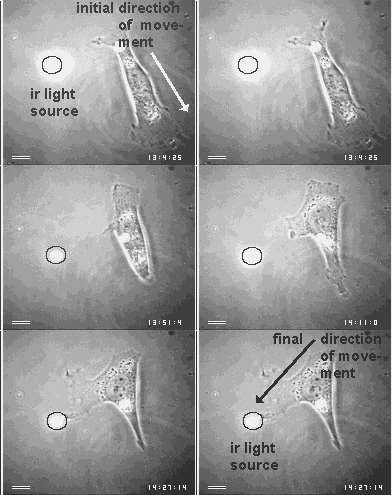
Scientists Control Living Cells With Light; Advances Could Enhance Stem Cells' Power
ScienceDaily (Aug. 11, 2009) — University of Central Florida researchers have shown for the first time that light energy can gently guide and change the orientation of living cells within lab cultures. That ability to optically steer cells could be a major step in harnessing the healing power of stem cells and guiding them to areas of the body that need help.

The results, presented at the 2009 Conference on Lasers and Electro-Optics/International Quantum Electronics Conference, were discovered by a research team led by Aristide Dogariu, an optical scientist at the College of Optics and Photonics, and Kiminobu Sugaya, a stem cell researcher at the College of Medicine's Burnett School of Biomedical Sciences.

Long-term implications of the work include stimulating and controlling tissue regeneration for cleaner wound healing and the possibility of altering the shapes of cells and preventing malignant tumors from spreading throughout the body.

While optical techniques such as drilling microscopic holes with light or using the light as tweezers have shown promise in manipulating small pieces of matter, the UCF team explored the use of a gentler light energy. Their work showed for the first time that optically induced torques can affect components within cells that drive their motility -- their ability to move spontaneously -- and change the orientation of cells within cultures.

While earlier studies of cell manipulation have emphasized shielding the cell from the power of the light, Dogariu and Sugaya focused on using that energy to stimulate the cells' natural tendencies.

Living cells use energy to move actively and spontaneously. To influence them without jeopardizing their chemical makeup was a tremendous challenge. Dogariu and Sugaya began exploring the idea of moving an entire cell by focusing on its inner mechanisms. Inside the cells there are slender rods made up of a protein called actin.

"Actin rods are constantly vibrating, causing the cells to move sporadically" Sugaya said. The researchers demonstrated that low-intensity polarized light can guide the rods' Brownian motion to ever-so-slowly line up and move in the desired direction.

"Stronger light would simply kill them," Dogariu said. "We wanted to gently help the cells do their job the way they know how to do it."

A time-lapse video shows that after more than two hours of exposure to light with specific characteristics, a group of stem cells migrates from a seemingly random mix of shapes, movement and sizes to a uniform lineup.

Interesting site about cell intelligence and how cells respond to light;
http://www.basic.northwestern.edu/g-buehler/cellint0.htm

mv_irdet.gif


mv_prbdk.gif


mv_ird1.gif


mv_ird2.gif

And here is the tubulin structure and nucleus (in interphase) of a few cells.
picture.php
 
Last edited:
Raising The Alarm When DNA Goes Bad: 'Rapid Response Team' Monitors And Quickly Responds To DNA Damage

ScienceDaily (Aug. 13, 2009) — Our genome is constantly under attack from things like UV light and toxins, which can damage or even break DNA strands and ultimately lead to cancer and other diseases. Scientists have known for a long time that when DNA is damaged, a key enzyme sets off a cellular ‘alarm bell’ to alert the cell to start the repair process, but until recently little was known about how the cell detects and responds to this alarm.

090813170854.jpg

Macrodomain-containing proteins rapidly respond to DNA damage: An ultraviolet laser is used to damage DNA within a human cell. This is a still image from a movie showing how a fluorescent version of a macrodomain-containing protein (labelled Af1521 here) rapidly accumulates at the site of DNA damage. (Credit: Image copyrighted EMBL)​

In a study published in Nature Structural and Molecular Biology, researchers at the European Molecular Biology Laboratory (EMBL) in Heidelberg, Germany, have identified a whole family of proteins capable of a direct response to the alarm signal.

Our genome is a huge repository of information guiding the construction and function of all the cells in our bodies. Cells sustain many hits to their DNA every day, which can lead tomutations, so they maintain a fleet of DNA repair machinery that can be rapidly mobilised and sent to damaged sites in an emergency.

Because our DNA is so long and unwieldy, it needs to be packaged up with proteins and organised into a complex structure called chromatin. Scientists have known for 50 years that one component of chromatin, an enzyme known as PARP1, is activated by DNA damage and produces a molecular signal, called PAR, which raises the alarm at the site of the damage. In recent weeks, scientists have for the first time worked out how PAR is rapidly detected by the cell; in their Nature Structural and Molecular Biology paper, the group of Andreas Ladurner and their colleagues at EMBL have identified a whole family of proteins that respond to this signal by binding to it directly.

What these proteins share is a special region called a macrodomain. By using a laser to reproduce DNA damage in the lab, the scientists were able to follow fluorescently-labelled macrodomain proteins in cells and observed that they quickly move to the site of DNA damage. A high-resolution image, obtained by X-ray crystallography, shows how the macrodomain forms a ‘pocket’ fitting the PAR signal exactly.

Among the members of the family the researchers found a protein called histone macroH2A1.1. “This was very surprising. Histones play a major role in assembling chromatin and keeping it together, but they don’t usually have macrodomains,” says Ladurner. “The finding is particularly relevant, because it turns out that cancer cells don’t have macroH2A1.1. The fact that one member of the rapid response team that detects DNA damage is missing could contribute to the disease.”

Because macroH2A1.1 is embedded in chromatin, when it recognises PAR at DNA damage sites, it drags the complex but highly-organised tangle of chromatin with it. As a result, macroH2A1.1 condenses the chromatin environment around the damaged area.

The scientists are now trying to understand why this happens. One plausible explanation could be that by temporarily compacting the DNA, the broken ends of the DNA molecule are kept closer together. This should increase the chances of being able to repair it.

“With these findings we’ve opened up completely new perspectives to a fifty-year-old field of research,” says Ladurner. “We’re very excited of what lies ahead and hope that we’ll soon be much closer in understanding how PARP1 and macrodomains together maintain a healthy genome.”
Interesting times ahead...
 
Protein Folding: Diverse Methods Yield Clues

ScienceDaily (Aug. 10, 2009) — Rice University physicists have written the next chapter in an innovative approach for studying the forces that shape proteins -- the biochemical workhorses of all living things.

New research featured on the cover of the August 6 issue of the Journal of Physical Chemistry illustrates the value of studying proteins with a new method that uses the tools of nanotechnology to grab a single molecule and pull it apart. The new method helps scientists measure the forces that hold proteins together. The new study contrasted the findings from Rice's method with a different approach that relies on chemical reactions.

"There is an ongoing discussion among scientists about which of these methods is more relevant," said Ching-Hwa Kiang, assistant professor of physics and astronomy at Rice. "What we've found is that each teaches us something different, but the results from the two are similar enough that we can use them together in the future."

Over the past decades, scientists have discovered that misfolded proteins play an important but mysterious role in diseases like Alzheimer's and Parkinson's. As a result, more laboratories like Kiang's are studying how proteins fold and misfold in the hopes of finding clues that could lead to new treatments.

Kiang's team specializes in studying the forces that hold protein strands together. Her group uses atomic force microscopes (AFM), which operate much like phonograph players. The AFM has a needle that's suspended from one end of a cantilevered arm. The needle bobs up and down on the arm, randomly grabbing and lifting proteins. By measuring exactly how much force it takes to pull the strands apart, Kiang's group can learn important clues about the protein's behavior.

Kiang's work is not the only way to study protein folding. Other groups use chemicals to determine how much energy it takes to unfold proteins, and Kiang's latest paper looks at similarities and differences between the two methods.

"The chemical denaturant method gives very accurate information about the folded and unfolded state of the protein, and our method gives important information about what happens in between," Kiang said.

Proteins are the workhorses of biology. Each protein is a string of amino acids that are attached end to end, like a strand of pearls. The order of the amino acids comes from DNA blueprints, but the order itself doesn't tell scientists what the protein is designed to do.
That's because each protein folds in upon itself shortly after its made, much like a strand of pearls curls up as it's dropped into someone's palm.

Unlike the pearls, which might fall this way or that depending upon how they're dropped, proteins fold the same way every time.
That's important, because when they misfold, they cannot function properly and in some cases can make people sick.

"This is fundamental research, but it is very important," Kiang said. "We need to answer to these fundamental questions in order to better understand how protein folds correctly, which affects people's health."

The research was sponsored by the National Science Foundation, the National Institutes of Health and the Welch Foundation.
 
More efficient cellular nanomachines :D.

Well, fluctuation is a tool used by biological molecular machines.

Good thing it does because it needs to fight friction :p:
Bio-Nanomachines: Proteins As Resistance Fighters

ScienceDaily (Aug. 18, 2009) — Friction limits the speed and efficiency of macroscopic engines. Is this also true for nanomachines? A Dresden research team used laser tweezers to measure the friction between a single motor protein molecule and its track. The team found that also within our cells, motors work against the resistance of friction and are restrained in its operation—usually by far not as much though as their macroscopic counterparts.

090814100101.jpg

Fluorescent image of single motor proteins (left): Motion of two diffusing kinesin molecules (green) on a microtubule (red) shown as a time series kymograph. Schematic (right): By dragging diffusing kinesin molecules with laser tweezers over a microtubule, the friction force between the motor and its microtubule track can be measured very precisely. (Credit: MPI-CBG, BIOTEC)

These first experimental measurements of protein friction could help researchers to better understand key cellular processes such as cell division which is driven by such molecular machines. (Science, August 14, 2009)

Friction is the force that resists the relative motion of two bodies in contact. The same is true on the nanoscale: Molecular motors have to fight the friction created between them and their tracks. However, since the frictional forces acting on such motors had not been measured before, it was not known how they depend on the speed and the direction of motion.

Friction Slows Down Proteins

Scientists in Dresden at the Biotechnology Center (BIO-TEC) of the Technical University of Dresden and at the Max Planck Institute of Molecular Cell Biology and Genetics (MPI-CBG) immobilized the molecular motor kinesin on a microsphere which was held by laser tweezers and dragged over its track, a so-called microtubule. In this manner, the friction force between the motor and its microtubule track was measured very precisely. "Just like for macroscopic machines, protein friction limits the speed and efficiency of the small bio-motors", says Erik Schäffer, group leader at the BIOTEC and Jonathon Howard, director and group leader at the MPI-CBG.

The researchers explain that the protein, in the absence of an energy source, takes eight nanometer (a millionth of a millimeter) wide "diffusive hops", corresponding to the length of the tubulin subunits that make up a microtubule. The motors step from one tubulin subunit to the adjacent one by forming a new bond with the microtubule filament as another bond is broken. When pulled by the tweezers, the energy released from these breaking bonds is lost as friction.

Efficient nanomachines

Protein friction also gives insight into the efficiency of kinesin. "About half of the energy from the motor’s fuel ATP is dissipated as friction between the motor and its substrate" Howard comments. Schäffer adds: "What remains after further dissipation inside the motor is used for mechanical work—the efficiency is usually much better than for man-made machines". The dissipated energy is eventually converted to heat, that contributes to the heating of our body. Thus, for example our muscles are partly heated by protein friction as the muscle motor proteins do their work.
 
Last edited:
Something for the A.I. guys.

Key Circuits Control Cell's Ability To Adapt To Changes In Its Environment
ScienceDaily (Aug. 21, 2009) — UCSF researchers have identified the two key circuits that control a cell’s ability to adapt to changes in its environment, a finding that could have applications ranging from diabetes and autoimmune research to targeted drug development for complex diseases.
The new findings are featured as the cover story in the August 21, 2009 issue of the journal Cell.

The limited number of circuits that can achieve adaptation represents a fundamental shift in our understanding of this important biological behavior, which previously had been thought to be affected by hundreds of different circuits, according to Chao Tang, PhD, who was co-senior author on the paper with Wendell Lim, PhD.

Both Lim and Tang are faculty members in the UCSF departments of Bioengineering and Therapeutic Sciences and of Biochemistry and Biophysics, and are affiliated with the California Institute for Quantitative Biosciences (QB3) at UCSF.

Adaptation is a fundamental property of many cellular sensing systems, allowing the cell to automatically reset itself after responding to a stimulus, Lim said. These adaptive circuits are what enable eyes to adjust to changes in light, white blood cells to move toward bacteria, or insulin levels to adjust to sugar loads. They are involved in heat adaptation, movement, sight and smell, among others. They also are often the mechanisms that go wrong at a molecular level in some of the most difficult diseases to treat.

“Many diseases are diseases of homeostasis,” explained Lim, who is also affiliated with the Howard Hughes Medical Institute. “Diabetes or autoimmune diseases, for example, are based on a disruption in the circuitry that prevents the body from readjusting itself.”

Until now, however, the millions of circuits involved in that adaptive response were impenetrably complex.

For this research, the team used a computational method to analyze 160 million circuits that come into play when a cell adapts to environmental stimuli and monitored them for the circuit’s sensitivity to a stimulus and the precision of its adaptation.

The result was an exhaustive circuit-function map of enzymatic regulatory networks that identified two core structures that are common to every adaptive response, however simple or complex: a negative feedback loop with a buffering node, and a feed-forward loop that adjusts the proportion of response. Furthermore, the researchers said, they established that the most robust adaptive responses rely heavily on at least one of these two minimal motifs.

“This is a new way of looking at biology and disease,” Lim said. “We’ve sequenced the genome, we know the genes involved and have started to understand how they’re connected together. But it’s like opening your computer and looking at the chips and circuits inside – how do you begin to understand it?”

Unlike chemistry, in which the core elements were understood 100 years ago, there is no equivalent of the periodic table in the field of biology. The field of systems biology, in which both Lim and Tang focus, aims to create that same systematic approach to understanding how cells and biological systems work.

The goal is to break down the overwhelming amount of information that has been generated by advances over the last decade in genetic sequencing, into recognizable modules that can then be further studied, understood and ultimately used to create drug therapies for complex diseases such as cancer and diabetes that involve multiple genes.

Thus, beyond the specific advance in this particular research, the team’s ability to reduce millions of cellular responses to two common circuits lays the groundwork for similar analyses in other biological systems. Despite the diversity of possible biochemical networks, the team said, it may be common to find that only a finite set of core structures can execute a particular function.

“From a scientific standpoint, this is about one thing: Are there universal principles in biology, and if so, what are they,” Tang said.

The potential applications from these studies could be tremendous: in medicine, an understanding of what causes a system to shift from one behavior to another could greatly aid in developing more targeted therapeutics for treatments of complex diseases like cancer, the researchers said.

Fundamentally, the complex network of homeostatic response is what makes these diseases so difficult to tackle therapeutically, according to the research team. If the entire network is out of balance, a drug that blocks a single receptor won’t work. Identifying the core structures behind adaptive response, however, makes it possible to someday create a therapy that could readjust that network.

It also could have applications in the emerging field of synthetic biology, by serving as a manual for how to engineer robust biological circuits that carry out a target function.

I guess the next thing to do is to write a program that mimics one or more of these circuits and combine it with an evolutionary algorithm. And then a back-up program just to keep the thing going if something goes wrong... like a house-keeping metaprogram?

'Housekeeping' Genes Play Important Role In Developmental Pathways Of Cells
ScienceDaily (Aug. 23, 2009) — A study from the Center for Molecular Genetics at the University of California, San Diego School of Medicine shows that a gene called HPRT plays an important role in setting the program by which primitive or precursor cells decide to become normal nerve cells in the human brain. This unconventional view of metabolic genes known as "housekeeping" genes is now online at the journal Molecular Therapy.

"Housekeeping" genes are expressed in most cells under most conditions, and scientists usually regard them as having simple metabolic functions that regulate normal metabolism, or that can cause serious disease when the genes don't function properly. But they were not previous thought to be involved with setting developmental pathways that determine how stem cells and other primitive cells decide to become neurons, muscle cells, bone or blood cells.

"We showed that HPRT carries out an important new role by causing mistakes in the ways in which a number of super-regulatory genes called transcription factors genes are expressed – some up, some down, but many incorrectly," said Theodore Friedmann, MD, professor of pediatrics and director of the Gene Therapy Program at the UC San Diego School of Medicine. The researchers propose that many other housekeeping genes in addition to HPRT may also be found to regulate important developmental pathways.

The study also provides the first direct experimental support for a possible role that HPRT plays in the development of the devastating neurological disorder in Lesch Nyhan disease, a rare, X-linked inherited disorder caused by a deficiency of an enzyme produced by mutations in the HPRT gene. Complications of the disease usually appear in boys during their first year of life, and may result in severe gout and kidney problems, poor muscle control, and neurological problems that cause the boys to injure themselves uncontrollably. The study by the Friedmann group now supports the idea that the HPRT gene defects cause neurological problems by directly interfering with the birth and function of brain neurons, especially the ones that rely on dopamine for nerve transmission.

"This finding is important because a better understanding of the dopamine defect in Lesch Nyhan disease will almost certainly shed light on the similar defect in Parkinson's disease," said Friedmann. "The major difference in these two diseases is that in Parkinson's disease, the dopaminergic neurons degenerate and disappear. In Lesch Nyhan disease, the dopamine neurons are present in more or less normal numbers and locations, but appear to function improperly. Now we know a little more about why that is."

A distinct and severely aberrant neurobehavioral symptom of Lesch Nyhan disease is self-mutilation, associated with severe depletion of the neurotransmitter dopamine in the basal ganglia region of the brain, as well as defective dopamine (DA) uptake. This is demonstrated in both humans and the HPRT-deficient mouse model, even though DA neurons are present in relatively normal numbers and with normal distribution patterns.

The UCSD research identified a number of abnormally expressed genes in HPRT-deficient mice and in human HPRT-deficient fibroblasts or stem cells. This discovery led them to the hypothesis that complex, interacting networks and pathways affect many aspect of central nervous system development, possibly including defects in the development of DA neurons themselves.
 
Top
Sign up to the MyBroadband newsletter
X