Deluxxes Solar Experience

Deluxxe Legend

Active Member
Joined
Jan 19, 2011
Messages
68
Reaction score
65
My Solar Installation Journey: A Comprehensive Guide

I'm excited to share my journey into solar with you. At first, I hesitated to write this blog, thinking I might not have much to contribute to the discussion, given the wealth of knowledge on solar installations available in forums like this one. However, I've come to realise that each solar build is unique, and my experiences might offer valuable insights to others embarking on this path.

Motivation for Going Solar

About a year ago, after a challenging experience with the COVID-19 pandemic, I made the decision to move my family to a spacious 2000-square-meter property. While I loved the extra space, I was in for a shock when I received my first utility bills. My monthly electricity costs ranged from approximately R4000 during the summer to R7000 in the winter. After confirming with my neighbours that these were standard rates, I knew I had to explore alternatives quick.

I started by tracking my electricity usage and costs, which was relatively easy as I had a prepaid meter. The decision to go solar became even more apparent, considering the ongoing issue of load shedding.
1694097209116.png
Identifying Energy Hogs

I made an effort to understand why my electricity bill was so high. With the help of an electrician, I discovered that I had four geysers on my property, with two in the main house, one in the cottage, and one in the maid's quarters. I tried various strategies, including switching off the under-floor heating and setting alarms for geyser usage, but it was clear that going solar was the most viable solution.

Research and Quotes

I began researching solar solutions and reached out to multiple installers and banks offering solar financial solutions. Given my high electricity usage, most quotes ranged from just under R200K to about R250K, typically including an 8kW inverter, two batteries, and 8 to 14 panels. Feeling that these quotes exceeded my budget, I decided to dig deeper and explore alternative options.

I came across PowerForums and Steve on this platform, and they provided me with a quote of about R155K, which was more reasonable, though it did not include installation. I also started evaluating different installers with quotes ranging from R15K to R20K, including the issuance of a COC.

Choosing the Right System

After saving up and deciding against financing, I moved forward with my installation plans. To my surprise, I discovered that I had a 3-phase electrical system, which had implications for my solar setup. While I considered switching to single-phase, I opted to keep the 3-phase configuration, influenced by recommendations on the forum.

Equipment Selection

After careful consideration, I placed an order for the following equipment:

- Sunsnyk 12kW Inverter
- 2 x Hubble AM-5 51.2V Batteries
- 12 x JA Solar 550W Panels


The 12kW inverter was chosen to accommodate my 3-phase system and future expansion plans. This is the final quote that I accepted from PowerForum

1694097598226.png

Installation Challenges and Costs

Installation commenced, with the team working on the inverter, batteries, and panels the first day. However, I encountered a surprise when it came to cabling on the second day due to my 3-phase system. The specialised 4-core cable needed for the 30-meter run from my DB in the house to the garage cost me approximately R16.5K, an unforeseen expense. Additionally, the installation cost increased due to the need for larger combine and AC protection boxes for the 3-phase system.

1694097820892.png

System Configuration and Future Expansion

My installation included space for potential expansion, with room for an additional 10 north-facing panels and another 10 on a west-facing roof. These future additions could help maximise energy production.

1694098169327.png

Monitoring and Optimisation

My journey into solar didn't end with this installation, in fact, I realised that this was just the beginning. I learned that configuring my system to meet household needs was a separate challenge. In the first few days, I generated varying amounts of energy, mainly due to load shedding and adjusting my settings for essential appliances like geysers.

1694098480449.png

Seeking Efficiency Tips

The first few days with solar have been great, especially as I got it just as the recent stage 6 load shedding kicked in. The first full day with solar saw me generate 28.3kWh but it was obviously far from efficient as I had decided to add everything on essential (geysers, swimming pool, oven), with my house having a gas stove. I also decided to add CBI Astute smart timers for the 3 geysers that I am currently using so that I can stagger them throughout the day.

The day after that I only generated about 23kW due to the long spells of load shedding getting my timers out of whack and yesterday was my most efficient at generating 29.7kW but still not quite there yet as you can see by the gap in production between 10:25 and 12:55 with my batteries being fully charged earlier than anticipated and I did not add anything to the load.

1694099251578.png

I have also not tinkered too much with the settings of my inverter as I have yet to make sure that my house has enough hot water when needed (mornings and evenings) and ensure my wife has power late at night as she works for an international company and is usually online until about 4 am.

So I would really appreciate any tips and suggestions on what I can do to make my system work more efficiently. As many of you in the forums have suggested, I'm already itching to get a 3rd battery so that I can store more power that can be used by my family more efficiently at night, but that will have to wait a bit until I have enough budget and have recovered from this huge spend.

Conclusion and Cost Analysis

In the end, my solar installation cost nearly R200K, which was about R20K more than my initial budget. I attribute this increase to my choice of the 12kW inverter for my 3-phase system. While it was a significant investment, I believe it will pay off in the long run, especially as I consider expanding my system. Here are some pictures of the final installation.

1694098663244.png 1694098762830.png

Final Installation

After successfully completing the solar installation, I'm thrilled with the results. As I monitor usage and fine-tune the system over the next few weeks and months, I anticipate learning more and further optimising my solar setup.

Thank You and Community Appreciation

I want to express my gratitude to the forum members for their invaluable knowledge and guidance. Although I wish I had invested in solar earlier, I'm thankful for the insights and cost savings I've gained through this community. I hope my journey will inspire and assist others as they embark on their solar installation adventures.
 

Attachments

  • 1694110994463.png
    1694110994463.png
    329.9 KB · Views: 41
Last edited:
Very nice write-up and i think this adds a lot of value in the decision process you followed as well as the search for a better price point. Interested to see how this install and your home usage evolves into summer and with the varying stages of LS
 
My Solar Installation Journey: A Comprehensive Guide

I'm excited to share my journey into solar with you. At first, I hesitated to write this blog, thinking I might not have much to contribute to the discussion, given the wealth of knowledge on solar installations available in forums like this one. However, I've come to realise that each solar build is unique, and my experiences might offer valuable insights to others embarking on this path.

Motivation for Going Solar

About a year ago, after a challenging experience with the COVID-19 pandemic, I made the decision to move my family to a spacious 2000-square-meter property. While I loved the extra space, I was in for a shock when I received my first utility bills. My monthly electricity costs ranged from approximately R4000 during the summer to R7000 in the winter. After confirming with my neighbours that these were standard rates, I knew I had to explore alternatives quick.

I started by tracking my electricity usage and costs, which was relatively easy as I had a prepaid meter. The decision to go solar became even more apparent, considering the ongoing issue of load shedding.
View attachment 1583852
Identifying Energy Hogs

I made an effort to understand why my electricity bill was so high. With the help of an electrician, I discovered that I had four geysers on my property, with two in the main house, one in the cottage, and one in the maid's quarters. I tried various strategies, including switching off the under-floor heating and setting alarms for geyser usage, but it was clear that going solar was the most viable solution.

Research and Quotes

I began researching solar solutions and reached out to multiple installers and banks offering solar financial solutions. Given my high electricity usage, most quotes ranged from just under R200K to about R250K, typically including an 8kW inverter, two batteries, and 8 to 14 panels. Feeling that these quotes exceeded my budget, I decided to dig deeper and explore alternative options.

I came across PowerForums and Steve on this platform, and they provided me with a quote of about R155K, which was more reasonable, though it did not include installation. I also started evaluating different installers with quotes ranging from R15K to R20K, including the issuance of a COC.

Choosing the Right System

After saving up and deciding against financing, I moved forward with my installation plans. To my surprise, I discovered that I had a 3-phase electrical system, which had implications for my solar setup. While I considered switching to single-phase, I opted to keep the 3-phase configuration, influenced by recommendations on the forum.

Equipment Selection

After careful consideration, I placed an order for the following equipment:

- Sunsnyk 12kW Inverter
- 2 x Hubble AM-5 51.2V Batteries
- 12 x JA Solar 550W Panels


The 12kW inverter was chosen to accommodate my 3-phase system and future expansion plans. This is the final quote that I accepted from PowerForum

View attachment 1583856

Installation Challenges and Costs

Installation commenced, with the team working on the inverter, batteries, and panels the first day. However, I encountered a surprise when it came to cabling on the second day due to my 3-phase system. The specialised 4-core cable needed for the 30-meter run from my DB in the house to the garage cost me approximately R16.5K, an unforeseen expense. Additionally, the installation cost increased due to the need for larger combine and AC protection boxes for the 3-phase system.

View attachment 1583858

System Configuration and Future Expansion

My installation included space for potential expansion, with room for an additional 10 north-facing panels and another 10 on a west-facing roof. These future additions could help maximise energy production.

View attachment 1583862

Monitoring and Optimisation

My journey into solar didn't end with this installation, in fact, I realised that this was just the beginning. I learned that configuring my system to meet household needs was a separate challenge. In the first few days, I generated varying amounts of energy, mainly due to load shedding and adjusting my settings for essential appliances like geysers.

View attachment 1583866

Seeking Efficiency Tips

The first few days with solar have been great, especially as I got it just as the recent stage 6 load shedding kicked in. The first full day with solar saw me generate 28.3kWh but it was obviously far from efficient as I had decided to add everything on essential (geysers, swimming pool, oven), with my house having a gas stove. I also decided to add CBI Astute smart timers for the 3 geysers that I am currently using so that I can stagger them throughout the day.

The day after that I only generated about 23kW due to the long spells of load shedding getting my timers out of whack and yesterday was my most efficient at generating 29.7kW but still not quite there yet as you can see by the gap in production between 10:25 and 12:55 with my batteries being fully charged earlier than anticipated and I did not add anything to the load.

View attachment 1583872

I have also not tinkered too much with the settings of my inverter as I have yet to make sure that my house has enough hot water when needed (mornings and evenings) and ensure my wife has power late at night as she works for an international company and is usually online until about 4 am.

So I would really appreciate any tips and suggestions on what I can do to make my system work more efficiently. As many of you in the forums have suggested, I'm already itching to get a 3rd battery so that I can store more power that can be used by my family more efficiently at night, but that will have to wait a bit until I have enough budget and have recovered from this huge spend.

Conclusion and Cost Analysis

In the end, my solar installation cost nearly R200K, which was about R20K more than my initial budget. I attribute this increase to my choice of the 12kW inverter for my 3-phase system. While it was a significant investment, I believe it will pay off in the long run, especially as I consider expanding my system. Here are some pictures of the final installation.

View attachment 1583868 View attachment 1583870

Final Installation

After successfully completing the solar installation, I'm thrilled with the results. As I monitor usage and fine-tune the system over the next few weeks and months, I anticipate learning more and further optimising my solar setup.

Thank You and Community Appreciation

I want to express my gratitude to the forum members for their invaluable knowledge and guidance. Although I wish I had invested in solar earlier, I'm thankful for the insights and cost savings I've gained through this community. I hope my journey will inspire and assist others as they embark on their solar installation adventures.
Welcome to the club and enjoy your new system! Those Hubble's are neat. The whole install is neat. Very nice
 
I also have 3-Phase on the property.
Flat does have one phase. Here I installed an 5kW Sunsynk inverter.
House have the other two phases. Here I installed an 8kW Synsynk inverter.
The other phase does have the stove and geyser on. Not used because most of the cooking is done in the flat, gas hob. Also have gas geyser in flat and house installed.

Welcome to the solar club.
 
Very nice. They could have made the round conduit a bit more neat.
This is the thing, it's not normal conduit, but flexible PVC conduit. If you have ever worked with it, you will know that it will take on the form of the cable inside, especially if thick.
TBH I think that they did a great job, very neat.
 
This is the thing, it's not normal conduit, but flexible PVC conduit. If you have ever worked with it, you will know that it will take on the form of the cable inside, especially if thick.
TBH I think that they did a great job, very neat.
True, that stuff has a mind of it's own.
 
Very nice. They could have made the round conduit a bit more neat.
Nah, it's just not worth it, it's flexible as Ron said, uniform colour makes it neat. if you really want you can build a cabinet or clad around it
 
It's been approximately three weeks since my solar system installation, and I'm here to share the highs, lows, and valuable lessons I've experienced so far. The journey has been a blend of excitement and occasional frustration as I navigate the nuances of my new solar-powered lifestyle.

One of the key aspects of this journey has been gaining a deep understanding of my family's energy consumption habits and aligning them with the capabilities of my solar system. To achieve this, I've been actively tweaking my inverter and geyser timer settings. However, this hasn't been without its challenges, especially with the unpredictability of load shedding and the occasional cloudy days here in Johannesburg.

Efforts to optimise load usage have been at the forefront of my solar journey. It's been a process of trial and error, with the goal of ensuring that my solar-generated power matches my household's needs. The chart below represents my progress, with the spikes typically corresponding to appliance usage, such as geyser timers and the swimming pool pump. While I've made strides in optimising these loads, there's room for further improvement.

1695385555979.png

But as soon as I thought I had sorted it out, then the real challenges began.

One morning, I woke up to find no power in the house, and the geyser water was not warm enough for my kids' morning baths before school. It turns out this was the result of a combination of factors. I had adjusted my inverter settings, lowering the State of Charge (SOC) to 40% from 01:00 to 05:00, and had unticked the Grid option. During load shedding, the first geyser kicked in at 05:00, and unfortunately, the batteries couldn't keep up, leaving us without power. The delayed sunrise due to the weather exacerbated the situation. This continued for about three days until I decided to revert to my original settings to ensure a stable power supply.

1695386563679.png 1695386606174.jpeg

I am still not convinced that these are the best settings, but I still havent had the proper time to do enough research and study my power usage in a steady state, so this is something I plan to focus on resolving next.

As I closely monitored my solar system's performance, I noticed that my daily production had plateaued at approximately 3.6 kW. This raised concerns, prompting me to reach out to my installer on the 8th day, (didn't realise that I actually waited that long) for guidance. To my surprise, the issue was not related to my inverter or settings but rather external factors. He suggested I have a look at the panels to see if there was probably something happening with them.

1695387032088.png

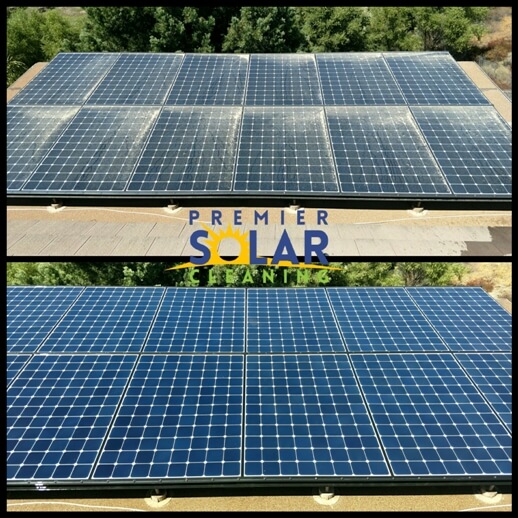
Upon closer inspection, I discovered a layer of dust on my solar panels, likely a result of recent windy storms in Johannesburg.

1695387119851.jpeg 1695387143677.jpeg

Cleaning these panels became a priority. My initial attempt involved using a hose, which provided some improvement (which I think had more to do with cooling the panels). However, the real breakthrough came when I tried a pressure washer, although the results were still not as significant as expected. The panels appeared cleaner, but I wasn't seeing a substantial boost in production. My installer suggested trying soap for a more thorough cleaning, a task I plan to tackle over the weekend.

1695387380930.jpeg

1695387532107.png

As I work to maximise my solar system's efficiency, I'm seeking advice and tips on how to fine-tune my inverter settings to strike the ideal balance between solar generation and load requirements. Your insights and suggestions are highly appreciated as I continue to fine-tune my system.

In conclusion, my solar journey has been a learning experience filled with both challenges and successes. I'm committed to overcoming these hurdles and continuously improving my system's performance. My next step involves researching my power usage in a steady state, a critical component in optimising my settings.

But the one definite positive so far is the amount of money I have saved on my prepaid electricity. In the past, I typically spent R1500 at the beginning of the month and topped up several times throughout. However, in the first month of using my solar system, I haven't needed to top up at all. I still have about 246 units left, which I'm confident will last me well into the next 10 days of the month. This translates to a substantial saving of approximately R3000 in just the first month!
 
It's been approximately three weeks since my solar system installation, and I'm here to share the highs, lows, and valuable lessons I've experienced so far. The journey has been a blend of excitement and occasional frustration as I navigate the nuances of my new solar-powered lifestyle.

One of the key aspects of this journey has been gaining a deep understanding of my family's energy consumption habits and aligning them with the capabilities of my solar system. To achieve this, I've been actively tweaking my inverter and geyser timer settings. However, this hasn't been without its challenges, especially with the unpredictability of load shedding and the occasional cloudy days here in Johannesburg.

Efforts to optimise load usage have been at the forefront of my solar journey. It's been a process of trial and error, with the goal of ensuring that my solar-generated power matches my household's needs. The chart below represents my progress, with the spikes typically corresponding to appliance usage, such as geyser timers and the swimming pool pump. While I've made strides in optimising these loads, there's room for further improvement.

View attachment 1591300

But as soon as I thought I had sorted it out, then the real challenges began.

One morning, I woke up to find no power in the house, and the geyser water was not warm enough for my kids' morning baths before school. It turns out this was the result of a combination of factors. I had adjusted my inverter settings, lowering the State of Charge (SOC) to 40% from 01:00 to 05:00, and had unticked the Grid option. During load shedding, the first geyser kicked in at 05:00, and unfortunately, the batteries couldn't keep up, leaving us without power. The delayed sunrise due to the weather exacerbated the situation. This continued for about three days until I decided to revert to my original settings to ensure a stable power supply.

View attachment 1591302 View attachment 1591304

I am still not convinced that these are the best settings, but I still havent had the proper time to do enough research and study my power usage in a steady state, so this is something I plan to focus on resolving next.

As I closely monitored my solar system's performance, I noticed that my daily production had plateaued at approximately 3.6 kW. This raised concerns, prompting me to reach out to my installer on the 8th day, (didn't realise that I actually waited that long) for guidance. To my surprise, the issue was not related to my inverter or settings but rather external factors. He suggested I have a look at the panels to see if there was probably something happening with them.

View attachment 1591310

Upon closer inspection, I discovered a layer of dust on my solar panels, likely a result of recent windy storms in Johannesburg.

View attachment 1591312 View attachment 1591314

Cleaning these panels became a priority. My initial attempt involved using a hose, which provided some improvement (which I think had more to do with cooling the panels). However, the real breakthrough came when I tried a pressure washer, although the results were still not as significant as expected. The panels appeared cleaner, but I wasn't seeing a substantial boost in production. My installer suggested trying soap for a more thorough cleaning, a task I plan to tackle over the weekend.

View attachment 1591316

View attachment 1591318

As I work to maximise my solar system's efficiency, I'm seeking advice and tips on how to fine-tune my inverter settings to strike the ideal balance between solar generation and load requirements. Your insights and suggestions are highly appreciated as I continue to fine-tune my system.

In conclusion, my solar journey has been a learning experience filled with both challenges and successes. I'm committed to overcoming these hurdles and continuously improving my system's performance. My next step involves researching my power usage in a steady state, a critical component in optimising my settings.

But the one definite positive so far is the amount of money I have saved on my prepaid electricity. In the past, I typically spent R1500 at the beginning of the month and topped up several times throughout. However, in the first month of using my solar system, I haven't needed to top up at all. I still have about 246 units left, which I'm confident will last me well into the next 10 days of the month. This translates to a substantial saving of approximately R3000 in just the first month!
Wont comment on everything but tbh I wouldnt bother with "cleaning" I didnt notice much of a difference my side

Super clean in march

1695389164922.png

Filthy today

1695389189322.png


Unless you trying to absolutely eeek out 200w dont bother.

Also looking at an awesome almost eskomless month

1695389280502.png

You can see where my geysers top up hope that helps you setting yours up. Also I always have grid as backup I dont care about pulling from Eskom if needed. Having power is always better than trying to save a kw or two

You can see my full journey here so if you have any other Qs just shout. At the point now where I dont even think about solar its just there. I must say the Sonoff light switches are cool as a number of lights around the house turn on early morning and I turn them off in the evening on my phone. Thats pure convenience

 
Welcome to the club.

Some food for thought. You might have already addressed them.

Is there a specific reason for having four geysers? How big are the geysers and elements?How many people in the house?

How energy efficient is your appliances. New appliances are better designed around energy usage. Have you upgraded the lights to led? Old school outside spotlights also use a significant amount of power.

You main power usage will always be heating:

1. Geyser
2. Kettle
3. Stove/Oven
4. Microwave
5. Tumble dryer etc.

Newer fridges and tvs dont use that much Units.
 
Welcome to the club.

Some food for thought. You might have already addressed them.

Is there a specific reason for having four geysers? How big are the geysers and elements?How many people in the house?

How energy efficient is your appliances. New appliances are better designed around energy usage. Have you upgraded the lights to led? Old school outside spotlights also use a significant amount of power.

You main power usage will always be heating:

1. Geyser
2. Kettle
3. Stove/Oven
4. Microwave
5. Tumble dryer etc.

Newer fridges and tvs dont use that much Units.
agree on these points our newest Siemens fridge is 30w an hour compared to our older Bosch at 100w.
 
Can have a look at this thread as well:

What has helped me a lot is Home Assistant (HA). The primary function being to switch off the geyser if the battery SOC drops below a certain % at a certain time. Most notably, and what would have helped you, below the time-of-use SOC % setting for the early AM geyser run.
So for me the geyser switches on 4AM, and I have the SOC setting at 30%. My HA automation checks every minute if the SOC goes below 30%, if so then it will switch off the geyser. The only way SOC can drop below 30 is if the grid is down. So it is a failsafe to sacrifice hot water if there's no battery left and no grid. In most cases should still be able to squeeze in 1 shower, so wife is happy and I take it on the chin.

It does take some effort to set it up, but if you're semi tech-savvy it should be fine. There are alternatives to manage the geyser better, like the Sonoff Loadshedder (requires electrical install). From my understanding, this can easily be set to switch off the geyser during loadshedding, at certain times. Downside, if you have some juice in the battery it won't be used either. You can also consider the aux port of the geyser, switch can basically be setup as a semi-essential load that operates just like essentials but with its own SOC cut-off.

For a decent forecast of PV production, have a look at the solcast website. If your setup differs drastically, without shading, something could be off. Installer is being a POS IMO by asking you to clean panels.
 
It's been approximately three weeks since my solar system installation, and I'm here to share the highs, lows, and valuable lessons I've experienced so far. The journey has been a blend of excitement and occasional frustration as I navigate the nuances of my new solar-powered lifestyle.

One of the key aspects of this journey has been gaining a deep understanding of my family's energy consumption habits and aligning them with the capabilities of my solar system. To achieve this, I've been actively tweaking my inverter and geyser timer settings. However, this hasn't been without its challenges, especially with the unpredictability of load shedding and the occasional cloudy days here in Johannesburg.

Efforts to optimise load usage have been at the forefront of my solar journey. It's been a process of trial and error, with the goal of ensuring that my solar-generated power matches my household's needs. The chart below represents my progress, with the spikes typically corresponding to appliance usage, such as geyser timers and the swimming pool pump. While I've made strides in optimising these loads, there's room for further improvement.

View attachment 1591300

But as soon as I thought I had sorted it out, then the real challenges began.

One morning, I woke up to find no power in the house, and the geyser water was not warm enough for my kids' morning baths before school. It turns out this was the result of a combination of factors. I had adjusted my inverter settings, lowering the State of Charge (SOC) to 40% from 01:00 to 05:00, and had unticked the Grid option. During load shedding, the first geyser kicked in at 05:00, and unfortunately, the batteries couldn't keep up, leaving us without power. The delayed sunrise due to the weather exacerbated the situation. This continued for about three days until I decided to revert to my original settings to ensure a stable power supply.

View attachment 1591302 View attachment 1591304

I am still not convinced that these are the best settings, but I still havent had the proper time to do enough research and study my power usage in a steady state, so this is something I plan to focus on resolving next.

As I closely monitored my solar system's performance, I noticed that my daily production had plateaued at approximately 3.6 kW. This raised concerns, prompting me to reach out to my installer on the 8th day, (didn't realise that I actually waited that long) for guidance. To my surprise, the issue was not related to my inverter or settings but rather external factors. He suggested I have a look at the panels to see if there was probably something happening with them.

View attachment 1591310

Upon closer inspection, I discovered a layer of dust on my solar panels, likely a result of recent windy storms in Johannesburg.

View attachment 1591312 View attachment 1591314

Cleaning these panels became a priority. My initial attempt involved using a hose, which provided some improvement (which I think had more to do with cooling the panels). However, the real breakthrough came when I tried a pressure washer, although the results were still not as significant as expected. The panels appeared cleaner, but I wasn't seeing a substantial boost in production. My installer suggested trying soap for a more thorough cleaning, a task I plan to tackle over the weekend.

View attachment 1591316

View attachment 1591318

As I work to maximise my solar system's efficiency, I'm seeking advice and tips on how to fine-tune my inverter settings to strike the ideal balance between solar generation and load requirements. Your insights and suggestions are highly appreciated as I continue to fine-tune my system.

In conclusion, my solar journey has been a learning experience filled with both challenges and successes. I'm committed to overcoming these hurdles and continuously improving my system's performance. My next step involves researching my power usage in a steady state, a critical component in optimising my settings.

But the one definite positive so far is the amount of money I have saved on my prepaid electricity. In the past, I typically spent R1500 at the beginning of the month and topped up several times throughout. However, in the first month of using my solar system, I haven't needed to top up at all. I still have about 246 units left, which I'm confident will last me well into the next 10 days of the month. This translates to a substantial saving of approximately R3000 in just the first month!
On the cleaning of the panels I've read that a dirty panel may lose you around 3 - 30% in energy production, so it may be a good idea to clean it once a year at least. Some good articles on this topic. This obviously affects what area these panels are in etc!


There are a few systems I've seen around recently but they do go at quite a price point especially if you clean them 1-4 times per year.


Let me know if there are any other cleaning systems that have proved to be useful, as you also mentioned you tested a high pressure washer on them, I read that this isn't a good solution to cleaning:

 
Last edited:
On the cleaning of the panels I've read that a dirty panel may lose you around 3 - 30% in energy production, so it may be a good idea to clean it once a year at least. Some good articles on this topic. This obviously affects what area these panels are in etc!


There are a few systems I've seen around recently but they do go at quite a price point especially if you clean them 1-4 times per year.


Let me know if there are any other cleaning systems that have proved to be useful, as you also mentioned you tested a high pressure washer on them, I read that this isn't a good solution to cleaning:

Just keep an eye on it.

When I was air raided by hadeda's who left wide AOE bombs (point of impact was at least 50cm wide & more than once, slight embellishment), I cleaned my panels. When it rains it keep the panel reasonably clean.

I generally get the same output between clean and not so clean panels. Major differences comes whether I am using something i.e. aircon, which ramps up production, if not, panels will only generate enough to match current load(after batteries are fully charged).

A better way to increase panel output and longevity is too cool panels down:

 
Top
Sign up to the MyBroadband newsletter
X