Does a UPS or Inverter increase electricity bill?

So what is the consensus? Does it take more power to charge batteries than to discharge batteries?
Yeah 3 years later, the consensus has changed it will take 10 to 20% more power to charge the batteries from what you used, so if you used 1000w you'd need use 1200 to 1100w to charge it back up when power comes back.
 
Hi I am thinking on buying a inverter or a UPS which is better? Which one does not increase the electricity bill that much?

Yes and no

Yes cause of efficiency if you 100% don't change your habit during LS you will use more to replace what you used.

and

No cause normally people's consumption rate changes during LS to persevere the limited battery reserve.

PS UPS is not an option cause power is off for longer than 5 mins.
 
You guys are all forgetting that during loadshedding a small power trolley inverter will provide a fraction of the electricity you would normally use because you're not powering your geyser, stove, kettle, etc. So overall you will use less grid electricity.
 
You guys are all forgetting that during loadshedding a small power trolley inverter will provide a fraction of the electricity you would normally use because you're not powering your geyser, stove, kettle, etc. So overall you will use less grid electricity.
The problem is that a lot of the time the load is shifted and not shed, your geyser will need to be on longer to make up for the heat you lost, the same for the fridge and freezer with cooling, the washing will be done when you have electricity, you'll either cook food later or will have bought takeaways. It's mostly the low-power stuff like the TV and lights that will not be shifted and together with the inefficiences of using the inverter I think you will have minimal cost savings becuase of loadshedding.
 
Lot's of people use really bad inverters.

Easily possible to have only 85% efficiency on charge and discharge (=30% total), I've seen as low as 80%.
eg:

1000VA for 600W or
1200VA for 720W

The efficiency of an inverter is the ratio of the output power to the input power. In your case, the input power is 1200VA (Volt-Ampere) and the output power is 720W (Watt). To calculate the efficiency, we need to convert VA to W. Since VA is equal to W for resistive loads, we can assume that the power factor is 1. Therefore, the efficiency of your inverter is 720W / 1200VA = 60%
 
Last edited:
Weeeelll. It depends. For most people this is not true. At best they save perhaps some of the running cost of the fridge for the time it was off. Other appliances like dishwasher, washing machine, kettle, etc only occasionally use electricity. For these, loadshedding only shifts the electricity usage from anytime-but-not-all-the-time to when the grid is up. Most people will not skip out washing self, clothes or dishes - their usage just shifts to another time of day but their total usage per 24h/week/month/year/whatever remains the same.

There's also huge misunderstanding about geysers. All else being the same (such as the temp to which your geyser thermostat is set) everything is determined by your hot water usage in your chosen period (per 24h, say, or weekly, or monthly - the principle remains the same). Without any usage (ie not drawing off any water and therefore not drawing in cold water) modern domestic geysers lose about 10 degrees Celsius per 24 hours through normal heat dissipation through the metal tank. This is also specified by the SABS in the SANS 151 specification for geysers in SA.

What really consumes power is using hot water, ie having to heat up the cold water being filled in to replace the drawn-off hot water, or the heating the warm-but-not-hot water in the geyser as it cooled since you switched off the power. It really doesn't matter when you wash/bath/shower, it takes the same amount of energy (ie kWh of electricity) to bring the water back up to the temperature setting, typically 60-65 deg C. Switching off your geyser but still having the same number of showers/baths/washes will at best save you the little fraction that is lost through static dissipation. Putting in a geyser timer and switching off for 18 hours a day will at best save you perhaps R40-R50 a month if you use the same amount of hot water as before. By far the best way to save hot water heating costs is to use less hot water. This is elementary high school science.

Switching off the power, whether at your DB or through loadshedding, doesn't really save any electricity. It saves the moment of load on the grid. But for most people, usage of appliances is shifted to other times. At best, your saving is barely measurable.

As you say, it depends. There can be savings. For instance say you regularly enjoy tea or coffee. You may regularly boil water, say every 2-3 hours. Say you're using a/c all the time, or a heater, all the time. Those times there is loadshedding and you don't have the backup capacity to run these, you may be saving as you'll do without that cup of tea or heating that room for 2 hours or playing that video game on that gaming pc at that time. Usually people won't heat a room twice as much to make up for the lost time or boil twice the water or if their free time is over, they won't be gaming but sleeping or helping kids with homework instead.
 
The problem is that a lot of the time the load is shifted and not shed, your geyser will need to be on longer to make up for the heat you lost, the same for the fridge and freezer with cooling, the washing will be done when you have electricity, you'll either cook food later or will have bought takeaways. It's mostly the low-power stuff like the TV and lights that will not be shifted and together with the inefficiences of using the inverter I think you will have minimal cost savings becuase of loadshedding.
I've heard of a lot people complaining their power bill is higher now during loadshedding. I guess in my case I will only save on my pool pump really.
 
a UPS/INVERTER is not close to 100% efficient, BUT, compared to a generator, it is heaven (ignoring solar), when running costs are considered
 
eg:

1000VA for 600W or
1200VA for 720W

The efficiency of an inverter is the ratio of the output power to the input power. In your case, the input power is 1200VA (Volt-Ampere) and the output power is 720W (Watt). To calculate the efficiency, we need to convert VA to W. Since VA is equal to W for resistive loads, we can assume that the power factor is 1. Therefore, the efficiency of your inverter is 720W / 1200VA = 60%
Not quite how i had it

1va = 1w

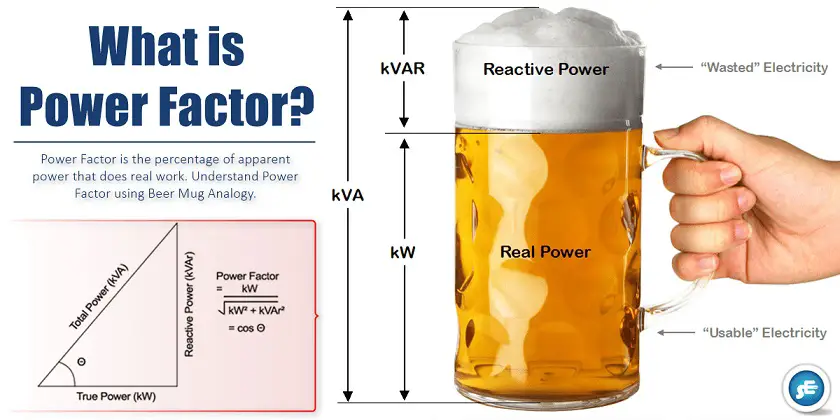
The va rating/capacity is more to do with the reactive power from induction devices

ie if you measure with a kilawatt it shows the spike

But that isn't what the device. Actually used

Eskom bills us according to the reactive power if we run devices with a lower power factor

because of the starin to the network

ie if we run a 1000w device at power factor 0.5

We actually. Only use 500w

And create feedback to eskom that strains their transformer about the same as 1000w actual power pull would so they bill us for the inconvenience

A ups/inverter actually absorbs this feedback and thus you save a bit of power from eskom

So the va is how much of a spike the transformer can handle in reactive power and the wattage is the most actual power the device can supply
 
Batteries store, rather than create, power. It would be impossible for it to output more than it consumes to charge?

Factoring in the inverter inefficiency rate, there's no doubt that the equivalent load under normal AC available circumstances would have drawn and cost lesser than when using an inverter.

So the direct, undiluted answer to the op question is yes. An inverter run solely by batteries charged through the ac outlet will increase your bill, for the equivalent load, when compared to powering it from the AC socket.
 
Last edited:
Yes

What-Power-Factor-IS.jpg
 
......

Eskom bills us according to the reactive power if we run devices with a lower power factor
.....
That is only if you are on specific tariffs, normally for big consumers.
Large consumers sometimes have a maximum demand charge, which is measured in kVA/MVA, but the usage is never measured in kVAh, but in kWh
 
That is only if you are on specific tariffs, normally for big consumers.
Large consumers sometimes have a maximum demand charge, which is measured in kVA/MVA, but the usage is never measured in kVAh, but in kWh
yea too true but for home users i more meant

there is round trip losses i feel the difference on my bill in stage 6 , the problem is any power you extract out of the battery you don't get what you put in ie you may get 80-90% the rest is lost as heat

and then charging the same, if there was no losses the fans would not have had to ramp up

so lifestyle dependant , any power used from battery carries a premium

if you live as if no load shedding , ie i use up to 6kwh in a 4 hours shedding

i get 93% efficiency charging , so right there i pay 7.5% extra
so that 6kwh cost me 6.45kwh to charge

then inverting the losses lets say i get 85% that means i used 5.1kwh actually

so that means i paid a 26% premium round trip,for any electricity used in load shedding

stage 6 i can really feel the difference ie lets say i use 40 units a day and 14 of those were in 10hrs load shedding

then 14 *1.26 + 26 outside shedding = 43.64 so that means my monthly usage goes up 10%

this is lifestyle dependant ie i use everything in loadshedding dishwasher kettle micro etc

live as if no load shedding and you incur extra cost as simple as that

now naturally if adding panels you don't care for the losses as you are recharging with free electricity
busy installing panels, in the meantime i pay the premium
 
Batteries store, rather than create, power. It would be impossible for it to output more than it consumes to charge?

Factoring in the inverter inefficiency rate, there's no doubt that the equivalent load under normal AC available circumstances would have drawn and cost lesser than when using an inverter.

So the direct, undiluted answer to the op question is yes. An inverter run solely by batteries charged through the ac outlet will increase your bill, for the equivalent load, when compared to powering it from the AC socket.
if you only run inductive loads and powered only via inverter
you would actually save money, as the inverter absorbs the reactive portion

there is actually areas where they use the inverters in solar farms to stabilise the grid ie to do power factor correction
 
Top
Sign up to the MyBroadband newsletter
X