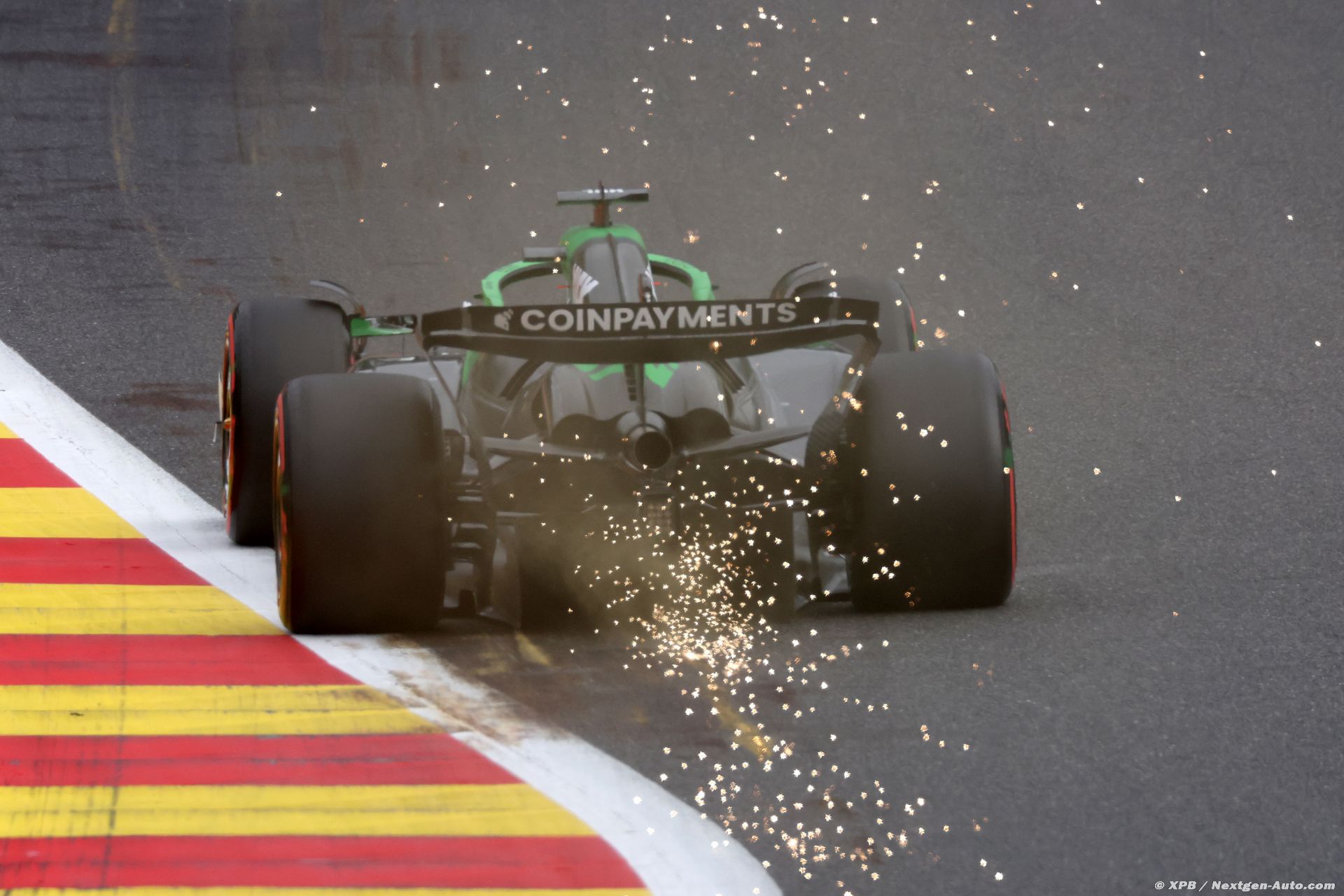
Follow the sparks.
No car throw more sparks in a night race than Merc.
Alpine and McLaren also looks sus
It's considered to be almost all cars. It's quite interesting since it's actually a hack:
Under the rules, the three skid elements must be made from titanium alloy to specific standards and sit exactly flush with the wooden plank.
Teams normally calculate surface wear after every session, ensuring the plank retains the minimum thickness required to avoid disqualification. But in Brazil, insiders say certain cars appeared to run unusually low without triggering excessive wear.
The report claims the heating process causes the titanium to expand downward.
"The higher the temperature of the titanium plate, the more it expands, resulting in it being lower than the plank itself," the outlet noted. When the car is "scattering sparks", only the skids make contact with the track while the plank sits fractionally higher - preserving legality.
Because drivers return to the pits slowly after sessions, the metal cools and retracts, returning to a flush surface for FIA inspection.
After several cars experienced severe bottoming during the sprint, FIA technical delegate Jo Bauer reportedly inspected all skid blocks before qualifying.
According to the Japanese report, he discovered "devices fitted to several cars for the sole purpose of heating the skids", and ordered their removal before Q1.
Affected teams were then forced to raise the rear ride-height, losing downforce and pace.
The same report suggests nearly every team uses the concept to some extent, with a few having developed it into a major advantage at smooth circuits where cars can run extremely low.
Formula 1 | The FIA is examining reports that several Formula 1 teams are using heat-expanding titanium skid plates to protect plank wear (…)

motorsport.nextgen-auto.com