-
- News
-
Categories
- 5G
- ADSL
- AI
- Banking
- Black Friday
- Broadband
- Broadcasting
- Business
- Business Telecoms
- Cellular
- Cloud and Hosting
- Columns
- Cryptocurrency
- Energy
- Enterprise
- Fibre
- Gadgets
- Gaming
- Government
- Hardware
- Industry News
- Internet
- Internet of Things
- Investing
- IT Services
- Motoring
- Reviews
- Science
- Security
- Smartphones
- Software
- Technology
- Telecoms
- Trending
- Wireless
- Press Office
- Forum
- Industry News
- What's Next
- Company hub
- Speed Test
- About us
- Advertise with us
- Contact
- Careers


-
Join the MyBroadband community
South Africa’s biggest forum. Discuss, discover, and connect with thousands of members.
-
Question of the Day: Which South African brand or product do you wish would make a return?

You are using an out of date browser. It may not display this or other websites correctly.
You should upgrade or use an alternative browser.
You should upgrade or use an alternative browser.
F1 - General discussion and 2017
- Thread starter Binary_Bark
- Start date


Dave
Honorary Master
Here is a couple more:
View attachment 426212
View attachment 426214
Carefully sequenced so it looks like the McLaren is making the move of course :crylaugh:
The Macca was making a move..
Going backwards is still a move

PS
Those 2 pics are dead links
Dave
Honorary Master
Just noticed your first pic is a .jpg, the other 2 are .png, I've had issues with .png in the past on this forum as well.
The Macca was making a move..
Going backwards is still a move
PS
Those 2 pics are dead links
Damn MyBB tends to do that too me when I upload rather than link.
I will Upload them again.
Dave
Honorary Master
Damn MyBB tends to do that too me when I upload rather than link.
I will Upload them again.
Try saving as .jpg before uploading, it's always .png that don't upload properly, I think they don't play well with the forum.
Special treat for anyone who missed it or would like to see it again:
http://racing4everyone.eu/2017/03/25/formula-1-2017-round01-australia/
Nice HD recording with option for Onboard or Track View.
http://racing4everyone.eu/2017/03/25/formula-1-2017-round01-australia/
Nice HD recording with option for Onboard or Track View.

thestaggy
Honorary Master
With regards to the lack of on-track action, did people honestly expect a change when downforce has been drastically increased? More downforce = more dirty air being thrown off the back = harder for the trailing car to sit with you. It was always going to get worse, not better.
The only solution to the boring racing is a move in the opposite direction with a radical decrease in aero grip.
Of interest, in an effort to improve racing, NASCAR moved in the opposite direction with regards to donwforce and the results were noticeable.
A year-old article, but written at the time when F1 announced its 2017 aero changes.
http://www.f1fanatic.co.uk/2016/04/26/higher-lower-faster-slower-f1s-downforce-debate/
The only solution to the boring racing is a move in the opposite direction with a radical decrease in aero grip.
Of interest, in an effort to improve racing, NASCAR moved in the opposite direction with regards to donwforce and the results were noticeable.
A year-old article, but written at the time when F1 announced its 2017 aero changes.
NASCAR and Formula One are poles apart as racing disciplines go. But both know the action on the track needs to be exciting, which makes NASCAR’s recent change in downforce levels significant for F1.
“I think it’s significantly better than what we had last year,” raved NASCAR racer Jamie McMurray after the first five races of 2016. “And I can’t find anybody that thinks differently.”
This week Formula One is expected to sign off rules which will see downforce levels rise in 2017. But NASCAR has just gone in the opposite direction, mandating changes to the rear wing, front splitter and underbody of its cars to bring downforce down.
“You can race a little bit closer,” McMurray continued. “The car in front of you doesn’t mess up your car as much. So, I have nothing but really positive things to say about it.”
Twelve months ago NASCAR faced a pressing need to inject more action into its races. The sport’s governing body was leaning towards a high-drag aerodynamic kit to bring the cars closer together, but drivers preferred the low-downforce option.
Both were put to the test: high-drag at Indianapolis and Michigan, low-downforce at Kentucky and Darlington (see full races below). The verdict was overwhelmingly in favour of the low-downforce approach, and that’s what the cars are running this year except at the Daytona and Talladega superspeedways.
http://www.f1fanatic.co.uk/2016/04/26/higher-lower-faster-slower-f1s-downforce-debate/

Binary_Bark
Forging
Australian GP driver ratings
More: http://www.skysports.com/f1/news/12433/10804716/australian-gp-driver-ratings
The finger is back. Eighteen months and 28 races after claiming his third win as a Ferrari driver in Singapore in a 2015 season that was supposed to be a gateway to a 2016 title tilt, Sebastian Vettel's raised single digit returned in joyous post-race scenes in Melbourne. Ferrari beat Mercedes, Vettel beat Lewis Hamilton, and they beat them fair and square.
This was the four-time champion at his very best. Vettel lost his way against team-mate Kimi Raikkonen in qualifying in particular in the second half of last season but this weekend he was a class apart: splitting the Mercedes' on the grid and then judging his pace to perfection around the crucial pit-stop window.
"Schumacher-esque" is how Martin Brundle described the harmony of team and driver in this victory-defining stage of the race and Vettel will hope that doesn't prove a one-off so to give Ferrari a chance of ending their decade-long drivers' title drought.
It's very (very) early days but Vettel and Ferrari look in the mood to continue track talking.
Rating out of ten: 9.5
More: http://www.skysports.com/f1/news/12433/10804716/australian-gp-driver-ratings
Binary_Bark
Forging
Fernando Alonso says McLaren have worst performance in F1
If even the Driver is saying it :erm:
http://www.skysports.com/f1/news/12...nso-says-mclaren-have-worst-performance-in-f1
If even the Driver is saying it :erm:
Alonso exceeded expectations at the season-opening Australian GP, qualifying 13th and he was running in the points for much of Sunday's race before being forced to retire late on with a suspension issue. Stoffel Vandoorne was last of the drivers to finish in 13th.
While McLaren avoided the major reliability issues that dogged them in winter testing, their speed remains poor with Vandoorne slowest through the speed traps in qualifying and Alonso third last.
"I was driving one of my best races so far and we were surprisingly in the points all race long," Alonso told Sky F1.
"We are last in terms of performance. We were 10th because the qualifying lap yesterday was extremely good, at the start I managed to gain one position and then [Romain] Grosjean's retirement gave us the other one.
"In normal conditions on a normal circuit we should be last and second last.
"We had to do a huge fuel-saving which was hurting us a lot but we managed to keep the position. It was a surprise to be so high but at the end we couldn't finish and we need to be more competitive soon."
http://www.skysports.com/f1/news/12...nso-says-mclaren-have-worst-performance-in-f1

With regards to the lack of on-track action, did people honestly expect a change when downforce has been drastically increased? More downforce = more dirty air being thrown off the back = harder for the trailing car to sit with you. It was always going to get worse, not better.
The only solution to the boring racing is a move in the opposite direction with a radical decrease in aero grip.
Of interest, in an effort to improve racing, NASCAR moved in the opposite direction with regards to donwforce and the results were noticeable.
A year-old article, but written at the time when F1 announced its 2017 aero changes.
http://www.f1fanatic.co.uk/2016/04/26/higher-lower-faster-slower-f1s-downforce-debate/
While following will be more difficult due to the aero, the trade-off is that the slipstream/tow will be more effective as well so on a decent enough straight overtaking will still be possible just more difficult due to the shorter braking distances. Overtaking is actually going to require some skill again. I'm in favour of it because overtaking had become way too easy. Lets give it a few races before we go all mental about the lack of close racing.
It wasn't easy to follow last year either but the offset in cheese tyres made it look ridiculously easy at times.
Also, after watching Vettel stay within 2 seconds of Hamilton for the entire first stint while still maintaining tyre life and pace it would appear to me that it's the teams with the crazy front wings which are suffering more from the dirty air. Ferrari have a relatively benign front wing.
thestaggy
Honorary Master
While following will be more difficult due to the aero, the trade-off is that the slipstream/tow will be more effective as well so on a decent enough straight overtaking will still be possible just more difficult due to the shorter braking distances. Overtaking is actually going to require some skill again. I'm in favour of it because overtaking had become way too easy. Lets give it a few races before we go all mental about the lack of close racing.
It wasn't easy to follow last year either but the offset in cheese tyres made it look ridiculously easy at times.
Also, after watching Vettel stay within 2 seconds of Hamilton for the entire first stint while still maintaining tyre life and pace it would appear to me that it's the teams with the crazy front wings which are suffering more from the dirty air. Ferrari have a relatively benign front wing.
The observation with regards to Ferrari's wing is an indication of how aero sensitive these cars are. The more appendages you add and the greater the downforce levels, the less effective they become in dirty air.
The biggest issue facing F1 was never really along the straights. Barring a significant performance gap, they could keep in touch if the straight allowed it. The real problem was following a car close enough through the corners so as to facilitate an overtaking move. Catch up down the straight, lose time under braking and through the corners, then attempt to recover the lost time down the next straight. Basically a yo-yo effect that kept cars at a constant distance from one another until the trailing car blew its tyres/had to start nursing them after scrubbing them up trying to follow through the corners. Cue DRS. Massive overspeed to compensate for the fact that cars were losing time under braking and through the turns.
True, we need to see them on a track with faster corners, but I am not expecting much and less so after Hamilton's warning at Barcelona.
I enjoyed seeing another team hand it to Mercedes. It is laziness imo on Mercedes design side as it was crystal clear even last year, that their aero package was useless when following another car. Hopefully this will give them a good wake up to redesign the cars aero and they will hopefully have to now really work at their wins. The Mclaren is just pathetic in current form. I don't see any real gains made from last year to now. Aside from the car being less reliable than at the end of last year.
The observation with regards to Ferrari's wing is an indication of how aero sensitive these cars are. The more appendages you add and the greater the downforce levels, the less effective they become in dirty air.
The biggest issue facing F1 was never really along the straights. Barring a significant performance gap, they could keep in touch if the straight allowed it. The real problem was following a car close enough through the corners so as to facilitate an overtaking move. Catch up down the straight, lose time under braking and through the corners, then attempt to recover the lost time down the next straight. Basically a yo-yo effect that kept cars at a constant distance from one another until the trailing car blew its tyres/had to start nursing them after scrubbing them up trying to follow through the corners. Cue DRS. Massive overspeed to compensate for the fact that cars were losing time under braking and through the turns.
True, we need to see them on a track with faster corners, but I am not expecting much and less so after Hamilton's warning at Barcelona.
The phenomenon you describe is nothing new and has been a problem for at least the last 20 years. I say wait a few more races to judge. It is going to be no worse than previous years I feel.
The only way to get the racing you speak of is to spec the aero but in doing so you'll alienate the manufacturers.
thestaggy
Honorary Master
The phenomenon you describe is nothing new and has been a problem for at least the last 20 years. I say wait a few more races to judge. It is going to be no worse than previous years I feel.
The only way to get the racing you speak of is to spec the aero but in doing so you'll alienate the manufacturers.
That is what I am saying and why I don't expect anything to change. As long as you have cars that rely on aerodynamic grip you will not get close racing.
Concept I found with simplified aero and even bigger tyres, harking back to the 70s and early-80s.
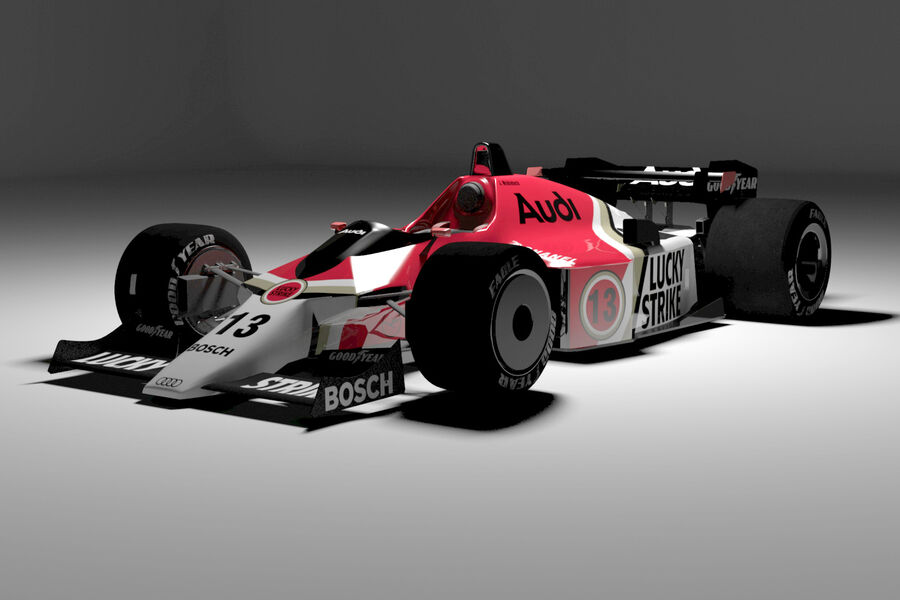
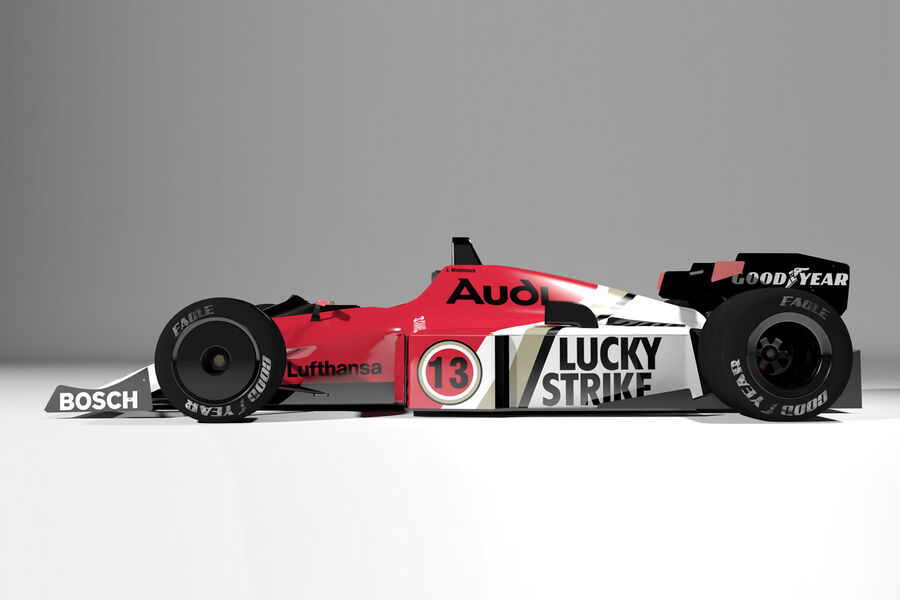
On a less radical front, ground effects may be an alternative.
Last edited:
That is what I am saying and why I don't expect anything to change. As long as you have cars that rely on aerodynamic grip you will not get close racing.
Concept I found with simplified aero and even bigger tyres, harking back to the 70s and early-80s.
On a less radical front, ground effects may be an alternative.
Ground effect is the best solution but too dangerous I believe. If the skirt is broken at those speeds it would be disastrous.

Agent_Smith
Honorary Master
- Joined
- Dec 3, 2010
- Messages
- 23,076
- Reaction score
- 17,333
Ground effect is the best solution but too dangerous I believe. If the skirt is broken at those speeds it would be disastrous.
Isn't that what the IRT series uses? They seem to manage just fine and I would imagine that they also have to adhere to strict safety regs, just as their F1 counterparts do.

Isn't that what the IRT series uses? They seem to manage just fine and I would imagine that they also have to adhere to strict safety regs, just as their F1 counterparts do.
What's the IRT series? Pardon my ignorance.