Goodbye Nissan NP200

10 interesting facts from SA’s February 2024 new-vehicle sales

We’ve combed through South Africa’s new-vehicle sales figures for February 2024 and pulled out 10 interesting facts. Here are your bite-sized new-vehicle nuggets…

February 2024 was another fascinating month for South Africa’s new-vehicle market. Overall, it was the industry’s 7th consecutive month of year-on-year decline, with total registrations falling 0.9% to 44 749 units. But dig a little deeper into the sales statistics and there are plenty of interesting facts to be found.

Yes, while we’ve already covered the big news – such as the fact Suzuki Auto SA cut the gap to the 2nd-placed Volkswagen Group to a mere 112 sales, while the Toyota Hilux continued its domination of the bakkie space – it’s now time to unearth a few fascinating nuggets. Let’s dive right in…

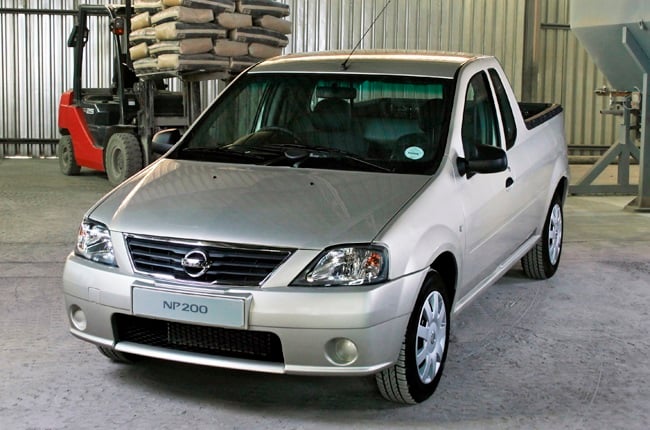
4. Nissan NP200’s sales spike before demise

Yes, production of the Nissan NP200 is scheduled to end at Rosslyn this month (March 2024). Since there’s no half-tonne bakkie alternative on the local market, sales of the NP200 spiked in February, with the 16-year-old contender climbing back into 4 figures for the first time since November 2023, to end on 1 276 units. Fascinatingly, 4 of those were sold to government, with 260 purchased by the rental industry. Meanwhile, Nissan South Africa registered 10 units of the NP200 for its own use.
 
Nissan Navara sales shock as March sees bakkie boom for four brands

March was not a good month for the overall new vehicle market, which contracted by a significant 11.7% year-on-year.

A total of 44,237 vehicles were sold last month, according to Naamsa, a decline of 5,877 units versus March 2023. Although the Easter weekend took an additional sales day out of the equation this year, overall consumer demand remains weak, the industry association said.

Passenger cars took the biggest plunge, falling 15.9% year-on-year to 26,577 units, while the light commercial and bakkie sector fell by just 4.3% to 15,542 units.

However certain bakkie manufacturers enjoyed a bumper month, particularly Nissan, which sold 2,277 Navaras in March, a 407% increase over the previous month’s 449 units. This is the first time since its launch as a locally manufactured product in 2021 that the Navara has breached 1,000 monthly sales, let alone the 2,000 mark.

It remains to be seen whether this is a one-off or a sign of what’s to come from the Navara. The company is currently in the process of discontinuing the smaller NP200 half-tonner, which found 1,113 homes in March. The Navara’s export figure of 622 units was also above average, with Nissan currently expanding its reach to countries like Algeria and Libya.

 
Nissan NP200 (2008-2024) Buyer’s Guide

You can no longer buy a new Nissan NP200, but should you consider it as a used buy? Let’s take a closer look at this South African-built half-tonne bakkie’s almost 16 years on the local market and what you can expect to pay for a good used example.

When the Nissan NP200 hit the South African market in 2008, it had massive (figurative) shoes to fill. Yes, this half-tonne bakkie was faced with the unenviable task of replacing the iconic Nissan 1400, which traced its local production roots all the way back to 1971, when it was known as the Datsun 1200 (B120).

Effectively a single-cab bakkie version of the 1st-gen Dacia Logan (the Renault-badged version of the sedan was briefly sold in Mzansi – find a Logan), the NP200 was – just like its storied forebear – built at Nissan SA’s Rosslyn factory, north of Pretoria. At launch, Nissan SA forecasted that the unibody NP200 was “clearly destined to [become] a reckonable force in the South African commercial vehicle market”.

That prediction turned out to be entirely accurate as Nissan’s smallest workhorse – which is interestingly still built and sold as the Renault Tondar Pick-Up in Iran – ended up outlasting every other half-tonne bakkie on the local market, thus having the segment all to itself for its final few years of existence.

Despite being decidedly long in the tooth, the NP200 remained exceedingly popular with local buyers – partly owing to the sheer power of monopoly, we should add – as the clock wound down. As many as 12 859 units were registered in Mzansi in 2022, enough for the NP200 to rank 4th on the list of SA’s best-selling bakkies. A further 12 721 units were sold locally in 2023, seeing the NP200 retain 4th position.

Production of the Nissan NP200 was officially suspended in March 2024, marking the end of a highly successful 16-year run on the local market. That final month of production saw the NP200 put in its best sales performance in recent memory, securing the bakkie a surprise 2nd position with a whopping 2 679 registrations (and even helping it keep 4th spot for H1 2024). It was an entirely fitting swansong, then.

 
There is absolutely demand for half ton and unibody bakkies.

I'm hoping that the Renault Oroch eventually shows up in SA.
 
‘It wasn’t our decision’ to axe NP200, says Nissan SA boss

Nissan SA’s managing director says it wasn’t the brand’s decision to discontinue the NP200, adding the firm is “working on the replacement” for the half-tonne bakkie…

Nissan South Africa’s managing director says “it wasn’t our decision to discontinue NP200”, emphasising that the company was forced to cancel the half-tonne bakkie’s successor at the last moment.

After 16 years, production of the Nissan NP200 officially ended at the Japanese firm’s Rosslyn factory in March 2024, despite the fact there was still clear local demand for what had for several years served as the market’s last-surviving half-tonne bakkie.

Maciej Klenkiewicz, Nissan South Africa and Independent Markets Africa Managing Director, however, suggested to Cars.co.za during an interview at the South African Auto Week 2024 in Cape Town that the firm had no choice in the matter.

“It wasn’t our decision to discontinue NP200. We had plans to replace NP200 with a successor. Unfortunately, due to the geopolitical situation in Russia – in fact, the crisis which we have between Ukraine and Russia – we had to cancel the project which was a replacement for NP200,” Klenkiewicz told us.

“The successor was supposed to be built there, in Russia, with the platform from Renault. Right now, we are of course working on the replacement, but the process is starting from scratch. So, I cannot say that it was a ‘business decision’ – we had a plant which we unfortunately had to drop,” he explained.

 
Top
Sign up to the MyBroadband newsletter
X