How Starlink could help make Internet cable breaks irrelevant

Hanno Labuschagne

Journalist
Staff member
Joined
Sep 2, 2019
Messages
6,447
Reaction score
4,723
How Starlink could help make Internet cable breaks irrelevant

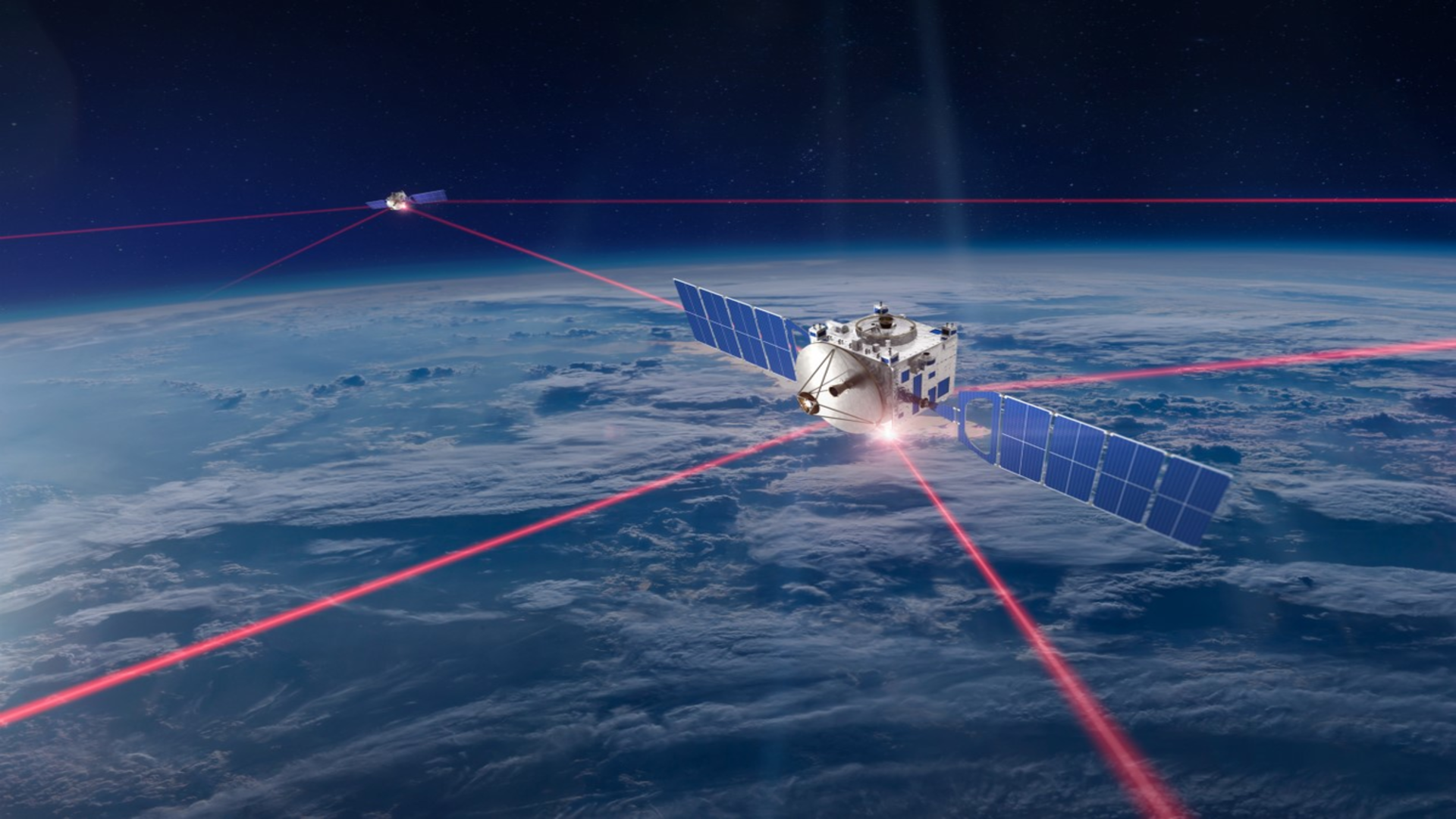
The ability of SpaceX’s Starlink Internet service to transmit data packets between its fleet of satellites makes it capable of circumventing undersea cable breaks.

This feature could soon also be supported on other satellite services, lessening the impact of cable breaks on global Internet connectivity.


 
Now I’m thoroughly confused. Does Starlink work or not in South Africa?
 
It works wonderfully. Not the fastest but more reliable than fibre

Frogfoot been off for 3 days now. Blame it on loadshedding. I ask where? No answer
 
It works wonderfully. Not the fastest but more reliable than fibre

Frogfoot been off for 3 days now. Blame it on loadshedding. I ask where? No answer
Depends on location but yes it can be fast, I often see 200Mb/s near the Tankwa Karoo, nice clear clean skies
 

5.2Tbps of traffic peak over 9000 satellites. So each satellite has about 600Mbps of proven uplink capacity

At any point in time, there are about 14 satellites covering South Africa, so the proven maximum is about 8.4Gbps assuming each one can communicate with a satellite outside of South Africa.

That's about 0.0143% of the lit capacity of Seacom.

Irrelevant my ass.
 

5.2Tbps of traffic peak over 9000 satellites. So each satellite has about 600Mbps of proven uplink capacity

At any point in time, there are about 14 satellites covering South Africa, so the proven maximum is about 8.4Gbps assuming each one can communicate with a satellite outside of South Africa.

That's about 0.0143% of the lit capacity of Seacom.

Irrelevant my ass.
There are 5500 satellites in use
 
Very well said

There is simply not enough bandwidth in radio, it’s simple physics.
There is reason that there is fibre cables around the world and not microwave relay towers across the world and countries.

The laser interlink is impressive but due to atmosphere you can’t do it to ground station to sat, there’s a reason we send it down a glass fibre after all.

To me this is just a very niche product that might find traction in things like high frequency trading but never replace country backbones.


5.2Tbps of traffic peak over 9000 satellites. So each satellite has about 600Mbps of proven uplink capacity

At any point in time, there are about 14 satellites covering South Africa, so the proven maximum is about 8.4Gbps assuming each one can communicate with a satellite outside of South Africa.

That's about 0.0143% of the lit capacity of Seacom.

Irrelevant my ass.
 
First launched in 2009 with a 1.28 terabits per second (Tbps) design capacity, Seacom’s cable helped kickstart a home broadband revolution in South Africa.

The cable has received several upgrades in the intervening years, and Seacom says it has lit 4.2Tbps of capacity so far.


Among currently active inter-satellite communication systems, Starlink is by far the most numerous and with the highest bandwidth, reaching over 42 PB per day across its over 9000 space lasers (yes, that is over 9000) for a 5.6 Tbps throughput. Since these satellites form a mesh network with their 100 Gbps laser transceivers, a big part of using it efficiently is to route any data with the least amount of latency while taking into account link distance (maximum of 5,400 km), link duration (up to multiple weeks) and presence of other Starlink satellites before they become within reach. With this complex mesh in LEO, this also means that a very high uptime can be accomplished, with a claimed 99.99% due to rapid route changing.

https://hackaday.com/2024/02/05/sta...etting-new-record-with-42-million-gb-per-day/
That is 5.6Tbps over the entire network, not just between the connection satellites, whereas one cable in can handle 40 times as much data.

Technically, you can add more satellites to increase the bandwidth over an area, but that isn't exactly going to beat a single monster like a datacenter.

I don't think making cable breaks irrelevant can happen, but it would certainly help as a fallover.
 
Did this calculation when Lazer links was first revealed with simulations, best and worst case.

It's all possible but this will not be consumer grade, it would have to be sold per Mbps to ISP's as transit and is/would be extremely expensive.

Thankfully a ton of live traffic doesn't use much, like gaming. So who knows, but it will take a large sum of money to get a full base station here and route traffic through it if we ignore ICASA as well.
 
It works wonderfully. Not the fastest but more reliable than fibre

Frogfoot been off for 3 days now. Blame it on loadshedding. I ask where? No answer
FNOs got us by the klokkies. What are you gonna do? Dump the for another one? Nice try LOL.

I am curious about Starlink, reliability, cost, etc. As a backup to fiber. Although I've had very very few outages.
 
Starlink FTW
Even @epah is moving over soon
Out here near Ceres the skies are clear and the internet is fast
200Mb/s
Goodbye Fiber, goodbye ESKOM. R740/month via Malawi
 
Starlink FTW
Even @epah is moving over soon
Out here near Ceres the skies are clear and the internet is fast
200Mb/s
Goodbye Fiber, goodbye ESKOM. R740/month via Malawi

Sure, great for (some) individual use.

With these cable breaks though, how many are going to set it up as a just-in-case option? A few no doubt but it will never be a mainstream option for that.
 
now if Starlink had to go down, because the Chinese decided to Pollute LEO orbit running one of their A-SAT tests,
you'd be sh#t out of luck then, as if a big chunk of Satellites were knocked out, what could you do.

also nobody has talked much about Kessler syndrome, or what happened in that movie Gravity, where flying Space trash kills everybody, and makes space impossible to navigate due to the rings of trash, circling Earth. almost like Saturn.
 
also nobody has talked much about Kessler syndrome, or what happened in that movie Gravity, where flying Space trash kills everybody, and makes space impossible to navigate due to the rings of trash, circling Earth. almost like Saturn.
That might be 'cos there's nothing to talk about there :unsure:

A lot of less than 1% chance type options in your thinking mate..
 
Why would you use starlink as a backup and not as your only provider?
For starters I don't need anything like that kind of speed. This is going to be for the more dependent users anyway, not a trainsmash here if things are slow or offline for a short period.
 
For starters I don't need anything like that kind of speed. This is going to be for the more dependent users anyway, not a trainsmash here if things are slow or offline for a short period.
While high speeds may not be necessary, they certainly won't cause any harm.

My point is actually that most people with Starlink will end up using it as their main internet, not just as a backup.

I do however understand that the high cost don't justify it for most people.
 
Last edited:
While high speeds may not be necessary, they certainly won't cause any harm.

My point is actually that most people with Starlink will end up using it as their main internet, not just as a backup.
I suppose so. On second thoughts I doubt Starlink would be cost effective as a backup unless normally using higher speeds still for business.
 
Top
Sign up to the MyBroadband newsletter
X
