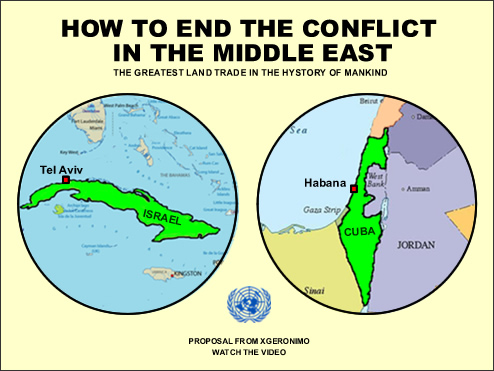
How to Solve the Palestine Problem?

Lies BS and propaganda.......................

We know what the common factor is behind modern day terrorism world wide, and the terrorism leveled at Israel is no different - the "religion of peace".

So from this post i take it you are embarrassed by the fact that you had no idea what a straw man fallacy was despite accusing others of it? :D

Nothing to be ashamed of, like i said. Better luck next time.
 
me-conflict-solution-frame.jpg


That way, everyone would stop giving a damn :)

WOW!!! Ambitious and I like the thinking! Not practical... But nothing seems to be... Love this idea!
 
So when someone blows up something in america and is not a muslim what them? How about all those school shootings they have? Also muslims?
No, not all muslims are terrorists, but most terrorists these days are muslim.
Besides terrorism is up for debate. There are many countries who are actively involved in terrorism. You got some terrorists who invaded iraq so it's not only muslims who have terrorist issues.

How about that terrorist who murdered all those people in his chopper? They even tried to hide it and gary/marine were pissed that they leaked it.
What you talking about ?

This incident ?
http://www.nydailynews.com/news/wor...an-lair-terror-leader-killed-article-1.141728


http://mybroadband.co.za/vb/showthread.php/380429-SA-is-a-nation-of-boozers-addicts
 
If you look at the history of Israel both sides seem guilty of some transgresions, luckily for Israel and unluckily for Palestine, Israel ended up with more control but if it had gone the other way I sincerly doubt the Israeli's would be any better off today than the Palestinein's.

After World War II, Britain found itself in fierce conflict with the Jewish community, as the Haganah joined Irgun and Lehi in an armed struggle against British rule.[73] At the same time, thousands of Jewish Holocaust survivors and refugees from Europe sought a new life in Palestine, but were turned away or rounded up and placed in detention camps by the British. In 1947, the British government announced it would withdraw from the Mandate of Palestine, stating it was unable to arrive at a solution acceptable to both Arabs and Jews.[74] The newly created United Nations approved the Partition Plan for Palestine (United Nations General Assembly Resolution 181) on 29 November 1947, which sought to divide the country into two states—one Arab and one Jewish. Jerusalem was designated to be an international city—a corpus separatum—administered by the UN.[75]

The Jewish community accepted the plan,[76] but the Arab League and Arab Higher Committee of Palestine rejected it.[77] On 1 December 1947, the Arab Higher Committee proclaimed a three-day strike, and Arab bands began attacking Jewish targets.[78] The Jews were initially on the defensive as civil war broke out, but they gradually moved onto the offensive.[79] The Palestinian Arab economy collapsed and 250,000 Palestinian-Arabs fled or were expelled.[80]

On 14 May 1948, the day before the expiration of the British Mandate, the Jewish Agency proclaimed independence, naming the country Israel.[81] The following day, the armies of four Arab countries —Egypt, Syria, Lebanon and Iraq – attacked Israel, launching the 1948 Arab–Israeli War;[82][83] Saudi Arabia sent a military contingent to operate under Egyptian command; Yemen declared war but did not take military action.[84] After a year of fighting, a ceasefire was declared and temporary borders, known as the Green Line, were established.[85] Jordan annexed what became known as the West Bank and East Jerusalem, and Egypt took control of the Gaza Strip. The United Nations estimated that more than 700,000 Palestinians were expelled or fled from what would become Israel during the conflict.[86]

Israel was accepted as a member of the United Nations by majority vote on 11 May 1949.[87]

In the early years of the state, the Labor Zionist movement led by Prime Minister David Ben-Gurion dominated Israeli politics.[88][89] These years were marked by an influx of Holocaust survivors and Jews from Arab lands, many of whom faced persecution in and expulsion from their original countries.[90] Consequently, the population of Israel rose from 800,000 to two million between 1948 and 1958.[91] Between 1948–1970, approximately 1,151,029 Jewish refugees relocated to Israel.[92] Some arrived as refugees with no possessions and were housed in temporary camps known as ma'abarot; by 1952, over 200,000 immigrants were living in these tent cities.[93] The need to solve the crisis led Ben-Gurion to sign a reparations agreement with West Germany that triggered mass protests by Jews angered at the idea that Israel could accept monetary compensation for the Holocaust.[94]

In the 1950s, Israel was frequently attacked by Palestinian fedayeen, mainly from the Egyptian-occupied Gaza Strip.[95] In 1950 Egypt closed the Suez Canal to Israel. There was mounting tension and a number of armed clashes took place along all of Israel's borders. In 1956, Israel joined a secret alliance with Great Britain and France aimed at regaining control of the Suez Canal, which the Egyptians had nationalized (see the Suez Crisis). Israel overran the Sinai Peninsula but was soon pressured to withdraw by the United Nations in return for guarantees of Israeli shipping rights in the Red Sea and the Canal.[96][97]
In the early 1960s, Israel captured Nazi war criminal Adolf Eichmann in Argentina and brought him back to Israel for trial.[98] The trial had a major impact on public awareness of the Holocaust.[99] Eichmann remains the only person ever to be executed by order of an Israeli court.

Arab nationalists led by Egyptian President Gamal Abdel Nasser continued to refuse to recognize Israel, and called for its destruction.[12][101] By 1966, Israeli-Arab relations had deteriorated to the point of actual battles taking place between Israeli and Arab forces.[102] In 1967, Egypt expelled UN peacekeepers, stationed in the Sinai Peninsula since 1957, and announced a partial blockade of Israel's access to the Red Sea. In May 1967 a number of Arab states began to mobilize their forces.[103] Israel saw these actions as a casus belli. On 5 June 1967, Israel launched a pre-emptive strike against Egypt, Jordan, Syria and Iraq. In a Six-Day War, Israeli military superiority was clearly demonstrated against their more numerous Arab foes. Israel succeeded in capturing the West Bank, the Gaza Strip, Sinai Peninsula and the Golan Heights.[104] Jerusalem's boundaries were enlarged, incorporating East Jerusalem, and the 1949 Green Line became the administrative boundary between Israel and the occupied territories.
In the Six-Day War of 1967, Israel defeated the combined armies of Egypt, Jordan and Syria. Following the war, Israel faced much internal resistance from the Arab Palestinians. Most important among the various Arab groups was the Palestinian Liberation Organization (PLO), established in 1964, which initially committed itself to "armed struggle as the only way to liberate the homeland".[105][106] In the late 1960s and early 1970s, Palestinian groups launched a wave of attacks[107][108] against Israel and Jewish targets around the world,[109] including a massacre of Israeli athletes at the 1972 Summer Olympics in Munich.

On 6 October 1973, as Jews were observing Yom Kippur, the Egyptian and Syrian armies launched a surprise attack against Israel. The war ended on 26 October with Israel successfully repelling Egyptian and Syrian forces but suffering significant losses.[110] An internal inquiry exonerated the government of responsibility for failures before and during the war, but public anger forced Prime Minister Golda Meir to resign.[111]

In July 1976 Israeli commandos carried out a daring mission which succeeded in rescuing 95 hostages who were being held by PLO guerillas at Entebbe International Airport close to Kampala, Uganda.
The 1977 Knesset elections marked a major turning point in Israeli political history as Menachem Begin's Likud party took control from the Labor Party.[112] Later that year, Egyptian President Anwar El Sadat made a trip to Israel and spoke before the Knesset in what was the first recognition of Israel by an Arab head of state.[113] In the two years that followed, Sadat and Menachem Begin signed the Camp David Accords (1978) and the Israel–Egypt Peace Treaty (1979).[114] Israel withdrew from the Sinai Peninsula and agreed to enter negotiations over an autonomy for Palestinians in the West Bank and the Gaza Strip.[115]
On 11 March 1978, a PLO guerilla raid from Lebanon led to the Coastal Road Massacre, in which 35 Israeli civilians were killed and 75 injured. Israel responded by launching an invasion of southern Lebanon to destroy the PLO bases south of the Litani River. Most PLO fighters withdrew, but Israel was able to secure southern Lebanon until a UN force and the Lebanese army could take over. However, the PLO soon resumed its policy of resistance to Israel. In the next few years the PLO infiltrated back south and kept up a sporadic shelling across the border. Israel carried out numerous retaliatory attacks by air and on the ground.

From Wikipedia: http://en.wikipedia.org/wiki/Israel

Thier is a lot more on thier but I won't post it all. through it does quite clearly seem the Arab states were the aggressors in most of the conflicts.
 
I wanted to post in the Nuclear-Israel thread earlier, but it had just been locked.

I think that Joseph Massad, quoted without the aljazeera link, by griffinbradley, in that OP, should be seen for what he really is...

Student comments about Joseph Massad

Course: CLME W3042 Palestinian and Israeli Politics and Societies

"Wow, tensions were flying high in this class between Zionist- sympathizers and Massad (and, to a lesser extent, between Zionist-sympathizers and Palestinian-sympathizers). Massad is clearly pro-Palestine in outlook, and while some students find this troubling, others find it refreshing. His descriptions of the suffering endured by Palestinians make great scholarship -- but he seems unable at times to see why the Jews, in their own words, would support and perpetrate such horrible policies. I agree with Massad`s stance, and I am glad to be able to take a class where the professor isn`t afraid to condemn a country for chronic flouting of UN resolutions and international law. At the same time, the lack of zionist voices in the (generally mixed-quality, sometimes brilliant) reading list and the strict guidelines on paper topics (they steer you towards making Massad`s own points) make this class not as thought-provoking as it should be. In all, most students were at least a little bit disappointed, though I felt this was because they felt frustrated having to learn the brutal history of Israel as fact, not because of shortcomings on Massad`s part. The course may not be perfect, but in scholarly terms, Massad is after something real, and there is a lot to be learned if you go along with him -- even if you criticize him all the way."

Course: ASCM V2008 Contemporary Islamic Civilization

"He might as well have cut through the bull**** and titled the class "Contemporary Egyptian Civ", because we didn`t get exposure to any other culture within the class. The reading is interesting, mostly, particularly the literature. Like the Intro to Islamic Civ class, however, it is all heavily biased. The professor (and, shockingly, many of the students) tend to turn discussion sections into "us vs. them" blame game, where they list the west`s various cultural crimes ad nauseum... not that it`s not justified, but it`s not really productive or interesting; if you`re in this class, chances are you already know Europe and the US suck. It`s a lecture course, but in an effort to make it a discussion class, Massad arbitrarily picks on people to answer questions that come out of the blue. If they aren`t answered satisfactorily, he tends to just let the subject drop instead of elaborating or correcting. There`s no context; one never gets a timeline of Egyptian history or politics, and so it`s easy to forget which work is a commentary on which leader or movement. The spring 2001 class was blessed with TAs who made it all worthwhile, but all in all, there are better courses in the MEALAC dept."

Course: Palestinian Israeli politics and societies

"This was possibly the most offended I`ve ever been. Massad does not even pretend to give the entire picture, he states that on the first day. Besides being offensive, is it really worth it to take a class that doesn`t tell you both sides of a controversy? I worry about the people who enter the class with little to no knowledge of the topic and form their opinions based on Massad`s lectures and assigned readings. Massad also doesn`t allow students to finish their questions before answering them. The class is taught unethically, and should be renamed "Why Palestinians Hate Israel." In sum, it sucks to take a class and walk away not feeling like you can form an educated opinion. It also sucks when your professor, (in my opinion) lies and even after being proven wrong by students, continues to lie."

Course: Contemporary Civilization

"A bizarre experience. Massad, whose writings and lectures on the Middle East have made him the most controversial professor on campus, is usually brilliant and provocative. But he`s always frustrating. The first semester of the course is a pretty stupid affair. The quality of the class varies greatly with Massad`s level of interest in a particular subject, and he isn`t interested in very much until he gets to Marx and Nietzsche. Our lecture on Thomas Aquinas, for instance, lasted about 20 minutes. You`ll spend most classes wondering how an apopleptic rant about US Foreign Policy that relates only vaguely to Plato or Aristotle is supposed to represent the "core" of your Columbia education. Massad clearly tries to provoke his students into applying ancient philosophy to current events, but he takes a categorically anti-U.S. tack at every possible opportunity, and usually succeeds only at alienating his students. The second semester is much better, mainly in the second half when Massad`s additions to the syllabus become the focus of the course. I`ll never forget what he taught me about Fanon, Cesaire, Adorno, and Edward Said - but it was only at these moments when CC felt like the experience Columbia purports it to be. The class features no discussion, which is a shame seeing as how that`s ostensibly the point of taking these courses in 20-person sections. Massad, in my opinion, is an egomaniac and entirely uninterested in hearing anything other than the sound of his own voice. I found his predilection for using his academic training to pick apart the semantics of statements made by his students horrifying. Do I regret taking Massad`s CC course? I guess not. It definitely wasn`t boring, and occasionally it was terrific. That`s saying a lot for a core course, I suppose."

(Student comments come from the student-operated anonymous professor-grading website, CULPA: http://culpa.procrastinationstation.com/php/prof_search.php4?prof_target=massad#262)

Columbia University's Worst Faculty

Joseph Massad of the Middle Eastern department. According to reliable source, Prof. Massad has openly supported Islamist terrorism against Israel, including suicide bombings of civilians. In his class on Israeli-Palestinian politics, Massad openly engages in conspiracy theories, teaching students about the connections between Nazis, Rothchilds, international bankers, and a host of other nefarious characters (such as the Freemasons or the Knights Templars) to dispossess Palestinians of their land and make them permanent victims of Western colonialism and imperialism. From what I hear, his behavior behooves that of a paranoid conspiracy theorist, and not that of a published academic. Massad has also come close to belittling, if not denying the Holocaust outright.

Appeared in: http://www.columbiacons.net/worst.htm, a website operated by the Columbia Conservative Alumni Association

http://www.campus-watch.org/article/id/63
 
Last edited:
About Campus Watch

Mission Statement

Campus Watch, a project of the Middle East Forum, reviews and critiques Middle East studies in North America, with an aim to improving them. The project mainly addresses five problems: analytical failures, the mixing of politics with scholarship, intolerance of alternative views, apologetics, and the abuse of power over students. Campus Watch fully respects the freedom of speech of those it debates while insisting on its own freedom to comment on their words and deeds.
Why Middle East Studies Matters

Middle East studies have a special importance due to its many subjects at the heart of the public debate, such as the war on terror, militant Islam, the Arab-Israeli conflict, Iraq, Saudi Arabia, and others. Specialists have an extensive but subtle influence on the way North Americans see this range of topics. They:
Write books and articles that influence the way the region is seen.
Set the tone for how the Middle East is regarded on campuses across North America.
Teach graduate and undergraduate students.
Contribute to the public debate via lectures, panels, teach-ins, newspaper articles, quotations in media outlets, and appearances on radio and television.
Influence government by helping candidates formulate positions, advising intelligence agencies, or providing help to congressional staffers writing briefs.
Conduct outreach activities in local communities.
Serve as expert witnesses in court cases.
Act as informal U.S. representatives when lecturing abroad, especially on State Department-sponsored tours.
The Problems in Middle East Studies

Analytical errors: University-based Middle East specialists have been consistently wrong in their analyses, as Martin Kramer showed in his Ivory Towers on Sand1. Some examples:
Portraying militant Islam as a benign movement and suggesting that anyone who thought otherwise is either ignorant or prejudiced. John Esposito of Georgetown University stated that Islamist movements "are not necessarily anti-Western, anti-American, or anti-democratic" and called on that Americans "to transcend their narrow, ethnocentric conceptualization of democracy" to include militant Islamic forms of governance.2
Dismissing Al-Qaeda as insignificant. "Focusing on Osama bin Laden," wrote Esposito in 1998, "risk catapulting one of the many sources of terrorism to center stage, distorting ... the significance of a single individual."3
Dismissing autocratic Arab regimes as weak, precarious, or temporary. Rashid Khaildi, Columbia University's Edward Said Chair of Middle East Studies, "unequivocally" but wrongly predicted in 1985 that this current reign of despots in the Middle East "will not, indeed cannot, continue for another decade."4
Predicting the Palestinians would establish a democracy, ushering in a transformation of the Middle East. Georgetown's Hisham Sharabi declared in 1983, "The Palestinians, despite their dispossession and dispersion, exercise today probably one of the few functioning democracies in the Third World."5 Ibrahim Abu-Lughod of Northwestern University predicted in 1988: "Under a Palestinian state in the West Bank and Gaza, which surely will be democratic and secular, Palestinian Arabs and Israeli Jews will be bonded in a political order not yet experienced in the Middle East."6

Extremism: Many U.S. scholars of the Middle East lack any appreciation of their country's national interests and often use their positions of authority to disparage these interests. Typical statements include:
Hamid Dabashi of Columbia University: "People near and dear to me, whether they live in downtown Manhattan, in Kandahar, in Ramallah, in Jerusalem, or in Baghdad, are at the mercy of US foreign policies."7
Following Saddam's August 1990 invasion of Kuwait, Khalidi argued not for its liberation but called on his colleagues to combat what he called a pro-war "idiots' consensus."8

Intolerance: The Middle East studies professorate is almost monolithically leftist due to a systematic exclusion of those with conservative or even moderately liberal views. The result is that Middle East studies lack intellectual diversity.

There are also attempts to bar alternative speakers on the Middle East from campus events - for example, in January 2003, when the Centre for International and Security Studies at York University disinvited Daniel Pipes and the York University Faculty Association tried to block his public talk on the campus.

Apologetics: Middle East studies tend to evade, ignore, or apologize for topics that do not fit their politicized agenda:
Internal repression in Libya, Sudan, Syria, Iraq, Iran, and the Palestinian Authority.
Palestinian Authority support for suicide bombing against Israeli civilians.
The long-term goals of Islamist movements.
The suffering caused by insurgencies in Algeria and Turkey.
The Syrian occupation of Lebanon.
The anti-American, anti-Christian, and anti-Semitic incitement that pervades state-run media through most of the region.

As an example of this evasion, out of the Middle East Studies Association's four-day conference in November 2002 where more than 550 papers were presented, exactly one dealt with Al-Qaeda and one with "fundamentalism." "Militant Islam" was not the subject of a single paper.

Many scholars are hostile to any discussion of these issues, lest it cast the region in an unfavorable light. Even after 9/11, Khalidi advises Washington to drop its "hysteria about suicide bombers."9 Joel Beinin, as MESA's president, disparaged the study of terrorism, mocking it as "terrorology," and lauded his colleagues' "great wisdom" in avoiding it.10 Juan Cole of the University of Michigan said "Asking MESA to hold panels on contemporary terrorism, is rather like asking literary scholars to comment on the resignation of Treasury Secretary Paul O'Neil."11

Abuse of power over students: Middle East scholars impose their views on students and sometimes expect students to embrace their own politics, punishing those who do not with lower grades or weaker recommendations.

A student in a class on Contemporary Civilization taught by Columbia University's Joseph Massad wonders why he must listen to "an apoplectic rant about US foreign policy" when the subject matter at hand has nothing to do with current events.12 In a Berkeley course on "The Politics and Poetics of Palestinian Resistance" (that initially informed conservatives that they "should seek other sections"), a student who took the course found "anti-Semitism tolerated" by the instructor.13

At the University of Chicago, a doctoral student in the Middle East Studies program was discouraged by faculty from studying militant Islamic ideologies, told that this topic was created by a "sensationalist media" and forwards "Zionist" interests.14
What Campus Watch Does
Gathers information on Middle East studies from public and private sources and makes this information available on its website, www.Campus-Watch.org.
Produces analyses of institutions, individual scholars, topics, events, and trends.
Makes its views known through the media - newspaper opeds, radio interviews, television interviews.
Invites student complaints of abuse, investigates their claims, and (when warranted) makes these known.


cont...
 
Campus Watch will continue its work until the problems it addresses are resolved.
Campus Watch Goals

Campus Watch seeks to have an influence over the future course of Middle East studies through two main avenues:
Engage in an informed, serious, and constructive critique that will spur professors to make improvements. We look forward to the day when scholars of the Middle East provide studies on relevant topics, an honest appraisal of sensitive issues, a mainstream education of the young, a healthy debate in the classroom, and sensible policy guidance in a time of war.
Alert university stakeholders (administrators, alumni, trustees, regents, parents of students, state/provincial and federal legislators) to the problems in Middle East studies and encourage them to address existing problems. We challenge these stakeholders to take back their universities, and not passively to accept the mistakes, extremism, intolerance, apologetics, and abuse when these occur.
Our Ideal of the University

The universities of North American are treasured institutions that build on the work of many generations. They are a trust that in no sense - not legally, not financially, and not morally - belongs to the academics who happen to administer and serve them at present. Stakeholders have not merely a right but an obligation to safeguard these vital institutions from being harmed. We call on the society at large to take an active interest in developments at the university in general, and in Middle East studies in particular.

John Dewey of Columbia University and Arthur Lovejoy of Johns Hopkins University came together with other educators in 1915 to found the American Association of University Professors, an organization designed to preserve the integrity of the academy from a donor-driven agenda.

Their 1915 Declaration of Principles set standards that we believe remain valid today:
the freedom of the academic teacher entail certain correlative obligations The university teacher should, if he is fit for his position, be a person of a fair and judicial mind; he should, in dealing with such subjects, set forth justly, without suppression or innuendo, the divergent opinions of other investigators and he should, above all, remember that his business is not to provide his students with ready-made conclusions, but to train them to think for themselves.15

Campus Watch calls upon Middle East studies specialists to recognize their "correlative obligations."
Replies to Our Critics

Unfortunately, Middle Eastern studies specialists responded to the launching of Campus Watch with a campaign of vilification and distortion. Lest there be any confusion, we wish to make explicit several points in response:
Campus Watch supports the unencumbered freedom of speech of all scholars, regardless of their views.
Campus Watch takes no position on individual academic appointments.
Academic freedom does not mean freedom from criticism; to the contrary, no one enjoys privileges in the free marketplace of ideas.
The charge of "McCarthyism" has come up so often that we address this in a separate study which demonstrates why the charge is ignorant, intolerant, and ultimately self-serving.
We challenge scholars of Middle Eastern studies to abandon the crude resort to insults and engage Campus Watch on the substance of our analysis.

http://www.campus-watch.org/about.php


;)
 
Until Israel's right to exist as an independent democratic state is accepted there simply won't be peace.

Arab nations have to focus on their own states by embracing democracy, free speech, human rights, free markets etc and get over their obsession with destroying Israel. For their own sake and that of the Palestinians
 
2v2cefo.jpg


My view, Palestine get within the orange border+ Gaza, but Israel is allowed to maintain a presence on her border with Jordan.
 
2v2cefo.jpg


My view, Palestine get within the orange border+ Gaza, but Israel is allowed to maintain a presence on her border with Jordan.

So they get the whole country except for Jerusalem and the Egyptian border or do you mean Palestine get outside of the orange border?
 
This is not a huge quandary.

We solve the problem based on the rulings of the International Court of Justice and the International community. There is no great quandary regarding land. The International Court of Justice was extremely clear in its opinion.

In the '67 war, Israel acquired East Jerusalem and the Golan heights, additionally to the land they were given. This acquisition was illegally gained in violation of the Declaration On Principles Of International Law Concerning Friendly Relations And Co-Operation Among States In Accordance With The Charter Of The United Nations (1970), Hague Regulations(1907), UN Charter(1945) and the Geneva Conventions IV(1949), all of which included the basic, fundamental legal principle that it is illegal to acquire territory by force.

The World Court finds:

In 2004 the International Court of Justice noted that the Security Council had described Israel's policy and practices of settling parts of its population and new immigrants in the occupied territories as a "flagrant violation" of the Fourth Geneva Convention. The Court also concluded that the Israeli settlements in the Occupied Palestinian Territory (including East Jerusalem) have been established in breach of international law and that all the States parties to the Geneva Convention are under an obligation to ensure compliance by Israel with international law as embodied in the Convention.

Well there you have it. That's your solution right there.
 
This is not a huge quandary.

We solve the problem based on the rulings of the International Court of Justice and the International community. There is no great quandary regarding land. The International Court of Justice was extremely clear in its opinion.

In the '67 war, Israel acquired East Jerusalem and the Golan heights, additionally to the land they were given. This acquisition was illegally gained in violation of the Declaration On Principles Of International Law Concerning Friendly Relations And Co-Operation Among States In Accordance With The Charter Of The United Nations (1970), Hague Regulations(1907), UN Charter(1945) and the Geneva Conventions IV(1949), all of which included the basic, fundamental legal principle that it is illegal to acquire territory by force.

The World Court finds:


Well there you have it. That's your solution right there.

So what about the small matter of Iran, Hamas and Hezbollah desire to see Israel wiped off the map?

They couldnt care less about what you quoted there. Their position is: No Isreal. Period. There will never be peace until the 1 side is utterly destroyed.
 
So what about the small matter of Iran, Hamas and Hezbollah desire to see Israel wiped off the map?

They couldnt care less about what you quoted there. Their position is: No Isreal. Period. There will never be peace until the 1 side is utterly destroyed.

That's the catch 22, if Israel played ball they would get a lot more sympathy from the world wrt Iran/Hamas etc.
 
Top
Sign up to the MyBroadband newsletter
X