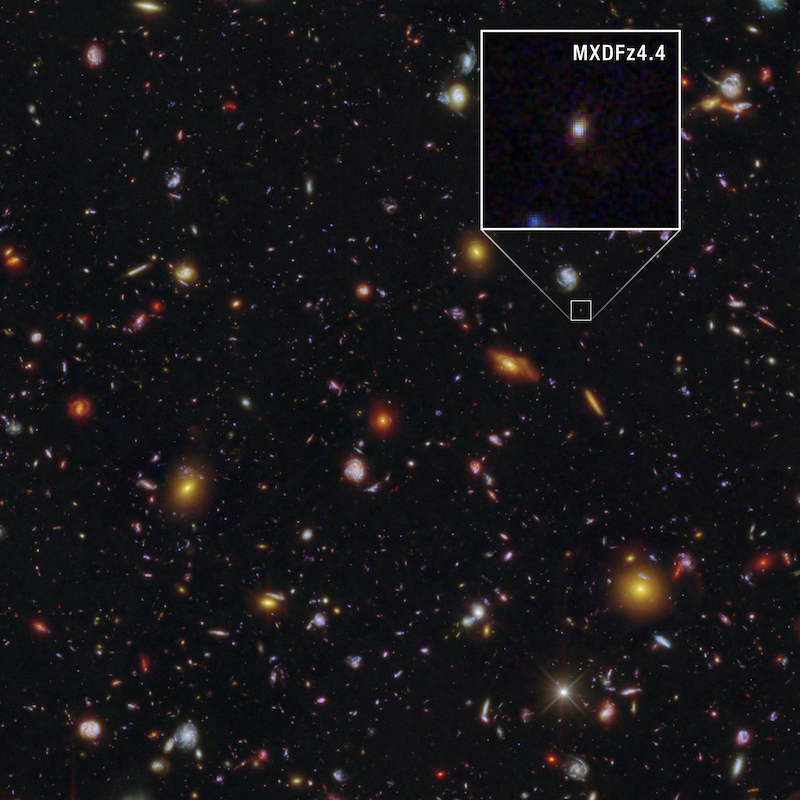
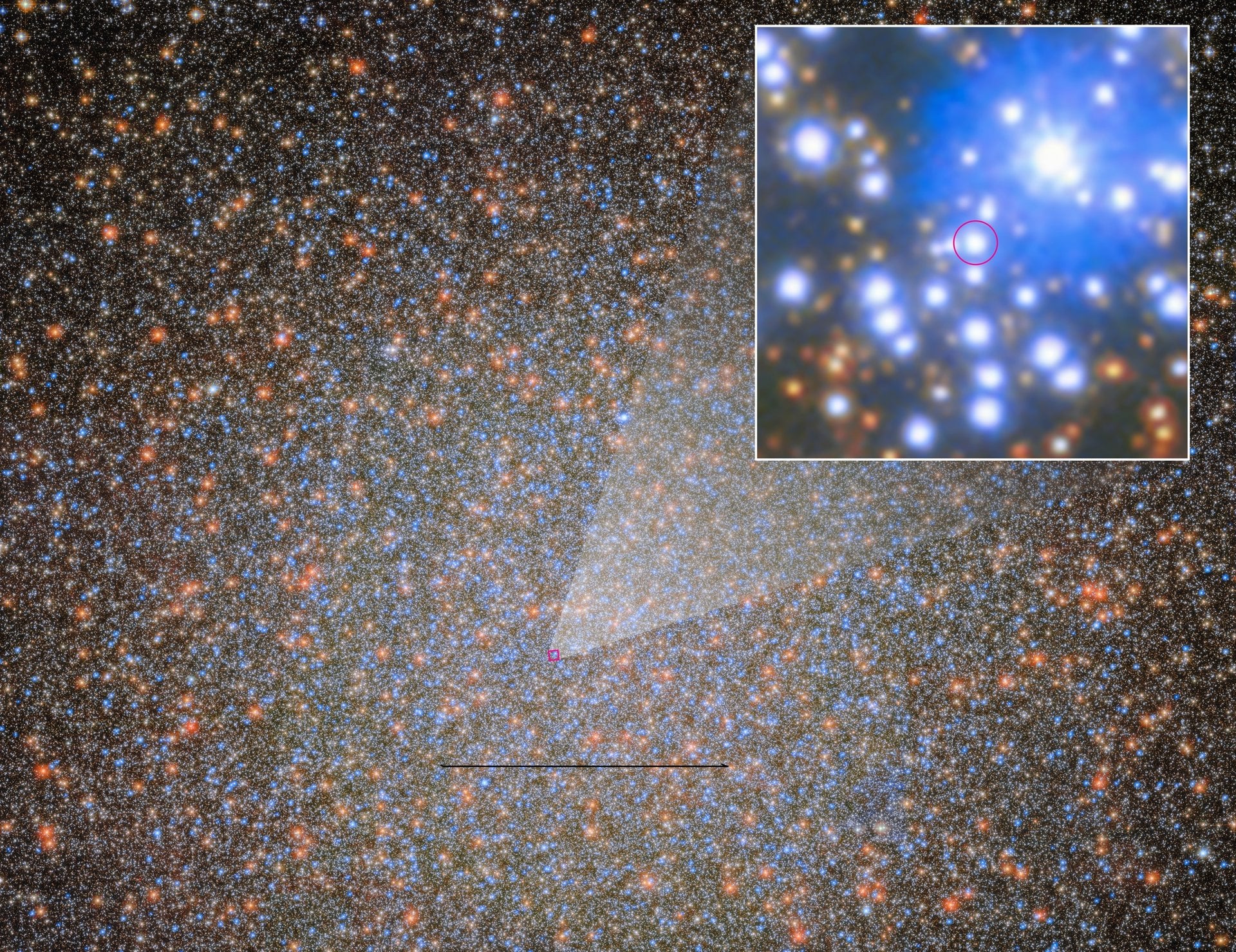
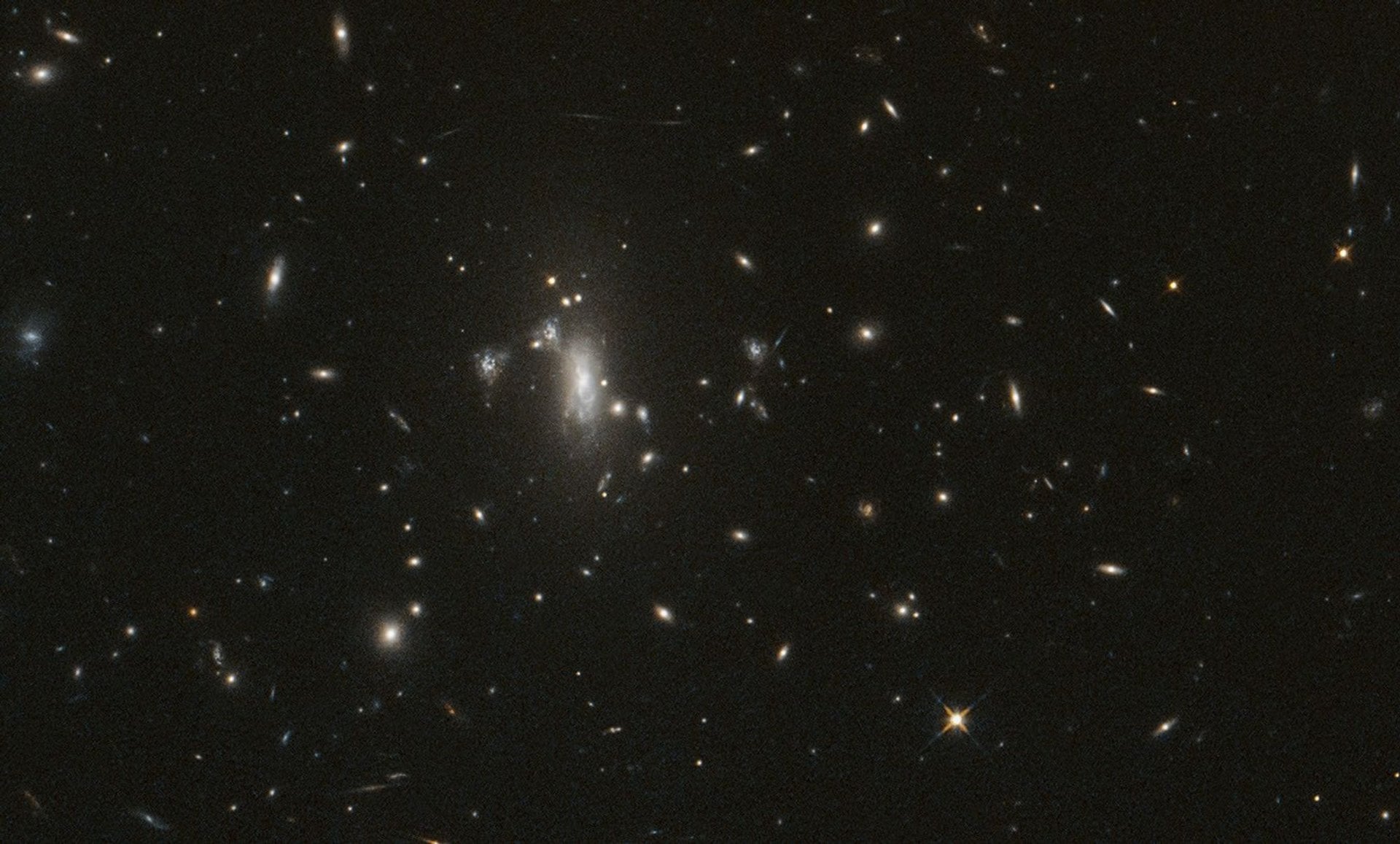
A bright, dense cluster of hot, massive stars in a galaxy that existed 1.4 billion years after the big bang has been found helping to end the early universe's foggy days during which neutral hydrogen gas was draped across the cosmos, obscuring ultraviolet light from luminous objects.
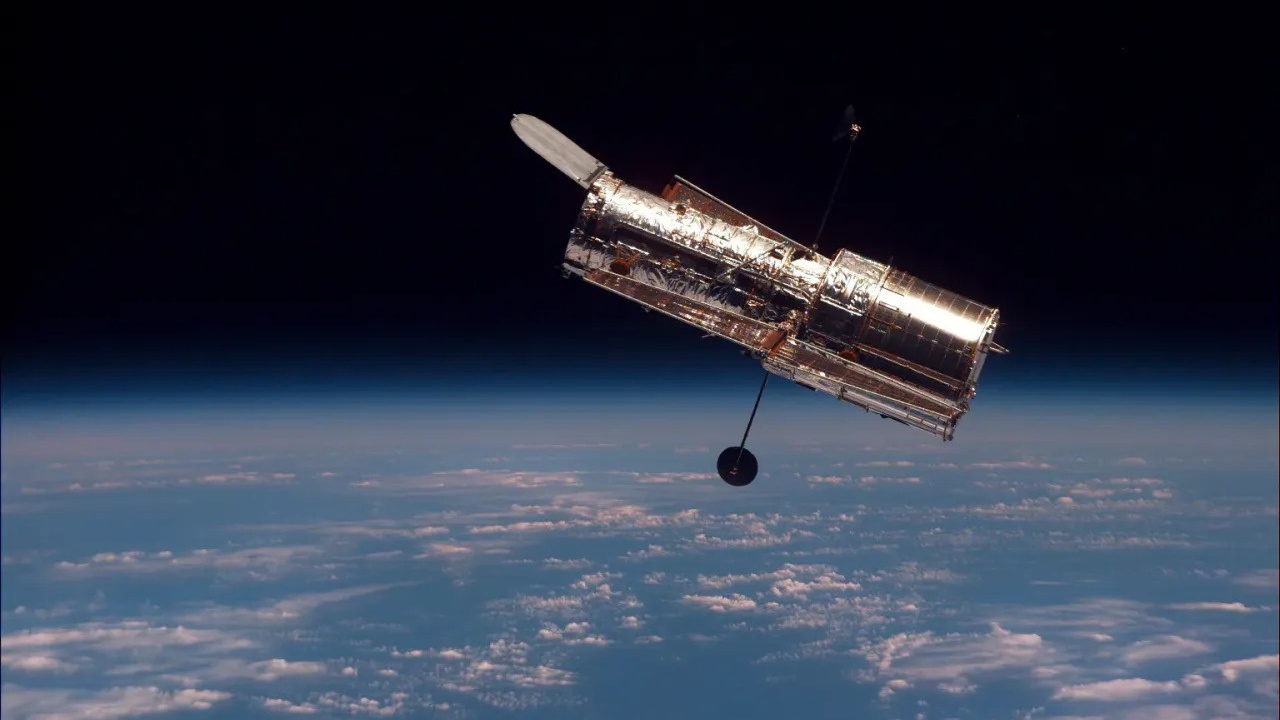
The cluster was found emitting ultraviolet light in a small but quickly growing galaxy by the
Hubble Space Telescope. The presence of this ultraviolet light, and the
star-forming history of the cluster producing it, suggests that bursts of star formation contributed to waves of ionizing radiation that gradually cleared out the opaque neutral hydrogen.


 Bullseye! Hubble Spots Ripples in Space From a Galaxy Collision