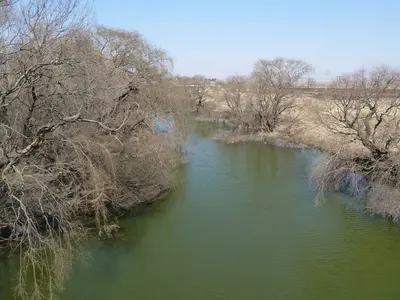
Loskop dam disaster

Gabe Owner

Executive Member
Joined
May 4, 2021
Messages
9,869
Reaction score
13,267


A 58km stretch of the lower Wilge River system is “dead” after an old coal mine in Mpumalanga decanted millions of litres of acidic water into the river system last week.
Tons of fish were wiped out within days by the acid mine drainage (AMD) from Thungela ResourcesKhwezela Colliery’s Kromdraai site, outside eMalahleni, which was detected on 14 February.
 
eMalahleni must just be declared a disaster area. It's a good example why a country needs proper environmental laws. Businesses that mined the area before made a mess of the area.
 
Not good for the table grape and citrus farmers in that area.
Water in this area is highly contaminated due to a lot of factors, largely emanating from past and present mining operations. Poor monitoring and controls by government and miners aggravate the issue.
 
Finger pointing and blame game, followed by attempts to sweep it under the carpet. In the end, no one will be brought to book and it will be the community that suffers. The usual...
 
Close the farming, nationalize the land and allow the spillage to flow over that land as well. Problem solved.
 
Water in this area is highly contaminated due to a lot of factors, largely emanating from past and present mining operations. Poor monitoring and controls by government and miners aggravate the issue.
Totally agree... I spent time in Witbank and the area... You could see the damage being done and that's 25 years and more back...
..
 
eMalahleni must just be declared a disaster area. It's a good example why a country needs proper environmental laws. Businesses that mined the area before made a mess of the area.
I thought that mines had to have a ringfenced rehabilitation/environmental fund, to clean up their mess, during the lifespan / when the mine closes down...?
 
eMalahleni must just be declared a disaster area. It's a good example why a country needs proper environmental laws. Businesses that mined the area before made a mess of the area.
We already have "proper environmental laws" ... they're just often ignored because the gov depts who are supposed to implement them don't know their @rses from their elbows and officials are more than willing to turn a blind eye for a brown envelope.
Businesses that mine the area continue to do what they like with zero consequence
It takes expensive court interdicts from private institutions and npo's to get any notice...and that's not even taking into account all the bullshit "anti-development" rhetoric from gov that anyone who speaks up has to deal with
 
I thought that mines had to have a ringfenced rehabilitation/environmental fund, to clean up their mess, during the lifespan / when the mine closes down...?

Two issues:

1. historically, mining activity goes back a lot longer than environmental regulation, so old workings have no rehabilitation fund.

2. Not specific to Loskop, but there’s been one or two cases where the rehab fund gets mismanaged/lost. It was happening at Optimum Coal when the Gupta bank accounts got frozen (may have since been reversed).
 
I thought that mines had to have a ringfenced rehabilitation/environmental fund, to clean up their mess, during the lifespan / when the mine closes down...?
They're supposed to, but does it get done thoroughly? You just have to look at the amount of air pollution to understand how these businesses handle pollution control in general.
 
Last edited:
  • Like
Reactions: ES1
There are lessons to be learnt and underlying issues to the incident that we can’t see currently. Our slow transition to renewable energy drives the issue of AMD further.

But Gweezy wants more coal mining.
 
Totally agree... I spent time in Witbank and the area... You could see the damage being done and that's 25 years and more back...
..
Even by then it had been ongoing. Mid 70's there was a similar incident, though not on this scale. I have a cousin who lived in the area. Fish were spluttering in the shallows.
 
Luckily Thungela's share price has gained +-50% since the disaster occurred so they should have plenty of funds to sort this mess out right?

/S
 
Luckily Thungela's share price has gained +-50% since the disaster occurred so they should have plenty of funds to sort this mess out right?

/S
That's not how it works. When the issue the shares they get the money. Say R10.00 per x 100 million shares for argument = R1 000 000 000. They use the money to invest in assets that generate revenues. Over the years the shareholders trade the shares on a stock exchange. This trades don't bring in more money to the company. The only time is when they issue more shares. The share owners who sells the shares make the money when their is an increase and a loss where there is a decrease. At least that is my understanding. I might be wrong.
 
I thought that mines had to have a ringfenced rehabilitation/environmental fund, to clean up their mess, during the lifespan / when the mine closes down...?

Yes, they do. Thungela has a R6.5 billion rehab provision which will only escalate because of residual and latent risks. That is one of the many reasons Anglo American de-risked its portfolio with a demerger of its thermal coal operations in South Africa to form Thungela while some were sold to Sereti.
 
Yes, they do. Thungela has a R6.5 billion rehab provision which will only escalate because of residual and latent risks. That is one of the many reasons Anglo American de-risked its portfolio with a demerger of its thermal coal operations in South Africa to form Thungela while some were sold to Sereti.
Maybe the rehab provision was a factor but possibly Anglo easing out of coal worldwide. SA's rehab etc provisions are not particularly onerous according to someone who worked in Brazil.
 
Maybe the rehab provision was a factor but possibly Anglo easing out of coal worldwide. SA's rehab etc provisions are not particularly onerous according to someone who worked in Brazil.

Rehab was a major factor and also pressure from Investors. Anglo is keeping its metallurgical coal because that is strategic in the steel value chain.

SA's rehab provisions are as onerous as Canada, Australia. The only difference with SA is in the implementation of the laws which we know pretty much lacks in every department in our esteemed government.

Having said that, every country in the mining world (SA, Australia, Brazil, Canada, Chile, USA) is constantly changing mine closure criteria because mine closure residual, latent risks are unfortunately not well understood until they manifest themselves post-closure. Most laws prescribe the desired end-state (social, environmental, safety) but are very light in terms of the method of how to get there.

As we speak, the National Environmental Management Act (NEMA) has been revised many times since 2015 to make it almost impossible for any junior, medium and large company to walk away from a mine closure liability. No company will ever get a mine closure certificate (unless through corrupt measures) and new provisions now include latent risks well beyond post-closure.
 
Top
Sign up to the MyBroadband newsletter
X