Mechanical Keyboard for Mac

[)roi(]

Executive Member
Joined
Apr 15, 2005
Messages
6,282
Reaction score
405
Location
I really miss the beautiful, solid design and tactile feel of the old clunkers -- keyboards that are famous for their recognizable clickety-clack sounds, the keyboards below, all which I had the good fortune to use follow a similar design philosophy, something which I believe everyone had lost (including Apple):

The first keyboard I ever touched was a "portable" remington something similar to this: -- passed on from my grandmother to my mom, and now stored as a family heirloom.
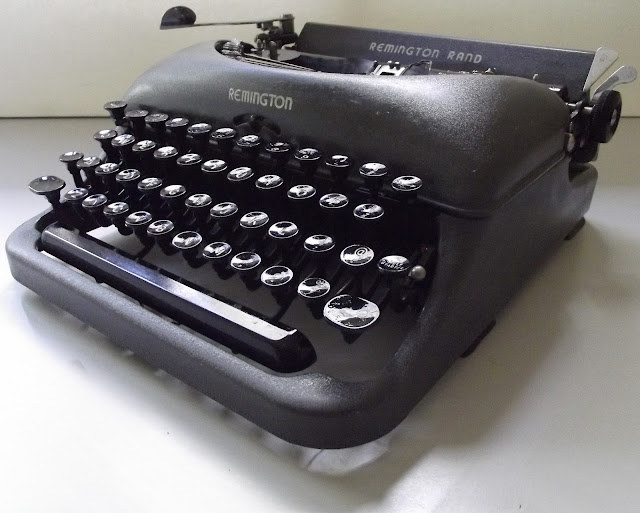
RemRand+011.JPG

The 1st computer was a Texas Instruments 99 4A (TI 99/4A for short) -- with many add-ons like voice detection and speech generation
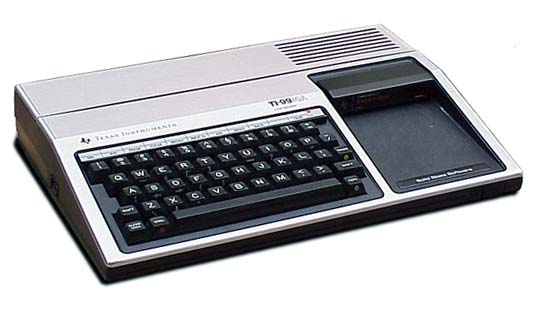
ti-994a.jpg


BBC Model B
300px-BBC_Micro_Front_Restored.jpg


My 1st Apple
apple_II.jpg


Followed later by my 1st so called Mac

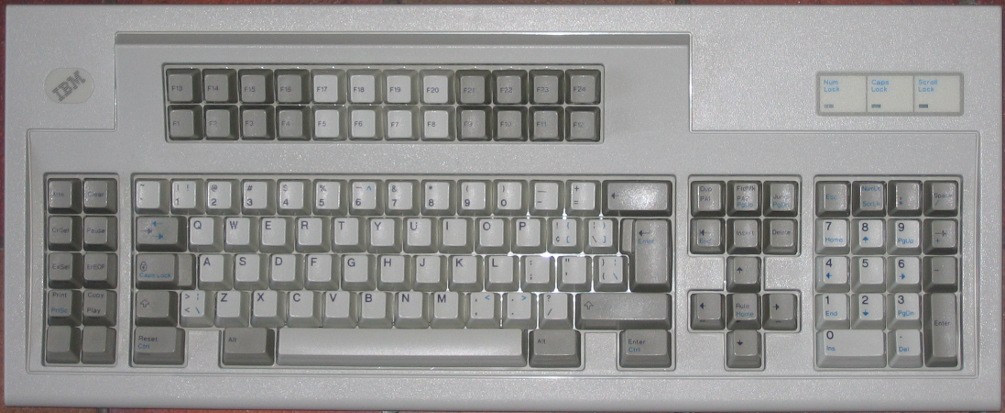
My 1st work systems - IBM System 36/38 & early AS/400 keyboards
$(KGrHqJ,!lgE7Gi98VFoBO33pS,,4w~~60_3.JPG

1397000.jpg


FYI, this is the 200Mb disk drive of IBM System 36, beauty, but not portable.

Then onto Sun SPARCStations, IBM 370/390, AIX, ... all sporting heavier and noisier keyboards.

The keyboards we have today (Apple included, even though the aluminum looks nice), just don't provide the same experience, either too plasticky, or like the Apple keyboards reduce the tactile feedback, and with the real cheap ones, if your really get down to typing, they bounce around. With the System 36 keyboard, which weighed over 11kg, there was no chance of that (yes it could have been classified as an office weapon), some really sturdy stuff, and if you opened it you could still see the rough hand soldering :D Today they spew out the cheap crap at hundreds an hour, or more.

Well the good news, for those that care:
Finally now there is a company that is going to introduce something which is pitched to provide a similar feel; old school feel, with the clickety-clack: http://www.daskeyboard.com/model-s-professional-for-mac

So far my concern about this product is the lack of weight, only 1.36kg (i.e. not as sturdy as ~11kg :D) but it should hopefully be better than my current keyboard: Apple Aluminium Keyboard with Numeric Keypad - English (USA) at 0.73Kg

Pity they didn't provide space for an optional lead weight or two, also it could have looked a little better if they used aluminum, hope that's an option they'll consider in the future.

How many of you worked on some of these?
 
Last edited:
Oh and just for a possible laugh, just in case you were wondering -- just how old is this fart?
I don't walk with a cane, just started very early, at 11, I received my 1st computer:
TI99/4A (Texas Instruments); by the end of the year I was programming in assembler; no games, except I did get pong with it on a cartridge (but after a month, you get bored).

This was around the same time as the ZX spectrum (before the commodore, , and Apple, but after the Atari "game console", so yes I got it basically a year before the ZX was released in SA. I'm sure there's a few others on the forum that started around the same time or earlier... fortunately I never had to learn to program with punch cards :wtf:

The TI btw, had 2K ram (1K more than the ZX :D)
It's still a wonder what we could do with that though.

The crap part of my 1st computer is that I didn't have a read/write storage device, only RAM; so yes after writing a nice assembly program for a few hours :sick:, you would have to either write it down with a pencil, or I'd use the Remington type writer, because once the power went, so did the code (yes I screamed many a time when the power tripped in the house, for example: when my brother (the now Electronics Engineer) was playing with his soldering iron, fixing some fault on the 8 track from my mom's VW bug :sick: :D

With the BBC I finally hooked a portable cassette player. and then had to proceeded to writing down using either the pencil or the Remington (manual file system, yes they had no FAT) the counter position (stop and start), and the volume setting, because the program wouldn't load if you didn't get the volume perfect, and considering technology was hand made, the volume would sometimes change of its own accord, yes during the load you would sometimes have to make subtle adjustments to the volume to load the remainder of the max 2K program :D

Oh and guess how you swear when you press play + record (that's how it worked) on the cassette player and forgot to forward the the correct counter position, yes program formatted.

Btw the keyboard on the ZX was the worst, rubber blocks with no tactile response, and many times you needed multiple presses to register a character, yes it sucked big time, thankfully I had the TI.

How did I use it?
My parents upgraded their TV in the living room, I got the old 1970's Blaupunkt TV (a beast); so on my desk in my room I had the little TI, in front of this huge CRT -- and yes even though I sat inches from that for 2 years, I don't wear or need glasses today (no surgery) :D

Upgraded to a 9" monitor with the BBC, reused that initially on the Apple II.

Do you remember how parents in those days would say to the kids; "don't sit so close you'll go blind", well it's a fallacy -- it's not 20/20, but I at least can drive without glasses, tested last week, so for those eye specialists it's around ~1.5 dioptre in both eyes -- if I'm missing details, sorry I'm no eye specialist :D

Well it's getting close midnight here, so I'll let the SA bunch take over.
Hope you don't find this boring, but I thought the two stories would go well together.... sorry if you did, and I wasted your time (that's life, you win some, you lose some, you screw up some, ...)
 
Last edited:
did you program in assembler at 11? That was when? Late 70's? I almost believed your posting until I read that :D What book did you use to learn assembly? Do you know the difference between assembly and binary? Which assembler did you use? Who did write it and how did you get it? I am not South African and thru my dad's work got introduced very early to computers. But grasping the very abstract concepts of bolean algebra at 11? Not to mention the electronic knowledge regarding the construction of 'your computer'. Assembly language for any particular processor in those years, was like a secret. Only later material become available and was difficult to obtain. You could not buy it over the counter and no you could not download it for free from the net :D
 
I don't think I am quite as old as you. I started my adventures in computing on a used Commodore 64 that my cousin in the UK sent to me after he upgraded to a Apple IIe. I learned to program using the C64's implementation of basic and yes, I well understand the frustrations of the power tripping.

The clunky keyboards? Yes I kinda do miss them my favorite keyboards were always the old IBM ones. They were also useful for smashing walnuts open on your desk. :p
 
did you program in assembler at 11? That was when? Late 70's? I almost believed your posting until I read that :D What book did you use to learn assembly? Do you know the difference between assembly and binary? Which assembler did you use? Who did write it and how did you get it? I am not South African and thru my dad's work got introduced very early to computers. But grasping the very abstract concepts of bolean algebra at 11? Not to mention the electronic knowledge regarding the construction of 'your computer'. Assembly language for any particular processor in those years, was like a secret. Only later material become available and was difficult to obtain. You could not buy it over the counter and no you could not download it for free from the net :D

1981... Prior to that it was the Atari, and Pong.
Grasping the concept of binary arithmetic (boolean algebra) at an early age, set me up to fly through computer science at School, attended my first computer olympiad in early high school, similarly maths olympiad.

If you read up about the TI/99 4A, you will see it came with 2 books, basic http://www.99er.net/files/Begin_Basic.pdf and assembler / editor, http://www.mainbyte.com/ti99/software/s_carts/editor.html - Manual : http://www.scribd.com/doc/35540454/Editor-Assembler-Manual all custom graphics were entered in 1 byte segments; similar to 10111111; that btw would reference 1 pixel on the screen.

Oh, I missed an important point, to draw, for example a square, the simplest method I found with the TI, was to use graphing paper (I've found a particular one at the Juta book store in old Jozie) that segmented each section into 64 squares (8x8), so it was easy to draw something on the graph paper, or trace through from behind. You then convert each, 64 block into 8 x 1byte binary numbers, and then final into hexadecimal before capturing into the assembly program on the TI.

Those conversions I can still do today; convert decimal to binary to hexadecimal to octal in my head (no calculator needed), not because I'm clever, but because I practiced so much on TI. For example, you try to draw a big picture on an A4 sheet using tracing paper, and then converting in essence each colored in block into 8 x 8 bit binary numbers and then into hexadecimal, and then punching this finally in (remember I had no backup, so if the power failed, ...)

Hopefully you get the idea. A simple picture of, for example: a naked cartoon cinderella drawn onto graphing paper (I was a young teenager of course) took me 1 day to manually write down all the binary codes (no excel, or lotus 1-2-3) only paper and another day to convert to hexadecimal and type into the TI, yep time consuming, but it looked great, it was limited to black and white re the image size and my 2K ram (but wow good for for 1981) -- playing with the speech synthesizer (nicknamed "big ears") was year 3's adventure, wonderful computer generated voice that you could barely understand (basically high tones mixed with white noise), but wow the amount of coding to get it to understand hello (and you had to repeat the word 7 times for it to recognize / record what you said, nothing like the speech recognition we have today), and then to do something after it recognised "the word" required even more code (ridiculous by today's standards, but so enjoyable).

If you have more questions, ask away (not senile yet :D), yes at 11 I did program in assembler, still can read it, but it's pretty useless now-a-days, primary coding we do is C, C++, Objective-C, some C# and VB.Net -- in our circles less Java these days, and some ABAP (corporates) -- anyway was not trying to brag, just sharing some memories. Btw I was not the only one attending computer camps when I was 13, so there definitely are a few others.

Come on, some simple arithmetic in there, in 1981, the TI was released and I was 11, birthday October, so that makes me: supposedly the magic number (42)

Oh and I just remembered something that was still published in I think in 1982 in popular electronics (my boryher's subscription); assembly code for random program generation; wow and o think we believe it could work; basically it randomly created assembly code, and tried to run it; crash all the time, but we were waiting for the next game to pop out -- lol never did.

Also for those that remember during BBC time, we used to have a BBC computer show screened on SABC, that focused on the computer advancements (almost like the Ozzie show Beyond 2000) focused of course in particular at the BBC Computer, on occasion you would sit at times with your tape recorder and record programs that they play out as high an low pitched tones (which of course was the program); basically you could say the first marketing CD distribution of its type; they also had to create a separate recordings of the tones for the subtle differences between PAL & NTSC signals around the globe, fortunately we had adopted the European PAL signal, else I doubt we would have received one specially tailored to SA., but trust me this was mind blowing at the time (someone wrote a program in the Uk, and you'd get it through the TV, not a magazine, and I didn't need a pencil or the trusty Remington.)
 
Last edited:
I don't think I am quite as old as you. I started my adventures in computing on a used Commodore 64 that my cousin in the UK sent to me after he upgraded to a Apple IIe. I learned to program using the C64's implementation of basic and yes, I well understand the frustrations of the power tripping.

The clunky keyboards? Yes I kinda do miss them my favorite keyboards were always the old IBM ones. They were also useful for smashing walnuts open on your desk. :p
Yes they started getting really fancy when that came out, great one for games, never owned one -- but was always jealous of my friends Commodores (re the cool games); you know what teenagers are like, I'd brag about coding and they say yeh boring, lets have a game...

When I got the Apple II, it pretty much, only had a basic language interface, like the BBC, and TI, so that was at least a common point. As I'm sure you aware assembler was completely different instruction set re the processors, but hey I thought it was cool at least basic had moved on since the TI and BBC (1st introduction of functions & procedures or subroutines (void) days, even though the Commodore was not really being used for coding, it was in many ways still "cooler" to have re the games, almost nothing on the Apple for the 1st year in SA.

Oh and I forgot, that wasn't Core at that stage, it was the real deal... Pity our market is too small now to get their attention.
 
Last edited:
TL;DR

Are you looking for info on Mechanical keyboards for a Mac computer?

Yes big heavy clunkers, ones that you can audibly hear in the next room, and of course built for the Mac, printing on the keyboard is important.

Note: at the bottom of my long winded article: I did find a solution, just not currently on the market, well at least where I am (NY), don't think it going to launch this week, so I'll need to either wait, or try to get one myself.
 
Last edited:
[)roi(];8088216 said:
Yes big heavy clunkers, ones that you can audibly hear in the next room, and of course built for the Mac, printing on the keyboard is important.

First stop would be keyboards using Blue switches. All the switches used in the more common mech kb's are made by Cherry, think they're a German company.

Cherry MX Blue:
Clicky sound
Tactile bump/feedback
50g force

We're hard-pressed for choice in SA. I use the CM Storm QuickFire Rapid and it's very good (I have Blue and Black, Blue is overall better for my use). It's a Tenkeyless design. Nice build quality and weight. AFAIK they're advertised as having laser-etched keys. My ASD are going a bit dull but I'll try cleaning it.

cooler-master-cm-storm-quickfire-review-keyboard-front.jpg


[video=youtube;nCbNx1TRpEs]http://www.youtube.com/watch?v=nCbNx1TRpEs[/video]

The other option in SA is the Razer BlackWidow (there is also a non back-lit version):

blackwidow_stealth_banner.jpg


These are both fairly cheap at around R750... I would start with the QuickFire to see if you like it, then if you actually want something better, save and import. It should work with Mac but you'll need to make sure. :p
 
First stop would be keyboards using Blue switches. All the switches used in the more common mech kb's are made by Cherry, think they're a German company.

Cherry MX Blue:
Clicky sound
Tactile bump/feedback
50g force

We're hard-pressed for choice in SA. I use the CM Storm QuickFire Rapid and it's very good (I have Blue and Black, Blue is overall better for my use). It's a Tenkeyless design. Nice build quality and weight. AFAIK they're advertised as having laser-etched keys. My ASD are going a bit dull but I'll try cleaning it.

cooler-master-cm-storm-quickfire-review-keyboard-front.jpg


[video=youtube;nCbNx1TRpEs]http://www.youtube.com/watch?v=nCbNx1TRpEs[/video]

The other option in SA is the Razer BlackWidow (there is also a non back-lit version):

blackwidow_stealth_banner.jpg


These are both fairly cheap at around R750... I would start with the QuickFire to see if you like it, then if you actually want something better, save and import. It should work with Mac but you'll need to make sure. :p

Sounds great, what about the weight, and the lettering; they all look unfortunately Windows to me; I could possibly find my way around this, but why if there is a known solution with the correct printing. Do you know of someone or some company locally I could call to check.

My favorite of all time is that 11kg System 36 keyboard, wow if only they made them in a Mac layout, yes serious damage stuff, but typing on it was unbelievable;

Funny enough IBM not Apple at that time was known for quality stuff, who knows maybe Jobs copied the quality principle from IBM.
 
Last edited:
[)roi(];8088550 said:
Sounds great, what about the weight, and the lettering; they all look unfortunately Windows to me; I could possibly find my way around this, but why if there is a known solution with the correct printing. Do you know of someone or some company locally I could call to check.

My favorite of all time is that 11kg System 36 keyboard, wow if only they made them in a Mac layout, yes serious damage stuff, but typing on it was unbelievable;

Funny enough IBM not Apple at that time was known for quality stuff, who knows maybe Jobs copied the quality principle from IBM.

940g.

You could probably buy Mac keycaps online. They're interchangeable.
 
Top
Sign up to the MyBroadband newsletter
X