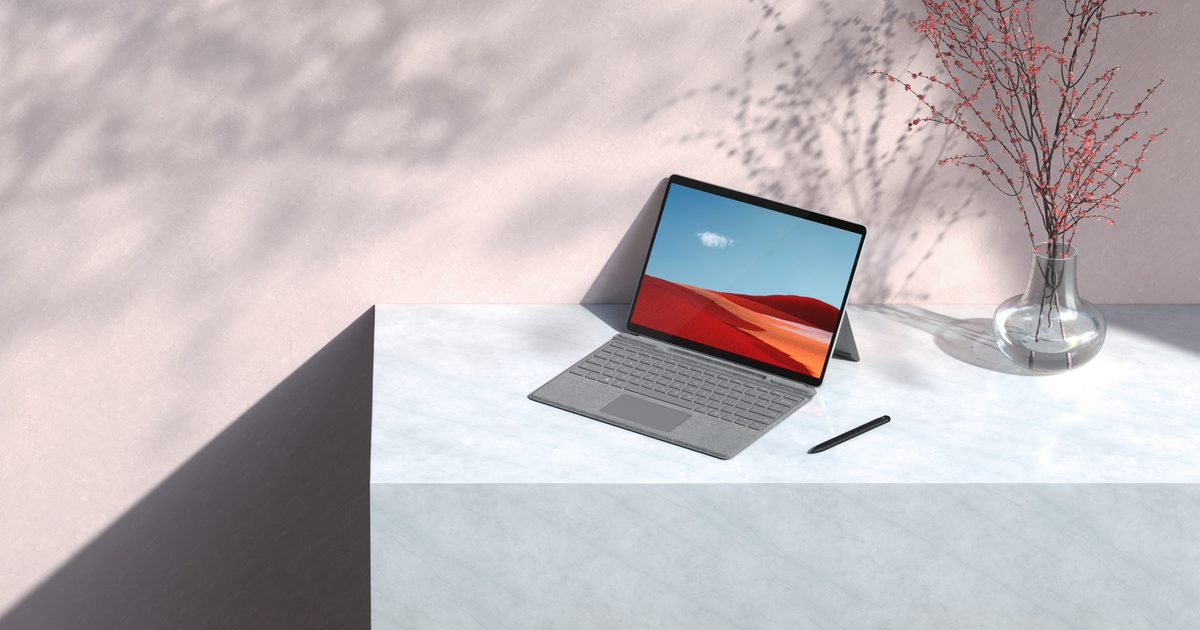
Microsoft might be developing an in-house chip for its Surface devices

The M1 processor has outperformed the Intel processors the company previously used in its Mac systems and allowed the company to bring down prices.
Not really? Or marginal at best?
 
do we really need more than a handful, isnt compatibility going to be an issue?

That would all be pending on the architecture's compatibility. I would believe that MS would also pursue ARM given their emphasis on this in regard to developer kits.
 
In support,


Why Microsoft’s moonshot attempt to support ARM could finally work this time​

Microsoft’s Build developer conference saw updates for products like Azure, Outlook, Teams, and the remainder of the Microsoft 365 services. However, an exciting announcement regarding ARM-based architecture really caught my attention.

Although Apple has stolen most of the spotlight when it comes to switching its products over to the custom ARM-based M1 chip, Microsoft did go there first. The company did it with the Surface RT, and again with the Surface Pro X, but both flopped for a number of reasons that I’ve documented in the past.

In the past, Microsoft’s approach to ARM-based chips largely depended on its own hardware like the Surface Pro X. Developers interested in coding apps for laptops and tablets with ARM-based chips (us insiders like calling them Windows 10 on ARM devices) had to buy the same products that you and I can purchase online.

This time around, though, things are a bit more promising. Microsoft seems to be putting things back in the hands of developers, and the new approach to ARM feels a lot different.

That means that the costs can add up quickly during the development process. But with the new approach announced at Build 2021, Microsoft finally has the mindset of the developer in mind. Instead of buying Microsoft’s own devices to code apps for devices with ARM chips, developers can now choose a new “low-cost” Snapdragon Developer Kit instead.

All in all, this is a good step towards reducing the degree of fragmentation. It would make sense for Microsoft to pursue this in-house.
 
Assuming they want to match Apple's M1 efficiency:

The problem IIRC is that there's only so much power-saving that can be done with x86, right?

ARM chips are just more efficient and customisable which was one of the major reasons Apple opted for them.

Now does MS build a custom ARM chips akin to Apple which then means they need to improve their x86-ARM translation layer. I assume Rosetta2 is beyond anything from MS.

Or.

They design an unprecedented x86 APU beating anything on offer from Intel and AMD.

I feel like the first scenario is more achievable.
 
Assuming they want to match Apple's M1 efficiency:

The problem IIRC is that there's only so much power-saving that can be done with x86, right?

ARM chips are just more efficient and customisable which was one of the major reasons Apple opted for them.

Now does MS build a custom ARM chips akin to Apple which then means they need to improve their x86-ARM translation layer. I assume Rosetta2 is beyond anything from MS.

Or.

They design an unprecedented x86 APU beating anything on offer from Intel and AMD.

I feel like the first scenario is more achievable.
I think they are easily capable of it.
 
If they get their x86 emulation right we could see MS develop a portable version of the Xbox Series S that would take on the Steam Deck and Nintendo Switch
 
Steam Deck is an x86 platform.
Yeah we all know that.

Apple has shown with the M1 that it's possible to emulate x86 instructions on an ARM chip at a much lower TDP than traditional x86 processors. Currently the Series S SOC runs at ~90w and the Steam Deck is said to run at 15w. Switching to ARM will definitely bridge the TDP gap between the 2 platforms much faster
 
Top
Sign up to the MyBroadband newsletter
X