


OrbitalDawn
Ulysses Everett McGill
A total of 93 292 e-toll accounts have been de-registered this year, since the controversial system went live in Gauteng, Transport Minister Dipuo Peters has revealed.
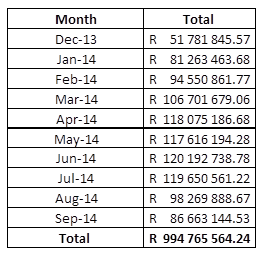
In a written reply to questions this week, Peters told parliament that further to this, motorists had paid just under a R1 billion in e-toll bills.
The SA National Roads Agency Ltd (Sanral) have been expected to gain R270 million a month through e-tolls.
“As at 30 September 2014… there are 1 254 502 active accounts registered on the system… and approximately 2.5 million users of GFIP per month.”
Peters was replying to questions by Freedom Front Plus MP Anton Alberts.
The total amount received through e-tolling since it went live on December 3 stood at R994 765 564.
Gauteng premier David Makhura recently received a report from an expert panel who he tasked with assessing the socioeconomic impact of the system.
Media reports have suggested that the panel has suggested scrapping the system.
This, after submissions to the panel from various organisations, political parties and civil society who indicated their opposition to the user-pays system.
Makhura said recently told media upon receiving the report that: “Now the ball is in our court…
“We don’t want to make another mistake. There will also be important lessons we will draw from this.
“The thing the panel says to us is that go and look at what (is) recommended. But as you move forward, just make sure you do it properly. We don’t want to make mistakes, make rash decisions.”
ANC Gauteng chairperson Paul Mashatile has indicated his opposition to e-tolling and has recently said that eyes could not be closed to the “problems of Gauteng”.
However, in her reply, Peters said that the “Gauteng provincial government recognises the benefits and the savings that accrue to the citizens of Gauteng”.
Her reply was to an Alberts’ question on whether the Gauteng provincial government laid charges since e-tolls went live, over its impact on provincial and local roads, regional planning and development, the environment, road traffic management, consumer protection, industrial development, pollution control, public transport, and tourism.


