


-
- News
-
Categories
- 5G
- ADSL
- AI
- Banking
- Black Friday
- Broadband
- Broadcasting
- Business
- Business Telecoms
- Cellular
- Cloud and Hosting
- Columns
- Cryptocurrency
- Energy
- Enterprise
- Fibre
- Gadgets
- Gaming
- Government
- Hardware
- Industry News
- Internet
- Internet of Things
- Investing
- IT Services
- Motoring
- Reviews
- Science
- Security
- Smartphones
- Software
- Technology
- Telecoms
- Trending
- Wireless
- Press Office
- Forum
- Industry News
- Features
- Company hub
- Speed Test
- About us
- Advertise with us
- Contact
- Careers
-
Join the MyBroadband community
South Africa’s biggest forum. Discuss, discover, and connect with thousands of members.
-
Question of the Day: Google Maps vs Waze vs Apple Maps vs physical paper maps?
- Forums
- General discussions
- Motoring and Transportation: Cars, Bikes and Plane
- General Motoring News and Reviews
You are using an out of date browser. It may not display this or other websites correctly.
You should upgrade or use an alternative browser.
You should upgrade or use an alternative browser.
New Honda Prelude
- Thread starter FiestaST
- Start date
FiestaST
Honorary Master
justplain
Expert Member
can we PLEASE get this and the Hybrid Civic. I'm keen for either.

Mike Hoxbig
Honorary Master
As cool as it is, I would rather they start on a new S2000....can we PLEASE get this and the Hybrid Civic. I'm keen for either.
FiestaST
Honorary Master
Sorry, folks: New Honda Prelude NOT coming to SA
Bad news, Honda fans: the new Honda Prelude is not coming to South Africa, with the Japanese brand’s local division citing “cost viability” and “limited demand” as reasons…
- New 6th-generation Prelude ruled out for South Africa
- Local arm’s decision comes after “careful consideration”
- Brand cites “cost” and “limited demand” as reasons
Hoping to see the new Honda Prelude in South Africa? Well, we have some bad news: Honda Motor Southern Africa has announced that the 6th-generation model will not be launched locally.
As a reminder, in October 2023, the Japanese automaker unveiled the Prelude Concept at Japan Mobility Show 2023, some 22 years after this storied nameplate was put out to pasture. The production version officially went on sale in Japan in early September 2025.
“As much as we’d love to see the Prelude back on South African roads, the decision not to introduce this model locally comes after careful consideration of several key factors, including cost viability, overall segment performance and limited demand within the sports coupé category,” said Callon Locke, Manager for Product & Retail Marketing at Honda Motor Southern Africa.
“Honda remains committed to offering a range of vehicles that truly meet the needs and preferences of South African customers, focusing on models that deliver exceptional value, efficiency, and everyday usability. We sincerely appreciate the ongoing enthusiasm and support from our loyal Honda fans and customers across the country,” Locke concluded.
The BF1-series Honda Prelude employs a version of the brand’s hybrid powertrain (seemingly borrowed from the Civic e:HEV offer in some markets), combining a 2.0-litre petrol engine with a 2-motor hybrid system and a continuously variable transmission (CVT).
According to Honda Japan’s website, the petrol engine makes 104 kW and 182 Nm, while the electric set-up contributes 135 kW and 315 Nm. The front-wheel-drive Prelude – which measures 4 520 mm from nose to tail – has a listed weight of 1 460 kg, while various Civic Type R chassis components have been incorporated underneath.
Bad news, Honda fans: the new Honda Prelude is not coming to South Africa, with the Japanese brand’s local division citing “cost viability” and “limited demand” as reasons…
- New 6th-generation Prelude ruled out for South Africa
- Local arm’s decision comes after “careful consideration”
- Brand cites “cost” and “limited demand” as reasons
Hoping to see the new Honda Prelude in South Africa? Well, we have some bad news: Honda Motor Southern Africa has announced that the 6th-generation model will not be launched locally.
As a reminder, in October 2023, the Japanese automaker unveiled the Prelude Concept at Japan Mobility Show 2023, some 22 years after this storied nameplate was put out to pasture. The production version officially went on sale in Japan in early September 2025.
“As much as we’d love to see the Prelude back on South African roads, the decision not to introduce this model locally comes after careful consideration of several key factors, including cost viability, overall segment performance and limited demand within the sports coupé category,” said Callon Locke, Manager for Product & Retail Marketing at Honda Motor Southern Africa.
“Honda remains committed to offering a range of vehicles that truly meet the needs and preferences of South African customers, focusing on models that deliver exceptional value, efficiency, and everyday usability. We sincerely appreciate the ongoing enthusiasm and support from our loyal Honda fans and customers across the country,” Locke concluded.
The BF1-series Honda Prelude employs a version of the brand’s hybrid powertrain (seemingly borrowed from the Civic e:HEV offer in some markets), combining a 2.0-litre petrol engine with a 2-motor hybrid system and a continuously variable transmission (CVT).
According to Honda Japan’s website, the petrol engine makes 104 kW and 182 Nm, while the electric set-up contributes 135 kW and 315 Nm. The front-wheel-drive Prelude – which measures 4 520 mm from nose to tail – has a listed weight of 1 460 kg, while various Civic Type R chassis components have been incorporated underneath.
FiestaST
Honorary Master
justplain
Expert Member
Had a suspicion this would be the case.
Still cant see why we cannot custom order one.
Instead we get a flood of boring SUV's.
So dull.
justplain
Expert Member
Also... Honda ZA....how much was it going to cost?
Perhaps establish demand with a public poll or refundable deposits etc and go from there?
Create a demand........
Dont tell us it wont sell.
If people will drop almost a bar of a Golf GTI, then this cant be too pricey.
If you dont bring it here, it wont sell...obviously, which means little to no hype about the brand
Also, where is the hybrid civic.
Come on Honda, you make some cool cars. The only one you give us is the Type R.
Let us, the buying public tell you if we want it or not.
FiestaST
Honorary Master
FiestaST
Honorary Master
justplain
Expert Member
Some Initial written reviews.
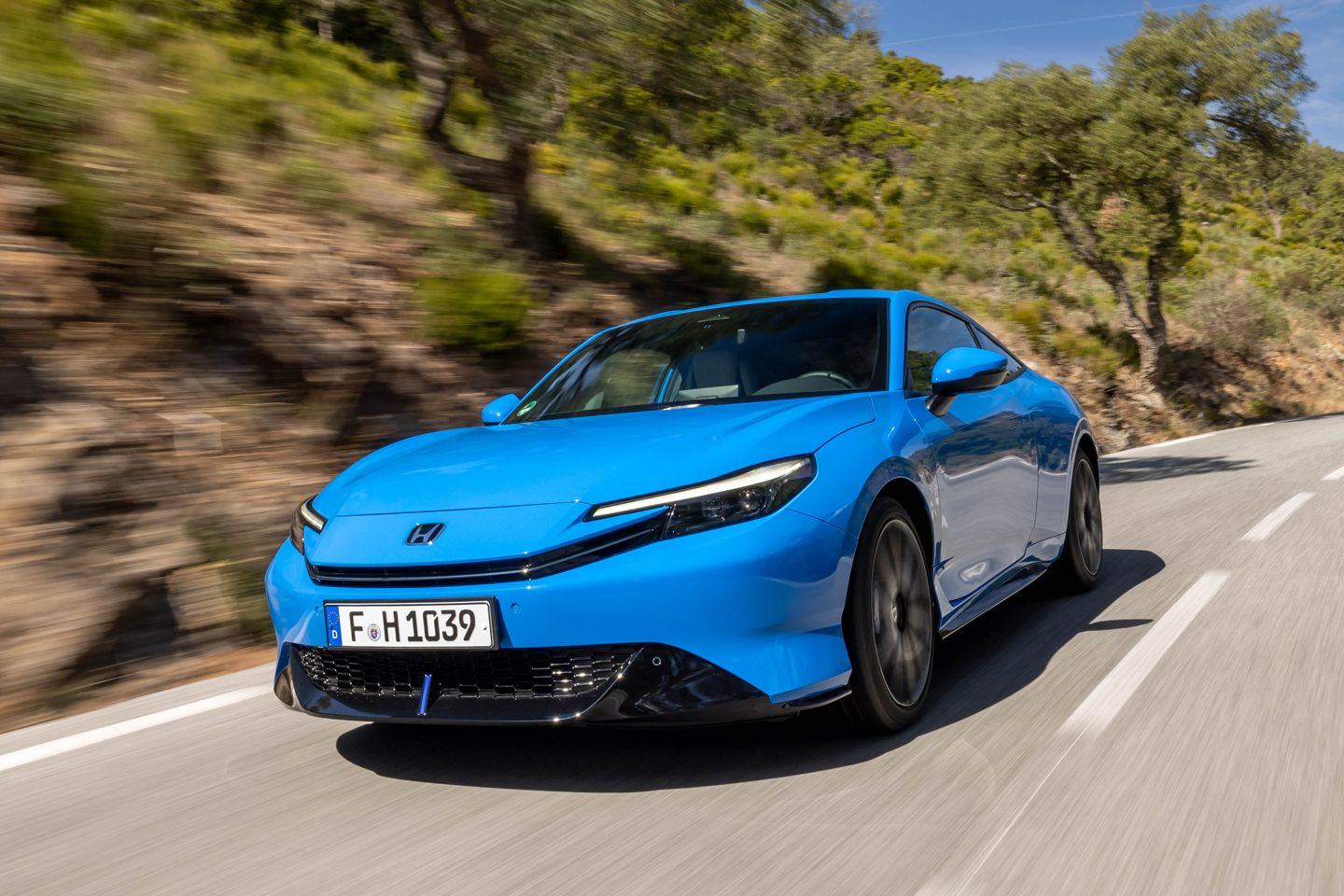
 www.pistonheads.com
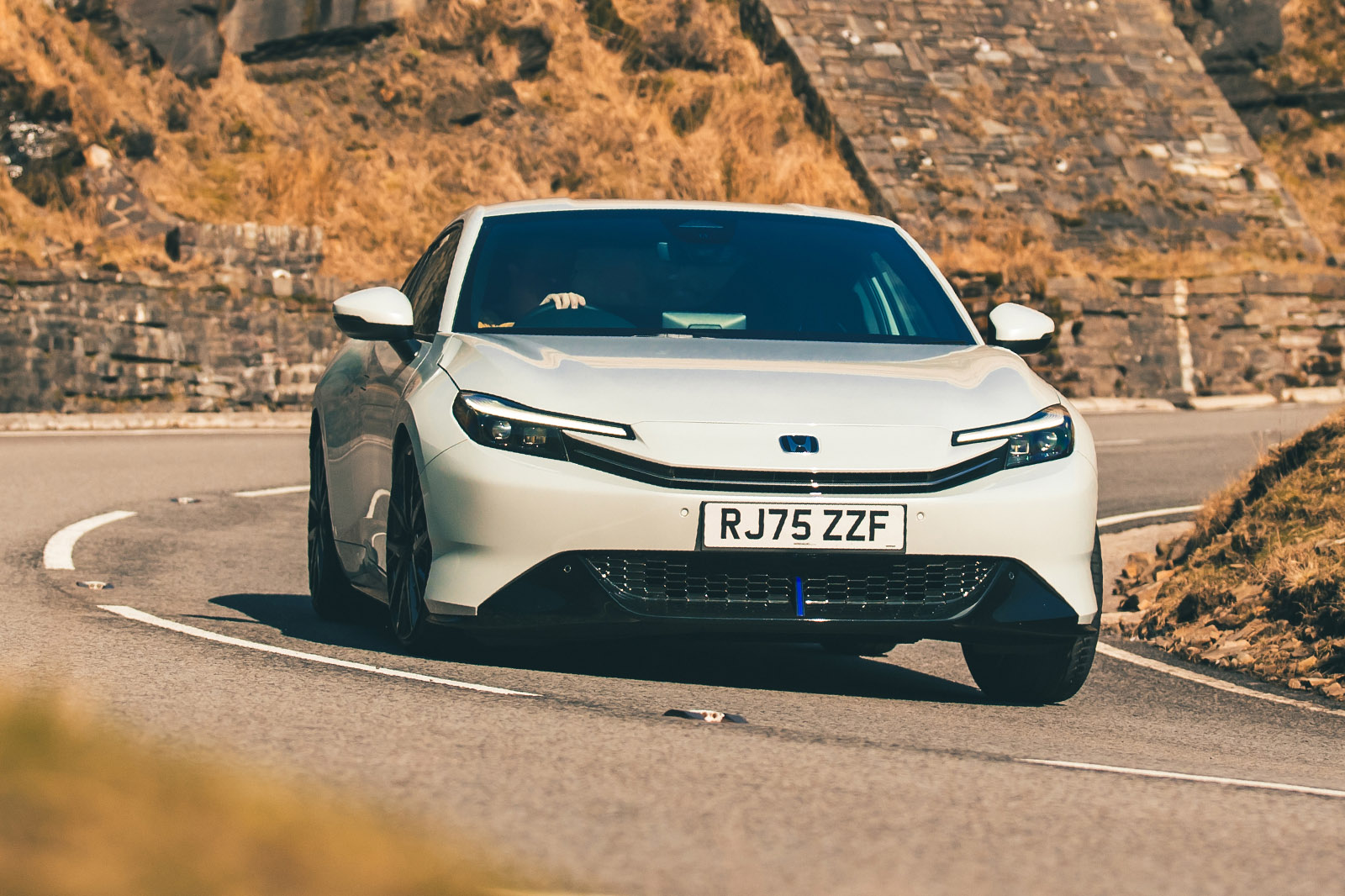
 www.autocar.co.uk
 www.evo.co.uk
Friendly Co-pilot quick summary
2025 Honda Prelude (BF1) | PH Review
The Honda coupe returns, with Civic Type R hardware and hybrid power - what's it like?
www.pistonheads.com
Full test: Is new Honda Prelude a FWD GR86, or simply a two-door Civic? | Autocar
Affordable sporty coupé returns with an interesting hybrid powertrain and tech from Civic
www.autocar.co.uk
Honda Prelude review – not the Civic Type R replacement we were hoping for | Evo
Honda's new Prelude has all the style a coupe needs but lacks the performance many will crave, yet it’s still enjoyable to drive and worthy of your consideration
www.evo.co.uk
Friendly Co-pilot quick summary
 Chassis: Built on a Civic-derived platform with Type R suspension components
 Ride Tuning: Adaptive dampers tuned for comfort and composure
 Engine: 2.0L Atkinson-cycle petrol engine
 Hybrid System: Paired with a 1.05kWh battery and electric motor
- Fuel Economy: WLTP 4.3 L/100 km; real-world ~5.9 L/100 km
 Power Output: ~137kw and 315nm of torque
 Transmission: e-CVT with S+ Shift paddles (simulated gear changes)
 Driving Feel: Smooth and seamless, but not highly engaging
 Braking: Firm with regenerative braking
 Character: Prioritizes balance, efficiency, and everyday usability over raw performance
FiestaST
Honorary Master
FiestaST
Honorary Master
FiestaST
Honorary Master
FiestaST
Honorary Master
CarGurus UK review of the new Prelude
FiestaST
Honorary Master
The 2026 Honda Prelude (often referred to as the 2025 model in some markets due to early announcements) uses Honda's two-motor hybrid-electric powertrain across global markets, pairing a 2.0-liter Atkinson-cycle gasoline engine with two electric motors. However, the combined system output is rated at **200 horsepower in the US** but **181 horsepower (or approximately 180 bhp) in Europe**. This discrepancy stems primarily from differences in regional emissions and testing standards, which influence how Honda calibrates and certifies the powertrain for compliance.
### Key Reasons for the Power Difference
1. **Emissions Regulations and Calibration**:
- Europe enforces stricter CO2 and pollutant limits under the Euro 7 standards (phasing in from 2025), alongside WLTP (Worldwide Harmonized Light Vehicles Test Procedure) testing for real-world efficiency. To meet these, Honda detunes the hybrid system's integration slightly—reducing peak output by about 19 hp—to optimize for lower emissions and better fuel economy ratings. This involves minor adjustments to engine mapping, electric motor assist thresholds, and throttle response, ensuring the car passes certification without needing costly hardware changes.
- In contrast, the US uses EPA (Environmental Protection Agency) testing and less stringent CO2 targets for hybrids (focusing more on overall MPG). This allows Honda to run a more performance-oriented calibration, unlocking the full 200 hp potential while still achieving strong efficiency (estimated 50+ mpg combined).
2. **Measurement and Certification Standards**:
- Power ratings can vary due to dyno testing protocols: US figures use SAE net standards (crankshaft output, accounting for accessories like alternator load), while Europe often references ECE or DIN metrics, which can yield slightly lower numbers for the same hardware. For the Prelude, the ~19 hp gap is mostly calibration-driven, not a fundamental hardware difference (the core components are identical).
- Torque remains consistent at 232 lb-ft across regions, as it's less affected by these regs—highlighting that the detuning primarily impacts peak horsepower from the gas engine's contribution.
3. **Market-Specific Tuning for Broader Goals**:
- Honda prioritizes "grand touring" dynamics in both versions, with the US tune emphasizing quicker acceleration (0-60 mph in ~6.2 seconds, per Civic Hybrid benchmarks) to appeal to performance buyers. Europe's setup trades a bit of top-end punch for superior WLTP efficiency (up to 55 mpg), aligning with EU incentives for low-emission vehicles and higher fuel taxes.
- Both use the same e-CVT transmission with "S+ Shift" mode for simulated gear changes, but the US version feels snappier due to the untamed calibration.
### Performance and Real-World Impact
- **US (200 hp)**: Quicker off the line thanks to fuller electric motor deployment; expect Civic Hybrid-like agility with Type R-derived chassis bits (dual-axis struts, adaptive dampers) for sharp handling.
- **Europe (181 hp)**: Still respectable (0-62 mph in ~8.2 seconds), but tuned for smoother, more efficient cruising. Reviews note it's "pleasant and economical" but lacks the "exciting partner" the chassis deserves.
- The 20 hp gap is noticeable in dyno pulls or highway passing but minimal in daily driving, where the instant electric torque shines.
This isn't unique to the Prelude—similar detuning affects models like the Civic Hybrid (200 hp US vs. 181 hp EU). Honda confirmed the setup in September 2025 announcements, with US deliveries starting late 2025 and Europe in early 2026. If regs evolve (e.g., post-2027 global harmonization), future updates could close the gap.
FiestaST
Honorary Master
FiestaST
Honorary Master
We Drive the New Honda Prelude (We’re confused) - The Late Brake Show
FiestaST
Honorary Master