New Horizons is awake!
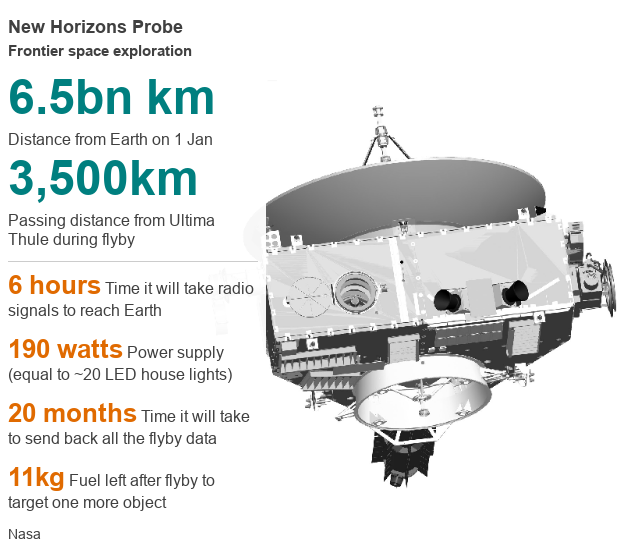
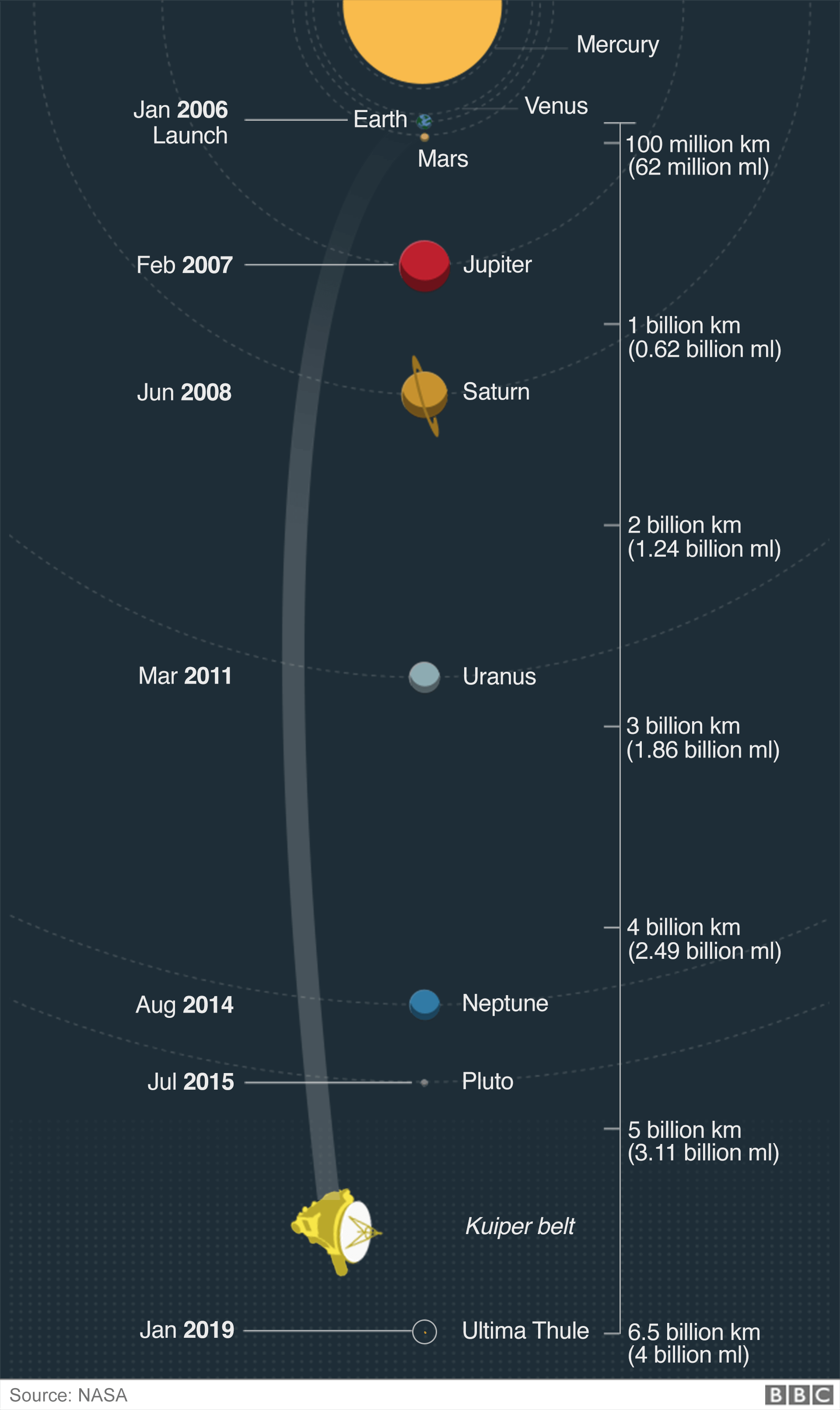
NASA said on June 5, 2018, that its New Horizons spacecraft is back “awake” and being prepared for the farthest planetary encounter in history – a New Year’s Day 2019 flyby of the Kuiper Belt object nicknamed Ultima Thule.
Cruising through the Kuiper Belt more than 3.7 billion miles (6 billion km) from Earth, New Horizons had been in resource-saving hibernation mode since December 21, 2017. Radio signals confirming that New Horizons had executed on-board computer commands to exit hibernation reached mission operations at the Johns Hopkins Applied Physics Laboratory in Laurel, Maryland, via NASA’s Deep Space Network at 2:12 a.m. EDT on June 5 (6:12 UTC).
New Horizons made a historic flight past Pluto and its moons on July 14, 2015. Since then, New Horizons has been speeding deeper into the Kuiper Belt, observing other Kuiper Belt objects and measuring the properties of the heliosphere while heading toward the flyby of Ultima Thule – about a billion miles (1.6 billion km) beyond Pluto – on January 1, 2019.
New Horizons is now approximately 162 million miles (262 million km) – less than twice the distance between Earth and the sun – from Ultima, speeding 760,200 miles (1,223,420 km) closer each day.
Rest at source: http://earthsky.org/space/new-horizons-wakes-up-for-flyby-ultima-thule
NASA said on June 5, 2018, that its New Horizons spacecraft is back “awake” and being prepared for the farthest planetary encounter in history – a New Year’s Day 2019 flyby of the Kuiper Belt object nicknamed Ultima Thule.
Cruising through the Kuiper Belt more than 3.7 billion miles (6 billion km) from Earth, New Horizons had been in resource-saving hibernation mode since December 21, 2017. Radio signals confirming that New Horizons had executed on-board computer commands to exit hibernation reached mission operations at the Johns Hopkins Applied Physics Laboratory in Laurel, Maryland, via NASA’s Deep Space Network at 2:12 a.m. EDT on June 5 (6:12 UTC).
New Horizons made a historic flight past Pluto and its moons on July 14, 2015. Since then, New Horizons has been speeding deeper into the Kuiper Belt, observing other Kuiper Belt objects and measuring the properties of the heliosphere while heading toward the flyby of Ultima Thule – about a billion miles (1.6 billion km) beyond Pluto – on January 1, 2019.
New Horizons is now approximately 162 million miles (262 million km) – less than twice the distance between Earth and the sun – from Ultima, speeding 760,200 miles (1,223,420 km) closer each day.
Rest at source: http://earthsky.org/space/new-horizons-wakes-up-for-flyby-ultima-thule


![_105038503_text[1].jpg](https://mybroadband.co.za/forum/data/attachments/537/537540-60e491883f72e8aa340e516b256441c0.jpg?hash=YOSRiD9y6K "_105038503_text[1].jpg")
![_105337400_image1[1].jpg](https://mybroadband.co.za/forum/data/attachments/550/550532-b48368bcbfc317bba53d335508988987.jpg?hash=tINovL_DF7 "_105337400_image1[1].jpg")