Nissan Ariya

Nissan gives the Ariya a makeover - Japan is getting it first

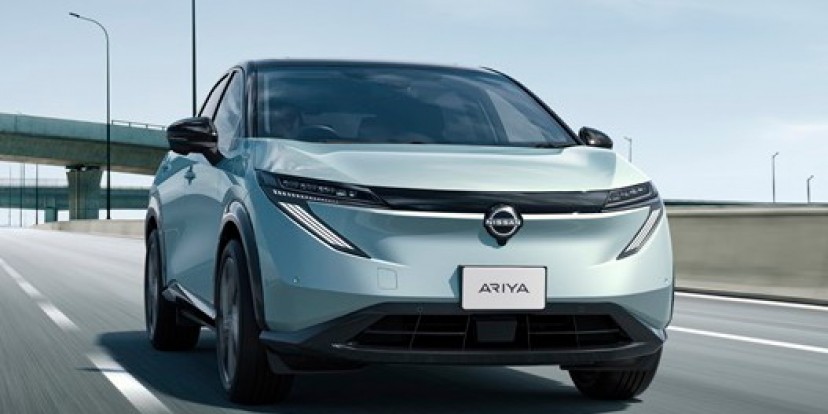
Nissan published the first official images of a refreshed Nissan Ariya electric crossover, but there's a catch: this updated model is, for now, a Japan-exclusive. The updated version will debut at the upcoming Japan Mobility Show in Tokyo, sporting a fresh look and new technology.

Nissan's designers have given the Ariya a cleaner, more streamlined face. The old grille design is gone, replaced by a smooth, grille-less front end that gives the EV a sleeker look. New LED headlights, which seem to take a cue from the new Nissan Leaf, flank the updated nose.

The front bumper was also redesigned for a simpler aesthetic, removing the previous side intakes and toning down the lower intake for a more mature appearance. Even the fog lights have been removed in the name of a cleaner design. The side profile is unchanged, but newly designed five-spoke alloy wheels with a new texture and a fresh exterior color option round out the visual updates.

Inside the cabin, the Ariya is about to get a technological boost. The old infotainment system is out, and a new Google-powered system is in, promising a more user-friendly experience, with familiar Android apps and features integrated directly into the dashboard.

Another practical upgrade is the addition of Vehicle-to-Load (V2L) functionality. This technology allows the car's battery to be used as a mobile power source, capable of running everything from a laptop to small appliances - a handy feature for camping trips or during a power outage.
 
Nissan has given its Ariya electric car a makeover, and this is it

And – surprise! – it looks remarkably like the new Leaf

Good news for fans of electric Japanese crossovers. Nissan has given its Ariya a bit of a refresh, and its new makeover looks uncannily like that of the new Leaf.

We say that, but this is really just the soft launch, as we can only see the front and side in the two pictures released so far. Must be feeling self-conscious, we guess.

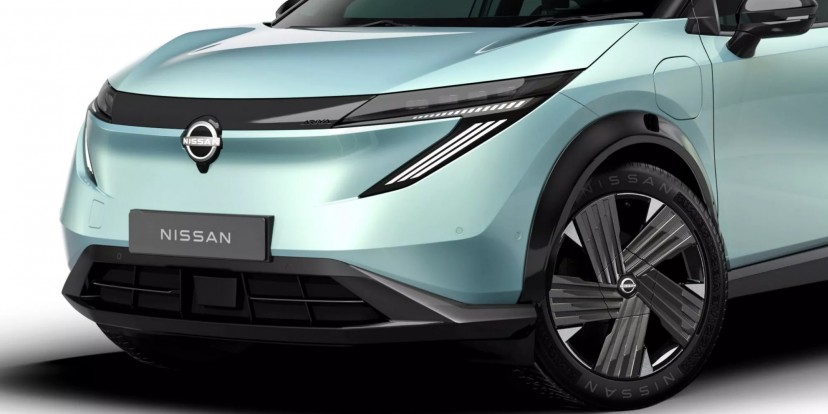
Anyway, you’ll immediately notice the large black panel at the front has been lobbed in the skip, while the daytime running lights now get a new curved three-stripe design. Anyone else seeing Peugeot e-3008/e-5008, or is that just us?

The front badge also now appears backlit, another of 2025’s must-haves, while the air intakes and fog lights are gone. Round the side the plastic cladding on the wheel arches appears more pronounced, and it’s wearing a new alloy wheel design.

 
Here's when Nissan is releasing the refreshed Ariya and Ariya Nismo

Back in October, Nissan unveiled a minor refresh for the Ariya and Ariya Nismo. The company is now sharing when these will become available in Japan. The new Ariya will be out on February 20, while its Nismo variant will be released on March 19.

The new Ariya comes with a redesigned front, with a grille that's the same color as the body, and new 20" wheels made of a combination of aluminum and resin. Three two-tone colors and five monotone colors will be offered, and while the interior stays unchanged, it is getting a new White/Green color.

The infotainment system is now powered by Google, which makes us think it's using Android Automotive. You get Google Maps and access to the Google Play Store. Nissan's battery conditioning system can work in conjunction with navigation to automatically control battery temperature based on the route you're taking.

 
Nissan turns to the sun to give the Ariya EV a range boost

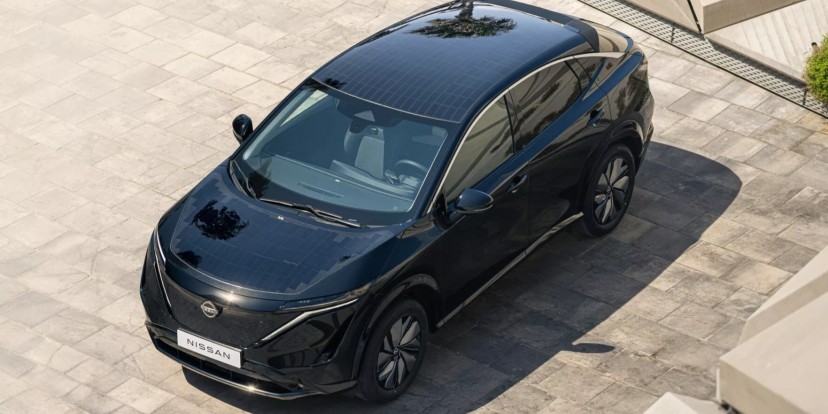
It’s no surprise to anyone that electric cars need a plug and a socket to keep moving. Nissan decided that maybe it’s time to try something different. To celebrate Clean Energy Day, the automaker showed off a special version of its Ariya. This new concept car uses the sun to help fill up its battery. By adding solar panels to the body of the vehicle, Nissan is apparently exploring a future where electric cars can charge themselves while sitting in a parking lot or driving down the highway.

The Japanese car company covered 3.8 square meters (nearly 41 sq ft) of the car in high-tech solar panels. You can find these panels on the hood, the roof, and even the rear liftgate. These parts are now made from a mix of polymer and glass, and are designed to catch sunlight and turn it into DC power. That power goes straight into the battery pack to give the car a few more miles without ever touching a charging cable.

Testing shows that this technology works well when the weather is clear. On a very sunny day, the solar panels can add up to 23 km of range. That might not seem like a lot for a long road trip, but it is quite a bit for daily life. Many people drive less than 64 km a day to get to work and back. This means the sun could provide more than a third of the energy needed for a normal commute, in theory.

Location makes a big difference in how well the technology performs. In a sunny place like Dubai, the car can average about 21.2 km of free range every day throughout the year. In New Delhi, it gets about 18.9 km. Even in a cloudy city like London, the panels still work. Drivers there might see an average of 10.2 km per day. Nissan says that even a quick two-hour drive in the sun can add about 3 km to the battery.

One of the biggest goals of this project is to make life easier for owners of electric cars. Nissan believes that using solar energy could reduce how often a driver needs to plug in by 35% to 65%. If you do not drive long distances every day, you might go weeks without visiting a charging station. For a person who drives 6,000 km a year, Nissan estimates they would only need to plug the car in eight times a year instead of 23.

This technology is especially helpful in places where there are not many charging stations. If you live in a rural area or a city with limited infrastructure, having a car that runs on sunlight is a huge advantage. It gives drivers more freedom. They do not have to worry as much about finding the next plug. Instead, they can just park their Nissan Ariya in a sunny spot and let nature do the work.


1769603695107.png
 
Is Nissan’s next-gen ProPILOT better than a human? We tested it in Tokyo

Nissan has taken its next step towards autonomous mobility, beginning real-world demonstrations of its next-generation ProPILOT system on the streets of Tokyo.

Using a fleet of all-electric Nissan Ariya prototypes, the company is testing how its latest driver-assist technology performs in dense, unpredictable urban traffic, which has traditionally exposed the limits of automation.

The system is scheduled for production rollout in Japan from 2027, but these early demonstrations show how far the technology has progressed beyond highway assistance.

A new approach

At the core of the system is the “Wayve AI Driver”, developed by UK-based Wayve. Unlike traditional rule-based systems, Nissan says this software learns to drive more like a human, interpreting entire scenes rather than reacting to isolated objects.

It uses camera data to understand how traffic situations evolve, allowing it to anticipate movements and adapt in real time. The result, according to Nissan, is smoother and more natural driving behaviour, particularly in complex environments such as intersections, pedestrian-heavy zones and multi-lane traffic.

This is paired with Nissan’s “Ground Truth Perception” system, which integrates next-generation LiDAR mounted on the roof. The sensor improves long-range object detection, especially in low-light or high-speed scenarios


Top
Sign up to the MyBroadband newsletter
X