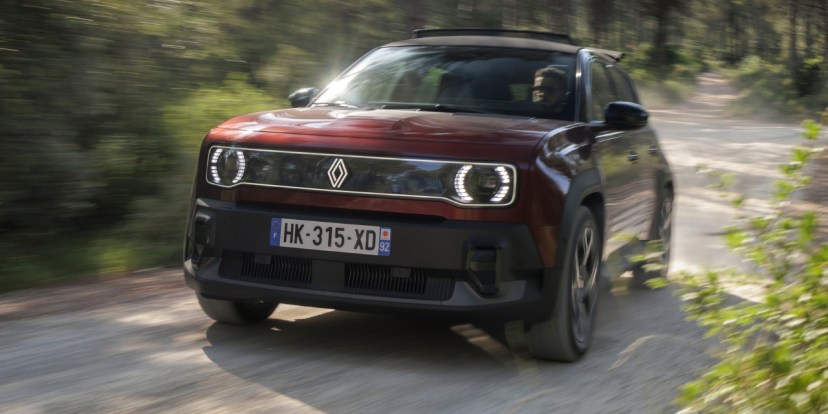
Reborn Renault 4 EV

You can now have the reborn Renault 4 as an actual van

Renault throws it back to the old 4 Fourgonnette with a new EV workhorse

According to Renault itself, the original 4 F4 Fourgonnette with its bubble-shaped roof, clever giraffe hatch and side-hinged rear door was “THE must-have van for tradesmen, government agencies and leading companies alike”. Heck, it did sell over two million of the things.

And now modern-day Renault is leaning into that heritage, so you can now buy the new R4 as a proper van too.

Sadly, there’s no inflated roof and no mention of that giraffe hatch to stand up exceedingly long baguettes, but the newly named ‘4 E-Tech electric Van’ gets a payload of up to 375kg and a loadspace of 1,045 litres with its rear seats removed. There’s also a handy underfloor area with an extra 55 litres for cables and the like, although if you’ll need to charge that day you best remember to take them out before loading your tools and suchlike.

The length of the loadspace is 1.2m and there’s an optional grid to separate the passenger compartment from what’s in the back. Renault said the vans are converted by its subsidiary Qstomize at the factory where the 4 is built. Prices will start from €29,300 (excluding VAT) in France, where there will be the choice of a 118bhp motor and a 40kWh battery for 191 miles of range, or a 148bhp motor with a 52kWh battery for 254 miles total.


1758028547919.png

1758028554952.png
 
Renault introduces the 4 E-Tech Societe" a master of disguise electric van

For businesses needing a small electric van, the image that comes to mind is often a boxy, windowless vehicle designed purely for function. Renault has decided that small business owners deserve a better solution.

The French automaker has introduced a commercial version of its new Renault 4 E-Tech crossover, but you would be hard-pressed to identify it as a work vehicle at first glance. Called the Societe, this new line of electric cars for professionals skips the traditional van look in favor of something much more subtle.

Back in 2021, Renault revealed a concept that paid homage to the classic, box-backed Renault 4 Fourgonnette. Many hoped this charmingly retro design would make it to production. Instead, for the new 4 E-Tech Societe, Renault chose a more cost-effective route.

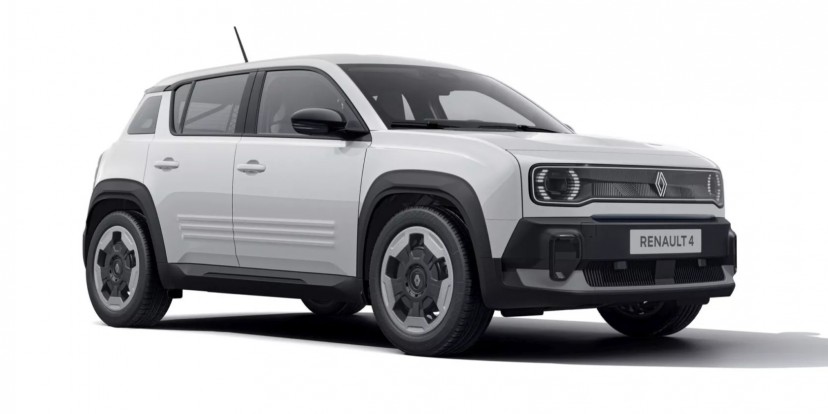
The commercial version is visually identical to the standard passenger crossover. It keeps its rear doors and glass windows, forgoing the typical metal panels seen on most light commercial vehicles. This approach allows the EV to blend in seamlessly in any environment, looking more like a personal car than a delivery van.

The real transformation happens inside. To create a practical cargo hauler, Renault removes the rear seats entirely. In their place, a specialized company named Qstomize installs a custom-molded storage compartment at Renault's Ampere factory in Maubeuge, France. This space features a durable, anti-slip mat and tie-down hooks to secure goods.

A sturdy partition separates the cargo area from the two front seats. The setup provides a total cargo capacity of 1,045 l, with a handy 55 l hidden compartment under the floor for smaller items. The loading floor itself is 1.2 m long, and the vehicle can handle a maximum payload of 345 kg.

Under the already recognizable R4 body, the Societe shares its electric powertrain with the passenger version. A single electric motor delivers 148 horsepower (110 kW) to the front wheels, powered by a 52 kWh battery pack. According to the WLTP testing cycle, this combination is good for up to 409 km of range. Plugging into an 11 kW AC wall charger will take the battery from 15 to 80 percent in just over three hours. If you're in a hurry, a 100 kW DC fast charger can accomplish the same task in about 30 minutes.


Renault 4 vs Ford Puma Gen-E: which of these small e-crossovers is best?

It’s retrofit versus purpose built as Ford and Renault face off in contest of the everyday EV

Both cars offer one motor and battery option. The 4 gets a 52kWh cell for 247 miles of WLTP range, while the Gen-E harvests 233 miles from a 43kWh pack. Both looked good for those estimates on this 32°C test – ie the least challenging conditions possible. But previous experience (and the Puma’s lack of a heat pump) suggests the Renault will give you fewer headaches in the UK winter months of October to May.

So a thumping win for the R4. No doubt both will sell in buckets, but the Ford’s success will be inherited – the Renault’s will be hard-earned.


1761633234807.png

1761633262398.png
 
Driven: four-wheel-drive Renault 4 edges closer to production

Production version of the 4 Savane concept car is close to a green-light – and it feels it, too

Renault is close to signing off a four-wheel-drive version of the 4 for production, having engineered a working prototype of the 4 Savane 4x4 concept car.

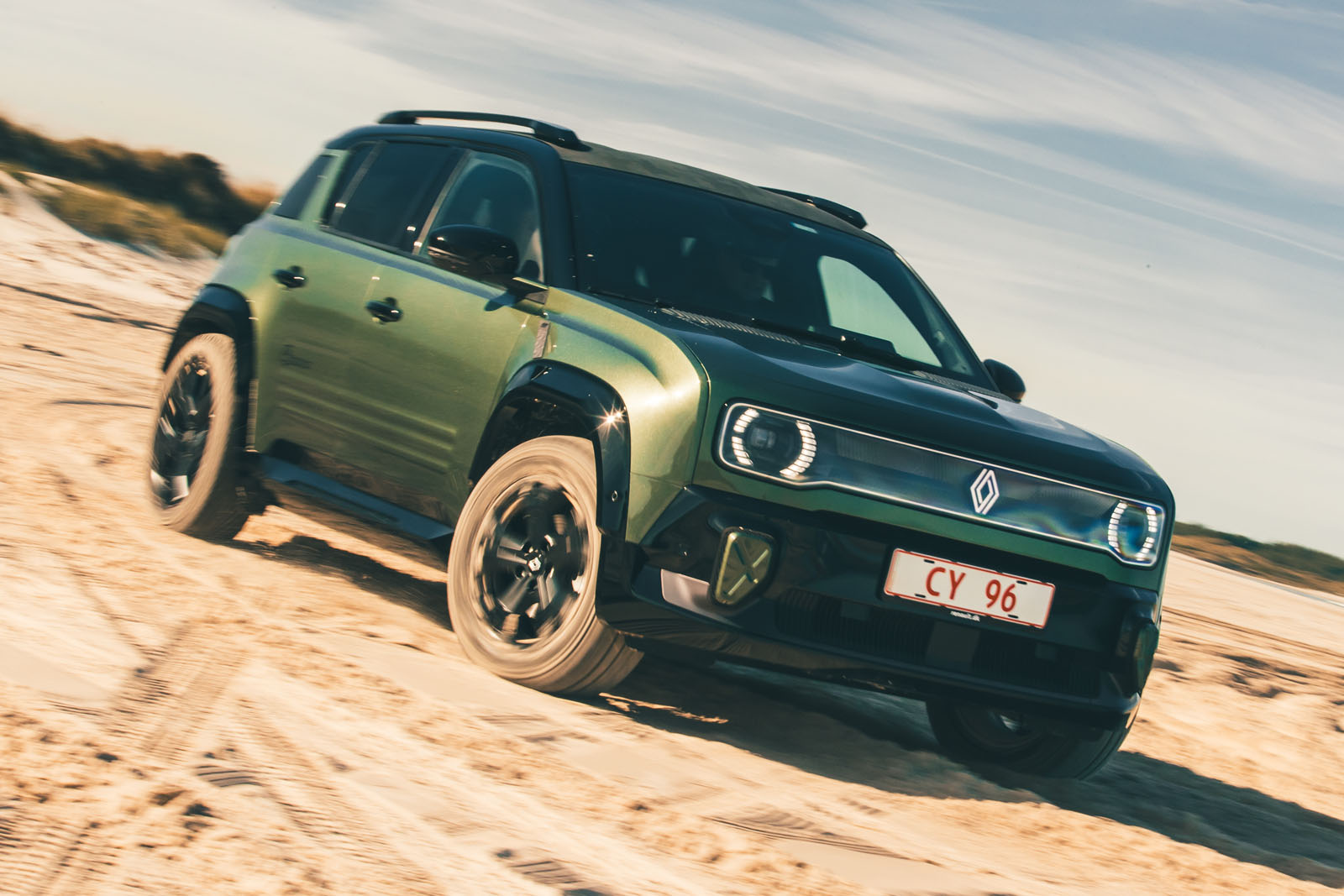
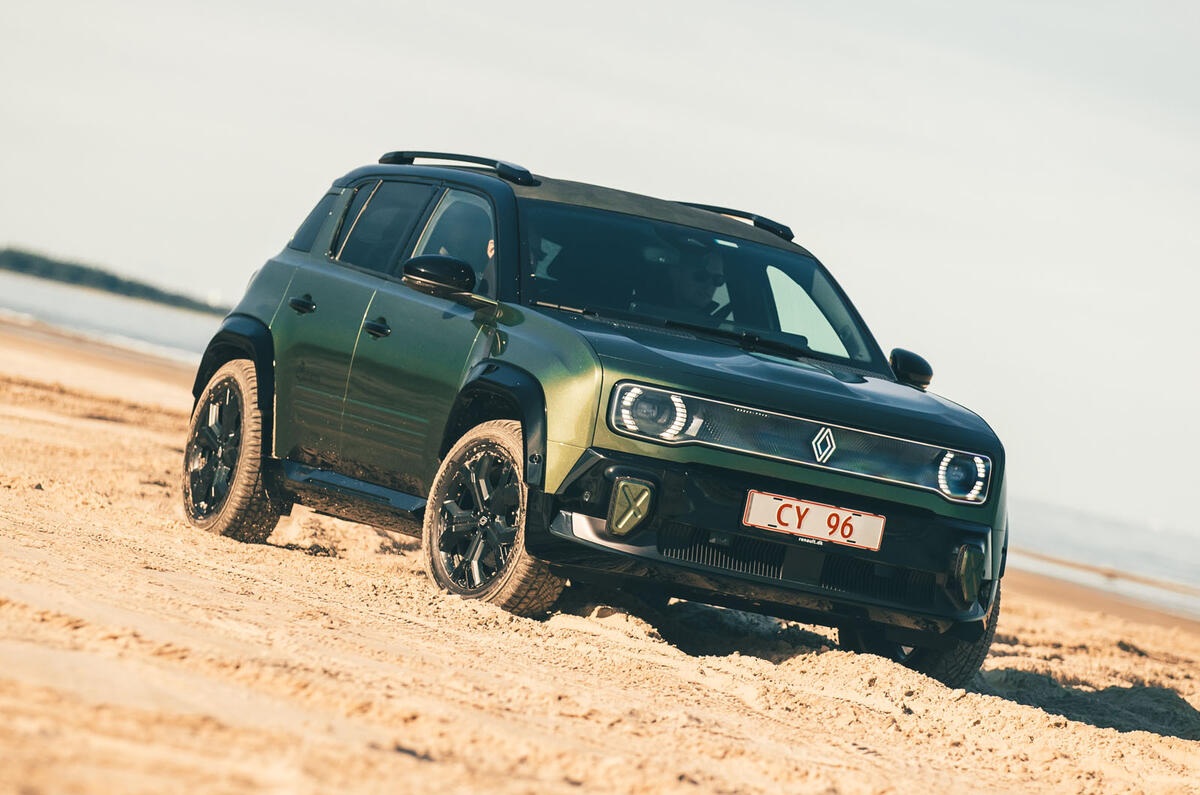
Indeed, Autocar has driven the concept on a beach in Denmark and can report the model already feels fresh from the factory and ready for a place in Renault showrooms.

Few details of the prototype have been revealed since it was first seen at the French Open tennis tournament in Paris in the spring.

However, the still-unspecified additional, rear motor is smaller than either the 118bhp or 148bhp units that normally power the 4’s front axle. The tracks are 20mm wider, ground clearance is raised by 15mm and there are wider, 215mm tyres.

A subtle bodykit helps to further distinguish the 4x4 Savane from the standard 4 on which it is based and the inside features some brown trim and fabrics.

A driving mode selector allows you to engage a new terrain mode, the only mode this prototype has been optimised for, while the infotainment screen has a new display that indicates how much torque is being distributed between the front and rear axles.


IMG_1944.jpeg
 
Renault CEO 'pushing' to get four-wheel-drive 4 on sale

Fabrice Cambolive said Savane 4x4 variant would extend the market appeal of the compact electric crossover

A decision on whether the Renault 4 Savane 4x4 concept car will make production will be taken within the coming weeks.

Renault CEO Fabrice Cambolive said he “would be pushing” for the four-wheel-drive model to make production as one of the “cherries on top of the cake” of Renault’s new range of small EVs.

Speaking at the Car of the Year 2026 final event in Barcelona, Cambolive said the Savane would also extend the market appeal of the 4 in certain Northern European countries where 4WD is more desirable.

The 4x4 adopts an additional electric motor to power the rear axle, rather than having a traditional 4WD system.

The only delay on the decision to date had been one of making strategic priorities, Cambolive said.

The 4 follows the Renault 5 and comes to market ahead of the new Renault Twingo as one of a trio of retro EVs inspired by some of Renault’s past icons.

However, Cambolive said “retro was not a rule” for Renault in its future models and its next-generation models in higher segments will all be much more forward-looking and not play to the past.

 
Here's why we gave the Renault 4 our 'crossover of the year' award

Top Gear's reigning electric car of the year has delivered again...

Our reigning Electric Car of the Year delivers again! To be honest, were it not for its ever so slightly cooler and ever so slightly less useful sister car – the Renault 5 – winning Car of the Year in 2024, it could have scooped the top prize. It’s that good.

We’re still searching frantically for a chink in the R4’s armour. Styling? OK it’s not as cool as the R5, but compared to 95 per cent of EVs it’s a shot of concentrated joy and sunshine into your eyeballs.

Space? There are larger cars in the world, but for every day, modest family duties its longer wheelbase, bigger boot and extended rear legroom are just right.

Handling? A Ferrari F80 will show it a clean pair of heels, but there’s a clarity to its responses and an underlying squishiness to the ride that makes even short journeys fun.

 
Renault goes back in time with a fun new electric beach buggy

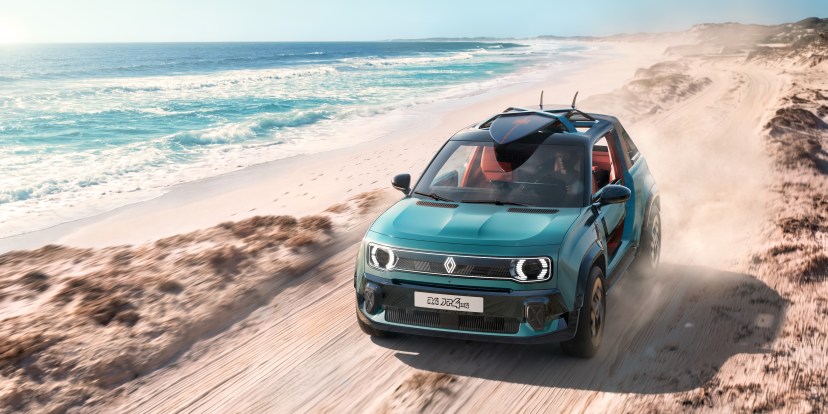
Renault is reminding the world that electric cars can be more than just quiet tools for getting to work. At the 2026 Roland-Garros French Open, the company revealed a new concept called the Renault 4 JP4x4, a colorful mix of a small SUV and a beach buggy. It does not have a traditional roof or full doors - you might get a little wet if it rains, but you will definitely look cool driving it. This car is part of a larger plan to show how versatile the new Renault 4 platform can be for different types of drivers.

The new concept takes its style from the 1960s and 1970s, when "leisure vehicles" like the Citroën Méhari and the Mini Moke were popular for driving on the coast. Renault had its own version back then called the Plein Air and later the JP4. Those old cars were simple and fun, and this new EV tries to capture that same feeling. It is the fourth special version of the Renault 4 E-Tech electric that the company has made to show off what their engineers can do when they are allowed to play.

Renault chose Emerald Green for the JP4 - it has a pearlescent finish, and it is a modern version of green paint the company used on the original "4L" cars decades ago. To make it stand out even more, the inside is bright orange. If you are looking for a car that blends in, this is not it. The doors aren't really doors - they are very small and look like blades, but make it easy to hop in and out.

 
Renault adds a folding fabric roof to the 4 E-Tech electric crossover

Some automakers love to revive classic names from the past to make their new vehicles look interesting. Renault is doing exactly that with introducing a unique version of its compact SUV, called the Renault 4 E-Tech Plein Sud. This specific variant gets a large fabric roof that rolls back, giving drivers an open-air option that is surprisingly rare among modern EVs.

The canvas top measures 92 cm long and 80 cm wide, which creates an opening of nearly one square meter. Renault claims this is the largest opening in this vehicle class - and it’s easy to see why the claim stacks up since there is no other car in its class sporting a similar roof. Drivers can open or close the fabric roof in about 10 seconds.

The mechanism works through a physical button on the overhead console or via voice commands using an onboard artificial intelligence assistant named Reno. Drivers do not have to pull over to use it either, as the roof operates at speeds up to 90 kilometers per hour. An automatic deflector helps manage wind noise when driving with the top down at highway speeds.

Adding a folding roof to a vehicle usually comes with a heavy weight penalty. Engineers typically have to add thick metal braces to keep the vehicle safe and rigid after cutting away a solid roof structure. Renault avoided massive weight gains by using polymer components instead of metal for the roof structure. The opening mechanism also uses three folds instead of the four folds usually found on similar systems. Because of these choices, the Plein Sud weighs only 19 kg more than the standard hardtop version.


Top
Sign up to the MyBroadband newsletter
X