SA Politics Thread Part 12

Status
Not open for further replies.

I wonder who they could be...
Who are the “strategic partners” for whom the ANC had election posters made and paid for last year?

The DA has filed an application under the Promotion of Access to Information Act (Paia) with the ANC after documents in the party’s court battle against Ezulweni Investments showed that the ANC entered into a debt agreement with Ezulweni in 2023. Under this, the company would provide services and goods worth R190 million for the ANC’s 2024 election campaign in exchange for the settlement of debt.

In the 2023 agreement, which was concluded between Ezulweni’s CEO (Renash Ramdas) and the ANC’s treasurer-general (Dr. Gwen Ramokgopa), Ezulweni agrees to make election material for the ANC’s “strategic partners” which includes 15 000 banners and a million posters.

The 2023 agreement was entered into after the ANC failed to pay Ezulweni for election banners the company made for the 2019 general election.

Rapport reported two weeks ago that the sheriff raided Luthuli House and removed office furniture, computer equipment and kitchen appliances worth about R140 000. This was after the Gauteng High Court granted a warrant of execution to recover the R85.5 million that the ANC owes to Ezulweni Investments. Three of the ANC’s bank accounts were also frozen.
Dr. Gwen Ramokgopa, treasurer-general of the ANC. Photo: Gallo Images

Willie Aucamp, DA MP and party spokesperson, says his party was forced to submit a Paia application because the 2023 agreement “raises serious questions about which political parties benefit from ANC funding”.

“South Africans have the right to know whether these parties are effectively acting as ANC puppets during and after the election,” says Aucamp.

He has also written to the Electoral Commission to investigate whether the provision of material to these “strategic partners” and “strategic alliances” amounts to undeclared funding.

“South Africans cannot be left in the dark about how ANC resources are used. Political funding and support must be openly declared,” says Aucamp.

Meanwhile, Shafique Sarlie, Ezulweni’s legal representative, confirmed to Rapport that Ezulweni is once again attempting to reach a settlement agreement with the ANC to settle the debt.

This comes after Ramokgopa filed a court application last week to overturn the freezing of the ANC’s bank accounts. She indicated that the ANC is unable to pay the salaries of hundreds of employees across the country.

“The practical consequences (of the freezing of the bank accounts) are nothing short of catastrophic,” Ramokgopa’s application states.

“The ANC has been unable to pay the salaries of hundreds of employees across all nine provinces. This has caused immense and immediate inconvenience, uncertainty and anxiety to the ANC employees and their families, who rely on these salaries for their livelihood.

“One for the ANC, which must pay its creditors and service providers, including municipal accounts, and provide the necessary support to its public representatives in parliament, provincial legislatures and municipalities,” the application states.

Sarlie believes it is unlikely that the ANC’s application will proceed in court on Tuesday because they are likely to reach a settlement agreement.

“The parties are this time, under the guidance of their respective legal teams, engaged in settlement negotiations with the aim of resolving the entire list of grievances between them in an amicable and equitable manner, which is clearly in the best interests of both,” Sarlie says.

The ANC had earlier indicated that it was questioning the debt to Ezulweni and further alleged that an employee admits he was bribed to falsely claim that Ezulweni supplied banners for the ANC.

The ANC further alleges that Ezulweni was not registered for VAT at the time of the transaction, but charged VAT nonetheless.
 

lol

Pres. Cyril Ramaphosa has admitted under oath that section 19 of the controversial Expropriation Act is unconstitutional because it “erroneously” stipulates that expropriation can take place before the landowner can challenge the matter in court.

Ramaphosa is asking the Western Cape High Court to either change the wording of the section or declare it unconstitutional.

In a response to the various court cases of his coalition partner the DA, the civil rights group AfriForum and the Vaderland Foundation, Ramaphosa admits that if you read section 19 of the Expropriation Act together with other sections, it creates a “circular process” that can declare these provisions “null and void” because they are so “vaguely” worded.

In terms of section 19, parties must first try to resolve a dispute before approaching the court about a property earmarked for expropriation. If mediation fails and the state therefore still insists on zero compensation, the next step is to approach the court.

In terms of section 19(2), any party may approach the court within 180 days from the date of the notice of expropriation. However, experts consider this confusing because a notice of expropriation can only be issued when a dispute over the expropriation has already been resolved.

If the amount of compensation is disputed, the parties should be able to approach the court from the date of receipt of an expropriation notice, Ramaphosa argues in his statement.

“The practical effect of sections 19(2) and (3) is that a court process to determine the amount and payment of compensation cannot commence until a notice of expropriation has been issued. But a notice of expropriation cannot be issued where the amount of compensation is disputed, until a court has determined the amount of compensation,” Ramaphosa points out the inconsistencies.

He then asks the court to change the wording of the law. Should the court be unable to do so, he is asking that section 19 of the Expropriation Act be declared unconstitutional.

Helen Zille, chairperson of the DA's federal council, argued in her party's affidavit for their case that the "irrationality" of section 19 makes the law "unworkable".
Helen Zille, chairperson of the DA's federal council. Photo: Edrea du Toit

"The law cannot work without clarity on when a court can and must determine compensation. Consequently, the entire law is invalid if section 19 is invalid," Zille's affidavit states.

AfriForum and the Vaderland Foundation are also questioning the constitutionality of section 19 in their court applications. Although the DA, AfriForum and the Vaderland Foundation have brought separate court applications, Ramaphosa has made his answering affidavit applicable to all parties.

Rapport has learned that the controversial section 19 of the Act was also presented to Ramaphosa in January by the Minister of Public Works and Infrastructure, the DA's Dean Macpherson, as to why he believes the Expropriation Act is unconstitutional.

Ramaphosa signed the Act into law on 20 December despite the concerns of Macpherson, the minister who is supposed to implement the Act. The signing of the Act was published in the Government Gazette on 24 January, with Macpherson only being informed a day before the publication in the Government Gazette that the Act had been signed.

Ramaphosa attributes this discrepancy to the government, including the offices of the Government Gazette, which were closed over the festive period due to the numerous public holidays.

Kallie Kriel, CEO of AfriForum, in her response to Ramaphosa's statement welcomes the recognition that the relevant sections of the Expropriation Act are unconstitutional. However, he argues that the courts are not in this case empowered to amend the legislation themselves as Ramaphosa requested.
Kallie Kriel, CEO of AfriForum. Photo: Deaan Vivier

According to Kriel, this is Parliament's job and Ramaphosa should have asked Parliament to correct the unconstitutionality before he quietly signed the law.

Kriel also argues that Ramaphosa tried to mislead the court in his affidavit by claiming that the state printer was closed over the festive period, when in reality it was only closed on public holidays.

“Ramaphosa made this misrepresentation to try to justify why he only had a law that he had already secretly signed on 20 December 2024 published in the Government Gazette 35 days later, on 24 January 2025,” says Kriel.

“The period is important because under section 80 of the Constitution, a third of members of parliament can refer a law to the Constitutional Court for review within 30 days of its signing. Ramaphosa’s secret signing of the law deprived members of parliament of this constitutional right.”

Despite his own issues with section 19 of the Expropriation Act, Ramaphosa argues that the law was urgently needed because the previous Expropriation Act of 1975 did not provide for
g for expropriation in the public interest, and therefore it was contrary to the Constitution.

Ramaphosa also argues that “zero compensation” as contained in the law is not unconstitutional because there were several examples in parliament’s deliberations on the law of how zero compensation could be “just and equitable”. He adds that the circumstances of zero compensation are diverse and acknowledges that some examples “may require more care”.

According to Ramaphosa, he has also received a request from AfriForum in the past to send the law back to parliament. However, he had no “concerns” about the law’s constitutionality and therefore did not send it back to parliament.

Ramaphosa’s defense of zero compensation could once again create tension between him and the DA – the ANC’s largest coalition partner in the government of national unity.

The DA’s federal council, the party’s highest decision-making body, passed a motion in June in which the party strongly opposes the principle of zero compensation.

AfriForum is content with Kriel’s statement that the court should declare the Expropriation Act in its entirety unconstitutional, or else that the unconstitutional parts thereof should be referred back to parliament for amendments.

“Ramaphosa’s admissions confirm that he and the ANC have been telling blatant lies by dismissing AfriForum’s concerns about the unconstitutionality of the Expropriation Act as the ‘spreading of misinformation’,” says Kriel.

AfriForum had already requested Ramaphosa before last year’s general election to refer the Expropriation Act back to parliament because it is unconstitutional.

Kriel believes Ramaphosa ignored this request from AfriForum and others “because he mistakenly thought that the law would help the ANC regain lost support in the election”.

GG, Rest in Piss Expropriation Act.
 
What makes it even better is that ****ing McPherson warned Rama about this, and he got ignored... Nywe nywe "we will not be bullied " or something.

Also, Rama could always have at least sent the Act to the ConCourt first before assent (which is his prerogative to do) if he wanted to cover his bases. But then again, ANC arrogance must've clouded his mind.
 
During her hours-long torture, a farmer’s wife’s attackers boiled the kettle several times to pour boiling water over her head and face.

“One man actually had a good laugh at us. They had fun and enjoyed torturing us,” says Stephanus Botha (24), the farm manager of Rolé Uys, a 70-year-old cattle farmer from Carolina in Mpumalanga.

At one stage, the assailants also wanted to boil cooking oil on the gas stove to burn Uys with it, but then smashed the plastic kettle with boiling water in it against her face.

Uys and Botha were ambushed last Friday after being lured out of the farmhouse with a cunning trap.

Botha says he was getting ready to get into bed at around 8:00 p.m., but the security guard on the farm called him and Uys and told them to go help a sick cow.

“There really is a sick cow, so I didn’t suspect anything was wrong. I walked to the garage, but there were no lights on. When I got into the garage, the attackers overpowered me and tied my hands with an electrical cable,” Botha told Rapport.

“All four men were armed with pistols. They told the security guard that he had to somehow lure me and Aunt Rolé out of the house, otherwise they would shoot him. That’s why he called us to go and look after the cow.”

Uys went to see where Botha and his family were hanging around for so long, after which the attackers also overpowered her.

“They then made all three of us (Botha, Uys and the security guard) lie on the kitchen floor and started torturing us. They hit me over the head with a pistol and started boiling the kettle.

“They poured boiling water over my hand and a little on top of my head, but I tried to pull it away every time. They poured the rest of the boiling water over the aunt,” Botha says.

He says when the kettle was empty, they filled it up and boiled it again.

“Finally, they smashed the kettle against her face. They also kicked her in the face and punched her,” Botha says.

“The men kept ordering us to give them firearms and money. They pulled a bag over Aunt Rolé’s head to suffocate her and they strangled her. At one stage, they wanted to boil cooking oil on the gas stove to burn us with it, but I told them the stove wasn’t working.

“By chance, there really is one plate that doesn’t work and the one man wanted to test the stove to see if I was lying. Mercifully, he tested the plate that didn’t work. I was hit over the head three times with a pistol.”
Some of the burns on Stephanus Botha’s hand after the thugs threw boiling water on him.

Botha says the four men didn’t even try to disguise themselves.

“I thought they were going to kill us and that’s why they didn’t care that we saw their faces. They took me from room to room and insisted that I give them firearms and money. The security guard received his pay that same day, which they took, and they looted cash from one of the bakkies, but they said they were looking for R1 million. It was actually as if they were out to hurt Aunt Rolé.”

According to Botha, they took Uys from the kitchen to the living room, where the police later found her. Furniture was piled on top of her and she was tied up with a chain.

He says the men finally stole firearms after struggling for about two hours to break open the cupboard in which they were locked.

At around 01:00, the attackers ordered Botha to climb into the back of Uys' bakkie and they had the guard sit in front of them and pulled a duffel jacket over his head.

"They finally stopped an hour later on the way to Machadodorp and made us get out. They had the guard run in one direction and me in the other."

Botha reached houses and knocked on doors for help. The police were already on their way to Uys at that stage.

"I really didn't think any of us would survive the story."

The four men were later seen in Uys' bakkie in Mbombela, after which the police's speedboat patrol forced them off the road, but the four fled.

Capt. Mpho Nonyane-Mpe, police spokesperson in Mpumalanga, said no one had been arrested yet, but the investigation was ongoing. Police are investigating charges of house robbery, kidnapping and assault with intent to do grievous bodily harm.

Uys was initially treated at a hospital in Carolina after the incident, but was transferred to Wilgers Hospital in Pretoria and was still in critical condition in the intensive care unit on Monday. Botha said on Friday afternoon that she was currently recovering well.

Uys was also attacked by five men at one of her farm gates on June 25 and one man bit her. Although she was unarmed, she fought back and bit one of the assailants herself. She eventually drove her car through the farm gate to escape the men.

Botha said that shortly after the attack he
started working as farm manager, and suspects it was the same men who attacked them again last Friday night.
Some of the damage to Rolé Uys' vehicle after a previous farm attack in June this year.

“The men talked about the events of the previous attack and told how they pelted Aunt Rolé's car with stones. They didn't achieve what they wanted last time and may have come back for it this time,” he says.

According to Botha, the security guard was not severely tortured, but the thugs constantly threatened him that they would harm him and his family if he tried anything.

Botha was in hospital for treatment and he and the guard are both back at work.

“Since the attack, I've only been staying in town. During the day I'm okay being on the farm, but not at night. Something keeps telling me to flee.”

He also hasn't been back to the farmhouse since the attack, but he had to go in there with the police forensic team on Friday.

“I couldn't walk further than the kitchen. The scene keeps replaying in my head.”
Normal crime, guys, amirite? What about Cape Flats or Khayelitsha?

 
What makes it even better is that ****ing McPherson warned Rama about this, and he got ignored... Nywe nywe "we will not be bullied " or something.

Also, Rama could always have at least sent the Act to the ConCourt first before assent (which is his prerogative to do) if he wanted to cover his bases. But then again, ANC arrogance must've clouded his mind.
There are definite legal problems with squirrels process in signing it..

Regardless of the law and it's unconstitutionality.
 
The funder has spoken, you people should start practising to say President Lesufi.

Nah, we first have to fix up South Africa. Goggo needs to take the helm of Gauteng and Parratjie the helm of the Eastern Cape, have them fix up both. Our one mybb friend assures us Parratjie can can fix up anything, so the birth province of the GLM is fair game..
 
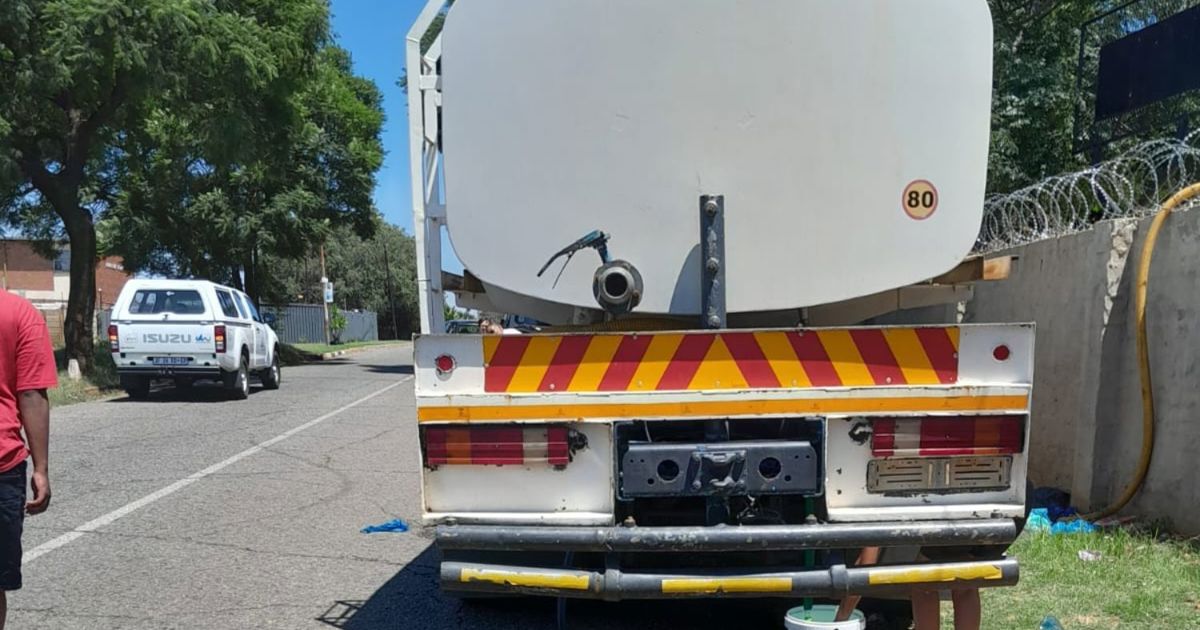
The water tankers were there during Cilliers Brink and the DA's era, why? Since we are now pretending it's a new phenomenon.
So Cilliers was spending nearly r800m a year on tankers?

Don't get desperate champy, you've done it too often lately and it's a bad look for you.
 
The spend was already close to R500m when Brink was still in office, today the poor guy skriks wakker that the city has spent over R700.

Round up when it suits you, round down when it suits you. Know what this is called? Lying, like your President.
 
Status
Not open for further replies.
Top
Sign up to the MyBroadband newsletter
X