Suckered by Big Wind in the UK

Nicodeamus

Honorary Master
Joined
Sep 20, 2006
Messages
14,477
Reaction score
4,530
"And cost is the biggest wind con of all. In August, the British government published a report on generator costs. The renewables lobby used it to claim that wind was cheaper than new-build gas, a claim that Johnson swallowed whole. To make their case, the advocates ignored balancing and other system costs. When these are included together with the system benefits of gas, new-build gas comes out as the most economic source, when used efficiently.

Government-run auctions for the right to build offshore wind farms create the misleading impression that costs are falling. Far from falling, costs have been rising for the last two decades, as analysis of the audited accounts of wind developers by Edinburgh University’s Gordon Hughes reveals. Although new-generation turbines are larger and initially have better load factors, their performance degrades more rapidly. Compared to the government estimate of £2.16m ($2.83m) per megawatt hour for offshore wind, the actual cost came out to £3.99m ($5.22m), and that excludes an enormously expensive floating wind farm project – “we will build windmills that float on the sea,” Johnson says – which pushes the average to £4.49m ($5.88m) per megawatt hour."


 
You'll have the renewable brigade on here defending it soon...

I am still waiting for the consumer prices to come down. The proponents keep looking at the falling cost of generation without realizing that it is only half of your system. Overcoming the intermittency problem makes the system inherently expensive.


"Lee Drummee, an analyst at Cornwall Insight, said: “With the cost of renewable subsidy schemes and other policy aspects now accounting for over 30% of the typical electricity bill, these rising costs will ultimately be recouped from consumer bills. "
 
I am still waiting for the consumer prices to come down.


"Lee Drummee, an analyst at Cornwall Insight, said: “With the cost of renewable subsidy schemes and other policy aspects now accounting for over 30% of the typical electricity bill, these rising costs will ultimately be recouped from consumer bills. "
They won't as renewables aren't cheap, look at California as well.
 
They won't as renewables aren't cheap, look at California as well.

What they don't get is that being anti cheap energy is effectively being against poor people as it increases energy poverty.
 
What they don't get is that being anti cheap energy is effectively being against poor people as it increases energy poverty.
But u know wind and solar are free... How much can that beat poverty. (sarcasm)
 
Suppose actual answer is, "depends on who you ask". The OP's source is likely a little biased as they seem to pump nucular. Also Nico, is a nuclear proponent, with good I suppose as he works in the industry and a proliferation of nuclear means more financial security for him. Anyway, I don't care either way - but I do think one of the downsides for nuclear is that no private company would be willing to directly construct them without government support due to onerous regulations.

With the UK among the few western nations making a commitment to new reactors, the world is watching to see whether they can be competitive. The government’s decision to guarantee EDF a minimum price for electricity from Hinkley Point C of £92.50/MWh — linked to inflation and almost double the current wholesale price — has attracted severe criticism.
 
Suppose actual answer is, "depends on who you ask". The OP's source is likely a little biased as they seem to pump nucular. Also Nico, is a nuclear proponent, with good I suppose as he works in the industry and a proliferation of nuclear means more financial security for him. Anyway, I don't care either way - but I do think one of the downsides for nuclear is that no private company would be willing to directly construct them without government support due to onerous regulations.


Just a correction, I work on Energy projects and yes I have spend a lot of time on Nuclear projects, but my job security isn't threatened by the type of technology since you need me to build whatever one you want to.

Now Nuclear can easily bankrupt a country like SA if the interest rates on the power station is horrible and if the costs keep on overrunning, but that wasn't the case in the past and one reason as to why it got so expensive is due to ridiculous intervention by the regulatory authorities.

France and Sweden currently has some of the cheapest energy costs in Europe and they both happen to use Nuclear Energy. Germany and Denmark has some of the most expensive costs and some of the highest renewables. We have been hearing about how cheap they are, yet consumer prices keep on rising. Now the claim that I put forward is that the lightbulb hasn't gone on for many of the proponents of renewables, ie that the intermittency problem inherently makes the cost to consumers more expensive.

My personal view is that the fuel for the future is going to be natural gas and that these renewables that are being put forward is just another form of greenwashing.
 
Last edited:
Suppose actual answer is, "depends on who you ask". The OP's source is likely a little biased as they seem to pump nucular. Also Nico, is a nuclear proponent, with good I suppose as he works in the industry and a proliferation of nuclear means more financial security for him. Anyway, I don't care either way - but I do think one of the downsides for nuclear is that no private company would be willing to directly construct them without government support due to onerous regulations.

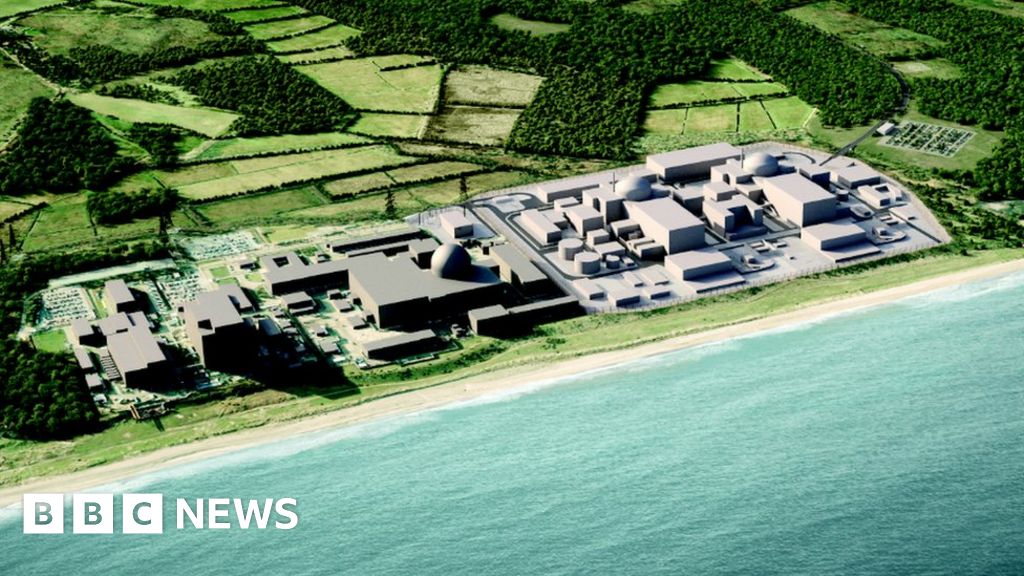
"One of the reasons that the electricity that Hinkley will one day produce is so expensive (£92.50 per megawatt hour, compared with gas and wind at about £40) is that the constructors were required to shoulder the risk of any cost overruns themselves. EDF estimates that the cost of electricity produced at Sizewell will be somewhere between £40 and £60."
 
"One of the reasons that the electricity that Hinkley will one day produce is so expensive (£92.50 per megawatt hour, compared with gas and wind at about £40) is that the constructors were required to shoulder the risk of any cost overruns themselves. EDF estimates that the cost of electricity produced at Sizewell will be somewhere between £40 and £60."
Your point being?
 
"One of the reasons that the electricity that Hinkley will one day produce is so expensive (£92.50 per megawatt hour, compared with gas and wind at about £40) is that the constructors were required to shoulder the risk of any cost overruns themselves. EDF estimates that the cost of electricity produced at Sizewell will be somewhere between £40 and £60."

HPC was the first successful EPR being build in Europe, and there were lots of issues with the project (I worked on the design of many of the concrete works), but the project eventually got ruling. There were also issues with the Shanghai power station and Flammenville, but it's all part of the learning curve.

So I am not romanticizing Nuclear Energy, an interest loan agreement that HPC underwent can easily bankrupt SA.

Sizewell should go easier, because they are essentially using the same model and that should bring down the cost of the simulations.
 

Your're not looking at the consumer cost. It's amazing how people keep on falling for that sales pitch. The price of generation is cheaper, but the energy is intermittent, meaning you either need to store it or waste it. Solar panels like wind is also very close to their physical limits, so the prices won't fall much further.

The current amount of available batteries in the US is enough to power its economy for less than 1 minute.

People have talked about smart grids etc, but they increase the price to the system.

By looking purely at the panels and generation, you're looking at half your system.
 
Your're not looking at the consumer cost. It's amazing how people keep on falling for that sales pitch. The price of generation is cheaper, but the energy is intermittent, meaning you either need to store it or waste it. Solar panels like wind is also very close to their physical limits, so the prices won't fall much further.

Even with storage solar is cheaper or as competitive. Without the nuclear waste.

 
Even with storage solar is cheaper or as competitive. Without the nuclear waste.


Please explain to me why France and Sweden has some of the cheapest electricity in the world.

The OECD study explains why Germany has such an expensive energy.
 
1604148950387.png

*1604148971714.png

The above graph illustrates my point, renewables are intermittent and when they don't work you need to increase your carbon emissions. (that is either Coal or Gas). Why do you think that the biggest investor in Renewables are also natural gas and oil companies?

France has a relatively stable carbon emissions, because of their nuclear power generation.
1604150014927.png

@ghoti, my understanding from your posts in the past has been that you care about carbon emissions.
 
Last edited:
Even though nuclear is low, according to this the hidden carbon footprint of solar panel is less than half of that of nuclear energy. So not only does it win in price, it wins with less CO2 emissions as well.

2020-10-31 15_59_29-Solar, wind and nuclear have ‘amazingly low’ carbon footprints, study finds.png

 
Even though nuclear is low, according to this the hidden carbon footprint of solar panel is less than half of that of nuclear energy. So not only does it win in price, it wins with less CO2 emissions as well.

View attachment 943812


Sorry, but that just sounds like propaganda, do a through analysis for solar panels and then compare it. No sensible energy analysist believes that.

Please explain to me why Germany has such a high carbon emissions that fluctuates, because Solar's intermittency problem inevitably leads to more carbon emissions. (see the graph above)
 
Sorry, but that just sounds like propaganda, do a through analysis for solar panels and then compare it. No sensible energy analysist believes that.

Please explain to me why Germany has such a high carbon emissions that fluctuates, because Solar's intermittency problem inevitably leads to more carbon emissions. (see the graph above)
And Germany is still building OCTGs to handle peaks, the least efficient power
 
Compared to the government estimate of £2.16m ($2.83m) per megawatt hour for offshore wind, the actual cost came out to £3.99m
Just imagine those figures in the hands of Eskom and the ANC. They would be laughing at how "stupid" the UK government was to only come in less than double.
 
Top
Sign up to the MyBroadband newsletter
X