Mad cheap, I wonder how that compares to other cars being sold there.I figured out why there are so many BYDs in Thailand - BYD have a plant there. Also, pricing is insanely good.
BYD Dolphin: ~฿699,999 (Standard), ~฿859,999 (Extended).
BYD Atto 3: ~฿629,900 - ฿699,900
BYD M6: ~฿829,900 (Dynamic) - ฿929,900 (Extended).
BYD Seal: ~฿999,900 (Dynamic) - ~฿1,199,900 (Performance AWD)
BYD Shark 6 (PHEV): ~฿1,699,000.
1 ZAR is bang on 2 Bhat, divide by two to get Rand.
I'd definitely buy an Atto 3 at R315 000 new.
-
- News
-
Categories
- 5G
- ADSL
- AI
- Banking
- Black Friday
- Broadband
- Broadcasting
- Business
- Business Telecoms
- Cellular
- Cloud and Hosting
- Columns
- Cryptocurrency
- Energy
- Enterprise
- Fibre
- Gadgets
- Gaming
- Government
- Hardware
- Industry News
- Internet
- Internet of Things
- Investing
- IT Services
- Motoring
- Reviews
- Science
- Security
- Smartphones
- Software
- Technology
- Telecoms
- Trending
- Wireless
- Press Office
- Forum
- Industry News
- What's Next
- Company hub
- Speed Test
- About us
- Advertise with us
- Contact
- Careers
-
Join the MyBroadband community
South Africa’s biggest forum. Discuss, discover, and connect with thousands of members.
-
Question of the Day: Museums you've been to, would recommend, or want to go to?
You are using an out of date browser. It may not display this or other websites correctly.
You should upgrade or use an alternative browser.
You should upgrade or use an alternative browser.
The BYD (EV) Thread
- Thread starter FiestaST
- Start date

FiestaST
Honorary Master
FiestaST
Honorary Master
FiestaST
Honorary Master

HAL 9000
Honorary Master
- Joined
- May 27, 2008
- Messages
- 22,617
- Reaction score
- 26,398
BYD introduces Atto 3 Evo with a larger battery, 510 km range - Team-BHP


BYD has introduced a new variant of the Atto 3 electric SUV called the ‘Evo’ in the international market. It comes with a larger battery pack, offering a higher range than the standard version.
The Atto 3 Evo comes with a 74.8 kWh battery – 14.3 kWh more than the standard version. BYD claims a range of 510 km (WLTP cycle), which is 92 km more than the 60.5 kWh version.
Powering the Atto 3 Evo is a rear-mounted electric motor that delivers 309 BHP and 380 Nm. That’s 108 BHP more than the old front-wheel drive version. It enables the EV to accelerate from 0-100 km/h in 5.5 seconds and has a top speed of 180 km/h.
The Atto 3 Evo is also available in a dual-motor configuration. The AWD version packs 443 BHP and 560 Nm. It can sprint from 0-100 km/h in just 3.9 seconds and can reach a top speed of 200 km/h. The AWD version has a WLTP-certified range of 470 km.
The Atto 3 is now based on an 800 V architecture, reducing charging times from 29 minutes for a 30-80% charge to 25 minutes for a 10-80% charge.
FiestaST
Honorary Master
FiestaST
Honorary Master
FiestaST
Honorary Master
FiestaST
Honorary Master
The Right Car? review of the Sealion 5
FiestaST
Honorary Master
Tired of high car prices? These new Chinese brands are launching in SA this year
South Africa’s new vehicle market is set for further expansion in 2026 as 6 new arrivals take the number of Chinese brands to more than 20. Who are the newcomers – Lepas, iCaur, Denza, Zeekr, Farizon and Riddara – and why should they be on your radar?
There’s simply no let-up in the tsunami of new Chinese brands flooding the South African car market. The last two years saw power players like Jaecoo, Omoda and Jetour almost immediately rocket to respectable chunks of local market share.
Similarly, former entrants such as BAIC, MG, JAC and Changan have re-entered the ring with an improved product focus. As all of these importers continue finding a captive audience for their competitively priced and well-specced vehicles, the floodgates will stay open in 2026 as at least another 6 new Chinese brands are set to be established in Mzansi.
Interestingly – and for a degree of peace of mind for skeptics – the debuting Lepas, iCaur, Denza, Zeekr, Farizon, and Riddara marques are all subsidiaries of established Chinese automotive parent companies.

South Africa’s new vehicle market is set for further expansion in 2026 as 6 new arrivals take the number of Chinese brands to more than 20. Who are the newcomers – Lepas, iCaur, Denza, Zeekr, Farizon and Riddara – and why should they be on your radar?
There’s simply no let-up in the tsunami of new Chinese brands flooding the South African car market. The last two years saw power players like Jaecoo, Omoda and Jetour almost immediately rocket to respectable chunks of local market share.
Similarly, former entrants such as BAIC, MG, JAC and Changan have re-entered the ring with an improved product focus. As all of these importers continue finding a captive audience for their competitively priced and well-specced vehicles, the floodgates will stay open in 2026 as at least another 6 new Chinese brands are set to be established in Mzansi.
Interestingly – and for a degree of peace of mind for skeptics – the debuting Lepas, iCaur, Denza, Zeekr, Farizon, and Riddara marques are all subsidiaries of established Chinese automotive parent companies.
FiestaST
Honorary Master
BYD joins forces with Manchester City as official vehicle partner
BYD Group has announced its latest collaboration as the official vehicle partner of Manchester City Football Club.
BYD Group and Manchester City Football Club have joined forces in a move that links the automotive giant to the “iconic” UK football team. This collaboration is meant to serve as a projection of shared sustainable values for the future of both brands. “Manchester City stands for excellence, innovation and the courage to push beyond limits — values that are deeply rooted in BYD’s DNA,” said Stella Li, BYD Executive Vice President.
Li added, “This partnership is about more than football or mobility; it is about inspiring people around the world through technology that excites, connects and drives a more sustainable future.”
The club itself will have access to BYD, Denza, and other BYD group vehicles for transportation needs and full access to BYD’s “new-energy expertise”. This will be provided in the form of vehicle charging and energy battery storage at the Manchester City Football Academy training centre, which is home to the men’s, women’s, and academy teams.
BYD Group has announced its latest collaboration as the official vehicle partner of Manchester City Football Club.
BYD Group and Manchester City Football Club have joined forces in a move that links the automotive giant to the “iconic” UK football team. This collaboration is meant to serve as a projection of shared sustainable values for the future of both brands. “Manchester City stands for excellence, innovation and the courage to push beyond limits — values that are deeply rooted in BYD’s DNA,” said Stella Li, BYD Executive Vice President.
Li added, “This partnership is about more than football or mobility; it is about inspiring people around the world through technology that excites, connects and drives a more sustainable future.”
The club itself will have access to BYD, Denza, and other BYD group vehicles for transportation needs and full access to BYD’s “new-energy expertise”. This will be provided in the form of vehicle charging and energy battery storage at the Manchester City Football Academy training centre, which is home to the men’s, women’s, and academy teams.
FiestaST
Honorary Master
Autogefühl review of the Atto 2
FiestaST
Honorary Master
FiestaST
Honorary Master
FiestaST
Honorary Master
FiestaST
Honorary Master
FiestaST
Honorary Master
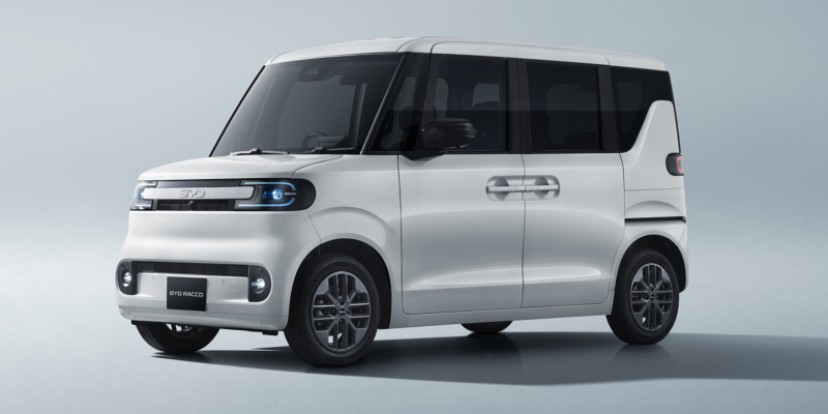
BYD reveals the interior of the new Racco electric kei car
The tiny car market in Japan is about to get a big shake-up courtesy of BYD. The company shared the first look at the inside of its newest model, the BYD Racco. This vehicle is part of the “kei car” category in Japan. These are very small vehicles built to fit into tight city streets and save owners money on taxes. Japanese brands have ruled this segment for decades, but BYD is about to challenge them with its own take on this very popular category.
The Racco is a boxy, tall vehicle designed specifically for urban life. It measures 3,395 mm long, 1,475 mm wide, and 1,800 mm tall. Because it is so narrow and tall, it can squeeze into parking spots that would make a standard sedan look like a giant. Despite its small footprint, the upright shape helps the cabin feel much larger than it actually is.
The interior design of the smallest BYD focuses on being useful rather than fancy. The front of the cabin features a center console built into the dashboard where the gear lever sits. This layout creates more floor space, making it easier for people to move around. The front seats are placed very close to each other, which is common in this class of vehicles. To add a bit of comfort, the car has a small armrest for the driver and passenger to share.
Technology is a big part of the new Racco. A floating touchscreen sits in the middle of the dashboard, paired with a digital screen behind the steering wheel for the driver. Many modern cars put everything on a screen, but the Racco keeps things simple with physical buttons for the air conditioning. This makes it easier to change the temperature without taking your eyes off the road. The interior also has modern charging options, including a 12V outlet, a standard USB port, and a Type-C port.
Storage space is often a problem in tiny cars, but BYD tried to find every extra inch. There is a storage area on top of the dashboard, a glovebox, and even a secret spot in the center tunnel between the seats. The large, upright windshield provides an excellent view of the road, which should make driving through crowded neighborhoods a bit easier. The steering wheel has three spokes and includes buttons to control the music and other features.
 www.arenaev.com


The tiny car market in Japan is about to get a big shake-up courtesy of BYD. The company shared the first look at the inside of its newest model, the BYD Racco. This vehicle is part of the “kei car” category in Japan. These are very small vehicles built to fit into tight city streets and save owners money on taxes. Japanese brands have ruled this segment for decades, but BYD is about to challenge them with its own take on this very popular category.
The Racco is a boxy, tall vehicle designed specifically for urban life. It measures 3,395 mm long, 1,475 mm wide, and 1,800 mm tall. Because it is so narrow and tall, it can squeeze into parking spots that would make a standard sedan look like a giant. Despite its small footprint, the upright shape helps the cabin feel much larger than it actually is.
The interior design of the smallest BYD focuses on being useful rather than fancy. The front of the cabin features a center console built into the dashboard where the gear lever sits. This layout creates more floor space, making it easier for people to move around. The front seats are placed very close to each other, which is common in this class of vehicles. To add a bit of comfort, the car has a small armrest for the driver and passenger to share.
Technology is a big part of the new Racco. A floating touchscreen sits in the middle of the dashboard, paired with a digital screen behind the steering wheel for the driver. Many modern cars put everything on a screen, but the Racco keeps things simple with physical buttons for the air conditioning. This makes it easier to change the temperature without taking your eyes off the road. The interior also has modern charging options, including a 12V outlet, a standard USB port, and a Type-C port.
Storage space is often a problem in tiny cars, but BYD tried to find every extra inch. There is a storage area on top of the dashboard, a glovebox, and even a secret spot in the center tunnel between the seats. The large, upright windshield provides an excellent view of the road, which should make driving through crowded neighborhoods a bit easier. The steering wheel has three spokes and includes buttons to control the music and other features.
BYD reveals the interior of the new Racco electric kei car
The BYD Racco is a new electric kei car arriving in 2026 in Japan with {{180 km}} of range and a tech-filled interior.
www.arenaev.com

W@P
Honorary Master
- Joined
- Sep 10, 2007
- Messages
- 11,347
- Reaction score
- 9,059
BYD reveals the interior of the new Racco electric kei car
The tiny car market in Japan is about to get a big shake-up courtesy of BYD. The company shared the first look at the inside of its newest model, the BYD Racco. This vehicle is part of the “kei car” category in Japan. These are very small vehicles built to fit into tight city streets and save owners money on taxes. Japanese brands have ruled this segment for decades, but BYD is about to challenge them with its own take on this very popular category.
The Racco is a boxy, tall vehicle designed specifically for urban life. It measures 3,395 mm long, 1,475 mm wide, and 1,800 mm tall. Because it is so narrow and tall, it can squeeze into parking spots that would make a standard sedan look like a giant. Despite its small footprint, the upright shape helps the cabin feel much larger than it actually is.
The interior design of the smallest BYD focuses on being useful rather than fancy. The front of the cabin features a center console built into the dashboard where the gear lever sits. This layout creates more floor space, making it easier for people to move around. The front seats are placed very close to each other, which is common in this class of vehicles. To add a bit of comfort, the car has a small armrest for the driver and passenger to share.
Technology is a big part of the new Racco. A floating touchscreen sits in the middle of the dashboard, paired with a digital screen behind the steering wheel for the driver. Many modern cars put everything on a screen, but the Racco keeps things simple with physical buttons for the air conditioning. This makes it easier to change the temperature without taking your eyes off the road. The interior also has modern charging options, including a 12V outlet, a standard USB port, and a Type-C port.
Storage space is often a problem in tiny cars, but BYD tried to find every extra inch. There is a storage area on top of the dashboard, a glovebox, and even a secret spot in the center tunnel between the seats. The large, upright windshield provides an excellent view of the road, which should make driving through crowded neighborhoods a bit easier. The steering wheel has three spokes and includes buttons to control the music and other features.
BYD reveals the interior of the new Racco electric kei car
The BYD Racco is a new electric kei car arriving in 2026 in Japan with {{180 km}} of range and a tech-filled interior.
View attachment 1886751
View attachment 1886752
View attachment 1886753
View attachment 1886755
View attachment 1886754