


-
- News
-
Categories
- 5G
- ADSL
- AI
- Banking
- Black Friday
- Broadband
- Broadcasting
- Business
- Business Telecoms
- Cellular
- Cloud and Hosting
- Columns
- Cryptocurrency
- Energy
- Enterprise
- Fibre
- Gadgets
- Gaming
- Government
- Hardware
- Industry News
- Internet
- Internet of Things
- Investing
- IT Services
- Motoring
- Reviews
- Science
- Security
- Smartphones
- Software
- Technology
- Telecoms
- Trending
- Wireless
- Press Office
- Forum
- Industry News
- What's Next
- Company hub
- Speed Test
- About us
- Advertise with us
- Contact
- Careers
-
Join the MyBroadband community
South Africa’s biggest forum. Discuss, discover, and connect with thousands of members.
-
Question of the Day: Museums you've been to, would recommend, or want to go to?
You are using an out of date browser. It may not display this or other websites correctly.
You should upgrade or use an alternative browser.
You should upgrade or use an alternative browser.
The BYD (EV) Thread
- Thread starter FiestaST
- Start date
FiestaST
Honorary Master
FiestaST
Honorary Master
Electrifying review of the BYD Sealion 7
FiestaST
Honorary Master
FiestaST
Honorary Master
carsales.com.au review of the BYD Shark
FiestaST
Honorary Master
BYD's Yangwang U9 laps the Nürburgring in just over 7 minutes, here's the video
Xiaomi's SU7 Ultra went around the famous Nürburgring Nordschleife racetrack in 6:46.874, becoming the fastest four-door car to ever lap the 'Ring.
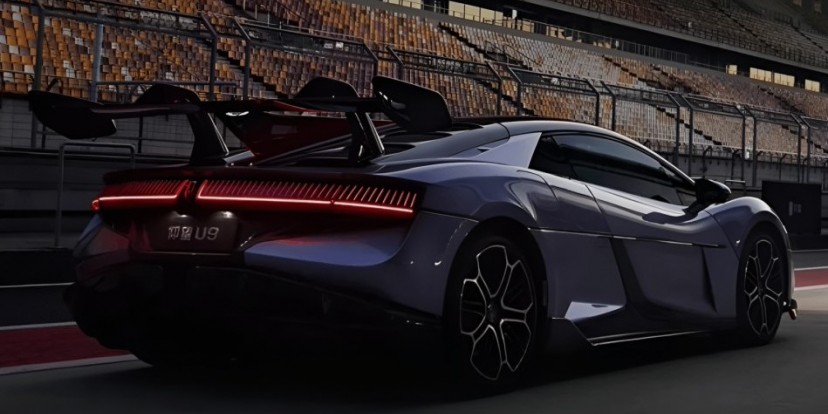
BYD has a supercar of its own in the Yangwang U9, and while it might not have four doors, it does have plenty of power: 1,287 hp to be exact. So will it be able to outdo the Xiaomi? Spoiler alert: no. The Yangwang U9 lapped the 'Ring in 7:17.900, and BYD's global YouTube account uploaded the proof - here's the lap in its entirety.
The Yangwang's result is definitely nothing to scoff at, but Xiaomi's supercar wins at this very specific task - and it's cheaper too. Plus, it has twice the number of doors (though whether that makes it better is up to you, some people prefer the more classic sportscar look of the Yangwang).
 www.arenaev.com
Xiaomi's SU7 Ultra went around the famous Nürburgring Nordschleife racetrack in 6:46.874, becoming the fastest four-door car to ever lap the 'Ring.
BYD has a supercar of its own in the Yangwang U9, and while it might not have four doors, it does have plenty of power: 1,287 hp to be exact. So will it be able to outdo the Xiaomi? Spoiler alert: no. The Yangwang U9 lapped the 'Ring in 7:17.900, and BYD's global YouTube account uploaded the proof - here's the lap in its entirety.
The Yangwang's result is definitely nothing to scoff at, but Xiaomi's supercar wins at this very specific task - and it's cheaper too. Plus, it has twice the number of doors (though whether that makes it better is up to you, some people prefer the more classic sportscar look of the Yangwang).
BYD's Yangwang U9 laps the Nürburgring in just over 7 minutes, here's the video
The Xiaomi SU7 Ultra was faster across that track.
www.arenaev.com
FiestaST
Honorary Master
Nevo EV Review Ireland review of the BYD Sealion 7
FiestaST
Honorary Master
BYD celebrates 10 million electrified vehicles milestone
The Chinese automotive powerhouse BYD has just hit a remarkable milestone, rolling its 10 millionth new energy vehicle (NEV) off the production line. This achievement highlights BYD's meteoric rise from a small battery producer in 1995 to a global leader in the electric vehicle market.
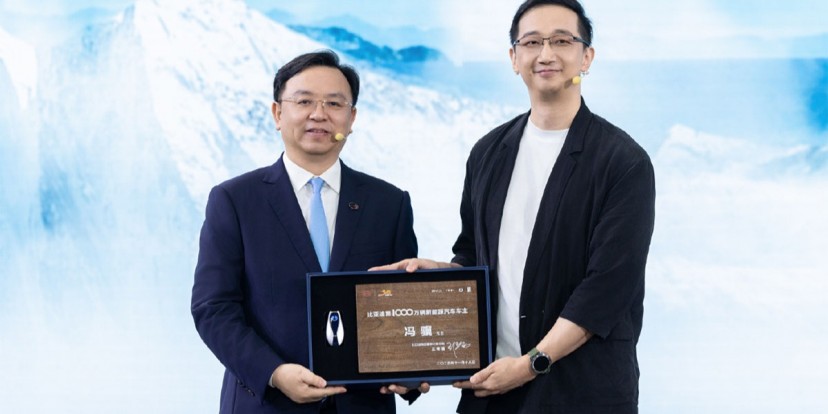
The landmark vehicle, a Denza Z9 sedan, was officially launched at the 2024 Guangzhou auto show and handed over to Feng Ji, the CEO of Game Science, the company behind the popular video game Black Myth: Wukong. The partnership between BYD and Game Science plans to use BYD technology to digitally preserve cultural relics.
The Denza Z9 comes in both plug-in hybrid (PHEV) and battery-electric (BEV) versions. It has a starting price of RMB 334,800 (approximately €41,700), and it features BYD's e3 technology - a slightly scaled-down version of their e⁴ technology designed for luxury vehicles. The e3 system is built on the Xuanji architecture. The tri-motor independent drive system and dual-motor independent steering for the rear wheels provide impressive performance and handling. Deliveries of the Z9 are expected to begin in early December.
BYD's journey began in 1995 with just 20 employees. Today, it has a workforce of over 900,000, including 110,000 dedicated to research and development. The company's entry into the automotive industry started in 2003 with the acquisition of Qinchuan. After an initial setback with their first car model, the 316, BYD found success with the F3 in 2005, selling 100,000 units in just 14 months. This early success fueled BYD's ambition, leading to the development of their pioneering plug-in hybrid technology and the launch of the first-generation DM hybrid platform in 2008.
 www.arenaev.com


The Chinese automotive powerhouse BYD has just hit a remarkable milestone, rolling its 10 millionth new energy vehicle (NEV) off the production line. This achievement highlights BYD's meteoric rise from a small battery producer in 1995 to a global leader in the electric vehicle market.
The landmark vehicle, a Denza Z9 sedan, was officially launched at the 2024 Guangzhou auto show and handed over to Feng Ji, the CEO of Game Science, the company behind the popular video game Black Myth: Wukong. The partnership between BYD and Game Science plans to use BYD technology to digitally preserve cultural relics.
The Denza Z9 comes in both plug-in hybrid (PHEV) and battery-electric (BEV) versions. It has a starting price of RMB 334,800 (approximately €41,700), and it features BYD's e3 technology - a slightly scaled-down version of their e⁴ technology designed for luxury vehicles. The e3 system is built on the Xuanji architecture. The tri-motor independent drive system and dual-motor independent steering for the rear wheels provide impressive performance and handling. Deliveries of the Z9 are expected to begin in early December.
BYD's journey began in 1995 with just 20 employees. Today, it has a workforce of over 900,000, including 110,000 dedicated to research and development. The company's entry into the automotive industry started in 2003 with the acquisition of Qinchuan. After an initial setback with their first car model, the 316, BYD found success with the F3 in 2005, selling 100,000 units in just 14 months. This early success fueled BYD's ambition, leading to the development of their pioneering plug-in hybrid technology and the launch of the first-generation DM hybrid platform in 2008.
BYD celebrates 10 million electrified vehicles milestone
The Chinese automotive giant BYD celebrates the production of its 10 millionth new energy vehicle.
www.arenaev.com
FiestaST
Honorary Master
BYD working on an AI autonomous driving chip, report claims
It looks like BYD is following in the footsteps of its competitor XPeng and is working on its own AI chip to support the self-driving of its cars. The information comes from a local Chinese news outlet
In any case, there are some hints from before that BYD is working on an AI chip. The general manager of BYD's Ocean lineup has revealed in the past that the company hopes to use its in-house chips for cheaper models in the near future. Even the cheap Seagull will get autonomous smart driving features next year.
The chip is reportedly capable of 80 TOPS, and BYD hopes to significantly bring the cost down to stay competitive. Offering advanced smart driving features on all of its models, even its cheapest ones, will definitely give the company an edge over its competitors.
 www.arenaev.com
It looks like BYD is following in the footsteps of its competitor XPeng and is working on its own AI chip to support the self-driving of its cars. The information comes from a local Chinese news outlet
In any case, there are some hints from before that BYD is working on an AI chip. The general manager of BYD's Ocean lineup has revealed in the past that the company hopes to use its in-house chips for cheaper models in the near future. Even the cheap Seagull will get autonomous smart driving features next year.
The chip is reportedly capable of 80 TOPS, and BYD hopes to significantly bring the cost down to stay competitive. Offering advanced smart driving features on all of its models, even its cheapest ones, will definitely give the company an edge over its competitors.
BYD working on an AI autonomous driving chip, report claims
BYD continues to strengthen its vertical integration.
www.arenaev.com
FiestaST
Honorary Master
FiestaST
Honorary Master
Shark Headed For SA As BYD Celebrates 30th Birthday

 www.carmag.co.za
Shark Headed For SA As BYD Celebrates 30th Birthday
BYD has played a pivotal role in China's automotive industry and is ready for a reintroduction (of sorts) to South Africa in 2025.
www.carmag.co.za
FiestaST
Honorary Master
BYD's next-gen Blade battery is coming next year
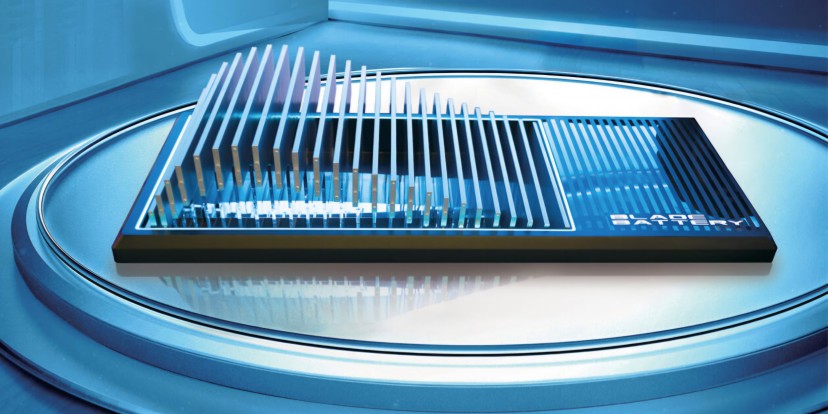
The EV landscape is evolving fast and without any signs of slowing down. Advancements in battery technology are probably the most important part at the moment. According to the latest reports, BYD will unveil its next-generation Blade battery in 2025. The company promises significant improvements in the range and extended life cycle of the battery.
Cao Shuang, managing director of BYD Central Asia in the European Auto Sales Division, revealed the news in an interview with CGTN during COP29 in Baku, Azerbaijan. He confirmed that the new battery would increase the driving distance of BYD EVs and prolong the battery's lifespan. This is achieved through a focus on battery life cycle management and collaborations with partners to develop battery reuse systems for applications like energy storage.
The first-generation Blade battery was launched in March 2020. It uses a lithium iron phosphate chemistry known for its improved durability and safety. It's currently used across BYD's entire NEV model lineup.
BYD hasn't updated the Blade battery in recent years, but competitors like CATL have launched new battery products with charging multiples of up to 5 C. Rumors suggest that BYD's second-generation blade battery could launch in the second half of 2025, with a 6C battery in development.
 www.arenaev.com
The EV landscape is evolving fast and without any signs of slowing down. Advancements in battery technology are probably the most important part at the moment. According to the latest reports, BYD will unveil its next-generation Blade battery in 2025. The company promises significant improvements in the range and extended life cycle of the battery.
Cao Shuang, managing director of BYD Central Asia in the European Auto Sales Division, revealed the news in an interview with CGTN during COP29 in Baku, Azerbaijan. He confirmed that the new battery would increase the driving distance of BYD EVs and prolong the battery's lifespan. This is achieved through a focus on battery life cycle management and collaborations with partners to develop battery reuse systems for applications like energy storage.
The first-generation Blade battery was launched in March 2020. It uses a lithium iron phosphate chemistry known for its improved durability and safety. It's currently used across BYD's entire NEV model lineup.
BYD hasn't updated the Blade battery in recent years, but competitors like CATL have launched new battery products with charging multiples of up to 5 C. Rumors suggest that BYD's second-generation blade battery could launch in the second half of 2025, with a 6C battery in development.
BYD's next-gen Blade battery is coming next year
BYD's next-generation blade battery promises to significantly enhance the range of its electric vehicles and extend the battery's life cycle.
www.arenaev.com
FiestaST
Honorary Master
FiestaST
Honorary Master
BYD and SAIC pressure their suppliers to reduce prices in 2025
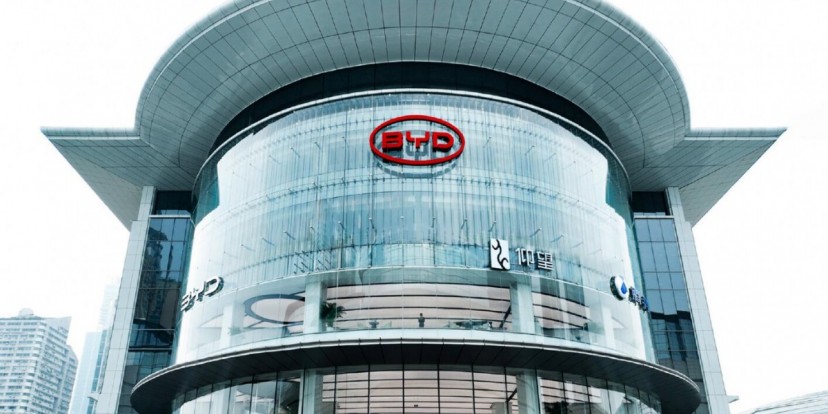
According to industry insiders, BYD and SAIC are trying to negotiate lower parts prices from their suppliers, aiming to reduce costs by 10% starting January 2025. This indicates that the price war in the Chinese automotive industry is getting serious.
The report from BYD stems from an email sent by the president of BYD Group and CPO of passenger cars. He says that suppliers should reduce their prices by 10%. The Maxus division of SAIC is doing something similar: inviting its suppliers to reduce costs by 10% and even proposing several strategies.
Firstly, it suggests that suppliers seek out better raw material deals and reduce material usage through new production technologies. Secondly, improvements in the manufacturing process can reduce waste and improve efficiency.
SAIC also wants to see suppliers implement techniques such as value analysis and value engineering (VAVE), which will give suppliers' own advantages and collaborate with SAIC in design to optimize parts even further.
 www.arenaev.com
According to industry insiders, BYD and SAIC are trying to negotiate lower parts prices from their suppliers, aiming to reduce costs by 10% starting January 2025. This indicates that the price war in the Chinese automotive industry is getting serious.
The report from BYD stems from an email sent by the president of BYD Group and CPO of passenger cars. He says that suppliers should reduce their prices by 10%. The Maxus division of SAIC is doing something similar: inviting its suppliers to reduce costs by 10% and even proposing several strategies.
Firstly, it suggests that suppliers seek out better raw material deals and reduce material usage through new production technologies. Secondly, improvements in the manufacturing process can reduce waste and improve efficiency.
SAIC also wants to see suppliers implement techniques such as value analysis and value engineering (VAVE), which will give suppliers' own advantages and collaborate with SAIC in design to optimize parts even further.
BYD and SAIC pressure their suppliers to reduce prices in 2025
The price war in the Chinese EV sector deepens.
www.arenaev.com
FiestaST
Honorary Master
FiestaST
Honorary Master
Autogefuhl review of the BYD Sealion 7
FiestaST
Honorary Master
China’s Auto Takeover: BYD Vs. Tesla And The Battle For EV Supremacy
FiestaST
Honorary Master
BYD breaks another sales record in November, reaches full year goal ahead of time
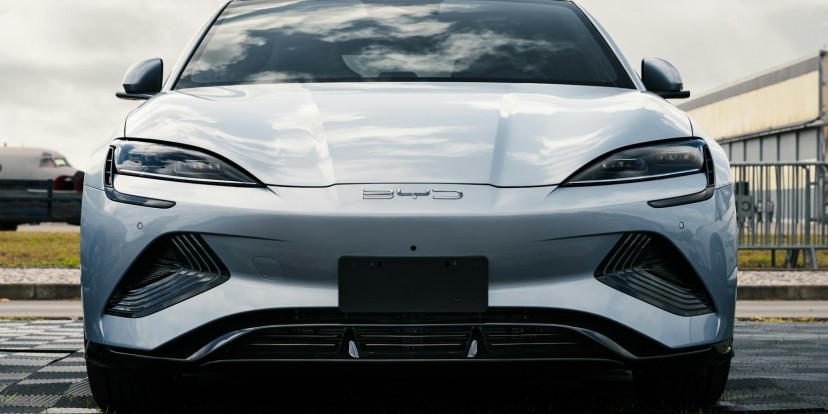
BYD is having a great time in the EV market, and November was another record-breaking month for the Chinese maker in terms of sales. It managed to sell 504,003 passenger vehicles last month, up 67.2% from November 2023 and up 0.7% from this October. So in November it's sold more than in any other month.
November is also only the second month when BYD went over the 500,000 mark. Of the cars sold, 198,065 were BEVs and 305,938 were PHEVs. BYD also sold 449 buses and 2,352 other commercial vehicles in November. The company has stopped making ICE vehicles in April 2022.
BYD targeted selling 3.6 million vehicles this year, and with November counted it's at 3,740,930 already, exceeding the forecast with one more month to go in the year. That is, of course, impressive performance.
 www.arenaev.com
BYD is having a great time in the EV market, and November was another record-breaking month for the Chinese maker in terms of sales. It managed to sell 504,003 passenger vehicles last month, up 67.2% from November 2023 and up 0.7% from this October. So in November it's sold more than in any other month.
November is also only the second month when BYD went over the 500,000 mark. Of the cars sold, 198,065 were BEVs and 305,938 were PHEVs. BYD also sold 449 buses and 2,352 other commercial vehicles in November. The company has stopped making ICE vehicles in April 2022.
BYD targeted selling 3.6 million vehicles this year, and with November counted it's at 3,740,930 already, exceeding the forecast with one more month to go in the year. That is, of course, impressive performance.
BYD breaks another sales record in November, reaches full year goal ahead of time
The company sold more vehicles until the end of November than it planned to for the full year.
www.arenaev.com
FiestaST
Honorary Master
Review: BYD’s All-Electric Hypercar; The Yangwang U9
 www.carmag.co.za
Review: BYD’s All-Electric Hypercar; The Yangwang U9
Hypercars are an attractive sight on all roads, and BYD’s all-electric hypercar, the Yangwang U9, stands out for all the right reasons.
www.carmag.co.za