The BYD (EV) Thread

BYD Atto 2 becomes South Africa's most affordable plug-in hybrid: Here's what you get for your money

BYD has lowered the entry price for plug-in hybrid vehicles once again in South Africa with the introduction of the new Atto 2 DM-i this week.

It is available in two variants, with the Comfort version priced at R449,900 and the Dynamic listed at R489,900. That makes it, by far, the nation’s least expensive plug-in hybrid, undercutting the brand’s own Sealion 5, which starts at R509,900. It’s also the country’s second least expensive hybrid model, costing just R10,000 more than Chery’s self-charging Tiggo Cross CSH and undercutting the Corolla Cross by over R50,000.

At 4.33 metres in length, the BYD Atto 2 is roughly the size of a Chery Tiggo 4 and is powered by BYD’s DM-i Super Hybrid powertrain, which includes the brand’s Blade Battery technology.

It is powered primarily by the electric motor, with the 1.5-litre naturally aspirated petrol engine acting mainly as a generator and powering the wheels only when maximum acceleration is required. BYD claims a system output of 122 kW and a 0–100 km/h sprint time of 9.1 seconds.

The 7.85 kWh battery enables a claimed electric range of around 40 km on the WLTC cycle, which is on the low side compared to most PHEVs, but understandable given the price. The company claims a combined fuel consumption figure of 5.1 litres per 100 km, but owners will need to keep it charged regularly to optimise efficiency. The battery allows AC charging only, at a rate of 3.5 kW when plugged into a wall charger.

BYD claims a combined range of 930 km when the tank is full and the battery is charged.

 
BYD’s 1,582-horsepower Denza Z revealed ahead of official debut

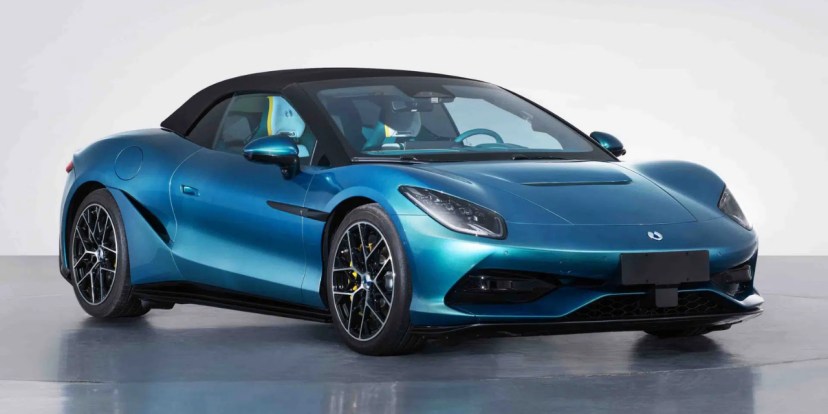
Denza, the premium sub-brand of Chinese automotive giant BYD, has filed technical specifications for its upcoming flagship model during the domestic vehicle approval process. Named the Denza Z, this new high-performance EV completely abandons the brand's traditional focus on comfortable MPVs and large family crossovers. Instead, it enters the market as a driver-focused machine with an astonishing peak output of 1,180 kW, which translates to 1,582 horsepower.

The arrival of the Denza Z is an important milestone for Chinese electric cars. Legacy European manufacturers have historically dominated the high-end sports car segment, but BYD wants this new model to challenge global performance benchmarks directly. Denza Z relies on a very advanced three-motor layout: a single electric motor sits on the front axle and delivers 500 kW (670 horsepower), with two separate electric motors powering the rear wheels with a combined output of 680 kW (912 horsepower). This powerful trio allows the vehicle to sprint from zero to 100 km/h in a claimed two seconds flat.

Buyers will have a choice between two distinct body styles right from the launch, which is officially scheduled to take place in July. The first variant is a four-seat convertible with a traditional folding soft-top roof. This version rides on 20-inch wheels with a staggered tire setup - 255/40 in the front and 265/40 in the rear. The convertible measures 4,780 mm in length, 1,990 mm in width, and 1,350 mm in height, resting on a wheelbase of 2,780 mm. The electric convertible is quite compact in comparison to the new Mercedes-AMG GT - it's 317 mm shorter.

The heavy structural reinforcements required for drop-top vehicles naturally impact the overall weight of the convertible variant. The Denza Z soft-top has an empty curb weight of 2,290 kg, while its maximum gross vehicle weight reaches 2,650 kg. This version can reach a top speed of 300 km/h, matching many of the quickest EVs currently on the market. The exterior design moves away from the typical look of previous Denza models. It has a strong, athletic stance characterized by a low, slanted hood line with a functional air duct, aggressively flared rear fenders, and a prominent rear diffuser flanked by unique diamond-shaped taillights.

 
Top
Sign up to the MyBroadband newsletter
X