The Mazda BT-50 Thread

Mazda launches new BT-50 double cab

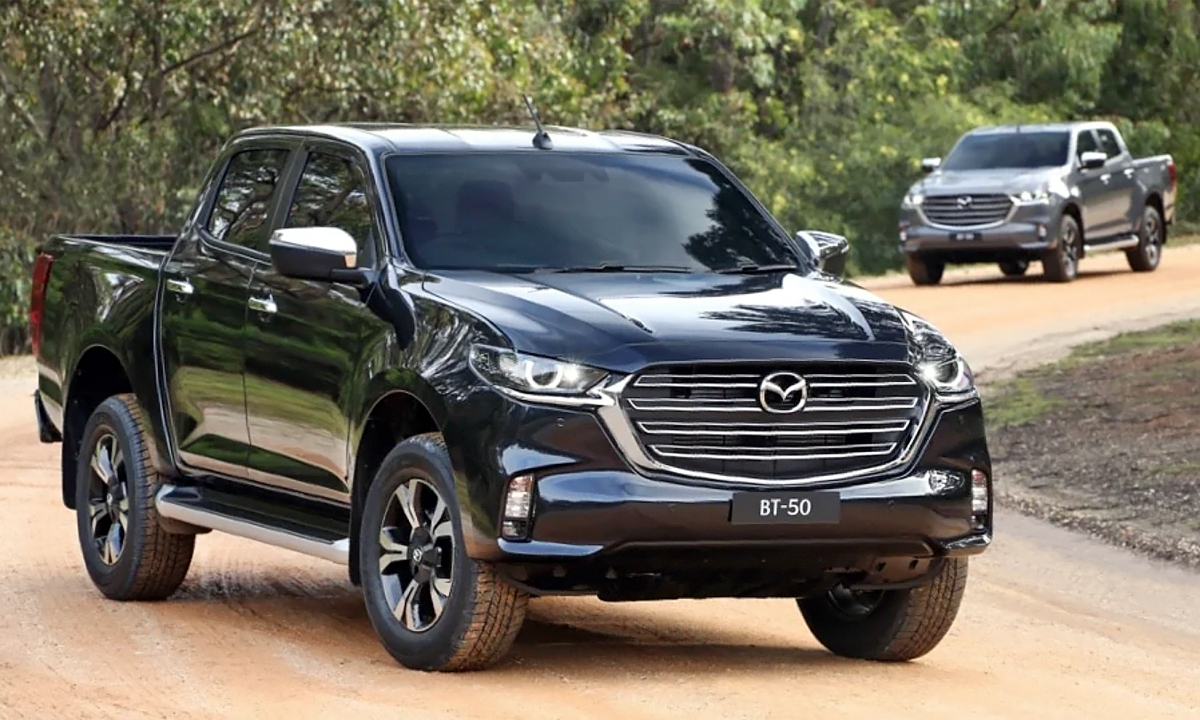
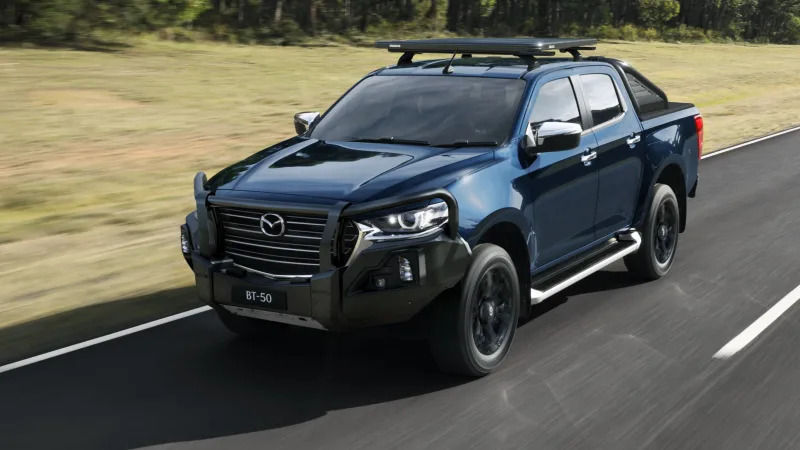
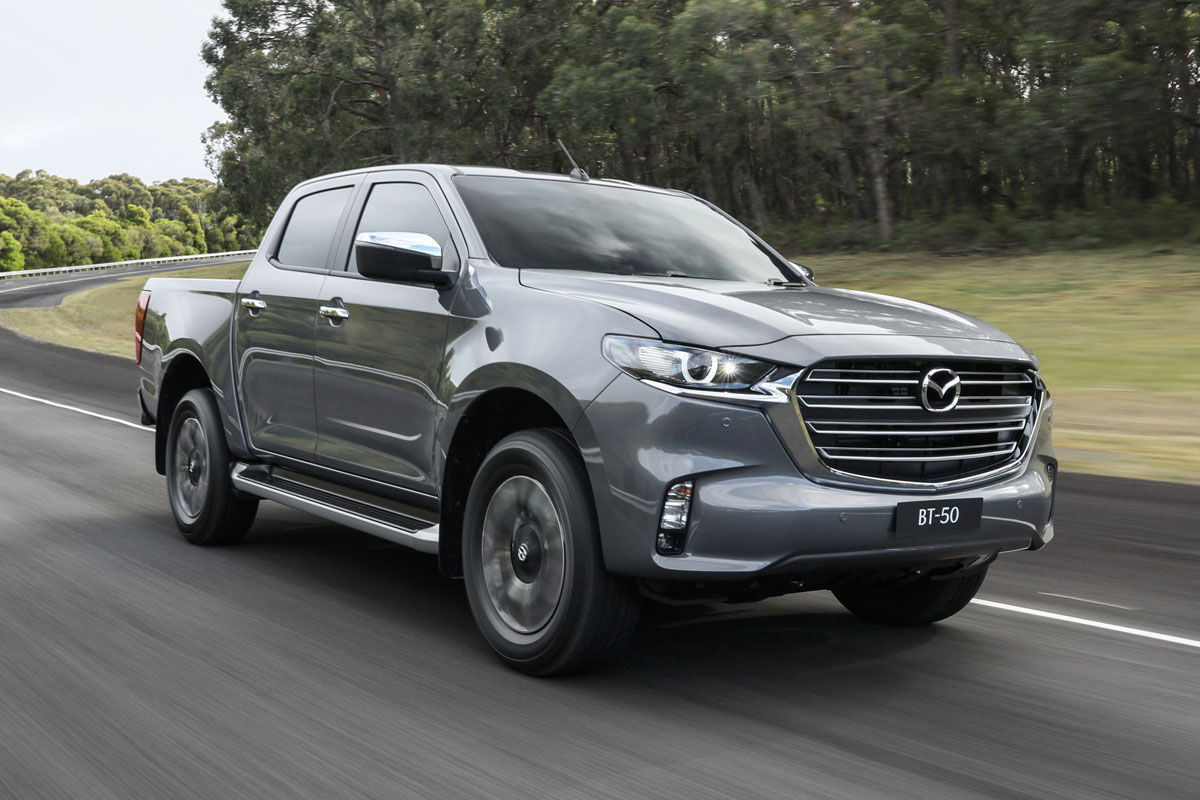
Is this handsome Japanese newcomer set to become the best-looking bakkie in South Africa? The new-generation Mazda BT-50, which shares its underpinnings with the upcoming Isuzu D-Max, blends bold styling cues with a smarter cabin and advanced new features.

This BT-50 marks the end of the 48-year relationship between Ford and the Japanese brand as previous iterations of the BT-50 were based on the Ford Ranger platform. Now it remains to be seen whether the Mazda will arrive in South Africa before production of the bakkie on which it is based, the new D-Max, commences in Port Elizabeth in 2021.

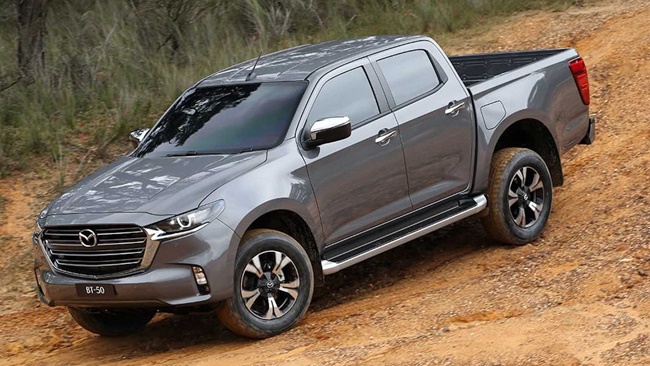
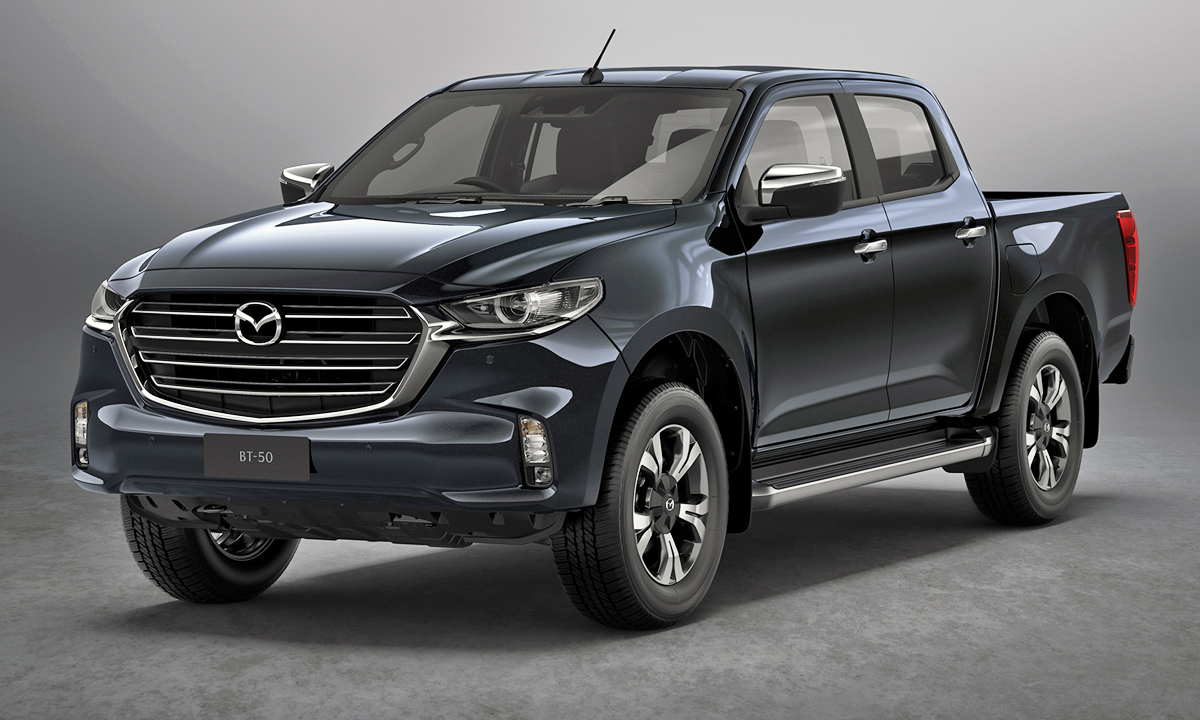
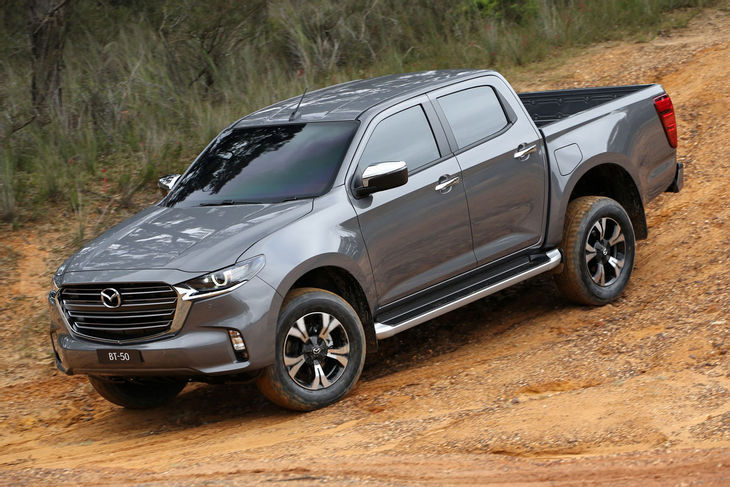
It's a handsome bakkie in anyone's book... Mazda has fused its Kodo design language with the bold, muscular proportions to convey a sense of toughness and powerful movement. The newcomer adopts a distinctive Mazda face with its 3-dimensional signature wing wrapping its commanding front grille and extending out to the side of the vehicle into the sharp, deep sculpted headlamps. A strong rear-view mirror presence is amplified with a sense of width created by the use of low outboard parking lamps.

Kodo design is exemplified by sweeping crease lines running from the front grille out towards the wing mirrors, paired with an unbroken centre line that flows from front to rear, combining to ensure a dynamic, powerful appearance.

A9207689-9118-4CB6-8A1D-2B0186F79401.jpegD8764743-AE84-41CC-B88C-74265F807B98.jpeg441B6CBA-9D79-409C-9E98-AB215782D4E0.jpeg8DAB6E3D-3ED1-4D26-AEF2-201398F9E468.jpeg5AB79FD3-6021-4069-87B7-624FECB0DD9D.jpeg996F9840-177A-45A1-A81A-D52AA5D475DB.jpeg
 
Mazda says new BT-50 bakkie will be quicker despite power drop

A Mazda executive in Australia has suggested the new BT-50 will be both quicker and more fuel-efficient than its predecessor, despite adopting a less powerful engine.

While the outgoing BT-50 shares much with the Ford Ranger (including its five-cylinder oil-burner), this third-generation model is based on Isuzu’s new D-Max (the latter is scheduled to start rolling off the Port Elizabeth assembly line only in the second half of 2021 although production in Thailand has already started).

Like the D-Max on which it’s based, the flagship double-cab variant of the new BT-50 is powered by Isuzu’s 3,0-litre, four-cylinder turbodiesel engine, which delivers 140 kW at 3 600 r/min and 450 N.m from 1 600 to 2 600 r/min.

While you’ve no doubt noticed that’s a little down on the outgoing 3,2-litre five-pot’s 147 kW and 470 N.m, Mazda Australia marketing director Alastair Doak told motoring.com.au the new BT-50 would be lighter and quicker.

 
Throwing a lifeline: Why Isuzu's partnership with Mazda is the new BT-50 bakkie's saving grace

Will the bakkie sell?

When the BT-50 arrives either in 2021 or in 2022, Mazda will hope that it will make an impact on South Africa's bakkie market. However, it is unlikely that it will rival the Toyota Hilux, Ranger, and D-Max on sales. This trio of bakkies are South Africa's best-selling bakkies and are almost unrivalled at the top.

To garner some sales success, Mazda must take a page out of Mitsubishi's book and limit the number of models its BT-50 range will consist of. Only double cab bakkie models, with either one or both engines the new D-Max will be equipped with. (A 1.9-litre and 3.0-litre diesel engine will power the new D-Max.)

On a concise range, Mazda SA has to market its bakkie aggressively and ensure that it gets the formula right. Then they have to hope that the bakkie will sell.

 
Mazda ‘delighted’ with new BT-50 bakkie’s Isuzu turbodiesel engine

A high-ranking Mazda executive in Australia says the firm is “delighted” with the Isuzu turbodiesel engine doing duty in the new BT-50 bakkie.

The new, third-generation BT-50 is based on the new D-Max and is thus powered by Isuzu’s 3,0-litre, four-cylinder turbodiesel engine, which delivers 140 kW at 3 600 r/min and 450 N.m from 1 600 to 2 600 r/min.

Alastair Doak, Mazda Australia marketing chief, suggested to CarsGuide the new BT-50 would stay true to the company’s Skyactiv philosophy despite being built by another brand.

“I think it sits quite comfortably [in the Mazda line-up]. Obviously, the whole point of Skyactiv is around improving fuel consumption, and this one is a huge improvement over the current BT-50.

 
Mazda says new BT-50's design sets it ‘totally apart’ from Isuzu D-Max

Mazda says the new BT-50’s exterior design sets it “totally apart” from the Isuzu D-Max on which it is based.

Speaking to CarsGuide, Mazda Australia marketing chief Alastair Doak said the new bakkie’s styling would serve to differentiate it from the D-Max.

“We think design is great. We used the Kodo design as a basis here and made it appropriate for a [bakkie] by making it tougher,” Doak said. “Obviously, that sets us totally apart from our partner.”

The new, third-generation BT-50 is based on the new D-Max and is thus powered by Isuzu’s 3,0-litre, four-cylinder turbodiesel engine, which delivers 140 kW at 3 600 r/min and 450 N.m from 1 600 to 2 600 r/min.

 
Mazda exec explains why the new BT-50 bakkie won't suffer 'an X-Class'

A Mazda executive in Australia is confident the new BT-50 bakkie won’t suffer the same fate as the Mercedes-Benz X-Class.

Production of the X-Class, which was based on the Nissan Navara but positioned at the very top of the premium double-cab segment, ended earlier in 2020.

Speaking to CarsGuide, Mazda Australia marketing chief Alastair Doak explained why he thought the new BT-50 would not suffer the same fate.

“The X-Class was coming in cold in that segment. We’ve been a player for decades … forever,” Doak said.

“That gives you a certain familiarity; a different position in the market. We understand where the market is with BT-50, and we’ll be competitive on value,” he added.

 
New Mazda BT-50: More details emerge

Proper bakkie bits for new Mazda double-cab.

Anticipation for Mazda’s third-generation BT-50 bakkie range is steadily building, as the Japanese brand ramps-up production.

This new BT-50 is a mechanical twin of the latest Isuzu D-Max and with the global launch schedule now commencing, we have gained greater insight into the Mazda’s specification and available accessories.

Powered by an Isuzu 3-litre turbodiesel engine, the new BT-50 has impressive hauling statistics. All double-cabs, irrespective of transmission choice or whether they are 4x4 or 4x2, have been certified to tow 3 500 kg.

Loadbox carrying capacity is on the double-cab cab is a notable 1 106 kg, which should provide all the capacity any leisure user would need, for Safari travel in the SADC region.


BT-50.jpg
 
New BT-50 to arrive in SA before D-Max

The new-generation Mazda BT-50 will arrive in South African showrooms next year... in other words, before the bakkie on which it is based – the upcoming Isuzu D-Max – comes to market.


Last week, Cars.co.za reported that Isuzu South Africa has had to delay upgrades of its manufacturing facilities in Port Elizabeth (where it will produce the new generation D-Max) due to the impact of Covid-19, which had, in turn, also caused interruptions to the Japanese brand’s development programme to adapt the bakkie's various components specifically for local conditions.

The net result of this development is that the new Mazda BT-50 will debut in South Africa before the bakkie on which it is based, the new D-Max, goes on sale locally in 2022. Unlike the Eastern Cape-produced D-Max, however, the BT-50 will be imported from Thailand.

"I can confirm that the BT-50 is part of our product planning for 2021, but we will only be able to communicate the exact timing of the model's introduction closer to our launch time," Mazda Southern Africa brand manager Melané Bezuidenhout told Cars.co.za. “We have yet to be finalise the new range's line-up of derivatives and their respective specifications, including powertrains, features, interior trim etc."

 
Isuzu D-Max and Mazda BT-50 in line for power hike and off-road pack?

A fresh report out of Australia claims the new Isuzu D-Max and Mazda BT-50 are in line for a “factory-backed” power increase as well as an off-road pack.

According to CarExpert.com.au, the two bakkies (as a reminder, Isuzu builds the D-Max-based BT-50 for Mazda) are set to gain a 10 percent hike in power and torque.


In both models, a 3,0-litre, four-cylinder turbodiesel engine makes 140 kW and 450 N.m as standard. The publication claims the figures will rise to around 155 kWand about 500 N.m when the new package is introduced either in “six to 12” months from now or further down the line, as part of a mid-cycle update.

Those increased peak figures would see the D-Max and BT-50 pretty much match the outputs of the Toyota Hilux’s uprated 2,8-litre engine (150 kW/500 N.m) and the Ford Ranger’s bi-turbo 2,0-litre unit (157 kW/500 N.m).

The off-road pack, meanwhile is expected to include lifted suspension and “more off-road hardware” such as all-terrain rubber and additional underbody protection.

 
Top
Sign up to the MyBroadband newsletter
X