The Parker Solar Probe

Binary_Bark

Forging
Joined
Feb 24, 2016
Messages
41,953
Reaction score
23,947
Location
Midgard
: The Parker Solar Probe
Launched: August 2018
Subject of study: The Sun
Current location: On its third lap around the Sun on a highly elliptical orbit, becoming closer and closer with each revolution
The inspiration for NASA’s Parker Solar Probe can be traced back more than half a century. In 1958 an astrophysicist by the name of Eugene Parker published a paper detailing what he believed to be high-speed matter and magnetism emanating from the Sun and flowing outward through the solar system.

We now know these to be solar winds and that they can have a destructive effect on GPS, satellites and electrical grids. A better understanding of them could better protect these systems, and also reveal clues about what gave rise to life on our planet. Scientists have spent decades working to better understand these forces. Only now thanks to advances in thermal engineering, are they able to send a machine in for a closer look.

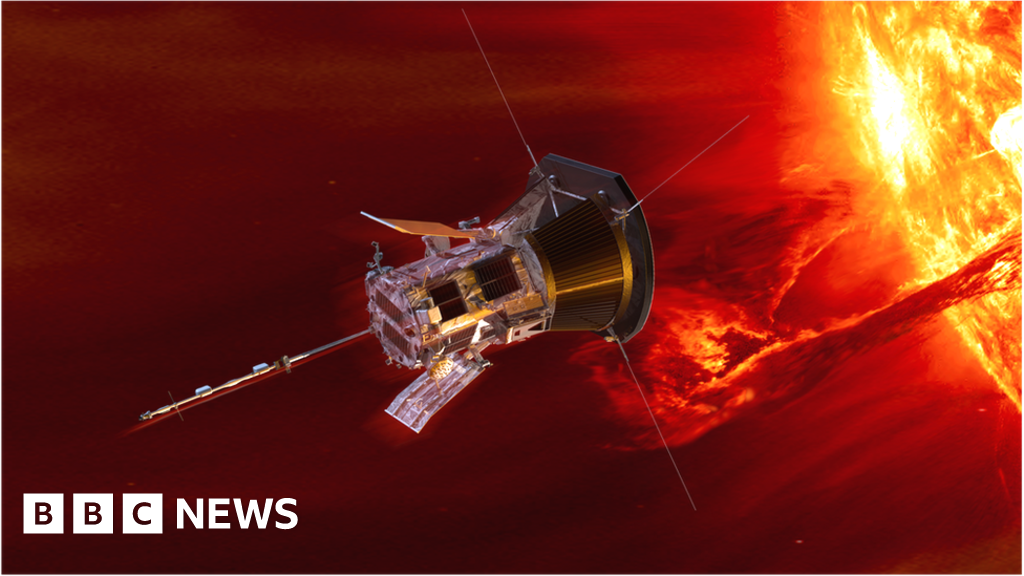
The Parker Solar Probe, named after the astrophysicist whose curiosity inspired it, is built to fly closer to the Sun than any spacecraft in history. It is around the size of a small car and is fitted with a 4.5-inch-thick (11.4-cm) carbon-composite plate that serves as a heat shield. This sophisticated sunshade is able to, quite remarkably, keep the probe’s equipment to a cool 85° F (29.5° C) by bouncing away from the Sun’s energy, even in environments of nearly 2,500° F (1,377° C).

More At: https://newatlas.com/space/space-exploration-parker-solar-probe/
 
When it becomes time to die, I hope the probe plunges into the sun shouting something heroic like the Cassini probe.

The story - The Cassini probe launched by NASA 20 years ago towards Saturn, had reached the end of its useful life. NASA don’t want it to contaminate the water moons of Saturn where they suspect there may be life so they plunged Cassini into Saturn (suicidal death spiral) with the probe transmitting data to Earth about Saturn’s atmosphere until it died.

Interlude: In the internet game, World of Warcraft (WoW) a team was preparing a battle strategy. One of the team members (Leroy Jenkins) was in the kitchen getting something to eat so he missed-out on the strategy session. When he returned he just rushed in with the battle cry ‘Leroy Jenkins’. The rest of the team tried to support him but they were all massacred. Someone recorded everything on their phone. It became a (rather famous) internet meme.

On Cassini’s suicidal death plunge into Saturn, NASA decided that on the probes external speaker it will scream the LEEEEEEEROY JEEEEEENKINS battle cry as it burns up in Saturn’s atmosphere until it stops transmitting. With the Parker Solar Probe, the suicidal death plunge will be into the sun. It’s a bit pointless and silly but I approve.
 
When it becomes time to die, I hope the probe plunges into the sun shouting something heroic like the Cassini probe.

The story - The Cassini probe launched by NASA 20 years ago towards Saturn, had reached the end of its useful life. NASA don’t want it to contaminate the water moons of Saturn where they suspect there may be life so they plunged Cassini into Saturn (suicidal death spiral) with the probe transmitting data to Earth about Saturn’s atmosphere until it died.

[snip]

It is not possible for the current orbit of the Parker Solar Probe to actually crash into the sun's surface. It takes a lot of energy to increase the speed sufficiently in order to get close to the sun. The current design is not set up to do that, and you can't just 'fall into the sun' like Cassini did with Saturn.
 
NASA’s Parker probe reveals the sun’s rogue plasma waves and magnetic islands
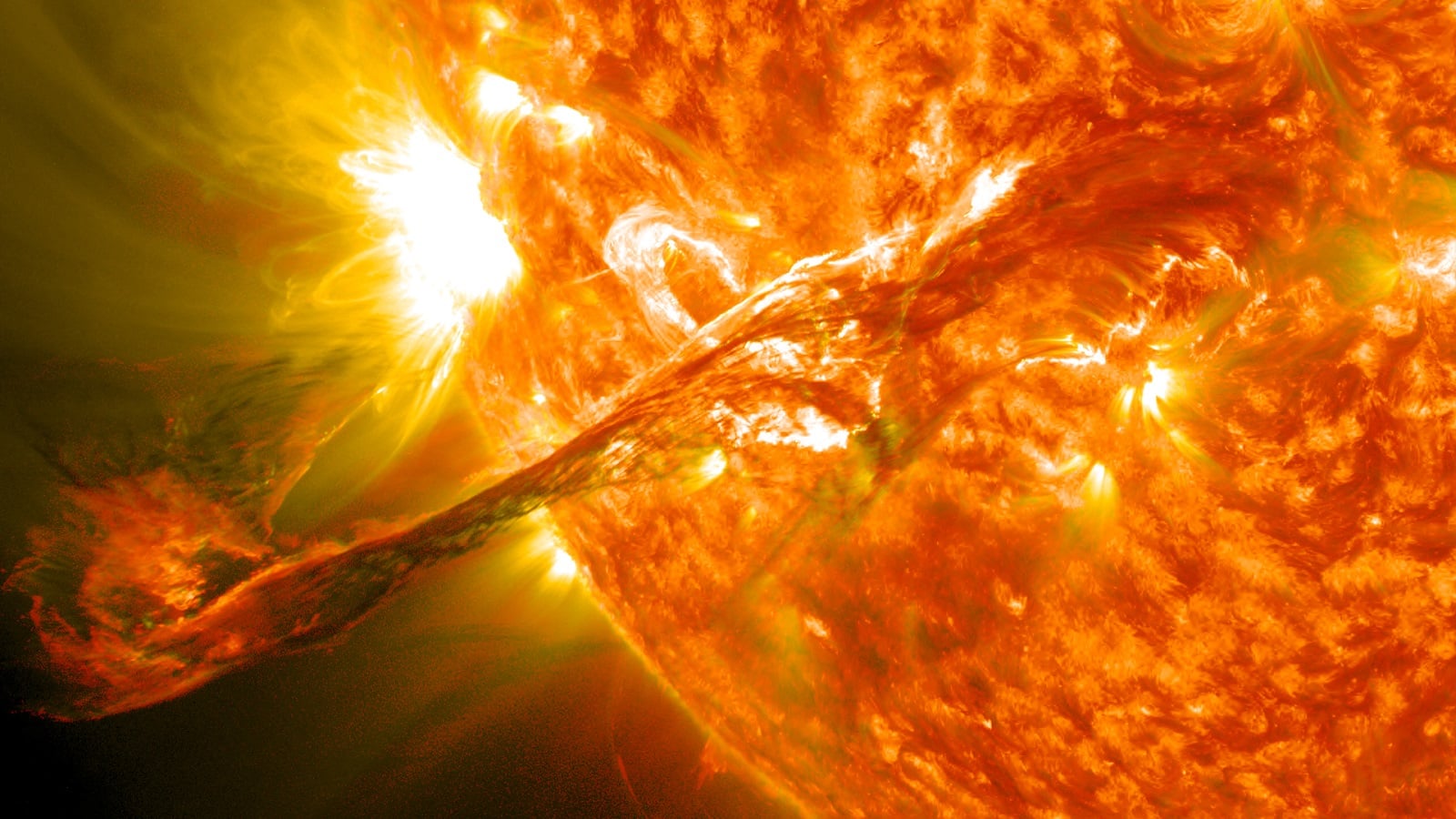
Rogue plasma waves. Floating magnetic islands. Showers of charged particles. These are just some of the things NASA’s Parker Solar Probe witnessed during its first two intimate encounters with the sun.

Parker is on a nearly seven-year mission to repeatedly soar near the sun and gather intel on mysteries that have plagued solar physicists for decades (SN: 7/5/18). By flying a robotic craft through the tenuous plasma emanating from the sun, researchers hope to figure out such puzzlers as why the sun’s atmosphere is millions of degrees Celsius hotter than its surface and what powers the solar wind, the stream of charged particles that blows outward through the solar system.

Mission scientists aren’t ready to answer those questions yet. But data from the probe’s first two orbits, published online December 4 in four papers in Nature, offer a sneak peek at what’s to come as Parker moves closer to the sun over the next several years.
“We’re exploring a brand-new region,” says Russell Howard, a solar physicist at the U.S. Naval Research Laboratory in Washington, D.C., who is in charge of the probe’s cameras. “Questions we would have formulated a year ago are just going to be blown away by the things that we’re actually seeing.”

 
Revealing the physics of the Sun with Parker Solar Probe

Nearly a year and a half into its mission, Parker Solar Probe has returned gigabytes of data on the Sun and its atmosphere. Following the release of the very first science from the mission, five researchers presented additional new findings from Parker Solar Probe at the fall meeting of the American Geophysical Union on Dec. 11, 2019. Research from these teams hints at the processes behind both the Sun's continual outflow of material—the solar wind—and more infrequent solar storms that can disrupt technology and endanger astronauts, along with new insight into space dust that creates the Geminids meteor shower.

revealingthe.gif


The young solar wind

The solar wind carries the Sun's magnetic field with it, shaping space weather throughout the solar system as it flows out from the Sun at around a million miles per hour. Some of Parker Solar Probe's primary science goals are to pinpoint the mechanisms that send the solar wind streaming out into space at such high speeds.

 
When it becomes time to die, I hope the probe plunges into the sun shouting something heroic like the Cassini probe.

The story - The Cassini probe launched by NASA 20 years ago towards Saturn, had reached the end of its useful life. NASA don’t want it to contaminate the water moons of Saturn where they suspect there may be life so they plunged Cassini into Saturn (suicidal death spiral) with the probe transmitting data to Earth about Saturn’s atmosphere until it died.

Interlude: In the internet game, World of Warcraft (WoW) a team was preparing a battle strategy. One of the team members (Leroy Jenkins) was in the kitchen getting something to eat so he missed-out on the strategy session. When he returned he just rushed in with the battle cry ‘Leroy Jenkins’. The rest of the team tried to support him but they were all massacred. Someone recorded everything on their phone. It became a (rather famous) internet meme.

On Cassini’s suicidal death plunge into Saturn, NASA decided that on the probes external speaker it will scream the LEEEEEEEROY JEEEEEENKINS battle cry as it burns up in Saturn’s atmosphere until it stops transmitting. With the Parker Solar Probe, the suicidal death plunge will be into the sun. It’s a bit pointless and silly but I approve.
Maybe they can make it shout, "DJ KHALED!" before shutting down.
 
The ESA’s Solar Orbiter, a Mission That Will Chart the Unexplored Polar Regions of the Sun, Just Launched!

In the coming years, a number of will be sent to space for the purpose of answering some of the enduring questions about the cosmos. One of the most pressing is the effect that solar activity and “space weather” events have on planet Earth. By being able to better-predict these, scientists will be able to create better early-warning systems that could prevent damage to Earth’s electrical infrastructure.

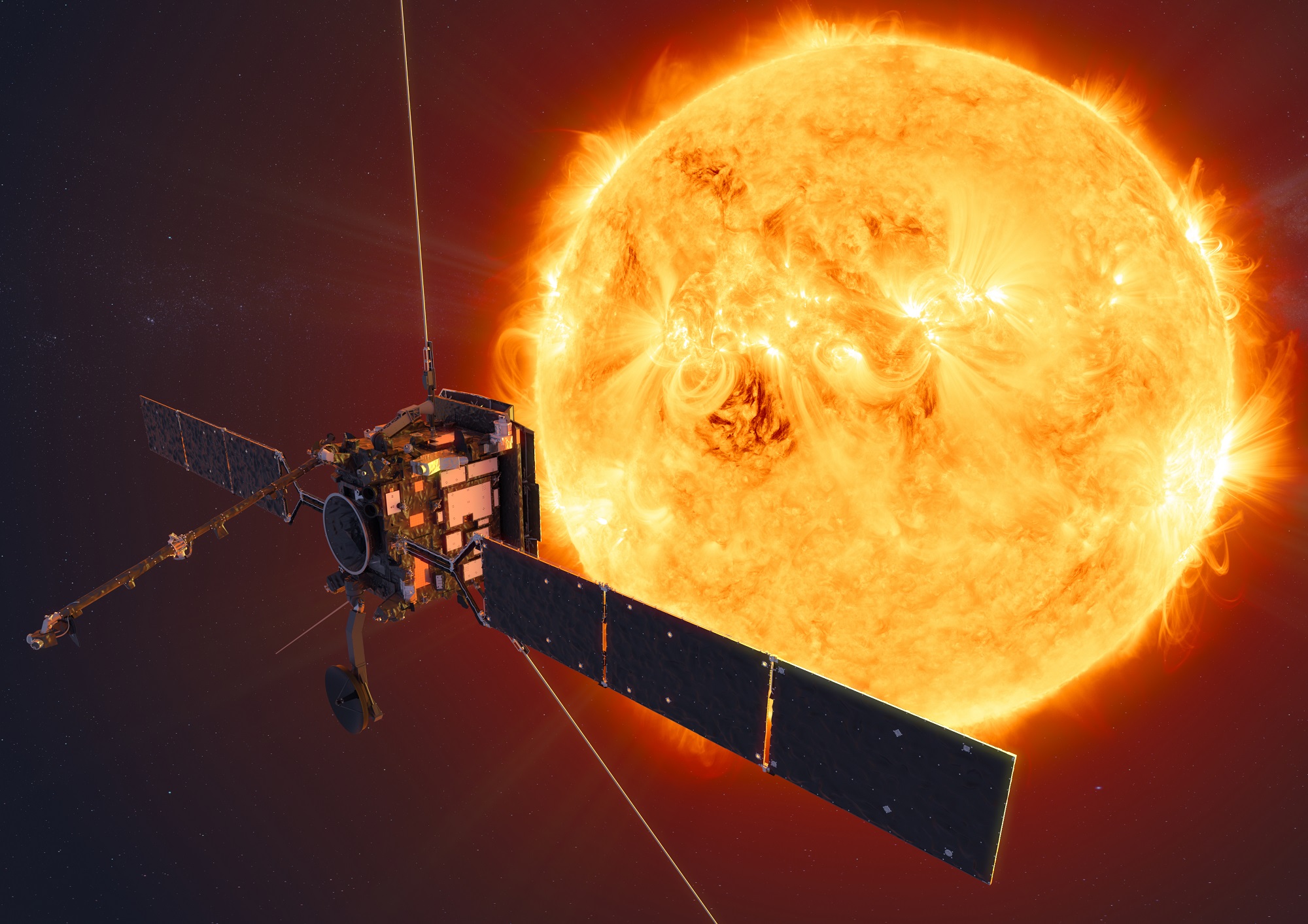
This is the purpose of the Solar Orbiter (SolO), an ESA-led mission with strong participation by NASA that launched this morning (Monday, Feb. 10th) from Cape Canaveral, Florida. This is the first “medium-class” mission implemented as part of the ESA’s Cosmic Vision 2015-25 program and will spend the next five years investigating the Sun’s uncharted polar regions to learn more about how the Sun works.


Here on Earth, events like solar flares have the potential to play serious havoc with electrical infrastructure, which includes knocking out power grids, disrupting air traffic and telecommunications, and endangering astronauts and the International Space Station (ISS). At present, governments and space agencies are able to anticipate such events only 48 minutes or so in advance.

 
ESA is Considering a Mission to Give Advanced Warnings of Solar Storms

The Sun is not exactly placid, though it appears pretty peaceful in the quick glances we can steal with our naked eyes. In reality though, the Sun is a dynamic, chaotic body, spraying out solar wind and radiation and erupting in great sheets of plasma. Living in a technological society next to all that is a challenge.


Mostly the Sun just warms the Earth. But sometimes its eruptions lead to solar storms that strike the Earth. And in our electrified and globally communicative world, those storms can cause a lot of damage. Potentially billions of euros worth of damage in Europe alone, according to the European Space Agency (ESA). There are things we can do to protect our electrical grid, communications systems, and other infrastructure from the geomagnetic storms caused by the Sun. But, we need to know when one’s coming.

 
Solar Orbiter is Already Starting to Observe the Sun
On February 10th, 2020, the ESA’s Solar Orbiter (SolO) launched and began making its way towards our Sun. This mission will spend the next seven years investigating the Sun’s uncharted polar regions to learn more about how the Sun works. This information is expected to reveal things that will help astronomers better predict changes in solar activity and “space weather”.

Last week (on Thursday, Feb. 13th), after a challenging post-launch period, the first solar measurements obtained by the SolO mission reached its international science teams back on Earth. This receipt of this data confirmed that the orbiter’s instrument boom deployed successfully shortly after launch and that its magnetometer (a crucial instrument for this mission) is in fine working order.


The SolO mission carries a total of ten instruments that are part of its advanced scientific suite, a combination of imagers, remote, and in-situ sensors. Four of these instruments are designed to measure properties of the environment around the spacecraft, particularly the electromagnetic characteristics of the solar wind (the stream of charged particles constantly emanating from the Sun).

 
Parker Solar Probe Gives a Unique Perspective on Comet NEOWISE


Comet watchers have enjoying the newly-discovered NEOWISE comet since it was first spotted in March 2020. Now that it’s visible with the naked eye, in dark sky conditions, all kinds of Earthly observers are checking the visitor out.


But NASA’s Parker Solar Probe has another view of the comet, one denied to Earth-bound observers.


NEOWISE’s actual name is C/2020 F3, but since the NEOWISE telescope discovered it, the name stuck. WISE was an infrared survey mission, but in 2013 it was re-christened as NEOWISE, which stands for Near Earth Object Wide-field Infrared Survey Explorer. NEOWISE was given a new job: detecting asteroids and comets.
 
A close pass to the sun revealed some interesting results:
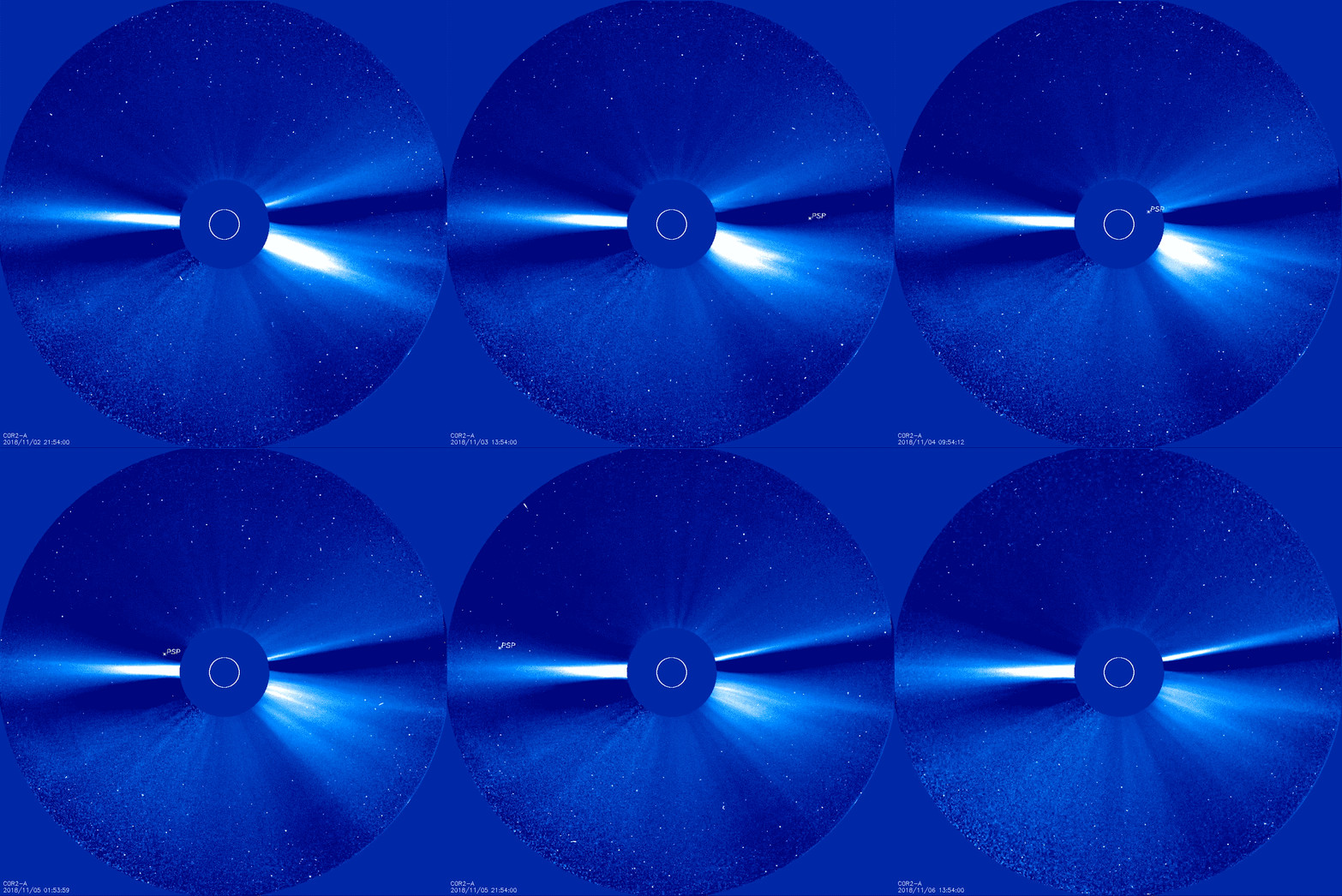
On 28 April this year, Parker crossed what is termed the Alfvén critical boundary.

This is the outer edge of the corona. It is the point where solar material that is normally bound to the Sun by gravity and magnetic forces breaks free to stream out across space.
Parker encountered the boundary at about 13 million km (8 million miles) above the visible surface, or photosphere, of the Sun.

The probe's data suggests it actually passed above and below the boundary three separate times in the course of five hours, according to Stuart Bale from the University of California, Berkley.

"We saw the conditions change completely," he told reporters. "Inside the corona, the Sun's magnetic field grew much stronger, and it dominated the movement of the particles there. So the spacecraft was surrounded by material that was truly in contact with the Sun."
 

NASA probe data suggests a more complex sun's magnetic engine​


A Southwest Research Institute-led study found that protons and heavy ions react differently to solar magnetic reconnection events, revealing a more complex magnetic engine powering the solar wind. Magnetic reconnection converts magnetic energy into explosive kinetic energy, powering solar events and causing space weather that impacts Earth. Magnetic reconnection energizes protons and heavy ions, sending them shooting out from the sun at high speeds.

 
Top
Sign up to the MyBroadband newsletter
X